
Intro
Sleep in the preteen years can feel surprisingly complicated. A 10- to 12-year-old may still need the structure of childhood, while school demands, friendships, sports, screens, puberty, and a growing wish for independence begin to push bedtime later.
For most children in this age range, sleep is not simply “rest.” It supports brain maturation, learning, mood regulation, immune function, growth, metabolic health, and family functioning. When sleep becomes difficult, a supportive, non-blaming approach usually works better than a power struggle.
Highlights
Most 10- to 12-year-olds need 9 to 12 hours of sleep in a 24-hour period, with many doing best near the middle or higher end of that range.
Preteen sleep problems often reflect a mix of biology, routines, school pressure, emotional stress, caffeine, and evening screen exposure.
Consistent wake times, predictable wind-down routines, and a sleep-supportive bedroom can improve sleep without making bedtime feel punitive.
Snoring, breathing pauses, severe daytime sleepiness, restless legs, or major mood and school changes should be discussed with a healthcare professional.
How much sleep do 10- to 12-year-olds need?
Most preteens ages 10 to 12 fall within the school-age sleep recommendation of 9 to 12 hours per 24 hours. This range is broad because sleep need is biologically variable. One child may function well with about 9.5 hours, while another may need 11 hours to wake easily, regulate emotions, and learn effectively.
A helpful way to think about sleep need is not only the number of hours in bed, but also the child’s daytime function. Adequate sleep usually looks like waking with reasonable ease, staying alert during school, participating in activities without frequent irritability, and recovering from normal stress. If a child sleeps 9 hours but is hard to wake, sleepy in class, emotionally volatile, or dozing during quiet activities, the actual need may be higher or the sleep quality may be poor.
Weekends can provide clues. If a preteen sleeps several hours later on free days, that may indicate accumulated sleep debt. Occasional catch-up sleep after a busy week is common, but a consistent pattern of short school-night sleep followed by long weekend sleep can disrupt circadian rhythm and make Sunday night insomnia more likely.
Why preteen sleep changes around ages 10 to 12
The preteen years sit at the edge of adolescence. Even before obvious puberty, the brain’s circadian timing system can begin drifting later. Melatonin secretion, the hormonal signal that helps initiate sleep, may occur later in the evening as children mature. At the same time, school start times, homework, extracurricular activities, social messaging, and family schedules may require early waking.
This creates a common mismatch: the body wants to fall asleep later, but the alarm still rings early. The result can be chronic partial sleep deprivation. Parents may see this as resistance or defiance, but often it is a mixture of developmental biology and environmental pressure.
Emotional and cognitive development also matters. Preteens are building executive functions in preteens, including planning, impulse control, and time estimation. They may sincerely intend to get ready for bed, then lose track of time while reading, gaming, chatting, or finishing assignments. Sleep routines work best when adults provide scaffolding rather than shame.
Physical growth, early puberty, and changing social awareness can also affect sleep. Some children become more self-conscious, worry more at night, or replay peer interactions. Preteen behavior changes and challenges can show up at bedtime as arguing, procrastination, reassurance-seeking, or suddenly wanting more privacy.
Signs a preteen may not be getting enough restorative sleep
Insufficient sleep in a 10- to 12-year-old does not always look like a child saying, “I’m tired.” Many preteens push through fatigue or become wired and irritable. The nervous system may compensate with hyperarousal, making bedtime even harder.
Possible signs of inadequate or poor-quality sleep include:
- Difficulty waking in the morning despite a reasonable bedtime
- Falling asleep in the car, during reading, or during quiet classroom time
- Morning headaches, low appetite in the morning, or frequent complaints of fatigue
- Irritability, tearfulness, impulsivity, or more conflict at home
- Reduced attention, slower processing, forgetfulness, or declining school performance
- Increased craving for sweet foods, energy drinks, or caffeinated beverages
- Weekend oversleeping that is much longer than weekday sleep
Sleep also interacts with mental health. Anxiety can delay sleep onset, and poor sleep can intensify anxiety symptoms in preteens. Similarly, low mood can lead to excessive time in bed or irregular sleep. These patterns do not prove a diagnosis, but they do deserve attention, especially if they persist for several weeks or impair school, friendships, or family life.
Building a bedtime routine that respects growing independence
Preteens usually respond better when sleep routines are framed as health support rather than control. A collaborative plan can preserve dignity while still setting boundaries. Families can explain that sleep protects memory, athletic recovery, immune defense, emotional regulation, and growth, then invite the child to help design the evening sequence.
A practical routine often begins 60 to 90 minutes before the intended sleep time. The goal is to reduce cognitive, emotional, and sensory stimulation. This may include packing the school bag, choosing clothes, showering, brushing teeth, dimming lights, and doing a calm activity such as reading, drawing, stretching, or listening to quiet audio.
Consistency matters most at the wake time. Keeping wake time fairly stable, including weekends when possible, anchors the circadian rhythm. Bedtime can then be adjusted based on sleepiness and the number of hours needed. If a child must wake at 6:30 a.m. and needs about 10 hours of sleep, lights-out likely needs to be around 8:30 p.m., with the wind-down beginning earlier.
For resistant preteens, it may help to separate “in room time” from “asleep time.” For example, the family can agree that after a certain time the bedroom becomes a quiet zone, even if the child is not asleep immediately. This reduces pressure and helps the brain associate the bed with calm rather than conflict.
Screens, light, caffeine, and evening stimulation
Evening screen use is one of the most common sleep disruptors in this age group. The issue is not only blue-wavelength light, which can suppress melatonin signaling, but also psychological activation. Social messages, competitive games, short videos, and emotionally charged content can keep the brain alert long after the device is turned off.
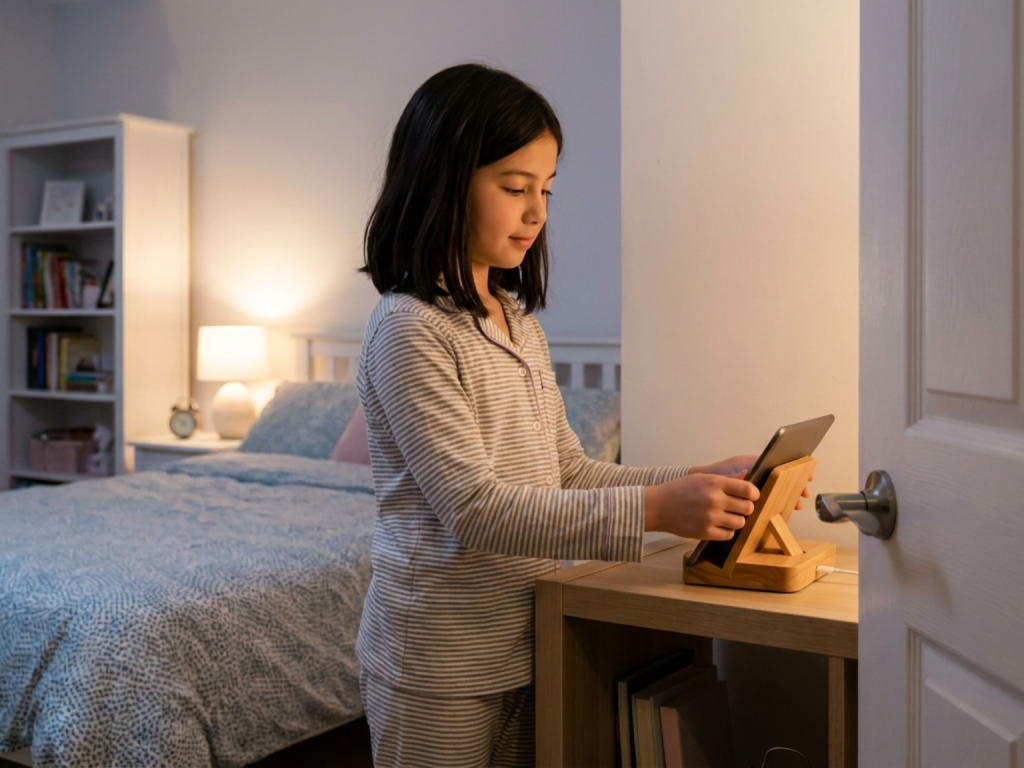
Many pediatric resources advise turning screens off about one hour before bed. Some families need a longer interval, especially for children who become intensely absorbed or dysregulated after gaming or social media. Charging devices outside the bedroom is often more effective than relying on willpower. If a device is needed for an alarm, a simple alarm clock can remove that justification.
Caffeine deserves special attention. Coffee is not the only source; tea, cola, energy drinks, chocolate, some sports supplements, and specialty beverages may contain caffeine. Preteens can be sensitive to its effects, and caffeine consumed in the afternoon may still interfere with sleep onset. Energy drinks are especially concerning because they may contain high caffeine doses and other stimulants.
Exercise generally supports sleep, but intense late-evening practices or competitions may delay sleep because of adrenaline, bright lights, late meals, and social excitement. When schedules cannot be changed, a predictable recovery routine, hydration, a light snack if needed, and a calm ride home may help the body transition.
The sleep environment and comfort factors
A sleep-supportive bedroom is usually cool, dark, quiet, and predictable. Blackout curtains, a fan, white noise, or earplugs may help some children, depending on safety and comfort. The mattress and pillow should be comfortable, and bedding should match the child’s temperature needs.
For some preteens, sleep is disrupted by issues that are easy to miss. Allergic rhinitis can cause nasal obstruction and mouth breathing. Eczema or other itchy skin conditions can fragment sleep. Gastroesophageal reflux, constipation discomfort, asthma symptoms, medication timing, and pain from sports injuries may also interfere. If a child is spending enough time in bed but still waking unrefreshed, quality of sleep should be considered.
Nighttime worries are also common. Some children benefit from a brief “worry time” earlier in the evening, when they can write down concerns and identify one next step. Others need reassurance that parents are available, while still learning independent settling skills. Preteen emotional regulation often improves when the day includes connection, predictable routines, and chances to talk before the lights go out.
Food patterns can contribute as well. Going to bed very hungry can make sleep difficult, while a heavy meal right before bed may cause discomfort. Balanced preteen nutrition during the day, with predictable meals and snacks, can reduce bedtime hunger and support stable energy.
Naps, weekends, school schedules, and sleep debt
Napping is not inherently harmful, but it can become a cycle. A preteen who sleeps too little at night may nap after school, then feel less sleepy at bedtime, fall asleep late, and wake tired again. If naps are needed, they are usually less disruptive when short and early, such as 20 to 30 minutes after school rather than late evening.
Weekend schedules are another common pressure point. A large weekend shift, such as sleeping from midnight to noon, can function like social jet lag. The body clock shifts later, and the child may be unable to fall asleep on Sunday night. A more moderate approach is to keep wake time within about one to two hours of the usual school-day time when feasible.
Families should also consider the total load on the child. A schedule packed with advanced classes, sports, music, tutoring, and social events may leave too little time for sleep. In medically literate terms, sleep opportunity can be insufficient even if sleep physiology is normal. The solution may not be a stricter bedtime, but a realistic review of commitments.
If school start time is early, morning light exposure can help anchor the circadian rhythm. Opening curtains, eating breakfast in a bright area, or walking outside briefly can signal daytime to the brain. In the evening, dimmer lights and calmer activity help create the opposite signal.
When sleep problems need professional guidance
Many sleep challenges improve with routine changes, but some patterns warrant medical assessment. Parents should seek guidance from a pediatrician or qualified healthcare professional if a preteen has loud habitual snoring, witnessed pauses in breathing, gasping, restless sleep, significant bedwetting after being dry, morning headaches, or marked daytime sleepiness. These can be associated with sleep-disordered breathing or other medical issues.
Restless legs symptoms also deserve attention. A child may describe creepy-crawly sensations, an urge to move the legs, or discomfort that worsens at rest and improves with movement. Iron status, neurologic factors, and medications may be relevant, and evaluation should be individualized.
It is also appropriate to ask for help when insomnia persists despite a consistent routine, when anxiety or low mood is prominent, when nightmares are frequent or traumatic, or when sleep problems are affecting safety, attendance, learning, or family functioning. A clinician may review medications, medical history, mental health, pubertal development, snoring, diet, caffeine, and sleep timing. Some children may benefit from referral to pediatric sleep medicine, behavioral sleep therapy, or mental health support.
Most importantly, sleep should not become a moral battleground. A struggling preteen is not “lazy” because mornings are hard, and parents are not failing because bedtime has become difficult. Sleep is a biological, behavioral, and family-system issue. With compassionate structure and appropriate medical input when needed, many children can regain more restorative sleep.
Seek medical advice promptly if you notice
- Loud habitual snoring, gasping, choking, or pauses in breathing during sleep.
- Severe daytime sleepiness, falling asleep at school, or unsafe drowsiness during activities.
- Persistent insomnia, nightmares, panic at bedtime, or sleep problems with significant anxiety or low mood.
- Restless legs, unusual movements during sleep, morning headaches, or unexplained decline in school function.
- Use of energy drinks, stimulant supplements, or medications that may be affecting sleep.
Tools & Assistance
- Keep a 1- to 2-week sleep diary with bedtime, wake time, night wakings, naps, caffeine, screens, and daytime sleepiness.
- Create a family charging station outside bedrooms for phones, tablets, and gaming devices.
- Use a consistent wake time and a 60-minute calming wind-down routine before bed.
- Discuss persistent sleep concerns with your child’s pediatrician or a pediatric sleep specialist.
- Coordinate with school staff if sleepiness is affecting attendance, learning, or emotional regulation.
FAQ
Is 8 hours of sleep enough for a 10- to 12-year-old?
Usually not for most children in this age range. Many need 9 to 12 hours. If a child regularly gets 8 hours and has morning difficulty, sleepiness, irritability, or school struggles, discuss sleep habits with a healthcare professional.
Why does my preteen say they are not tired at bedtime?
Circadian timing may be shifting later, and evening screens, stress, homework, or stimulating activities can increase alertness. A gradual wind-down and consistent wake time can help.
Should preteens nap after school?
Short, early naps may help occasionally, but long or late naps can delay bedtime and worsen the cycle. If naps are needed every day, the nighttime schedule or sleep quality may need review.
Are melatonin supplements appropriate for preteens?
Do not start supplements without medical guidance. A clinician can assess sleep timing, medical causes, medication interactions, dose concerns, and whether behavioral strategies should be tried first.
When should snoring be evaluated?
Habitual loud snoring, gasping, pauses in breathing, restless sleep, morning headaches, or daytime sleepiness should be discussed with a pediatrician because sleep-disordered breathing may require evaluation.
Sources
- Cleveland Clinic Health — How Much Sleep Do Kids Need? Recommended Hours by Age
- Nemours KidsHealth — How Much Sleep Do Kids Need?
- Pediatrics of Southwest Houston — Sleep Requirements for Children
Disclaimer
This article is for general educational purposes only and is not a diagnosis or treatment plan. Consult a pediatrician or qualified healthcare professional for concerns about your child’s sleep, breathing, mood, medications, or development.

















Please log in to leave a comment.