
Intro
Giving medicine to a child can feel stressful, especially when a dose is time-sensitive, the child is crying, or the instructions differ from what a caregiver remembers using before. Children are not simply small adults: their pharmacokinetics, swallowing ability, developmental stage, and risk of accidental ingestion all change how medicines should be selected, measured, stored, and monitored.
This article reviews practical, evidence-informed safety rules for families and caregivers. It is not a substitute for individualized pediatric advice, but it can help you prepare clearer questions for your child’s clinician or pharmacist and reduce preventable medication errors at home.
Highlights
Use the exact medicine, dose, route, and interval recommended for your child; pediatric dosing is often weight-based and can change quickly as children grow.
Measure liquid medicines with an oral syringe, dosing cup, or dropper marked in metric units; kitchen spoons are inaccurate and should not be used.
Store all medicines, vitamins, and supplements out of sight and in a locked location, including items kept in purses, backpacks, nightstands, and visitors’ bags.
Over-the-counter products can still cause serious harm in children, especially cough and cold medicines, acetaminophen-containing combinations, sedating antihistamines, and adult formulations.
Start with the five rights: child, medicine, dose, route, and time
Medication safety begins before the bottle is opened. For every dose, confirm the right child, right medicine, right dose, right route, and right time. This sounds simple, but errors commonly happen when siblings take different medicines, when several caregivers share duties, or when a child has both prescription and over-the-counter products in use.
Read the label each time, not only when the medicine is first prescribed. Check the active ingredient, strength, concentration, expiration date, and whether the product is intended for children. Liquid medicines can have different concentrations even when the brand or generic name looks familiar. A dose of 5 mL from one bottle may contain a very different amount of drug than 5 mL from another.
Pediatric doses may be based on weight in kilograms, age, clinical indication, renal or hepatic function, and comorbidities. Avoid using an old prescription, a sibling’s medicine, or a leftover antibiotic for a new illness. Antibiotics, inhalers, anticonvulsants, insulin, opioids, and psychotropic medicines are examples where individualized instructions matter greatly.
If instructions conflict, pause and clarify with a pharmacist or prescriber. Common points to verify include whether the medicine should be taken with food, whether doses should be spaced evenly through the day, what to do after vomiting, and whether a missed dose should be skipped or given late. Written instructions are especially useful for daycare, school, travel, and shared custody arrangements.
Measure liquids accurately and avoid kitchen spoons
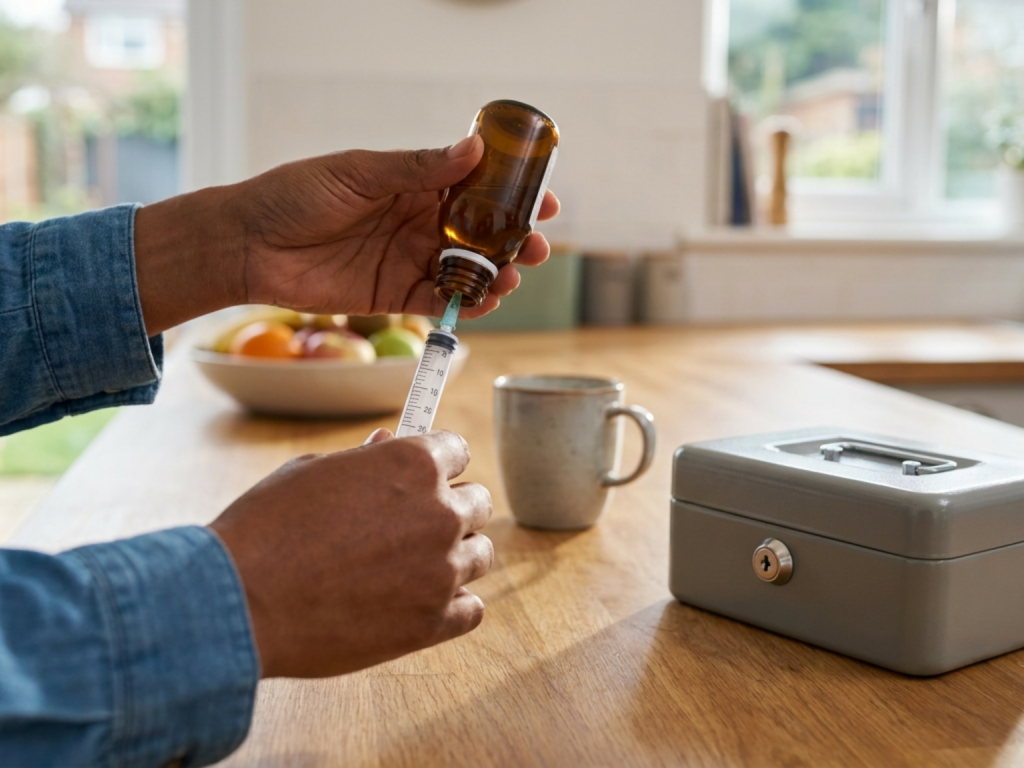
Liquid formulations are common in pediatrics, but they are also a major source of dosing error. Use an oral syringe, medication dropper, or dosing cup with clear metric markings. Milliliters are preferred because household teaspoons and tablespoons vary widely in volume. If a pharmacy label says 2.5 mL or 5 mL, ask for a measuring device that can accurately mark that amount.
Place the syringe tip gently inside the cheek rather than aiming toward the back of the throat, which may trigger gagging or aspiration. Give small amounts slowly if the child struggles. For infants, ensure the baby is awake, positioned safely, and able to swallow. Do not add medicine to a full bottle of milk or formula unless a clinician or pharmacist specifically advises it; if the infant does not finish the bottle, the dose may be incomplete. Mixing medicine with an essential food can also create aversion to that food.
Some medicines may be mixed with a small amount of soft food to improve acceptance, but this should be done only when the product is compatible and the child can finish the full portion. Avoid hot foods or drinks unless the pharmacist confirms stability, because heat can degrade some medicines. After administration, close the bottle tightly and put it away immediately; leaving it on the counter for the next dose creates an accidental ingestion risk.
Never call medicine candy. It may make one dose easier, but it teaches the child that medicines are treats. Use calm, honest language instead: the medicine is to help the body, and only an adult gives it.
Know what can and cannot be crushed, split, or hidden
As children grow, tablets and capsules may replace liquids. Swallowing pills is a learned skill, and many children need practice with posture, water, and reassurance. A pharmacist can often suggest practical techniques, such as practicing with very small swallowable foods when developmentally appropriate, using enough fluid, and keeping the head in a neutral or slightly forward position.
Do not crush, split, chew, open, or dissolve tablets or capsules unless a clinician or pharmacist confirms it is safe. Modified-release, extended-release, enteric-coated, sublingual, buccal, and certain hazardous medicines can become ineffective or toxic if altered. Crushing may cause dose dumping, mucosal irritation, bitter taste, or caregiver exposure to drug particles.
If a child cannot swallow the prescribed formulation, ask about alternatives rather than improvising. Options may include a liquid formulation, dispersible tablet, smaller-strength tablet, compounded preparation, different route, or a medicine in the same class with a more suitable formulation. Compounded medicines should come from a qualified pharmacy with clear concentration and storage instructions.
When a medicine is mixed with food, use the smallest feasible amount and give it immediately, unless instructed otherwise. Do not hide medicine in a large meal, because partial intake means partial dosing. Also consider the child’s trust: repeated hidden dosing can make feeding, future medical care, and caregiver-child cooperation more difficult.
Store medicines as if every child can climb, open, and explore
Medication storage should anticipate normal child development: toddlers climb, preschoolers imitate adults, and adolescents may experiment or self-treat. Store all prescription medicines, over-the-counter products, vitamins, herbal products, nicotine products, and supplements out of sight and in a locked cabinet or lockbox. Child-resistant caps reduce risk but are not childproof.
High-risk storage locations include purses, diaper bags, backpacks, coat pockets, bedside tables, kitchen counters, cars, and grandparents’ homes. Visitors may bring medicines in easily opened pill organizers or handbags. Before family gatherings or overnight stays, ask adults to keep their medicines secured. This is a safety request, not an accusation.
Close caps tightly after every use and return the medicine to storage immediately. Avoid leaving a dose drawn up in a syringe unless a clinician has specifically instructed how to label, store, and supervise it. Keep medicines in their original containers whenever possible, because labels provide the active ingredient, strength, lot information, and poison center or pharmacy reference details.
Safe disposal matters too. Remove unused or expired medicines from the home, especially opioids, sedatives, stimulants, and other controlled substances. Use a medication take-back program when available. If your child was prescribed opioids after surgery or injury, reassess with the clinician as pain improves and dispose of unused doses promptly to reduce accidental ingestion and misuse risk.
Be cautious with over-the-counter products and duplicate ingredients
Over-the-counter does not mean low-risk. Many pediatric overdoses involve products that families can buy without a prescription. Cough and cold medicines are not recommended for young children in many circumstances; authoritative pediatric guidance warns that they should never be used in children under two because of potentially serious side effects, and they are generally not recommended for children under six unless a healthcare professional advises otherwise.
Combination products create special danger because they may contain acetaminophen, ibuprofen, antihistamines, decongestants, cough suppressants, or alcohol-like solvents. Giving a fever reducer plus a multi-symptom cold product can unintentionally duplicate acetaminophen or another active ingredient. Always compare active ingredient panels, not just brand names.
Use fever and pain medicines only according to pediatric instructions. Do not alternate acetaminophen and ibuprofen on your own to “chase” a temperature without a clear plan from a clinician, because complex schedules increase error risk. Aspirin should generally be avoided in children and adolescents unless specifically prescribed, due to the association with Reye syndrome in certain viral illnesses.
Supplements, essential oils, and “natural” remedies require caution. They may interact with medicines, contain variable concentrations, or be unsafe for infants and children. Honey is not safe for children under one year because of infant botulism risk. Before using herbal preparations, melatonin, probiotics in medically fragile children, or high-dose vitamins, discuss risks and indications with a pediatric clinician or pharmacist.
Coordinate care when more than one adult gives medicine
Many errors occur not because caregivers are careless, but because the system is too complicated. When multiple adults give medicine, create a simple written medication plan. Include the child’s name, weight if relevant, medicine name, concentration, dose, route, timing, reason for use, start and stop dates, and the prescriber or pharmacist contact.
A medication log is particularly helpful for as-needed medicines, antibiotics, seizure rescue medicines, asthma inhalers, allergy medicines, and pain medicines after procedures. Record the time and amount immediately after giving the dose. Do not rely on memory during sleepless nights or when several family members are involved.
For school, daycare, camp, sports, and travel, follow local medication administration policies. Provide original labeled containers and written authorization when required. Children with asthma, seizures, diabetes, or severe allergies may need emergency action plans and trained adults who know when and how to administer rescue medicines. For children with a history of anaphylaxis, epinephrine auto-injector training and a written allergy action plan are essential parts of safe medication use.
Adolescents need a gradual, supervised transition toward medication independence. Teach them the purpose, dose, side effects, and storage rules for their medicines, while still monitoring adherence and safety. Discuss not sharing prescription medicines, not mixing medicines with alcohol or recreational substances, and telling a trusted adult about side effects, self-harm thoughts, or accidental extra doses.
Watch for adverse effects, errors, and emergency warning signs
Before starting a medicine, ask what benefits to expect, when improvement should occur, and which adverse effects need attention. Mild nausea or sleepiness may be anticipated with some drugs, while rash, breathing difficulty, severe lethargy, persistent vomiting, swelling of the lips or tongue, confusion, fainting, or seizures require urgent guidance. Keep a current allergy and adverse reaction list, distinguishing true allergic reactions from side effects whenever possible.
If a dose is missed, spilled, vomited, or possibly given twice, do not guess. Contact a pharmacist, prescriber, or poison center with the child’s age, weight, medicine name, concentration, dose, and timing. For suspected poisoning in a child, call your regional poison center or emergency services according to local guidance. If the child is unconscious, having severe breathing difficulty, seizing, or difficult to wake, seek emergency care immediately.
Caregivers should be familiar with pediatric emergency warning signs, especially when a new medicine is started or a dosing error may have occurred. Bring the medication container to urgent care or the emergency department. This helps clinicians identify the exact formulation and estimate exposure accurately.
Finally, report medication problems. Tell the prescriber and pharmacist if the dosing device does not match the instructions, the child cannot tolerate the formulation, or the label is confusing. Good pediatric medication safety depends on partnership: caregivers notice real-world barriers, and healthcare professionals can often simplify regimens or provide safer alternatives.
Seek urgent help for these medication-related situations
- A child may have swallowed an unknown medicine, adult medicine, opioid, sedative, stimulant, nicotine product, or multiple pills.
- There is severe breathing difficulty, facial or tongue swelling, collapse, seizure, extreme sleepiness, or the child is difficult to wake.
- A medication dosing error involves a high-risk drug such as insulin, anticonvulsants, heart medicines, opioids, or psychiatric medicines.
- A baby under one year has been given honey or a honey-containing product and becomes weak, constipated, floppy, or feeds poorly.
- You suspect poisoning in a child and cannot immediately confirm the substance, amount, or time of ingestion.
Tools & Assistance
- Use an oral syringe or dosing device marked in milliliters for every liquid medicine.
- Keep a written or digital medication log shared by all caregivers.
- Store medicines in a locked cabinet or lockbox, including vitamins and visitor medications.
- Ask a pharmacist to review all prescription, over-the-counter, and supplement products for duplicate ingredients.
- Use local poison center and emergency services guidance for suspected ingestion or overdose.
FAQ
Can I use a kitchen teaspoon if I know the dose is one teaspoon?
No. Kitchen spoons vary in volume and can lead to underdosing or overdosing. Use an oral syringe, dropper, or dosing cup with metric markings.
Is it safe to mix medicine into my child’s milk or formula?
Only if a clinician or pharmacist says it is appropriate. If the child does not finish the bottle, the dose may be incomplete, and the child may develop aversion to an essential food.
What should I do if I accidentally gave an extra dose?
Do not wait for symptoms or try to counteract it at home. Contact a pharmacist, prescriber, poison center, or emergency services with the medicine name, concentration, amount, timing, and your child’s weight.
Are cough and cold medicines okay for young children?
They should never be used in children under two, and they are generally not recommended for children under six unless a healthcare professional specifically advises them.
Can my child take adult medicine at a smaller dose?
Not without professional guidance. Adult formulations may have unsuitable concentrations, extended-release properties, unsafe ingredients, or dosing that is inappropriate for a child.
Sources
- National Center for Biotechnology Information / PMC — Administration of medicines to children: a practical guide
- HealthyChildren.org / American Academy of Pediatrics — Medication Safety Tips for Families
- University of Michigan Michigan Medicine / Pediatric Trauma — Medication Safety
Disclaimer
This article is for general educational purposes and does not diagnose, prescribe, or replace care from a qualified healthcare professional. For medication questions, dosing uncertainty, suspected poisoning, or urgent symptoms, contact a clinician, pharmacist, poison center, or emergency services.














Please log in to leave a comment.