
Intro
School-age behavior can be confusing because the same outward action, such as yelling, refusing homework, or hitting a sibling, may have very different causes. A child may be testing limits, but they may also be overwhelmed by anxiety, impulsivity, learning demands, sensory input, low mood, trauma reminders, communication difficulties, or social stress.
This article explains common behavior problems in children roughly 6 to 12 years old, why they happen, and how families and schools can respond in a structured, compassionate way. It is informational and cannot determine whether a child has a medical, developmental, or mental health condition.
Highlights
Behavior is often communication. Repeated defiance, outbursts, or avoidance may signal that a child lacks the skills, words, or regulation capacity to manage a situation.
Common contributors include anxiety, ADHD, learning disorders, sensory processing differences, depression, autism-related needs, trauma, sleep problems, family stress, and peer difficulties.
Consistent routines, clear instructions, predictable transitions, and calm teaching usually work better than escalating punishment.
When behavior is severe, persistent, unsafe, or affecting school progress, a pediatrician, child psychologist, school team, or developmental specialist can help identify next steps.
What behavior problems can look like
School-age behavior problems often show up as refusing instructions, arguing, yelling, running away from tasks, interrupting, lying, breaking rules, hurting others, or having explosive reactions that seem too large for the situation. Some children become loud and disruptive; others shut down, cry, complain of stomachaches, avoid school, or appear inattentive. The key clinical point is that behavior is observable, but the driver underneath is not always obvious.
A child who refuses to start reading may be oppositional, but they may also be embarrassed by dyslexia, anxious about making mistakes, exhausted, or unable to organize the first step. A child who hits during recess may have poor impulse control, social communication difficulty, sensory overload, or a history of feeling unsafe. A child who repeatedly says “no” may be trying to gain control in an environment that feels unpredictable.
Because school-age children are still developing executive function, emotional regulation, language, and social problem-solving, they may not be able to say, “I am overwhelmed by the noise,” or “I do not understand the worksheet.” Instead, adults see refusal, defiance, tears, or aggression. This does not mean all behavior should be excused. It means consequences are most effective when paired with teaching and support.
Common underlying causes
Several medical, developmental, and emotional factors can present as behavior problems. Anxiety may look like avoidance, perfectionism, irritability, reassurance-seeking, or meltdowns before school. Attention-deficit/hyperactivity disorder may involve impulsivity, interrupting, difficulty waiting, emotional reactivity, forgetfulness, and trouble completing multistep tasks. Learning disorders can create task refusal, clowning, anger, or stomachaches when academic demands feel humiliating or impossible.
Sensory processing differences may cause distress in noisy cafeterias, crowded hallways, scratchy clothing, or bright classrooms. Autism-related differences may involve difficulty with transitions, unexpected changes, social interpretation, flexible thinking, or communication under stress. Depression in children may appear as irritability, withdrawal, low motivation, sleep changes, somatic complaints, or loss of interest rather than obvious sadness.
Trauma and chronic stress can also change behavior. A child may become hypervigilant, easily startled, controlling, aggressive, withdrawn, or quick to interpret neutral situations as threatening. Sleep deprivation, hunger, chronic pain, constipation, medication effects, bullying, grief, family conflict, and excessive screen-related sleep disruption can worsen regulation. For some children, speech and language development differences make it harder to understand directions, explain feelings, negotiate with peers, or ask for help, which can increase frustration.
These possibilities are not diagnoses. They are reasons to look carefully before labeling a child as “bad” or “manipulative.” A medically literate approach asks what skill, demand, environment, or stressor is linked to the behavior.
Patterns that help explain the behavior
Adults can often make behavior more understandable by tracking antecedents, behavior, and consequences. Antecedents are what happens before the behavior: a transition, a correction, a noisy setting, a difficult worksheet, hunger, fatigue, peer teasing, or a sudden change in plan. The behavior is what the child does in concrete terms, such as leaving the room, shouting, throwing a pencil, or refusing to speak. Consequences are what happens afterward, including adult attention, escape from the task, peer reaction, punishment, comfort, or negotiation.
This pattern does not blame adults; it helps identify the function of behavior. Many difficult behaviors serve a purpose: escaping a task, gaining attention, accessing something desired, avoiding embarrassment, expressing distress, or reducing sensory overload. If a child screams and then the math sheet disappears, the screaming may be reinforced by escape, even if the child also receives a consequence. If a child jokes disruptively and peers laugh, social reward may maintain the behavior.
Useful tracking is specific and brief. Instead of writing “bad morning,” note: “Asked to stop tablet and put on shoes; child yelled, hid under table, and missed bus.” Over several days, patterns may emerge. Transitions without warning, rapid-fire instructions, vague commands, and unpredictable routines are common triggers. So are unstructured times such as recess, lunch, arrival, dismissal, and substitute-teacher days.
For older school-age children, social stress becomes more important. Preteen friendship changes, exclusion, comparison, cyberbullying, and fear of embarrassment can produce irritability, school refusal, or sudden emotional reactions. Asking about peer life in a calm, non-interrogating way can reveal pressures that are invisible to adults.
How adults can respond in the moment
In the moment, the first goal is safety and de-escalation. A dysregulated child cannot easily process lectures, moral reasoning, or long explanations. Use a calm voice, reduce the audience, create physical space, and give short, concrete directions. For example: “Put the scissors on the table” or “Sit on the step beside me.” If there is danger to the child or others, follow the school or family safety plan and seek urgent help when needed.
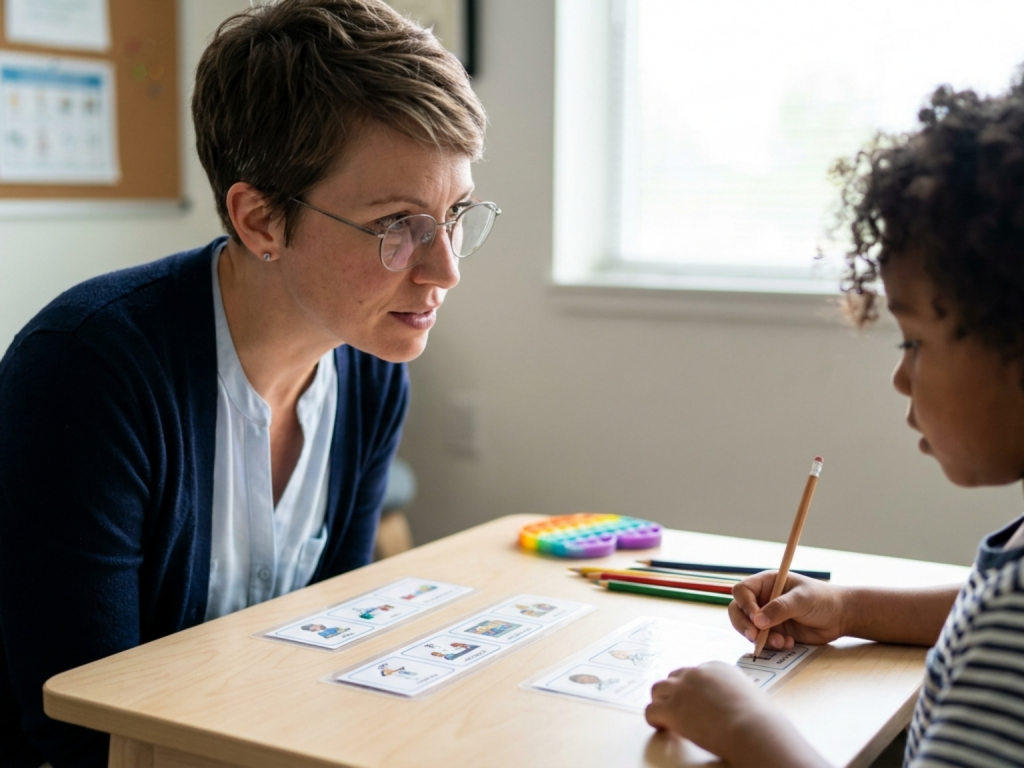
After immediate safety, name the limit and the next doable step. Children often manage better with one instruction at a time than with a chain of commands. Instead of “Stop messing around, clean everything up, get your shoes, and hurry,” try “Shoes on first. Then backpack.” Visual schedules, timers, first-then language, and transition warnings can reduce the cognitive load of moving from one activity to another.
It is also helpful to separate the child from the behavior. “I will not let you hit” is different from “You are mean.” Shame may briefly suppress behavior but often worsens avoidance, anger, and secrecy. Consequences should be related, proportionate, predictable, and paired with teaching. If a child throws blocks, they help clean up and practice asking for a break. If a child speaks hurtfully, they repair when calm and learn alternative words.
When the child is calm, collaborative problem-solving is more effective. Ask what was hard, reflect what you heard, and teach a replacement behavior: asking for help, using a break card, choosing from two tasks, practicing a script, or moving to a quieter space. The replacement must meet the same need as the problem behavior, or the child is unlikely to use it.
Building prevention into daily routines
Prevention is often more powerful than reaction. School-age children tend to do better when expectations are visible, routines are predictable, and adults respond consistently. Rules should be few, stated positively when possible, and practiced during calm times. “Use safe hands” and “Ask before leaving the room” are easier to teach than a long list of prohibitions.
Many children benefit from environmental adjustments. Give warnings before transitions, reduce clutter during homework, break tasks into smaller steps, offer limited choices, and schedule movement breaks. For a child with attention or executive function difficulty, “clean your room” may be too broad; “put clothes in the hamper” is more actionable. For a child with anxiety, previewing the day and rehearsing what to do if worried may prevent avoidance. For a child with sensory sensitivity, headphones, seating changes, or quiet recovery time may reduce overload.
Positive attention matters. Children who receive attention mainly when they misbehave may learn that escalation is the fastest way to connect. Brief, specific praise for effort, flexibility, waiting, using words, or recovering after frustration can strengthen the behaviors adults want to see. This is not empty flattery; it is feedback that helps the child notice what worked.
Sleep, nutrition, physical activity, screen boundaries, and medical care are also part of behavior support. Snoring, insomnia, nightmares, constipation, headaches, seizures, medication side effects, and chronic pain can all affect mood and regulation. If behavior changes abruptly or is accompanied by physical symptoms, regression, or loss of previously acquired skills, medical review is important.
Working with school and clinicians
If behavior is frequent, intense, unsafe, or interfering with learning, families should not have to solve it alone. Start by documenting patterns and speaking with the teacher, school counselor, pediatrician, or another trusted professional. Ask what happens before and after incidents, which settings are hardest, and which strategies have helped even slightly. Consistency between home and school can reduce confusion for the child.
Schools may use a Functional Behavior Assessment, often called an FBA, to identify the likely function of a behavior in the educational setting. The results can guide a Behavior Intervention Plan, or BIP, which should define the behavior, prevention strategies, replacement skills, staff responses, and ways to measure progress. A strong plan is practical, specific, and teachable; it should not simply list punishments.
Professional assessment may be appropriate when there are concerns about ADHD, anxiety, depression, autism, trauma-related symptoms, learning disorders, intellectual disability, developmental delay, or communication disorders. Developmental surveillance and screening can help identify broader concerns, especially when behavior occurs alongside delays in language, motor skills, adaptive functioning, or social communication. A pediatrician may evaluate sleep, hearing, vision, pain, medication effects, and other medical contributors, while psychologists, psychiatrists, occupational therapists, speech-language pathologists, and educational specialists may contribute depending on the concern.
Seek urgent help if a child talks about wanting to die, harms themselves, threatens serious harm, shows psychosis-like symptoms, becomes uncontrollably aggressive, or is unsafe at home or school. For non-urgent but persistent problems, early support is still valuable. Children often do best when adults respond before behavior becomes entrenched and before the child develops a fixed identity as “the problem.”
When to seek help promptly
- Any self-harm, suicidal statements, or threats of serious harm require urgent professional support.
- Sudden major behavior change, regression, confusion, seizures, severe sleep disruption, or new physical symptoms should be discussed with a clinician.
- Aggression that causes injury or makes home or school unsafe needs a safety plan and professional guidance.
- Persistent school refusal, severe anxiety, depression symptoms, bullying concerns, or trauma symptoms deserve timely assessment.
- Do not start, stop, or change medication for behavior without advice from the prescribing clinician.
Tools & Assistance
- Keep a brief antecedent-behavior-consequence log for one to two weeks.
- Ask the school about classroom supports, counseling, Functional Behavior Assessment, or a Behavior Intervention Plan.
- Schedule a pediatric visit to review sleep, hearing, vision, pain, medications, and developmental concerns.
- Consider referral to a child psychologist, child psychiatrist, occupational therapist, or speech-language pathologist when indicated.
- Create a simple home routine with visual steps, transition warnings, and calm-down options.
FAQ
Is defiance always intentional?
No. A child may refuse because of anxiety, shame, overload, impulsivity, difficulty understanding directions, or poor problem-solving skills. Intent matters, but support should focus on the pattern and the skill the child needs.
Should consequences be avoided?
Consequences can be useful when they are predictable, proportionate, and connected to the behavior. They work best when paired with teaching a replacement behavior and preventing known triggers.
When is a school evaluation worth requesting?
Consider asking when behavior repeatedly disrupts learning, causes removals from class, appears linked to academic difficulty, or continues despite consistent classroom strategies.
Can behavior problems be caused by medical issues?
Yes. Sleep disorders, pain, constipation, seizures, medication effects, sensory difficulties, hearing or vision problems, and mental health conditions can all influence behavior.
Sources
- Child Mind Institute — Common Causes of Behavior Problems in Kids
- Royal Children's Hospital — Kids Health Info: Understanding behaviour – school-age children
- Child Mind Institute — Complete Guide to Managing Behavior Problems
Disclaimer
This article is for general educational purposes only and is not a diagnosis or treatment plan. Consult a qualified healthcare professional or school specialist for concerns about a specific child.
















Please log in to leave a comment.