

Intro
The toddler years are a period of extraordinary neurologic, physical, and social growth. Between the first birthday and the third, many children move from tentative first steps and single words to running, pretend play, short conversations, early self-care, and increasingly strong opinions.
Milestones are useful guideposts, not a pass-fail test. Children develop at different rates, and skills often appear unevenly across motor, language, cognitive, and social-emotional domains. If something worries you, a pediatrician, health visitor, developmental clinician, or early intervention team can help assess your child in context.
Highlights
Toddler development is usually described across motor, cognitive, language and communication, and social-emotional domains.
From 1 to 3 years, children typically progress from walking and single words to running, climbing, short phrases, pretend play, and following simple instructions.
A milestone delay does not automatically mean a medical condition, but persistent concerns deserve timely professional evaluation.
Everyday play, responsive conversation, reading, safe movement, and predictable routines are powerful supports for development.
Understanding toddler milestones
Toddler milestones are observable skills that many children acquire within broad age ranges. Clinicians often group them into gross motor development, fine motor and adaptive skills, cognition, language and communication, and social-emotional development. This framework is helpful because a child may be advanced in one area and still developing in another. For example, a confident climber may use fewer spoken words, while a chatty toddler may be cautious on stairs.
Development in this age range reflects rapid brain maturation, increasing myelination, musculoskeletal growth, sensory integration, and expanding social experience. A toddler’s environment also matters: opportunities to move, play, communicate, imitate, explore safely, and recover from frustration all shape skill acquisition.
Milestone ages are not exact deadlines. Prematurity, chronic illness, hearing or vision differences, temperament, bilingual language exposure, family stress, and limited opportunity for practice can all influence when a skill appears. The key clinical question is not whether every skill arrives on the same day as a chart suggests, but whether the overall developmental trajectory is progressing and whether any regression, asymmetry, or major delay is present.
From 12 to 18 months: movement, curiosity, and first words
Around the first birthday, many toddlers are pulling to stand, cruising along furniture, standing briefly, or taking independent steps. Over the next several months, walking typically becomes steadier. Toddlers may squat to pick up a toy, climb onto low furniture, push or pull toys, and begin to throw a ball. Falls are common because balance, depth perception, and motor planning are still maturing.
Fine motor skills also become more intentional. A 12- to 18-month-old often uses a pincer grasp, points, turns board-book pages, places objects into containers, stacks a few blocks, and starts using a spoon with variable success. Scribbling may begin, usually as large arm movements rather than controlled marks.
Language often includes babbling with conversational rhythm, gestures, pointing, waving, and a small but growing number of words. Many toddlers understand more than they can say. They may respond to their name, look toward familiar sounds, identify common objects, and follow a simple one-step instruction when gestures or context help.
Socially, this stage can be both delightful and intense. Separation anxiety, stranger wariness, imitation, social referencing, and strong preferences are common. Toddlers learn by checking a caregiver’s face, copying household actions, and testing what happens when they drop, bang, open, close, hide, and repeat.
From 18 to 24 months: stronger bodies and expanding communication
Between 18 and 24 months, many toddlers walk confidently, run with a stiff or uneven gait, climb onto chairs, walk up steps with help, and kick a ball. They may carry toys while walking and begin to navigate playground equipment with close supervision. This increased mobility brings new independence and new safety risks, especially around stairs, roads, water, hot surfaces, and unsecured furniture.
Fine motor and problem-solving skills become more organized. Toddlers may build a tower of several blocks, place simple shapes into a sorter, complete very simple puzzles, imitate scribbles, use a spoon more effectively, and help with dressing by pushing an arm through a sleeve or removing socks. These tasks combine hand-eye coordination, planning, attention, and sensory feedback.
Language growth is often noticeable in the second year. By around age 2, many children use roughly 50 to 100 words and begin combining two words, such as “more milk” or “mama go.” They may name familiar people or objects, point to body parts, and follow simple instructions. Receptive language, meaning what the child understands, usually remains ahead of expressive language.
Emotionally, 18- to 24-month-olds are practicing autonomy before they have mature self-regulation. Tantrums can occur when desire, fatigue, hunger, sensory overload, or frustration outpace communication skills. Calm co-regulation, simple language, consistent limits, and predictable routines help the nervous system learn safety and recovery.
From 2 to 3 years: pretend play, problem-solving, and early independence
From the second to the third birthday, motor skills typically become more fluid. Many toddlers run more smoothly, jump with both feet, climb well, walk up and down stairs with support, throw a ball overhand, and pedal or push a ride-on toy. They may enjoy dancing, obstacle courses, water play, and outdoor exploration. Supervision remains essential because judgment and impulse control are still immature.
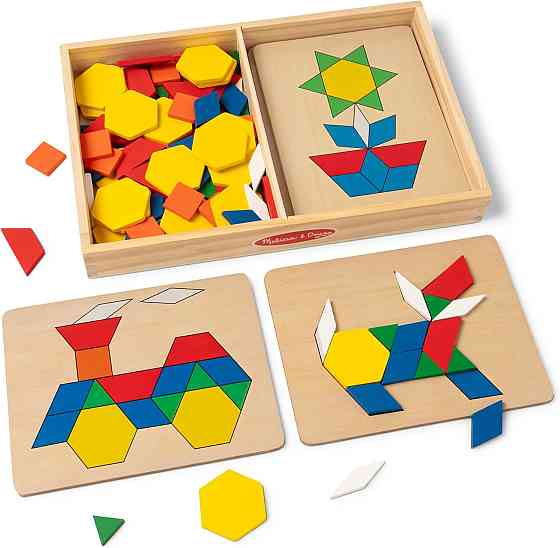
Fine motor abilities become more precise. A 2- to 3-year-old may build taller block towers, copy vertical or circular strokes, turn single pages, manipulate knobs or large buttons, sort by color or shape, and complete simple inset puzzles. These skills support later drawing, dressing, feeding, and pre-writing development, but they should be encouraged through play rather than formal drilling.
Cognitive development expands rapidly. Toddlers begin to use symbolic thinking: a block becomes a phone, a cup becomes a hat, or a doll is fed imaginary food. They may match objects, understand “one” or “two” in a practical way, remember routines, anticipate what comes next, and solve simple cause-and-effect problems. Attention span is still brief, but it lengthens when the activity is meaningful.
Language may progress from two-word phrases to short sentences. Many children can follow two-step instructions, such as “get your shoes and bring them to me,” especially if the request is familiar. Pronunciation errors are expected, but caregivers should generally see increasing clarity, vocabulary, and communicative intent over time.
Social-emotional skills and behavior in the toddler years
Toddler behavior is development in action. A toddler who says “no,” insists on doing things alone, clings at drop-off, or melts down when a banana breaks is not being manipulative in an adult sense. Their limbic system is highly reactive, while the prefrontal circuits responsible for impulse control, flexibility, and emotional inhibition are still immature.
Common social-emotional milestones include seeking comfort from trusted adults, showing affection, imitating peers and caregivers, engaging in parallel play, helping with simple tasks, and gradually showing interest in other children. Cooperative play usually remains limited before age 3; toddlers often play beside each other more than truly with each other.
Emotional regulation develops through repeated experiences of being supported. Useful caregiver responses include naming feelings, offering limited choices, using brief and concrete instructions, maintaining safe boundaries, and returning to connection after conflict. For example, “You are angry. I will not let you hit. You can stomp your feet or squeeze this pillow” gives language, limit, and alternative action.
Sleep, illness, pain, constipation, hunger, sensory overload, and major life changes can all worsen behavior. If tantrums are very frequent, prolonged, injurious, associated with regression, or difficult to interrupt, it is reasonable to discuss them with a healthcare professional rather than assuming the family simply needs stricter discipline.
Supporting development through everyday care
The most effective developmental support is usually ordinary, responsive interaction repeated many times. Talking during routines, reading aloud, singing, naming body parts, narrating feelings, and waiting for a child’s response all strengthen communication. Caregivers do not need expensive toys; toddlers learn from containers, blocks, books, spoons, balls, cardboard boxes, safe household objects, and outdoor spaces.
Movement opportunities are equally important. Safe climbing, walking on varied surfaces, pushing and pulling toys, dancing, ball play, and supervised playground time build strength, balance, coordination, and confidence. Fine motor play can include stacking, posting objects into containers, finger foods, play dough under supervision, chunky crayons, puzzles, and simple dressing practice.
For language, responsive conversation is more useful than constant quizzing. If a toddler says “dog,” a caregiver might expand with “Yes, a big dog is running.” This technique models grammar and vocabulary without pressure. For bilingual or multilingual families, consistent exposure to more than one language is not harmful; children may distribute vocabulary across languages while their total communication continues to grow.
Safety and development are intertwined. Toddlers learn by exploring, so the environment must anticipate climbing, mouthing, pulling, opening, and sudden running. Secure furniture, lock away medicines and chemicals, supervise water closely, use appropriate car seats, and create spaces where the child can practice independence without constant “no.”
When to ask for professional guidance
Parents and caregivers often sense when something is not quite right. That intuition deserves respect. Seek guidance if your child loses previously acquired skills, has persistent asymmetry such as using only one side, does not bear weight through the legs, has very limited eye contact or social engagement, does not respond to sounds or name, or has feeding, swallowing, vision, hearing, or movement concerns.
It is also appropriate to ask about delayed communication, especially if a toddler is not using gestures, has very few words by the second birthday, is not combining words as expected later in the second year, or does not seem to understand simple instructions. Hearing assessment is often an important part of evaluating speech and language concerns, even when a child appears to hear some sounds.
Developmental screening is a standard part of pediatric care in many settings. Screening tools do not diagnose on their own, but they help identify children who may benefit from fuller assessment or early support. Early intervention, speech and language therapy, physiotherapy, occupational therapy, audiology, and developmental pediatrics can be very helpful when concerns are identified.
Asking for help is not a failure and does not mean assuming the worst. It is a way to give your child the best chance to thrive, clarify what is typical variation, and support the family with practical strategies.
Seek urgent or prompt medical advice if
- Your toddler loses skills they previously had, such as words, walking ability, or social engagement.
- You notice persistent weakness, asymmetry, unusual stiffness, or very floppy muscle tone.
- Your child does not respond to sounds, their name, or visual cues in a consistent way.
- There are choking, swallowing, feeding, breathing, seizure-like, or injury concerns.
- Behavior includes frequent self-injury, prolonged inconsolability, or major changes after illness or trauma.
Tools & Assistance
- Keep a simple milestone diary with dates, new words, movement skills, and concerns.
- Bring videos of your child walking, playing, communicating, or showing concerning behaviors to appointments.
- Schedule routine well-child visits and developmental screening with your pediatric clinician.
- Ask about hearing, vision, speech-language, physiotherapy, or occupational therapy referral if concerns persist.
- Use local early intervention or child development services when recommended.
FAQ
Should I worry if my toddler reaches milestones later than another child?
Not necessarily. Milestones have wide normal ranges. Look for steady progress across domains, and discuss persistent concerns with a pediatric professional.
Are tantrums normal between 1 and 3 years?
Yes, tantrums are common because toddlers have strong emotions and immature self-regulation. Seek advice if they are very prolonged, injurious, unusually frequent, or linked with regression.
Can a bilingual toddler talk later because of two languages?
Bilingual exposure does not cause a language disorder. Vocabulary may be spread across languages, but overall communication should continue to progress.
What is the best way to support speech?
Use responsive talking, reading, singing, naming routines, and expanding your child’s words into short phrases. Avoid pressuring constant repetition.
When should I ask about early intervention?
Ask whenever you have developmental concerns, especially about regression, hearing, movement, social communication, or very limited speech. Early support can be beneficial.
Sources
- Cleveland Clinic — Toddler Developmental Milestones & Safety
- American Academy of Pediatrics, HealthyChildren.org — Milestones During The First 2 Years
- Bucks Healthcare NHS — A Guide to Development: From 18 Months to 3 Years
Disclaimer
This article is for general educational purposes and does not replace individualized medical advice. Consult a qualified healthcare professional for concerns about your child’s development, health, or safety.
















Please log in to leave a comment.