
Intro
A natural birth story can be reassuring because it shows labor as both intensely physical and deeply personal. For many families, natural birth means an unmedicated vaginal birth, often with minimal intervention, while still being supported by trained clinicians who monitor maternal and fetal well-being.
The experience below is written in a realistic, composite narrative style, drawing on themes commonly described in published natural birth stories: early labor uncertainty, active labor intensity, transition, pushing, and the first postpartum moments. It is not a template for how birth should unfold, because every labor deserves individualized medical guidance.
Highlights
Natural birth usually refers to vaginal birth without pharmacological pain relief, but it can still include monitoring, clinical support, and emergency care if needed.
Real birth stories often show that confidence comes from preparation, flexible expectations, and continuous emotional support rather than from perfect control.
Labor intensity changes over time: early labor may feel manageable, active labor often demands focused coping, and transition can feel overwhelming but temporary.
A positive natural birth experience is not defined by avoiding every intervention; it is often defined by safety, respect, informed consent, and feeling supported.
What natural birth meant in this real-life style story
In many birth communities, natural birth usually means an unmedicated vaginal birth, especially a labor without epidural analgesia or systemic opioid pain medication. Some clinicians and childbirth educators distinguish this from physiologic birth, which emphasizes the body’s endogenous oxytocin, catecholamine shifts, maternal movement, upright positioning, and spontaneous bearing-down reflex. In real life, these categories overlap but are not identical.
In this story, the birthing parent planned a low-intervention birth plan at a birth center affiliated with clinical transfer pathways. The pregnancy had been considered low risk by the care team, but the plan was never treated as a guarantee. Prenatal visits included discussion of fetal monitoring, indications for transfer, postpartum hemorrhage risk, newborn assessment, and labor pain relief options if the plan changed.
That flexibility mattered emotionally. The goal was not to prove toughness. It was to remain present, supported, and informed while allowing labor to progress as safely as possible. Like many published natural birth stories, the experience combined preparation with uncertainty: a packed bag by the door, affirmations taped to a mirror, and a quiet awareness that birth can change direction quickly.
Early labor: excitement, doubt, and the first rhythm
The first contractions began late in the evening as mild tightening low in the abdomen and back. They were irregular at first, spaced far enough apart that sleep still seemed possible. The midwife had advised calling for guidance rather than rushing in, so the family tracked contraction patterns, hydration, fetal movement, and overall coping. This stage felt emotionally strange: part excitement, part disbelief, and part caution.
By morning, contractions had become more patterned, but still not overwhelming. Early labor was spent eating small amounts, sipping fluids, walking around the kitchen, resting between surges, and using a warm shower. The partner timed contractions but also learned not to stare at the app constantly. The birthing parent described each contraction as a wave that required attention, then passed completely enough to allow conversation.
This part of the story illustrates something many families underestimate: early labor can be long. Some real accounts describe many hours before active labor, including a 24-hour overall process. A long early phase is not automatically abnormal, but it can be tiring and should be discussed with the care team, especially if membranes rupture, bleeding occurs, fetal movement decreases, fever develops, or coping deteriorates.
Arriving at the birth setting and finding support
When contractions became closer, longer, and harder to talk through, the family contacted the midwife again and came in for assessment. Vital signs were checked, fetal heart tones were evaluated, and the cervix was assessed only after discussion and consent. Hearing that labor was progressing brought relief, but the number itself was not treated as a verdict. Cervical dilation is only one piece of the clinical picture.
The room was kept dim and calm. The support team encouraged physiologic labor support: upright positions, privacy, reassurance, hydration, and minimal unnecessary interruption. Intermittent fetal heart rate monitoring was used according to the birth setting’s protocol, allowing movement while still checking fetal response to contractions. This balance helped the birthing parent feel watched over rather than managed.
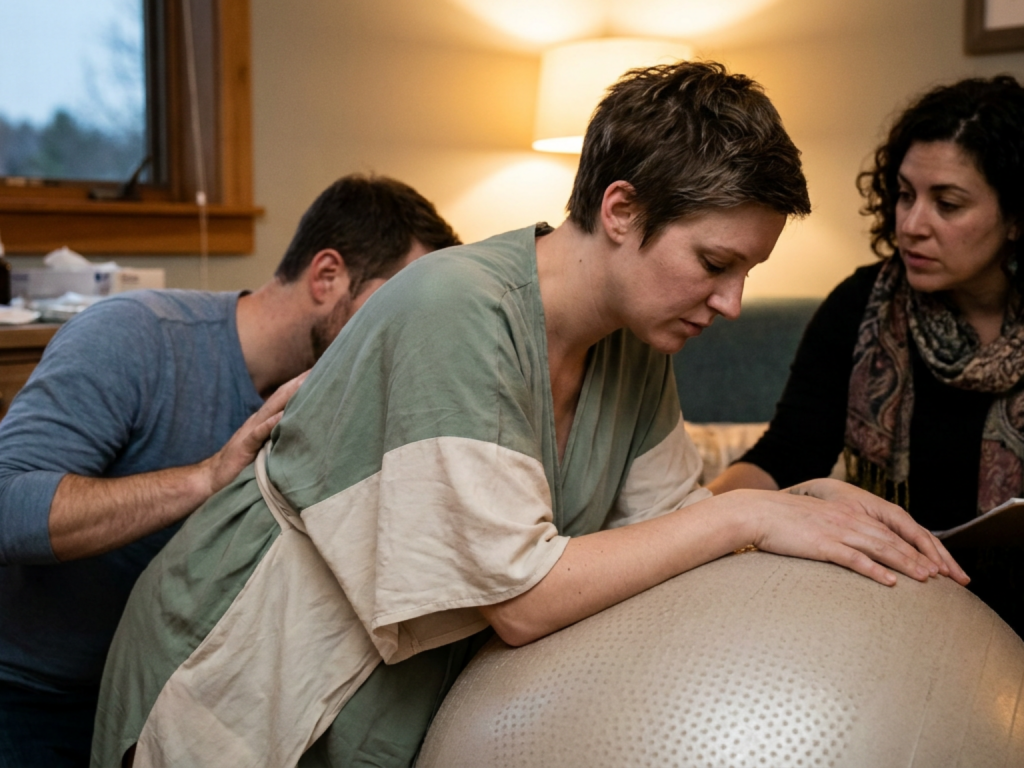
The most effective support was simple and consistent. The partner pressed firmly into the sacrum during back contractions. A doula suggested side-lying rest when fatigue rose. The midwife used short, clear phrases: breathe down, soften your jaw, you are safe, one contraction at a time. These words did not remove pain, but they reduced panic. In unmedicated labor, reducing fear can change the entire experience of intensity.
Active labor: coping when contractions became consuming
Active labor felt different from early labor. Contractions demanded full attention, and the spaces between them became precious. The birthing parent stopped wanting conversation and began using low vocal sounds instinctively. Movement helped: leaning over a birth ball, slow dancing with the partner, kneeling on the bed, and standing in the shower with warm water on the lower back.
Nonpharmacologic pain coping strategies were layered rather than relying on one technique. Breathing helped at the beginning of a contraction, counterpressure helped at the peak, and position changes helped when the pattern became too intense. The team also used practical clinical thinking: emptying the bladder, monitoring maternal temperature and pulse, watching contraction frequency, and checking whether rest or hydration might improve coping.
There was a moment when the birthing parent said, I cannot do this. In many natural birth stories, that sentence appears near transition, the phase around advanced cervical dilation when contractions may feel close together and emotionally overwhelming. The team did not dismiss the distress. They acknowledged it, offered options, and reminded the parent that pain medication or transfer could be discussed if desired. Feeling free to choose made continuing without medication feel less like being trapped.
Transition and pushing: intensity, instinct, and clinical observation
Transition was the hardest part of the experience. Nausea came suddenly, legs trembled, and the room felt both too quiet and too bright. These sensations can occur with the neurohormonal intensity of late first-stage labor, but symptoms should always be interpreted by clinicians in context. The midwife continued to assess fetal heart tones, maternal status, and the overall progress of labor.
Then the sensation changed. Instead of pain that had to be breathed through, there was downward pressure and an involuntary urge to bear down. The team encouraged waiting for the body’s cues rather than forceful, prolonged pushing before readiness. Positions changed several times: side-lying for rest, hands-and-knees for pelvic mobility, then a semi-upright position that felt strongest.
Pushing was not quiet or cinematic. It was sweaty, loud, and focused. The parent described it as hard work with a purpose, different from contractions earlier in labor. The fetal head descended gradually. The care team supported the perineum, coached slow breathing as crowning occurred, and watched for signs that intervention might be needed. When the baby was born, the room shifted instantly from effort to astonishment.
The first minutes after birth
The baby was placed skin-to-skin immediately because both parent and newborn were stable. The cord was left unclamped briefly according to the family’s preferences and clinical judgment. The newborn was dried, observed, and assessed while remaining close. This period felt quiet compared with labor, but medically it was still active: the team watched breathing, tone, color, uterine firmness, placental delivery, bleeding, and maternal vital signs.
The placenta delivered without drama in this story, but the team remained alert for postpartum hemorrhage, retained placenta, and perineal trauma. A small tear required evaluation and repair after local anesthesia. This detail mattered because natural birth does not mean absence of medical care. It can mean that interventions are used selectively, with explanation and consent, when they support recovery and safety.
The first breastfeeding attempt was clumsy but tender. The parent felt shaky, hungry, proud, and stunned. The partner cried. The baby rooted briefly, then rested. The emotional high was real, but so was the physical vulnerability: uterine cramping, perineal swelling, heavy fatigue, and the need for help standing. A respectful natural birth story includes both triumph and tenderness.
What preparation helped most
Several preparations seemed to make the experience more manageable, though none could guarantee an uncomplicated birth. Childbirth education helped the family understand stages of labor, common interventions, and reasons plans might change. Reading diverse birth stories helped normalize variation: some labors were fast, others long; some occurred in hospitals, others in birth centers or at home; some remained unmedicated, while others became safer or more humane with medication or operative support.
The most useful preparation was not memorizing a perfect script. It was practicing communication. The family discussed who would speak during intense contractions, what kinds of touch felt supportive, and how to ask for risks, benefits, alternatives, and time to decide when appropriate. That made informed consent during labor feel more realistic.
Practical tools also mattered: a flexible low-intervention birth plan, a list of comfort measures, snacks and electrolyte drinks approved by the care setting, a heating pad for early labor, and a clear transport plan. Pelvic mobility exercises and relaxation practice may be helpful for some people, but they should be individualized, especially when there are pregnancy complications, pain conditions, fetal concerns, or prior birth trauma.
How to read a natural birth story without pressure
A real natural birth story can inspire, but it should never become a measuring stick. Birth is influenced by fetal position, pelvic anatomy, contraction patterns, gestational age, medical history, emotional safety, clinician support, and sometimes pure unpredictability. Needing an epidural, induction, assisted vaginal birth, cesarean birth, antibiotics, continuous monitoring, or neonatal care does not mean failure.
The healthiest way to use stories is to look for transferable wisdom rather than identical outcomes. Notice how the person coped with fear, how the team communicated, how preferences were adapted, and how safety remained central. A positive story is not one where nothing changed; it is one where the birthing parent was treated with dignity and received appropriate care.
If you are planning a natural birth, bring your hopes to your obstetrician, midwife, or maternity care team early. Ask what makes you a suitable candidate for low-intervention care, what monitoring is recommended, what emergencies they prepare for, and how pain relief can be accessed if desired. The most empowering plan is not rigid. It is informed, compassionate, and responsive to the real body in real labor.
When to seek urgent medical advice
- Contact your maternity care team promptly for heavy vaginal bleeding, severe abdominal pain, fever, or feeling seriously unwell.
- Seek immediate guidance if fetal movements are reduced or noticeably different from your baby’s usual pattern.
- Call your clinician if your waters break and the fluid is green, brown, foul-smelling, or accompanied by fever.
- In labor, worsening headache, visual symptoms, chest pain, shortness of breath, or seizures require emergency care.
- After birth, heavy bleeding, fainting, fever, severe perineal pain, or thoughts of self-harm need urgent professional support.
Tools & Assistance
- Discuss birth setting eligibility and transfer protocols with your midwife or obstetrician.
- Prepare a flexible birth preferences document focused on communication and consent.
- Practice comfort measures such as breathing, position changes, water therapy, and counterpressure with your support person.
- Ask your care team about fetal monitoring options and when continuous monitoring may be recommended.
- Arrange postpartum help for meals, rest, newborn care, and emotional support.
FAQ
Does natural birth always mean no medical intervention at all?
No. Many people use natural birth to mean vaginal birth without pharmacological pain relief. Monitoring, clinical assessment, repair of tears, medication for bleeding, or transfer can still be appropriate when medically indicated.
Is an unmedicated birth safe for everyone?
Not necessarily. Suitability depends on maternal health, pregnancy complications, fetal status, birth setting, and emergency resources. Discuss your individual risks and options with your maternity care team.
What if I plan natural birth but choose an epidural?
Changing your mind is not failure. Pain relief can be a valid, beneficial part of care, especially with exhaustion, prolonged labor, anxiety, or medical indications.
Can reading birth stories help with preparation?
Yes, many families find stories useful for mental rehearsal and confidence. It is best to read a wide range of experiences so you are prepared for variation rather than expecting one exact path.
Who can support a natural birth?
Depending on your setting, support may include a midwife, obstetrician, labor nurse, doula, partner, or trained birth companion. Clinical support remains important even in low-intervention labor.
Sources
- Body Ready Method — The Power of Natural Childbirth: Unmedicated Birth Stories
- The Midwife Center for Birth & Women's Health — Lindsay's Birth Story
- Mama Natural — Birth Stories
Disclaimer
This article is for general educational purposes only and does not replace individualized medical advice. Always consult your midwife, obstetrician, or qualified healthcare professional about pregnancy, labor, birth, and postpartum concerns.

















Please log in to leave a comment.