
Intro
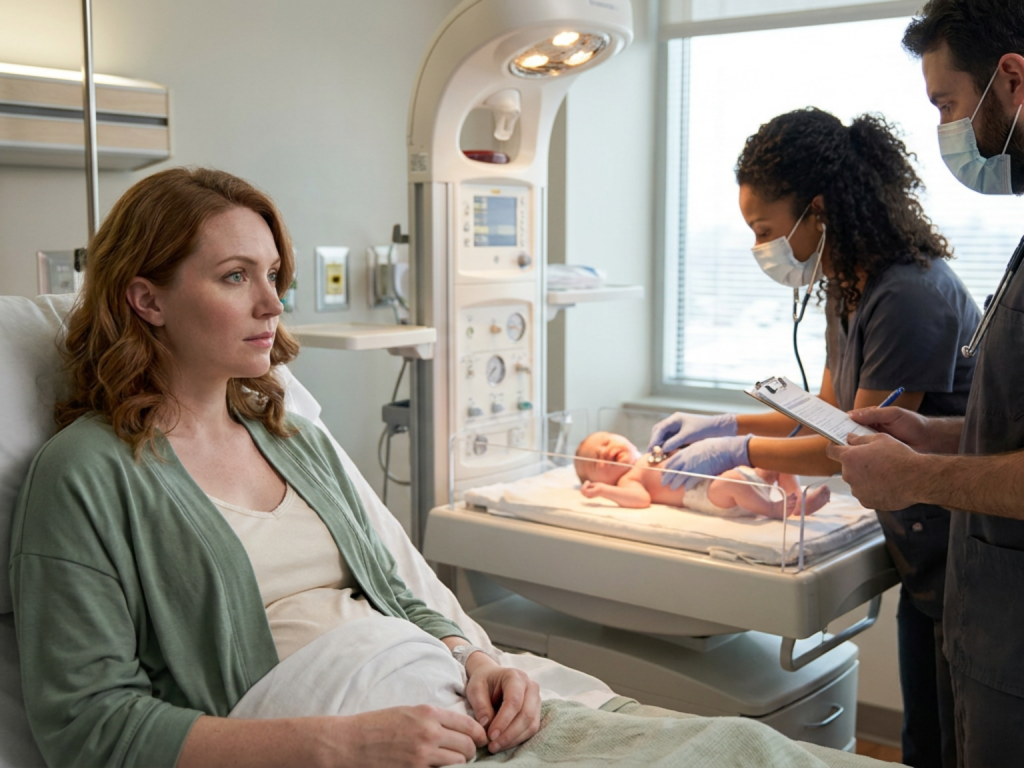
A baby’s first cry is often remembered as an emotional moment, but it is also a major physiologic event. In seconds, the newborn must shift from receiving oxygen through the placenta to using the lungs for gas exchange. For parents and clinicians alike, that sound can feel reassuring because it often signals that air is moving, the lungs are opening, and the baby is beginning extrauterine life.
Highlights
The first breath usually occurs within seconds after delivery and begins the transition from fluid-filled fetal lungs to air-filled newborn lungs.
Crying is more than a sound; it can help recruit functional residual capacity, the small volume of air that remains in the lungs after exhalation.
A baby who does not cry may still be breathing, but absent crying can be clinically important and should be assessed promptly by trained staff.
Gentle newborn care, warmth, airway positioning, and observation support the transition, while resuscitation is available when breathing is not effective.
The transition from fetal to newborn breathing
Before birth, the fetus does not breathe air. Oxygen and carbon dioxide exchange occur across the placenta, and the fetal lungs are fluid-filled. The chest and diaphragm may make breathing-like movements in utero, but these are not air breaths. At delivery, umbilical blood flow changes, the placenta is no longer the primary organ of gas exchange, and the newborn’s lungs must rapidly become the site of oxygen uptake and carbon dioxide elimination.
The first breath commonly occurs within about 10 seconds after birth. This is not a simple “switching on” of the lungs; it is a coordinated cardiovascular and respiratory transition. Fluid must move out of the air spaces, pulmonary blood flow rises, pulmonary vascular resistance falls, and the lung tissue must develop enough distending pressure to remain partly open between breaths. That partly open state is called functional residual capacity, or FRC.
Several signals support this transition: exposure to air, tactile stimulation, temperature change, rising carbon dioxide, and the physical effects of labor and birth. After a vaginal birth, thoracic compression and hormonal changes may help lung fluid clearance. After cesarean birth, especially before labor, retained lung fluid can be more common, although many babies still transition smoothly. The clinical focus is not the route of birth alone, but whether the baby is breathing effectively, maintaining tone, and improving color and oxygenation.
Why the first cry matters physiologically
The first cry is not only a sign that the baby is upset or startled. It is a distinctive breathing pattern that can generate strong inspiratory efforts followed by partial closure of the glottis during expiration. This expiratory braking helps prevent the lungs from emptying completely. In practical terms, crying can help establish and preserve FRC, allowing the alveoli and small airways to stay open for the next breath.
Research using breath-by-breath electrical impedance tomography has shown that crying is a key breathing pattern for recruiting lung volume soon after birth. In that work, functional residual capacity was established over approximately the first 43 breaths. Early ventilation was not perfectly uniform: gas initially tended to enter nondependent regions, particularly in the right lung, before redistributing. During crying, expiratory braking and pendelluft flow, meaning movement of gas between lung regions with different pressures, helped redistribute air and preserve lung volume.
This helps explain why a vigorous cry is so reassuring to birth teams. It suggests that the baby is moving air, creating pressure, and beginning effective pulmonary gas exchange. However, the cry is one clinical sign among several. A baby’s respiratory effort, heart rate, tone, color, oxygen saturation trend when measured, and response to routine care are all interpreted together.
What clinicians look for in the first minutes
Immediately after birth, trained clinicians rapidly assess whether the baby is term or preterm, has good muscle tone, and is breathing or crying. These observations guide whether the baby can remain with the parent for routine care, including skin-to-skin contact after birth, or whether the baby needs additional support such as airway positioning, drying, stimulation, suction only when indicated, or assisted ventilation.
The Apgar score, usually assigned at 1 and 5 minutes, summarizes heart rate, respiratory effort, muscle tone, reflex response, and color. It is useful for documenting transition, but it is not a standalone diagnosis and should not be used by parents to infer long-term outcomes. A baby may need immediate help before a formal score is recorded, especially if there is apnea, gasping, poor tone, or a low heart rate.
Normal newborn breathing can look irregular. Babies may breathe fast for short periods, pause briefly, sneeze, grunt once or twice while clearing fluid, or make transitional noises. Persistent grunting, chest retractions, nasal flaring, central cyanosis, limp tone, or poor responsiveness are different and need prompt professional assessment. The first hours after birth are a period of close observation because breathing patterns, temperature, glucose stability, and oxygenation can change as the baby adapts.
When a baby does not cry right away
Not every baby cries immediately, and the absence of an instant cry does not automatically mean something is wrong. Some newborns breathe quietly, especially if they are calm, have good tone, and quickly become pinker. Others may need simple steps such as drying, warming, repositioning the head to open the airway, or gentle stimulation. The key clinical question is whether the baby is breathing effectively, not whether the cry is loud enough to match expectations.
At the same time, a baby who is not crying deserves careful attention. Evidence from neonatal studies suggests that not crying after birth can predict an increased risk of not breathing by 1 and 5 minutes, even among some infants who appear to breathe initially. This does not mean parents should attempt to diagnose breathing status themselves. It means the birth team’s rapid assessment is important, especially in settings where newborn resuscitation resources may be limited.
Clinicians are trained to distinguish effective respirations from gasping or inadequate effort. Gasping may be an agonal pattern and is not the same as sustained breathing. If breathing is absent or ineffective, timely positive-pressure ventilation can be lifesaving. In many cases, early support is brief and the baby stabilizes well, but delays can be harmful. Parents can ask what is happening, but they should allow the clinical team to intervene quickly when needed.
How lung fluid clears and air fills the lungs
During fetal life, fluid in the lungs is normal and necessary for lung growth. Around birth, fluid clearance accelerates through several mechanisms. Labor hormones promote absorption of lung fluid through epithelial sodium channels. The first strong inspiratory efforts create pressure gradients that help move liquid out of the air spaces and into the interstitial tissue and circulation. As air enters, the lung’s surface tension is reduced by surfactant, a substance produced by type II pneumocytes that helps alveoli remain open.
Air entry in the first breaths is often uneven because the newborn lung is transitioning from a fluid-filled, high-resistance organ to an air-filled, lower-resistance organ. Some regions open earlier than others. Crying, with its high pressures and controlled exhalation, can assist recruitment. Once FRC is established, each subsequent breath requires less work because the lungs are not starting from complete collapse.
This is why preterm infants, babies with inadequate surfactant, or newborns affected by infection, meconium exposure, medication effects, or perinatal distress may have more difficulty. Their lungs or respiratory control systems may not establish stable gas exchange as efficiently. The appropriate response depends on the clinical situation and should be managed by neonatal professionals using established resuscitation and stabilization protocols.
Parent perspective: what you may see and feel
The moment before a first cry can feel very long, even when only a few seconds have passed. Many parents describe intense relief when they hear their baby cry. Others feel frightened if the baby is quiet, briefly taken to a warmer, or supported by clinicians. These reactions are understandable. Birth is emotionally charged, and the medical transition is happening in real time.
If the baby is vigorous, routine care often includes drying, warming, delayed cord clamping when appropriate, and placing the baby on the parent’s chest. Immediate skin-to-skin contact can support temperature stability, bonding, early feeding cues, and calmer transition, as long as the baby is monitored and breathing well. Newborn procedures and rooming-in preferences can usually be discussed before birth or revisited afterward, but urgent breathing support always takes priority.
If staff move quickly or the room becomes quiet, it does not necessarily mean the outcome is poor. Neonatal teams often act early to prevent deterioration. You can ask concise questions such as, “Is my baby breathing?” or “What support is being given?” After the situation stabilizes, it is reasonable to request an explanation of what happened, including whether the baby required stimulation, oxygen, positive-pressure ventilation, continuous positive airway pressure, or observation in a nursery or neonatal unit.
Why breathing support should be timely and professional
Newborn resuscitation is highly time-sensitive. The baby’s heart rate usually improves when ventilation becomes effective, because oxygenation and lung inflation support cardiovascular transition. For that reason, if a newborn is apneic, gasping, or has inadequate respirations, ventilation is the central intervention. Warming, drying, and positioning matter, but they do not replace assisted breathing when it is needed.
Parents should not feel responsible for judging or treating abnormal breathing after birth. Even medically literate families cannot reliably assess neonatal ventilation in the same way a trained clinician can with direct observation, auscultation, pulse oximetry when indicated, and knowledge of birth context. If you are planning a birth outside a hospital, discuss in advance who is qualified to provide newborn resuscitation, what equipment is available, and how transfer would occur if the baby needs higher-level care.
Most babies transition well, and a strong cry is a beautiful sign of that adaptation. Still, the science behind the first cry reminds us that it is not merely symbolic. It is part of the mechanics of lung aeration, gas exchange, and survival. Compassionate care means celebrating that first sound while also respecting the importance of skilled observation during the vulnerable first minutes of life.
Seek urgent newborn assessment if
- The baby is not breathing, is gasping, or has pauses that concern the clinical team.
- There is persistent blue coloring of the lips, tongue, or central body.
- Breathing looks labored, with grunting, flaring nostrils, or chest retractions.
- The baby is limp, poorly responsive, or has very weak tone.
- You notice worsening breathing, poor feeding, or unusual sleepiness after going home.
Tools & Assistance
- Discuss newborn resuscitation readiness with your birth team before delivery.
- Ask for a clear explanation of any breathing support your baby receives.
- Use hospital or birth-center staff for immediate assessment rather than trying to interpret breathing alone.
- Know where to seek urgent care if breathing concerns arise after discharge.
FAQ
Does every healthy baby cry immediately after birth?
No. Some healthy babies breathe quietly or cry after brief drying and stimulation. The key is whether breathing is effective and the overall assessment is reassuring.
Why does crying help the lungs?
Crying creates strong breaths and controlled exhalation, which can help open lung regions and preserve functional residual capacity.
Is a weak cry always dangerous?
Not always, but a weak or absent cry should be interpreted with tone, heart rate, respiratory effort, and color by trained clinicians.
Can a baby cry and still have breathing trouble?
Yes. Crying is reassuring but not perfect. Persistent grunting, retractions, cyanosis, or poor oxygenation still require medical evaluation.
What should parents do if the baby seems to breathe strangely after discharge?
Contact a healthcare professional urgently, and seek emergency care for blue color, labored breathing, poor responsiveness, or pauses that are prolonged or concerning.
Sources
- National Institutes of Health via PMC — Baby's First Cries and Establishment of Gas Exchange in the Lung
- MedlinePlus, National Library of Medicine — Changes in the newborn at birth: MedlinePlus Medical Encyclopedia
- American Academy of Pediatrics, Pediatrics — Not Crying After Birth as a Predictor of Not Breathing
Disclaimer
This article is for general medical education and does not replace care from qualified healthcare professionals. Seek urgent medical help for any concern about a newborn’s breathing.

















Please log in to leave a comment.