
Intro
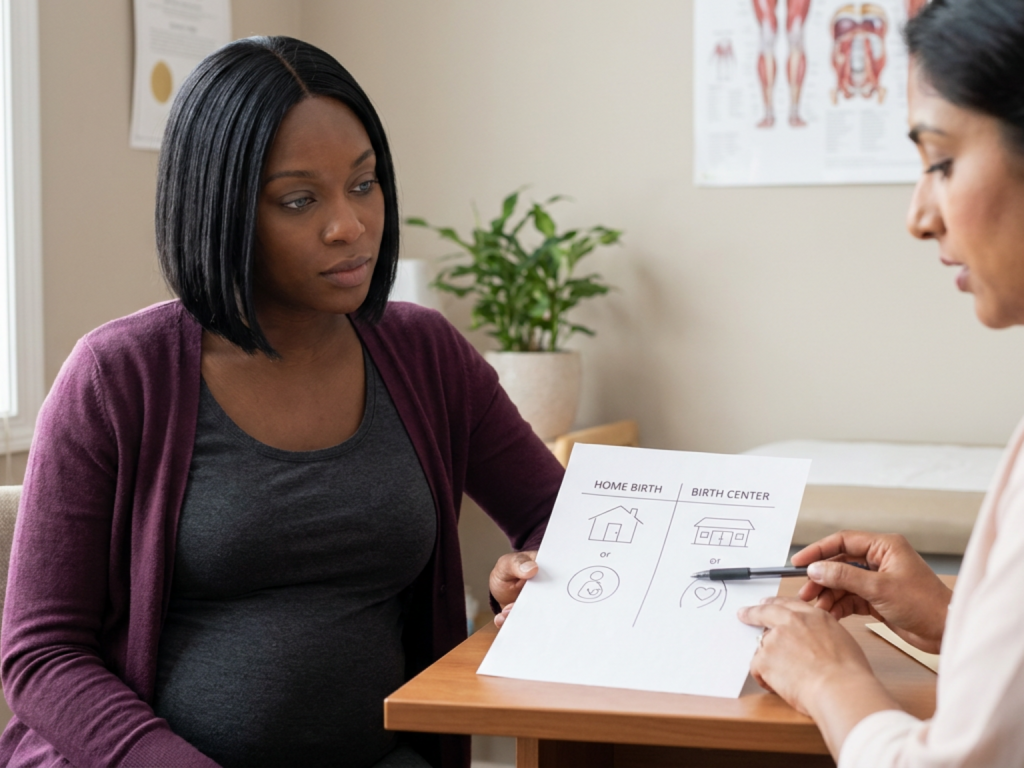
Choosing between a planned home birth and a planned birth center birth is rarely a purely clinical decision. It often reflects values around privacy, autonomy, physiologic labor, family involvement, and how close you want emergency services to be. Both settings can be appropriate for some low-risk pregnancies when attended by qualified maternity professionals and supported by clear transfer protocols.
Highlights
Home birth and birth center birth are both usually designed for low-risk pregnancy birth setting, but they differ in location, logistics, staffing structure, and proximity to additional clinical resources.
Neither setting is meant to replace hospital care for pregnancies with significant maternal, fetal, or obstetric risk factors.
A strong emergency plan, qualified professional attendance, neonatal resuscitation equipment, hemorrhage medications, and timely hospital transfer access are central safety considerations.
Birth centers often provide a home-like environment with more standardized equipment and protocols than an individual home, while home birth offers maximal familiarity and privacy.
What each setting means
A planned home birth is labor and birth intentionally arranged in the pregnant person’s home, usually with a midwife who brings clinical supplies, medications, oxygen, and newborn equipment. It is not the same as an unplanned delivery at home. A planned home birth should include prenatal risk screening, a skilled birth attendant, an emergency transfer plan, and advance discussion with a nearby hospital if complications arise.
A birth center is a dedicated maternity facility designed for low-intervention labor and birth. It may be freestanding, located near a hospital, or hospital-affiliated. Birth centers typically emphasize physiologic birth, mobility, family participation, water immersion when available, intermittent fetal heart rate monitoring, and avoidance of routine interventions unless clinically indicated. The environment is usually less medicalized than a labor and delivery unit, but more standardized than a private home.
The simplest difference is location: one occurs in your own space, the other in a facility built specifically for birth. However, that location affects almost everything else, including who is present, how equipment is stored, how emergencies are managed, how quickly additional staff can respond, and how transfer to a hospital is arranged.
Eligibility and risk screening
Both home birth and birth center birth are generally intended for people with low-risk pregnancies. This usually means a singleton fetus in cephalic presentation near term, no major placenta concerns, no severe hypertensive disorder, no poorly controlled preexisting disease, and no clinical reason to expect the need for immediate surgical or neonatal intensive care. Individual criteria vary by midwife, birth center, state or national regulation, and physician collaboration agreements.
Risk status is not fixed. A pregnancy that appears low risk at 28 weeks may require a hospital plan later if fetal growth restriction, placenta previa, preeclampsia, cholestasis, insulin-requiring diabetes, breech presentation, or concerning fetal testing develops. Similarly, labor itself may reveal a need for transfer because of abnormal fetal heart rate patterns, prolonged rupture of membranes, maternal fever, heavy bleeding, stalled labor, or need for pain management not available out of hospital.
Many birth centers have written admission and transfer criteria, which can make expectations clearer. Home birth practices may also have strict criteria, but the details depend heavily on the attending clinician and local laws. When comparing options, ask specifically which conditions would make you ineligible, which findings would prompt transfer during labor, and whether your clinician has privileges, consultation pathways, or established relationships with hospitals.
Environment, privacy, and support
Home birth offers the highest degree of environmental control. You can labor in familiar rooms, use your own shower or tub if appropriate, eat and move as advised by your clinician, and choose who enters your space. For some families, this decreases catecholamine-driven stress responses and supports labor coping strategies. The emotional benefit of privacy can be meaningful, especially for people who feel anxious in clinical spaces.
Birth centers aim to provide a similar sense of calm while keeping birth-specific resources organized in one place. Rooms may look like bedrooms rather than operating suites, but supplies are usually immediately available in standardized locations. Staff are accustomed to the layout, emergency drills, equipment checks, and facility protocols. For families who want a nonhospital atmosphere but prefer not to prepare their home for birth, this can feel like a balanced option.
Support people may be welcomed in both settings, but policies differ. A home birth may allow siblings, doulas, relatives, and chosen support people with fewer institutional limits. A birth center may have guidelines about visitors, children, infection precautions, and postpartum length of stay. During respiratory virus seasons or local outbreaks, policies can change quickly, so confirm expectations close to your due date.
Clinical equipment and emergency readiness
In well-prepared home and birth center births, the clinical equipment can be more similar than many people expect. Midwives commonly bring or maintain supplies for maternal vital signs, sterile instruments, suturing, intravenous access when within scope, uterotonic medications for postpartum hemorrhage, oxygen, suction, and neonatal resuscitation equipment. The difference is that, at home, the professional transports and sets up supplies in a nonclinical environment; in a birth center, supplies are stored and checked within a dedicated facility.
Emergency readiness is not only about having equipment. It also depends on training, team communication, recognition of deterioration, transport time, and the receiving hospital’s preparedness. Mayo Clinic notes that planned home birth has been associated with higher rates of infant death, seizures, and nervous system disorders compared with planned hospital birth, while also emphasizing that careful candidate selection and preparation are essential. These risks are uncommon, but they matter because some obstetric emergencies are time-sensitive.
Key questions include whether the attendant is a certified nurse-midwife, certified professional midwife, physician, or other credentialed professional; whether they are trained in neonatal resuscitation; how often emergency drills occur; and how postpartum hemorrhage management is handled. Ask how long transfer usually takes, not just how far away the hospital is. Travel time, weather, elevators, parking, ambulance availability, and handoff communication can all affect care.
Some guidance suggests considering whether the home is within a short travel time, such as about 15 minutes, from a hospital capable of maternity and newborn emergency care. A birth center may be closer to a hospital or have a formal transfer agreement, but this is not universal. A freestanding birth center can still require ambulance transport for cesarean section, advanced anesthesia, blood transfusion, or neonatal intensive care.
Pain relief and labor interventions
Home births and many birth centers focus on nonpharmacologic comfort measures: position changes, hydrotherapy, massage, counterpressure, warm compresses, breathing techniques, sterile water injections where offered, and continuous emotional support. Movement is usually encouraged, and laboring people may choose upright or side-lying positions rather than remaining in bed. Intermittent fetal heart rate monitoring is common for low-risk labor, although continuous monitoring may be needed if concerns arise.
The main limitation is pharmacological pain relief. Epidural analgesia is not available at home or in most freestanding birth centers because it requires anesthesia support, monitoring, intravenous access, and capacity to manage complications such as maternal blood pressure changes. Some birth centers may offer nitrous oxide or limited systemic medications depending on regulation and staffing, but options vary widely. If you strongly want access to epidural analgesia, a hospital or hospital-based birth center is usually more appropriate.
Other interventions are also limited. Induction with oxytocin, operative vaginal delivery, cesarean section, blood transfusion, and advanced neonatal care require hospital resources. Low intervention does not mean no intervention; it means interventions are used selectively and within the scope of that setting. A safe plan includes accepting transfer when the clinical situation exceeds what the setting can manage.
Transfer to hospital: how the experience differs
Transfer is sometimes treated as failure, but clinically it is a safety tool. Common reasons include request for epidural pain relief, prolonged labor, maternal exhaustion, meconium with concerning findings, fetal heart rate abnormalities, fever, hypertension, bleeding, retained placenta, or newborn respiratory transition concerns. Most transfers from out-of-hospital settings are nonemergent, but emergency transfers can happen.
From home, transfer begins in a private residence. The team may call emergency medical services or travel by private vehicle if appropriate and safe. The midwife must package records, communicate with the receiving facility, and continue monitoring during the transition. The emotional shift can be intense because the family moves from a familiar, intimate space into a hospital environment during active labor.
From a birth center, transfer protocols may be more rehearsed because staff use the same facility repeatedly. Some centers have direct lines to nearby hospitals, standardized documentation, and prearranged transport pathways. If the center is hospital-affiliated or located inside a hospital campus, escalation may be faster. Still, if surgical delivery or neonatal intensive care is needed, the receiving team, operating room availability, and clinical urgency determine the timeline.
Before labor, ask to see the transfer plan in writing. Clarify who decides, who accompanies you, whether your midwife remains involved, where your records go, and how newborn transfer is handled if the parent and baby need different levels of care.
Postpartum care and newborn care
After an uncomplicated home birth, postpartum recovery begins immediately in your own bed. The birth team typically monitors bleeding, uterine tone, vital signs, perineal trauma, breastfeeding initiation, newborn temperature, breathing, color, and feeding. They usually stay for several hours and then arrange follow-up visits. Families often appreciate not having to travel soon after birth, but they must be comfortable watching for warning signs between visits.
In a birth center, postpartum monitoring is similarly focused on stability but occurs in a facility. Length of stay is often shorter than in a hospital, commonly several hours if both parent and newborn are well. Staff may complete newborn assessments, assist with feeding, administer or discuss standard newborn medications according to local practice and parental consent, and arrange required screening tests. Some screenings may need follow-up at a clinic or hospital depending on timing.
In either setting, postpartum hemorrhage, severe pain, syncope, fever, hypertensive symptoms, respiratory distress, poor newborn feeding, persistent cyanosis, lethargy, or abnormal temperature require urgent clinical attention. The early postpartum period is medically dynamic, even after a smooth labor. A good plan includes clear contact numbers, scheduled visits, and instructions for when to call emergency services rather than waiting for routine follow-up.
Choosing between home and a birth center
The better setting is the one that fits your medical risk profile, your values, and your local system of care. Home birth may appeal if privacy, familiar surroundings, and minimal travel are central priorities, and if you live close to appropriate emergency services. Birth center birth may appeal if you want a low-intervention birth plan in a dedicated facility with established protocols, but without the intensity of a standard hospital unit.
Consider practical details as carefully as philosophical ones. Is your home accessible to emergency personnel? Is there reliable transportation in bad weather? Are there stairs, pets, limited space, or distance barriers? For a birth center, how far is it from home, what happens if labor progresses quickly, and what are the rules if you arrive before active labor?
Shared decision-making matters. Discuss your personal obstetric history, including prior cesarean section, postpartum hemorrhage, shoulder dystocia, hypertensive disorders, severe perineal trauma, infertility treatment, fetal concerns, or medical conditions. Ask your clinician to explain not only whether you are eligible, but what risk changes would alter the recommendation. A supportive provider should help you understand benefits and tradeoffs without shame or pressure.
Seek urgent medical care
- Heavy vaginal bleeding, fainting, severe abdominal pain, or signs of shock need emergency evaluation.
- Severe headache, vision changes, chest pain, shortness of breath, or right upper abdominal pain may signal serious postpartum or hypertensive complications.
- Decreased fetal movement, persistent abnormal fetal heart rate concerns, or meconium with distress require prompt professional assessment.
- A newborn with breathing difficulty, blue color, poor tone, poor feeding, fever, or low temperature needs urgent care.
- Do not choose an out-of-hospital birth without qualified attendance and a clear hospital transfer plan.
Tools & Assistance
- Schedule a risk review with an obstetrician, family physician, or qualified midwife.
- Ask the birth center or home birth team for written eligibility and transfer criteria.
- Tour the birth center and identify the nearest hospital with obstetric and neonatal emergency capacity.
- Prepare a birth preferences document that includes consent for transfer if needed.
- Confirm postpartum follow-up, newborn screening logistics, and emergency contact numbers before 37 weeks.
FAQ
Is a birth center the same as a home birth?
No. Both may support low-intervention physiologic birth, but a birth center is a dedicated facility with standardized supplies and protocols, while home birth occurs in your residence with equipment brought by the clinician.
Can I have an epidural at home or in a birth center?
Epidural analgesia is not available at home and is generally not available in freestanding birth centers. If epidural access is a priority, discuss hospital or hospital-based options.
Who is not usually a good candidate for home or birth center birth?
People with high-risk conditions such as severe hypertension, placenta previa, many significant medical disorders, certain fetal concerns, or anticipated need for cesarean or intensive neonatal care are usually advised to plan hospital birth.
What happens if complications occur?
The team should initiate stabilization within its scope and transfer to a hospital when needed. The safety of this process depends on early recognition, skilled staff, communication, and transport time.
Which option is safer?
Safety depends on individual risk factors, clinician qualifications, local transfer systems, and hospital proximity. Planned hospital birth offers immediate surgical and intensive care resources; out-of-hospital options require careful selection and planning.
Sources
- Mayo Clinic — Home birth: Know the pros and cons
- WebMD — The Difference Between Giving Birth in a Birthing Center vs. a Hospital
- Bozeman Birth Center — Home vs. Birth Center vs. Hospital: Choosing Where You Will Give Birth
Disclaimer
This article is for informational purposes only and does not replace individualized medical advice. Discuss birth setting, eligibility, and emergency planning with a qualified healthcare professional.

















Please log in to leave a comment.