
Intro
Physical preparation for childbirth is not about training for a perfect performance. It is about helping your body tolerate the changing mechanical, cardiovascular, respiratory, and neuromuscular demands of late pregnancy and labor while keeping safety and flexibility at the center of care.
Highlights
Appropriate exercise in pregnancy is associated with improved delivery outcomes in people without contraindications, including higher likelihood of normal vaginal birth and lower cesarean birth rates.
Physical preparation includes strength, mobility, pelvic floor awareness, breathing, rest, nutrition, and practical rehearsal for labor positions.
The safest plan is individualized. Medical conditions, obstetric risk factors, fetal wellbeing, and prior birth history can change what activities are appropriate.
Preparation should support all birth pathways, including vaginal birth, operative vaginal delivery, planned cesarean birth, and unplanned cesarean birth.
Why physical preparation matters
Childbirth is a physiologic event, but it is also physically demanding. Uterine contractions, progressive cervical dilation, fetal descent, maternal positioning, fluid shifts, pain responses, and prolonged exertion can challenge strength, stamina, coordination, and confidence. Physical preparation aims to improve functional capacity before labor begins, not to guarantee a specific mode of birth.
Evidence supports the value of appropriate activity. A large synthesis published in PLOS ONE reported that physical exercise during pregnancy was associated with a 14% increased likelihood of normal vaginal delivery and a 34% reduced rate of cesarean delivery, with high certainty evidence. These findings do not mean exercise prevents every complication or eliminates the need for obstetric intervention. They do support the idea that, for pregnant people without contraindications, movement can be a beneficial, non-invasive part of birth preparation.
Physical readiness also affects the experience of labor. Strong legs and hips can make upright positions easier. Better aerobic conditioning may help with the repetitive work of contractions. Pelvic floor awareness can help a person distinguish between contraction, relaxation, and bearing down. Breath skills can reduce unnecessary muscular tension and support coping. Just as importantly, preparation can help you recognize when rest, medical assessment, or a change of plan is the safest choice.
Start with medical clearance and individualized goals
Before beginning or changing an exercise routine in pregnancy, discuss your plan with your obstetrician, midwife, or other qualified maternity clinician. This is especially important if you have cardiac disease, significant respiratory disease, placenta previa, cervical insufficiency, preeclampsia, fetal growth restriction, recurrent bleeding, ruptured membranes, multiple pregnancy with complications, severe anemia, poorly controlled endocrine disease, or a history of preterm birth. These conditions do not all require the same restrictions, but they do require individualized guidance.
A useful preparation plan begins with your current baseline. Someone who was running, lifting, or swimming before pregnancy may safely continue modified versions with professional guidance. Someone who has been sedentary may benefit from gradual walking, prenatal mobility work, or supervised pregnancy exercise. The goal is not intensity for its own sake; it is consistency, safety, and function.
Consider discussing these points at a prenatal visit:
- Which activities are appropriate for your gestational age and medical history.
- Whether you should monitor symptoms, blood pressure, glucose, or fetal movement in a specific way.
- How to modify exercise for pelvic girdle pain, low back pain, shortness of breath, or dizziness.
- Whether referral to a pelvic health physical therapist is appropriate.
- How your plan should change if you are preparing for vaginal birth, planned cesarean birth preparation, or a trial of labor after cesarean.
Good preparation is adaptable. It respects the pregnant body’s changing physiology and avoids the harmful idea that more effort is always better.
Cardiovascular conditioning and everyday movement
Aerobic activity helps maintain cardiovascular efficiency, supports glucose metabolism, and may improve overall stamina. Walking is often the simplest option because it is accessible, adjustable, and easy to stop if symptoms arise. Swimming, stationary cycling, low-impact prenatal classes, and elliptical training may also be suitable for some people. The right choice depends on balance, joint comfort, previous fitness, medical history, and access.
During pregnancy, exertion is commonly guided by perceived effort rather than strict performance targets. Many clinicians use the “talk test”: if you can speak in short sentences while exercising, intensity is usually moderate. If you cannot speak, feel faint, develop chest pain, have regular painful contractions, experience vaginal bleeding, fluid leakage, severe headache, calf swelling, or decreased fetal movement, stop and seek medical advice promptly.
It is also worth challenging the assumption that bed rest or excessive rest automatically improves birth readiness. Research exploring women’s perspectives on childbirth preparation identified safe physical activities such as walking and pregnancy exercises as helpful, while insufficient physical activity and inadequate support were described as barriers. Rest is vital when clinically indicated, but unnecessary inactivity can worsen deconditioning, mood, constipation, sleep quality, and musculoskeletal discomfort.
For many people, the most sustainable approach is movement distributed through the day: a walk after meals, gentle stair use if safe, hip mobility while watching a class video, or short breaks from prolonged sitting. This type of consistency can be more realistic than infrequent long workouts.
Strength, mobility, and posture for labor mechanics
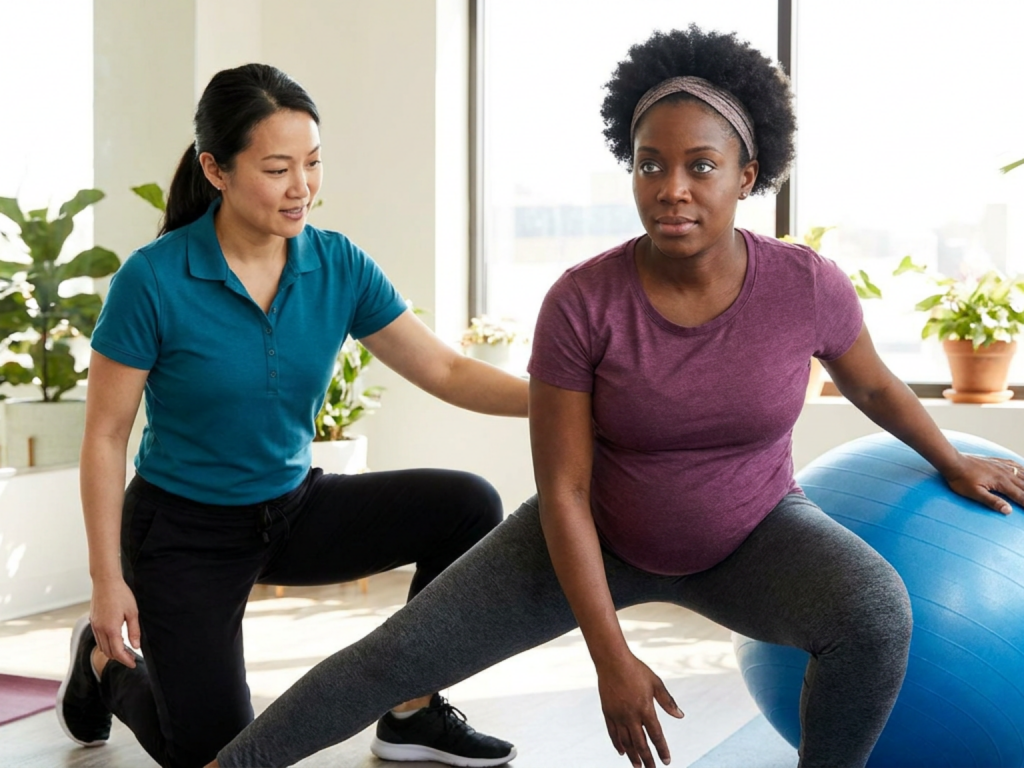
Labor often asks the body to use positions that are uncommon in daily life: supported squats, side-lying release positions, hands-and-knees, lunges, sitting on a birth ball, kneeling over a bed, or standing with support. Strength and mobility training can make these positions more comfortable and sustainable.
Key areas often emphasized include the gluteal muscles, hip rotators, quadriceps, hamstrings, calves, deep abdominal wall, spinal extensors, and shoulder girdle. Functional exercises may include sit-to-stand patterns, wall-supported squats, step-ups, side-lying leg work, modified rows, pelvic tilts, cat-cow movements, and gentle hip-opening drills. These should be adapted for balance, pelvic pain, abdominal coning, blood pressure concerns, and fatigue.
Mobility does not mean forcing flexibility. Pregnancy hormones, including relaxin, contribute to ligamentous laxity, and aggressive stretching can irritate joints. Aim for controlled range of motion, stable alignment, and comfortable breathing. If you have symphysis pubis dysfunction or sacroiliac pain, wide stances, asymmetrical lunges, or deep squats may need modification.
Practicing labor positions can be valuable. Try supported upright positions, side-lying with pillows, hands-and-knees with forearm support, and sitting on a birth ball if your clinician considers it safe. ACOG notes that moving around during labor, including short walks or changing positions, may help reduce pain. Rehearsing these options before labor can make them feel familiar rather than experimental when contractions intensify.
Pelvic floor preparation: strength, relaxation, and coordination
The pelvic floor is not simply something to “strengthen.” It is a dynamic group of muscles and connective tissues that supports pelvic organs, contributes to continence and sexual function, and participates in childbirth mechanics. During vaginal birth, pelvic floor tissues must lengthen and yield as the fetal head descends. Therefore, preparation involves both contractile control and relaxation.
Pelvic floor exercises, often called Kegels, may be useful when performed correctly, but many people unknowingly bear down, tighten the buttocks, hold the breath, or over-recruit abdominal muscles. A pelvic health physical therapist can assess coordination, tone, pain, scar tissue, prolapse symptoms, and appropriate technique. This is particularly helpful for people with urinary leakage, pelvic pain, constipation, vaginismus, a history of pelvic surgery, or previous birth trauma.
Relaxation skills are equally important. Learning to release the pelvic floor on the inhale, soften the jaw and abdomen, and avoid chronic gripping can support comfort in late pregnancy and may help during labor. Some clinicians discuss perineal massage in late pregnancy for selected patients, particularly those planning vaginal birth; it should be taught carefully and avoided when contraindicated, such as with active genital infection or unexplained bleeding.
During the pushing phase, some people are coached in directed pushing, while others use physiologic or open-glottis pushing depending on the clinical situation and birth setting. The goal is coordinated effort, adequate oxygenation, and responsiveness to maternal and fetal status, not adherence to one rigid technique.
Breathing, pain coping, and nervous system regulation
Breathing techniques do not remove all pain, but they can reduce panic, improve focus, and limit unnecessary muscular tension. Labor pain is influenced by cervical dilation, uterine ischemia during contractions, pelvic pressure, fetal position, fatigue, fear, and the care environment. A prepared nervous system may cope better, especially when paired with continuous support and realistic expectations.
Common skills include slow breathing in early labor, longer exhalations during intense contractions, reset breaths after a contraction ends, and low vocalization rather than high, throat-tightening sounds. Breathing techniques for natural birth can also be useful for people who plan epidural analgesia, because early labor, epidural placement, position changes, or breakthrough pain may still require coping strategies.
ACOG describes nonpharmacologic coping strategies such as massage, water therapy, breathing exercises, and movement. These methods can be combined with pharmacologic options if desired or medically recommended. Choosing an epidural, nitrous oxide, systemic opioid, or another pain management method does not mean preparation has failed. Physical preparation should expand choices, not create shame.
It can help to rehearse with a partner, doula, or support person. Practice counterpressure at the sacrum, hip squeezes if comfortable, warm shower positioning, supported leaning, and simple verbal cues. In labor, the brain often prefers short, familiar instructions: “soft jaw,” “slow exhale,” “drop shoulders,” “one contraction at a time.”
Recovery preparation before the birth
Preparing physically for childbirth should include the first days after birth. Whether birth is vaginal or cesarean, the postpartum body is recovering from pregnancy, blood loss, tissue stretching or incision, hormonal shifts, lactation demands if feeding at the breast or chest, sleep disruption, and emotional adjustment.
Before birth, arrange practical supports that reduce physical strain. Set up a recovery station with water, snacks, prescribed or approved medications, pads, peri bottle if recommended, feeding supplies, and phone charger. Place frequently used items at waist height to limit bending. Plan help for meals, laundry, stairs, pets, and older children. If surgical birth is possible or planned, ask about lifting restrictions, wound care, pain control, mobility, and postoperative cesarean recovery.
Gentle early movement, such as short walks, can support circulation and bowel function for many postpartum people, but intensity should be guided by the clinical team. Pelvic floor and abdominal recovery are gradual. Heavy lifting, high-impact exercise, and intense core work generally require clearance and symptom-guided progression, especially if there is perineal trauma, cesarean incision, diastasis recti, prolapse symptoms, persistent bleeding, or pain.
Birth preparation is therefore not just about labor endurance. It is about entering the postpartum period with a realistic plan for healing, support, and timely medical follow-up.
Building a flexible, evidence-informed preparation routine
A balanced routine usually combines aerobic activity, functional strength, mobility, pelvic floor coordination, breathing practice, education, and rest. For example, one week might include several walks, two short strength sessions, daily pelvic floor relaxation practice, one prenatal class, and a few rehearsals of labor positions. The exact schedule should be individualized and adjusted for symptoms, gestational age, and clinician recommendations.
Childbirth education matters because the body works better when the mind understands what is happening. Studies of childbirth preparedness emphasize mental and emotional preparation, support, preparation classes, and awareness of childbirth methods as facilitating factors. Birthing classes can explain latent labor, active labor, transition, pushing, fetal monitoring, induction, assisted delivery, cesarean birth, pain relief, and newborn care. This knowledge can reduce fear and improve communication with the care team.
A flexible plan may include a low-intervention birth plan, preferences for mobility-compatible monitoring, desired support people, pain coping options, and consent-centered care. It should also include what you would want if induction, operative vaginal delivery, or cesarean birth becomes the safest path. Preparing for multiple scenarios can be emotionally protective because it frames medical changes as part of safe care rather than personal failure.
The best physical preparation is steady, compassionate, and responsive. Some days your body may feel strong; other days fatigue, nausea, pelvic pressure, or sleep disruption may require rest. Listening to your body while staying connected to professional guidance is not weakness. It is skilled preparation for birth.
When to stop activity and seek advice
- Stop exercise and seek urgent guidance for vaginal bleeding, fluid leakage, chest pain, fainting, or severe shortness of breath.
- Contact your maternity team for regular painful contractions, decreased fetal movement, severe headache, visual symptoms, or right upper abdominal pain.
- New calf pain, one-sided swelling, redness, or sudden breathlessness requires prompt assessment for possible thromboembolism.
- Do not start intense training, heavy lifting, or new high-impact activity in pregnancy without professional guidance.
- If you have placenta, cervical, hypertensive, cardiac, fetal growth, or preterm labor concerns, ask for individualized restrictions.
Tools & Assistance
- Prenatal visit to review exercise safety and contraindications
- Pelvic health physical therapy assessment
- Childbirth preparation or hospital-based birthing class
- Comfort-measure practice session with a partner, doula, or support person
- Written postpartum support and recovery plan
FAQ
When should I start physical preparation for childbirth?
Many people can begin gentle preparation early in pregnancy, but it is never too late to benefit from safe movement, breathing practice, and education. Ask your clinician what is appropriate for your situation.
Can exercise guarantee a vaginal birth?
No. Exercise may improve the likelihood of certain favorable outcomes in people without contraindications, but fetal position, placental issues, labor progress, maternal health, and fetal wellbeing can still require intervention.
Are pelvic floor exercises always recommended?
Not always in the same way. Some people need strengthening, others need relaxation or coordination work. Pelvic pain, leakage, constipation, or prior trauma are good reasons to seek pelvic health physical therapy.
Should I prepare physically if I plan an epidural or cesarean birth?
Yes. Conditioning, mobility, breathing, and recovery planning can help before and after any birth pathway, including epidural-assisted labor and cesarean birth.
What is the safest intensity for pregnancy exercise?
This depends on your baseline fitness and medical history. Many people use moderate intensity guided by the talk test, but your maternity clinician should individualize recommendations.
Sources
- PLOS ONE — Effects of physical exercise during pregnancy on delivery outcomes
- National Center for Biotechnology Information — Childbirth preparation and its facilitating and inhibiting factors from the perspective of pregnant and postpartum women
- American College of Obstetricians and Gynecologists — Thinking About Childbirth Without Pain Medication? Here's How You Can Prepare
Disclaimer
This article is for informational purposes only and does not replace individualized medical care. Always consult your obstetrician, midwife, or qualified healthcare professional before starting or changing activity in pregnancy.















Please log in to leave a comment.