
Intro
A cesarean section, often called a C-section, is a surgical birth in which a baby is delivered through incisions in the abdomen and uterus. It may be arranged in advance, recommended after pregnancy or labor findings change, or performed urgently when continuing labor or attempting vaginal birth would create unacceptable risk.
Needing a C-section can bring relief, disappointment, fear, or all of these at once. Understanding the difference between a planned and an emergency procedure can help families ask clearer questions, prepare emotionally, and recognize that the safest birth is sometimes the one that changes course.
Highlights
A planned C-section is scheduled before labor, usually because a known maternal, fetal, placental, or obstetric factor makes vaginal birth higher risk.
An emergency C-section may be recommended during pregnancy or labor when the clinical situation changes and birth needs to happen sooner.
The operation itself is broadly similar in planned and emergency cases, but the pace, preparation time, anesthesia choices, and emotional experience may differ.
Common reasons include placenta previa, nonreassuring fetal heart rate, obstructed labor, cord prolapse, severe pre-eclampsia, some breech presentations, and certain previous uterine surgeries.
Decisions should be individualized with an obstetric or maternity team, balancing maternal safety, fetal wellbeing, gestational age, and available alternatives.
What a C-section means medically
A cesarean section is major abdominal and uterine surgery performed to deliver a baby when it is safer than vaginal birth, or when vaginal birth is not possible in a reasonable timeframe. The abdominal incision is usually low on the abdomen, and the uterine incision is often a low transverse incision, although the exact technique depends on clinical circumstances. Most C-sections are performed with , such as spinal or epidural anesthesia, so the birthing person is awake but numb from the abdomen downward. General anesthesia may be used if regional anesthesia is unsuitable or if immediate delivery is required.
The terms used around cesarean birth can be confusing. A , sometimes called elective, is scheduled in advance because risk factors are known. An unplanned cesarean is one that was not part of the original birth plan but becomes recommended. An emergency C-section is performed when vaginal birth is judged too risky or too slow for the maternal or fetal condition. The word emergency does not always mean panic; it means the clinical team has decided that surgical birth is the safer route within a shorter timeframe.
Planned C-section before labor
A planned C-section before labor gives the team time to review medical history, imaging, blood tests, anesthesia options, and neonatal needs. It may be recommended when a known condition makes labor hazardous or unlikely to end safely by vaginal birth. Examples include placenta previa and cesarean delivery, where the placenta covers or lies very near the cervix; some cases of placenta accreta spectrum, where the placenta is abnormally attached; or a baby lying transverse, meaning sideways, near term. Breech presentation and C-section may also be discussed, especially if vaginal breech birth expertise is not available or other risk factors are present.
Other reasons may include certain previous uterine incisions, a history of complex uterine surgery, some multiple pregnancies, active genital herpes near the time of birth, or maternal medical conditions in which prolonged labor could be unsafe. A planned procedure can feel more controlled: fasting instructions are given, birth preferences can be discussed, and planning can begin early. Even then, planned does not mean minor. It remains surgery, with risks such as bleeding, infection, injury to nearby organs, blood clots, and implications for future pregnancies.
Emergency C-section during labor
An is recommended when new information suggests that continuing labor, waiting longer, or attempting instrumental vaginal birth may expose the baby or birthing person to greater risk. One common trigger is a nonreassuring fetal heart rate pattern, which may indicate that the baby is not tolerating contractions well. Another is labor dystocia, sometimes called failure to progress, when the cervix does not dilate or the baby does not descend despite adequate contractions and supportive measures. In these cases, the urgency depends on the whole clinical picture, not on one sign alone.
More time-critical indications include cord prolapse, when the umbilical cord slips below the baby and may be compressed; placental abruption, where the placenta separates before birth; severe hemorrhage; uterine rupture, which is rare but serious; or severe pre-eclampsia with worsening maternal or fetal status. Some emergency operations are fast but orderly, with a brief explanation, consent when possible, and rapid transfer to theater. Others require immediate action. It is normal for parents to remember the pace more vividly than the details, and it can help later to request a birth debrief with the obstetric or midwifery team.
Urgency categories and decision timing
Emergency cesareans are often categorized by urgency. Local terminology varies, but many maternity units use categories that describe how quickly birth is needed. A Category 1 cesarean is typically for an immediate threat to the life of the mother or baby, such as cord prolapse with fetal compromise, suspected uterine rupture, or profound fetal bradycardia. Teams may aim to deliver very quickly, often using a target decision-to-birth interval of about 30 minutes, while still prioritizing safe anesthesia and surgical preparation.
A Category 2 cesarean usually means maternal or fetal compromise is present but not immediately life-threatening, so birth is urgent but there may be slightly more time. A Category 3 cesarean may be needed when early birth is indicated but there is no current compromise, such as stalled labor where vaginal birth is no longer likely. Some systems also describe Category 4 as planned at a convenient time. These categories help staff coordinate theater, anesthesia, blood availability, neonatal support, and communication. They are not a judgment on anyone’s labor, pain tolerance, or choices. They are a clinical shorthand for risk, time, and resources.
When a C-section may be necessary
A C-section may be necessary when the expected benefits of surgical birth outweigh the risks of surgery and of continuing pregnancy or labor. Fetal indications include persistent nonreassuring monitoring, malpresentation such as transverse lie, some breech situations, suspected macrosomia in specific contexts, or complications in twin birth. Placental and cord indications include placenta previa, vasa previa, cord prolapse, placental abruption, and some cases of placenta accreta spectrum. Maternal indications include severe pre-eclampsia or eclampsia, significant bleeding, certain infections, obstructed labor, or medical conditions where the stress of labor could be dangerous.
Previous cesarean birth is more nuanced. Some people are good candidates for trial of labor after cesarean, while others are advised to plan repeat cesarean delivery because of the type of previous uterine incision, number of prior surgeries, other pregnancy factors, or local emergency resources. can also change the decision pathway; if induction is medically indicated but does not lead to safe progress, cesarean delivery may become the safer option. These decisions should be made with individualized counseling rather than assumptions based only on one risk factor.
Procedure, recovery, and emotional care
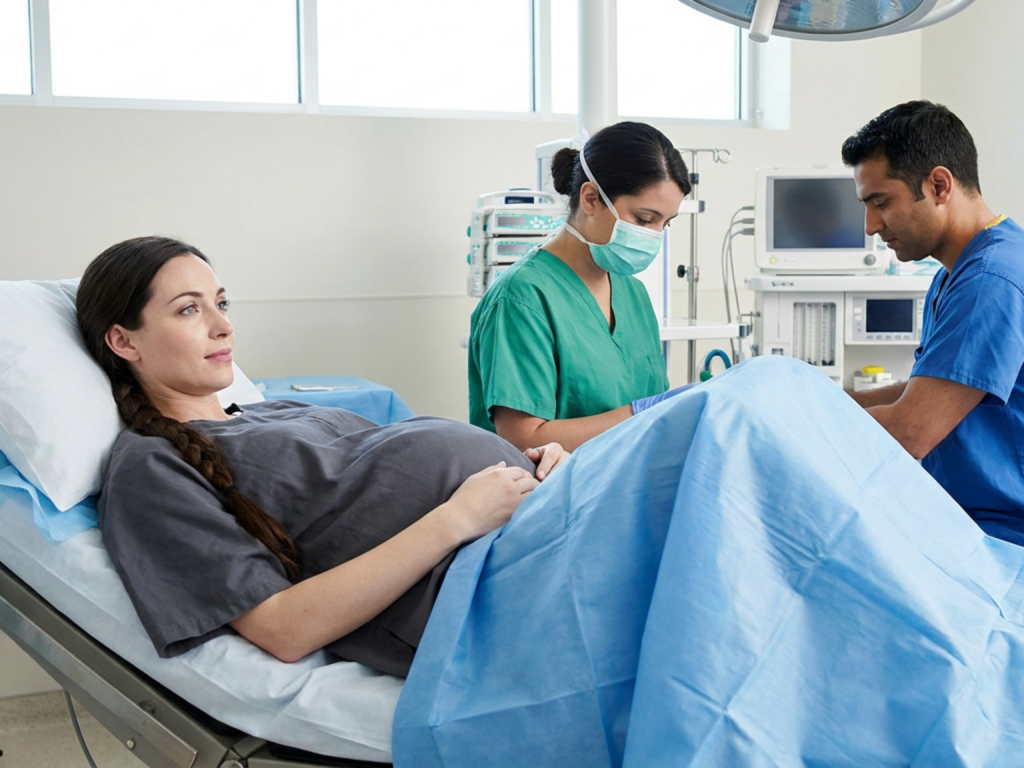
Before a planned cesarean, the team usually confirms identity, consent, allergies, blood results, fetal position, fasting status, and anesthesia plan. For an emergency cesarean, the same safety steps are compressed into a shorter period. A catheter is placed in the bladder, antibiotics are commonly given, and the abdomen is cleaned with antiseptic. A screen usually separates the surgical field from the birthing person’s view. If the baby is well, many units support skin-to-skin contact, a support person in theater, delayed cord clamping when appropriate, and early breastfeeding or chestfeeding support.
Recovery includes pain control, wound care, mobilization, bladder and bowel monitoring, and prevention of blood clots. Warning signs such as fever, increasing wound redness, heavy bleeding, chest pain, shortness of breath, calf swelling, severe headache, or feeling very unwell need urgent medical advice. Emotional recovery matters too. A calm planned cesarean can still bring grief about not laboring, and an emergency cesarean can feel frightening even when everyone is physically safe. Asking for the operative summary, discussing future birth options, and seeking mental health support after a traumatic birth are valid parts of healing.
Questions to ask your care team
Good communication can make a difficult decision feel less overwhelming. If a planned cesarean is recommended, ask what specific risk it is intended to reduce, whether any alternatives exist, what gestational timing is advised, and how the plan affects future pregnancies. If cesarean becomes urgent in labor, a concise framework can help: What is happening now? How urgent is it? What are the risks of waiting? What are the risks of surgery? Is instrumental vaginal birth an option? Who will care for the baby immediately after birth?
It is also reasonable to ask about anesthesia, support-person policies, skin-to-skin, newborn assessment, pain relief, thrombosis prevention, wound care, and expected length of hospital stay. In true emergencies, there may not be time for a detailed conversation before the operation, but you can still ask for an explanation afterward. No article can determine whether an individual C-section is necessary. The safest answer depends on examination findings, fetal monitoring, imaging, laboratory results, obstetric history, gestational age, and the resources available at that moment.
Seek urgent care
- Call your maternity unit immediately for heavy vaginal bleeding, severe abdominal pain, or reduced fetal movements.
- During labor, sudden fetal heart rate concerns, cord prolapse, or significant bleeding may require emergency intervention.
- After C-section, seek urgent help for fever, worsening wound redness, chest pain, shortness of breath, or calf swelling.
- Severe headache, visual symptoms, upper abdominal pain, or sudden swelling can suggest pre-eclampsia and need prompt assessment.
- If you feel confused, faint, unsafe, or unable to care for yourself or your baby, seek immediate medical support.
Tools & Assistance
- Write down your questions for the obstetrician, midwife, and anesthetist before a planned procedure.
- Ask your maternity unit whether they offer a birth reflections or debrief appointment after an emergency birth.
- Prepare a flexible birth preferences document that includes cesarean preferences as well as vaginal birth preferences.
- Use your local urgent maternity triage number for concerning symptoms rather than waiting for a routine appointment.
- Arrange practical help for lifting, meals, transport, and wound care during the first weeks after surgery.
FAQ
Is an emergency C-section always life-threatening?
No. Emergency means the plan has changed because vaginal birth is considered too risky or too slow. Some emergencies are immediate, while others are urgent but allow more preparation.
Can I be awake for an emergency C-section?
Often yes, especially if an epidural can be topped up or spinal anesthesia is appropriate. General anesthesia may be needed when birth must happen immediately or regional anesthesia is unsafe.
Does a planned C-section mean I cannot have a vaginal birth later?
Not always. Future options depend on the uterine incision, reason for the cesarean, number of prior cesareans, pregnancy factors, and local services. Discuss trial of labor after cesarean with your clinician.
Can I request a C-section without a medical indication?
Policies vary by country and health system. A clinician should discuss benefits, risks, alternatives, and personal circumstances so the decision is informed and safe.
What if I feel traumatized after an emergency cesarean?
That reaction is valid. Ask for a birth debrief, request your notes if helpful, and seek support from a midwife, obstetrician, mental health professional, or postnatal support service.
Sources
- NHS — Caesarean section
- My Expert Midwife — Emergency C-Sections: A Comprehensive Guide Written By Midwives
- ACOG — What to Know About Unplanned Cesarean Births
Disclaimer
This article is for general medical education and does not diagnose, prescribe, or replace care from your obstetric, midwifery, anesthesia, or emergency team. Seek urgent medical advice for concerning symptoms or if your care team recommends immediate assessment.
















Please log in to leave a comment.