
Intro
Pediatric care in the United States is designed to support children from birth through adolescence with preventive care, acute illness care, developmental surveillance, immunizations, behavioral health support, and coordination for chronic or complex medical needs. For parents of babies, the system can feel both reassuring and confusing: there are well-child visits, insurance rules, after-hours triage options, specialists, hospitals, pharmacies, and public programs that may all become part of a child’s care.
At its best, pediatric care is family-centered: clinicians partner with parents and caregivers, interpret a child’s growth and development over time, and help families make safe, evidence-informed decisions. Because babies change quickly and cannot describe symptoms, parents should use this article as a map of the system rather than a substitute for individualized medical advice.
Highlights
Pediatric primary care is usually the hub of a child’s medical care in the US, combining prevention, diagnosis, treatment, anticipatory guidance, and referral coordination.
Well-child visits are not just checkups; they include growth tracking, developmental surveillance, immunizations, feeding guidance, safety counseling, and screening for family or social needs.
Insurance coverage strongly shapes access. Many children are covered through employer plans, Medicaid, or the Children’s Health Insurance Program, but costs and networks vary.
Hospital pediatric care is increasingly concentrated in children’s hospitals and teaching centers, which can improve access to specialized services but may create travel burdens for rural families.
Parents should know how to reach an after-hours pediatric triage line and when urgent or emergency evaluation is appropriate.
The pediatrician as the child’s medical home
In the US, many children receive primary care from a pediatrician, a family physician, a nurse practitioner, or a physician assistant working in a pediatric or family medicine practice. Pediatricians are physicians trained specifically in the health of infants, children, adolescents, and young adults. In primary care, their role extends well beyond treating ear infections or ordering vaccines. They monitor growth, assess neurodevelopment, counsel families on feeding and sleep, identify safety risks, manage common illnesses, and coordinate care for children with chronic conditions.
The concept often used is the “medical home.” This does not mean care happens at home; it means the child has a central, accessible, continuous source of care. A strong medical home keeps track of the child’s history, test results, immunizations, medications, specialist recommendations, and family concerns. This continuity is especially valuable in infancy, when feeding patterns, weight gain, jaundice, sleep, and early development may change from week to week.
Pediatric primary care also acts as a bridge between clinical medicine and everyday family life. A clinician may discuss safe sleep, car seats, breastfeeding or formula feeding, daycare exposure, maternal mental health, smoke exposure, housing instability, and access to nutrition programs. These topics are medical because they influence injury risk, infection risk, growth, neurodevelopment, and family wellbeing.
Well-child visits: prevention, surveillance, and guidance
Well-child visits are scheduled preventive visits that begin shortly after birth and continue through adolescence. For babies, visits are frequent because early growth and development move quickly. The exact schedule may vary by practice and child, but visits commonly occur in the newborn period, during the first months of life, and then at regular intervals across the first year.
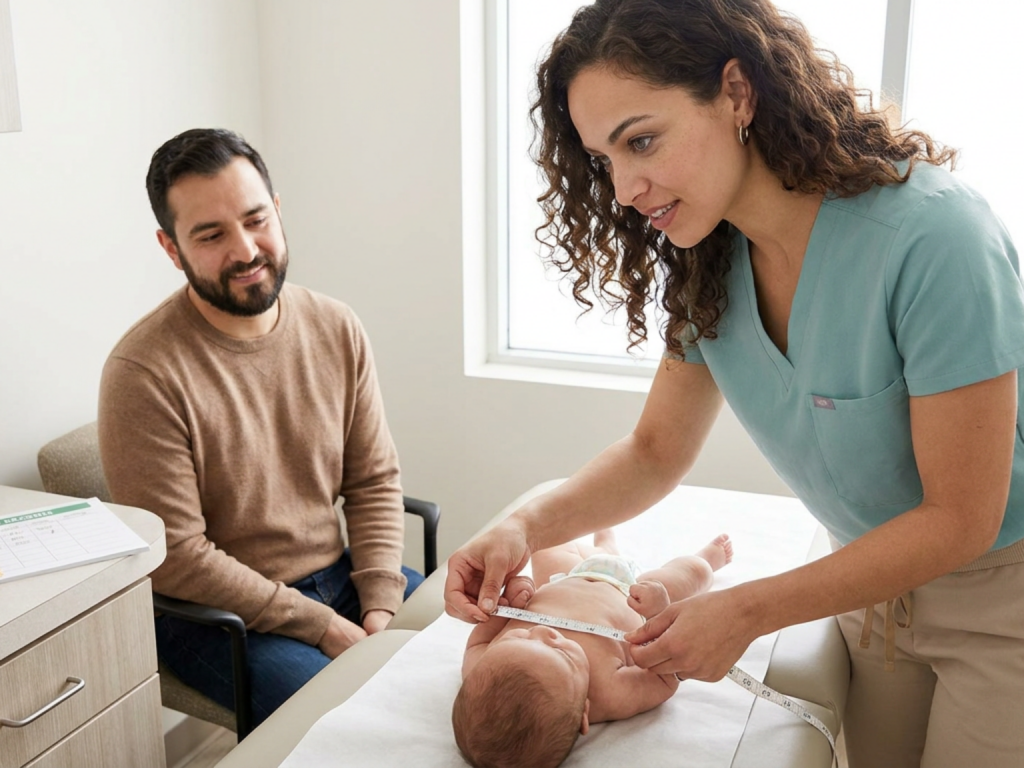
During these visits, the care team typically measures weight, length, and head circumference; reviews feeding, stooling, urination, sleep, and behavior; performs a physical examination; and discusses developmental milestones. Developmental surveillance means the clinician is watching the child’s skills over time, such as social engagement, motor progress, language emergence, and problem-solving. At certain ages, practices may use standardized screening tools for development, autism risk, maternal depression, social needs, or other concerns.
Immunizations are another major part of pediatric preventive care. Vaccines are recommended according to national schedules and are intended to reduce the risk of serious infections such as pertussis, measles, pneumococcal disease, hepatitis, influenza, and others. A pediatric clinician can explain vaccine timing, expected side effects, and what to do if a baby is behind schedule. Families should not rely on generalized online advice to delay or skip vaccines; vaccine decisions should be discussed with a qualified healthcare professional who knows the child’s medical history.
Anticipatory guidance is the counseling component of the visit. For a baby, this may include safe sleep practices, infant feeding, vitamin supplementation when appropriate, fever precautions, injury prevention, soothing strategies, oral health, and when to call for help. Many parents find it useful to bring a written list of questions, because visits can move quickly and sleep deprivation makes details easy to forget.
When babies are sick: office visits, triage, urgent care, and emergency care
For non-emergency concerns, parents usually start by calling the pediatric practice. Many practices have same-day sick visits, nurse advice lines, patient portals, and an after-hours pediatric triage line. Triage staff may help determine whether a baby needs immediate emergency care, a same-day office visit, home monitoring with specific precautions, or follow-up during regular hours. This triage is not a diagnosis; it is a safety-oriented way to match the level of care to the concern.
Babies are different from older children because signs of illness can be subtle. Poor feeding, unusual sleepiness, breathing difficulty in infants, persistent vomiting or diarrhea, fewer wet diapers, fever in young babies, or a concerning change in color or tone may require urgent medical guidance. Parents should follow the emergency instructions given by their child’s clinician and should call emergency services if a baby appears severely ill, is struggling to breathe, has a seizure, is unresponsive, or has other life-threatening signs.
Urgent care centers can be helpful for some after-hours problems, but not all urgent cares are equally equipped for infants, especially newborns or medically complex babies. Emergency departments are designed for potentially serious conditions, but wait times and costs can be substantial. Children’s hospitals and pediatric emergency departments often have more pediatric-specific staff and equipment, though they may be farther away.
Telehealth is now common for selected pediatric concerns. It may be useful for rash review, medication follow-up, behavioral health check-ins, or deciding whether an in-person exam is needed. However, telehealth cannot replace hands-on assessment when a baby needs vital signs, hydration assessment, respiratory evaluation, abdominal examination, or laboratory testing.
Insurance, Medicaid, CHIP, and costs
Pediatric care in the US is closely tied to insurance coverage. Children may be insured through a parent’s employer-sponsored plan, a marketplace plan, Medicaid, the Children’s Health Insurance Program, military coverage, or other arrangements. Medicaid and CHIP are especially important for children because they cover many low- and moderate-income families and often include comprehensive pediatric benefits.
Even with insurance, families may face practical barriers: copayments, deductibles, prior authorization requirements, limited specialist networks, transportation challenges, language access needs, and difficulty finding practices accepting new patients. The same child may have good access to primary care but long waits for developmental pediatrics, pediatric neurology, child psychiatry, feeding therapy, or other specialties.
Parents can reduce surprises by asking the practice and insurer practical questions:
- Is this pediatric practice in network?
- Which hospitals and laboratories does the practice use?
- Are routine vaccines covered at the office?
- Is there an after-hours phone line, and is there a fee?
- Does the plan require referrals for specialists?
- What should families do if a medication or formula is not covered?
For babies with special health care needs, coverage rules can become more complex. Durable medical equipment, therapies, home nursing, specialty medications, and nutritional products may require documentation. Care coordinators, social workers, and case managers can be extremely helpful in navigating these systems.
Specialists and care coordination
Some babies need specialty care because of prematurity, congenital conditions, feeding difficulties, genetic diagnoses, cardiac disease, neurologic concerns, endocrine disorders, respiratory disease, or developmental concerns. In the US, specialists often require referrals, and appointments may be located at children’s hospitals, academic medical centers, private specialty groups, or regional clinics.
Coordination matters because pediatric care can become fragmented. A baby may see a pediatrician, lactation consultant, gastroenterologist, cardiologist, physical therapist, early intervention services, and a home nursing agency. The primary care clinician often helps integrate those recommendations into a practical plan. Families can support coordination by keeping an updated medication list, sharing discharge summaries, bringing specialist notes to visits when needed, and asking which clinician is responsible for each part of the plan.
Early intervention services are a key part of the US system for infants and toddlers with developmental delays or certain medical risks. These programs are usually state-administered and may provide evaluation and therapies such as physical, occupational, speech-language, or developmental services. Parents do not need to wait passively if they are worried; they can ask the pediatrician about referral and local eligibility rules.
For medically complex children, family-centered care is essential. Parents are often the constant thread across hospitalizations, outpatient visits, therapies, and home routines. Clinicians may understand disease mechanisms, but caregivers understand the child’s baseline behavior, feeding tolerance, comfort signals, and what is feasible at home.
Hospital care and regional differences
Pediatric hospital care in the US includes general pediatric wards, neonatal intensive care units, pediatric intensive care units, children’s hospitals, community hospitals, and specialized surgical or subspecialty centers. Over time, many pediatric inpatient services have become more centralized, meaning more children receive hospital care in larger children’s hospitals or teaching hospitals rather than smaller community hospitals.
Centralization can bring benefits. Larger pediatric centers may have pediatric subspecialists, child-specific imaging protocols, pediatric pharmacists, respiratory therapists, child life specialists, neonatal and pediatric intensive care, and teams experienced with rare conditions. For complex surgery, severe respiratory illness, neonatal complications, or multi-system disease, these resources can be vital.
At the same time, centralization can worsen access burdens. Families in rural areas may need to travel long distances, miss work, arrange childcare for siblings, or transfer between hospitals. Nonteaching hospitals may have fewer pediatric beds or reduced capacity to admit children. These patterns create health equity concerns because travel, time, language, insurance, and income all influence whether families can reach the right level of care quickly.
Discharge from the hospital is another important transition. Families should leave with clear instructions about medications, feeding, warning signs, follow-up appointments, and who to call after hours. If instructions are unclear, it is appropriate to ask the team to repeat them, write them down, or explain them in plain language.
How parents can partner with the pediatric care team
Parents do not need to be medical experts to be effective advocates. The most useful information is often specific and observational: how many wet diapers the baby has had, how feeding has changed, whether breathing looks harder than usual, the highest measured temperature and how it was taken, what medications were given, and what the baby is like compared with baseline.
Before visits, families may want to prepare a short list of priorities. If there are multiple concerns, start with the most urgent or worrying. Bring medication names and doses, feeding details, hospital paperwork, and any growth or home-monitoring records the clinician requested. For newborns, details about birth history, gestational age, bilirubin testing, weight loss, feeding plan, and discharge recommendations can be important.
It is also reasonable to ask questions until the plan is clear. Helpful questions include: What are we watching for? When should we call? When should we go to urgent care or the emergency department? What follow-up is needed? What side effects or complications should we know about? If a test is ordered, how and when will results be communicated?
A good pediatric relationship is collaborative. Parents should feel respected, and clinicians should take concerns seriously. If communication repeatedly feels dismissive, confusing, or inaccessible, families may consider seeking another clinician within the limits of their insurance and local availability.
Seek urgent medical advice for concerning infant symptoms
- Call emergency services if a baby is unresponsive, has severe breathing difficulty, has a seizure, or appears critically ill.
- Contact a clinician promptly for fever in young babies, especially newborns or infants under the age threshold specified by your pediatrician.
- Breathing difficulty in infants, blue or gray color, persistent vomiting or diarrhea, or signs of dehydration require timely medical guidance.
- Do not give over-the-counter medicines, herbal products, or adult medications to a baby unless a healthcare professional specifically advises it.
- If your instincts tell you your baby is seriously different from baseline, seek medical help even if the signs are hard to describe.
Tools & Assistance
- A trusted pediatric primary care practice or family medicine clinic
- After-hours pediatric triage line or nurse advice line
- Updated vaccine record and medication list
- Insurance member services, Medicaid office, or CHIP enrollment support
- Early intervention services for developmental concerns in babies
FAQ
Do babies in the US have to see a pediatrician rather than a family doctor?
No. Many babies see pediatricians, but family physicians, nurse practitioners, and physician assistants may also provide primary care. The key is access to clinicians experienced in infant care, prevention, immunizations, and timely referral when needed.
What is the difference between a well-child visit and a sick visit?
A well-child visit focuses on prevention, growth, development, vaccines, screening, and anticipatory guidance. A sick visit focuses on a specific concern such as fever, cough, feeding difficulty, rash, vomiting, or injury.
Can a pediatrician help with feeding, sleep, and behavior questions?
Yes. Pediatric primary care commonly includes guidance on feeding, sleep safety, soothing, development, and behavior. For complex issues, the pediatrician may involve lactation consultants, dietitians, therapists, or specialists.
What should I do if I cannot get a specialist appointment quickly?
Tell your child’s primary care clinician about the wait time and ask whether the referral should be marked urgent, whether another specialist or location is appropriate, and what warning signs should prompt urgent or emergency evaluation.
How can parents prepare for after-hours problems?
Save the practice phone number, after-hours pediatric triage line, preferred urgent care, nearest emergency department, insurance card, medication list, and pharmacy information in an easy-to-find place.
Sources
- PubMed Central — Pediatric Primary Health Care: The Central Role of Pediatricians in the U.S. Health Care System
- U.S. Department of Health and Human Services, Office of the Assistant Secretary for Planning and Evaluation — Accelerating Innovative and Effective Pediatric Health Care Delivery Systems
- JAMA Network Open — Shifts in the Hospital Care of Children in the US—A Health Equity Perspective
Disclaimer
This article is for general educational purposes only and does not diagnose, treat, or replace care from a qualified healthcare professional. For concerns about a baby’s health, contact your pediatric clinician or seek urgent care when needed.

















Please log in to leave a comment.