
Intro
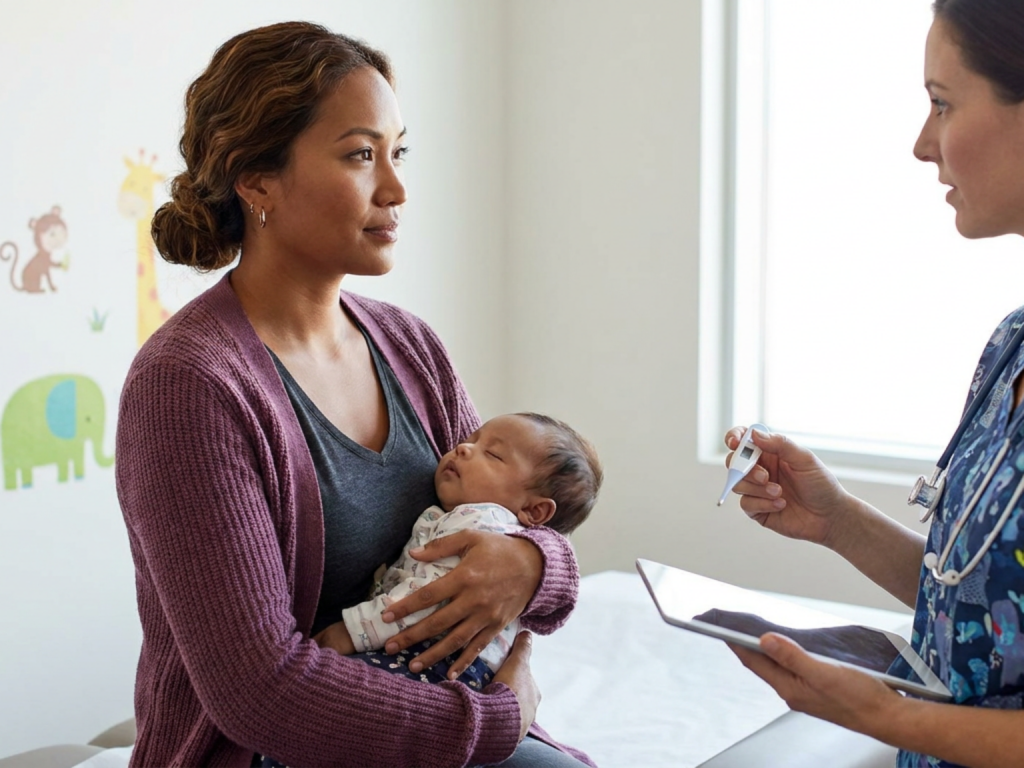
Few moments feel as tense as touching your baby’s forehead and wondering whether they are simply warm, overdressed, or developing a fever. Babies cannot describe chills, headache, throat pain, or body aches, so caregivers often rely on temperature readings, feeding patterns, alertness, and breathing comfort to decide what to do next.
In infants, the meaning of a temperature depends on age, measurement site, and the baby’s overall appearance. A mildly elevated reading in an older infant may be managed differently from the same number in a newborn. This article explains what temperatures are considered normal, what counts as fever by common measurement methods, and when prompt medical advice is especially important.
Highlights
A baby’s temperature naturally varies during the day; 98.6°F or 37°C is an average, not a strict normal for every infant.
For many clinical purposes, a rectal, ear, or temporal artery temperature of 100.4°F or 38°C or higher is considered fever, but method and age matter.
Any fever in a baby younger than 3 months deserves urgent medical guidance, even if the baby looks relatively well.
How your baby looks and behaves matters: feeding, responsiveness, breathing, hydration, and consolability are as important as the number on the thermometer.
Avoid guessing by touch alone; use an appropriate thermometer and tell the clinician exactly how and where the temperature was taken.
What temperature is normal for a baby?
A normal baby temperature is best understood as a range rather than one perfect number. The commonly quoted 98.6°F, or 37°C, is only an average. Many healthy infants run a little warmer or cooler depending on time of day, recent feeding, crying, activity, sleep, clothing, room temperature, and the measurement site.
Research in infants younger than 3 months found an average temperature around 37.5°C, with age-specific fever cutoffs close to but not identical to 38°C. In that study, fever was defined as 38.0°C or higher in infants under 30 days, 38.1°C in 1-month-olds, and 38.2°C in 2-month-olds. In everyday pediatric guidance, however, 100.4°F or 38°C is commonly used as a practical threshold for fever, especially for rectal measurements in young babies.
Normal variation can be confusing because a baby who feels warm may not have a fever, while a baby with a clinically important fever may not feel dramatically hot to your hand. That is why a measured temperature is more reliable than touch alone. If your baby is under 3 months, the safest approach is to take the reading carefully and contact a healthcare professional for guidance if it reaches fever range.
Fever thresholds depend on where the temperature is taken
Temperature readings differ by measurement site. Rectal temperature is often considered the closest practical estimate of core temperature in infants, but not every method uses the same fever cutoff. When speaking with a nurse, pediatrician, or urgent care clinician, it helps to report the exact number, the unit, the method, the thermometer type, and whether the reading was repeated.
- Rectal, ear, or temporal artery: 100.4°F or 38°C or higher is commonly treated as fever.
- Oral: 100°F or 37.8°C or higher is commonly considered fever, though oral temperatures are usually not practical or reliable for babies who cannot hold the thermometer properly.
- Armpit or axillary: 99°F or 37.2°C or higher may suggest fever, but axillary readings are less precise and may need confirmation depending on age and clinical context.
Ear thermometers may be less reliable in very young infants because of small ear canals and positioning challenges. Temporal artery thermometers can be convenient, but technique matters. Pacifier thermometers and forehead strips are generally less dependable for medical decisions. If a reading seems inconsistent with how your baby looks, repeat it using the manufacturer’s instructions and contact a clinician rather than trying to interpret borderline values alone.
Why age changes the level of concern
The same temperature does not carry the same implications at every age. Newborns and young infants have immature immune systems, and serious bacterial infections can sometimes present with subtle signs. For this reason, fever in the first 3 months of life is treated with more caution than fever in an older baby.
For a baby younger than 3 months, a rectal temperature of 100.4°F or 38°C or higher should prompt immediate medical advice. Many pediatric resources advise urgent evaluation for any fever in this age group. Do not wait to see whether it improves, and do not give fever-reducing medication unless a healthcare professional specifically instructs you to do so.
In babies older than 3 months, clinicians consider the temperature, duration, associated symptoms, immunization status, medical history, hydration, and overall appearance. Viral infections commonly cause fevers, and infant fevers with viral illness may reach 101°F to 104°F. Still, a higher number, persistent fever, breathing difficulty, dehydration, lethargy, seizure, or parental concern should be taken seriously. If you feel something is not right, it is appropriate to call for medical guidance.
How to take a baby’s temperature safely and accurately
Accurate measurement starts with using the right tool and consistent technique. A digital thermometer is usually the safest and most practical option. Keep one thermometer labeled for rectal use only if you take rectal temperatures, and clean it according to the manufacturer’s instructions before and after use.
For infants, many clinicians prefer a rectal temperature when an accurate fever assessment is needed, especially in young babies. Use only a digital thermometer designed for this purpose, apply a small amount of lubricant if recommended, insert only the tip as instructed, and stop if there is resistance. If you are uncomfortable taking a rectal temperature, ask your pediatric office to show you the safest technique or advise an alternative method.
Axillary temperature is easier but less exact. It can be useful for screening, particularly if you are nervous about rectal measurement, but a concerning armpit reading in a young infant should not be dismissed. Temporal thermometers require correct placement across the forehead or temple region, depending on the device. Ear thermometers need proper positioning and may not be recommended for the youngest babies.
Try to avoid measuring immediately after a warm bath, prolonged crying, skin-to-skin contact under heavy blankets, or time in an overheated room. Wait a few minutes, remove excess layers if safe to do so, and retake the temperature if the first reading seems surprising.
Fever, overheating, and clothing: how to tell the difference
A baby may feel warm because of fever, but also because of overdressing, a warm room, or being held close under blankets. Overheating can be especially concerning during sleep, so it is important to distinguish environmental warmth from internal fever as much as possible.
Check the baby’s chest, back, or neck rather than relying only on hands and feet, which can feel cool even when the baby is warm enough. Checking baby chest temperature can help you judge whether clothing layers are excessive, but it does not replace a thermometer when fever is a concern. If your baby is sweaty, flushed, breathing fast, or unusually sleepy in a warm environment, remove extra layers and assess the temperature with a thermometer.
For fever and baby sleep clothing, choose comfort and safety rather than heavy bundling. A feverish baby does not need extra blankets to “sweat it out.” Dress them in light, breathable layers appropriate for the room and maintain safe sleep practices. Avoid loose bedding, pillows, or blankets in the sleep space. If your baby has chills or seems uncomfortable, call your pediatric clinician for advice instead of adding multiple layers.
What to watch besides the number
The thermometer matters, but your baby’s behavior often provides crucial context. A baby with a modest fever who is alert, feeding reasonably well, making wet diapers, and breathing comfortably is different from a baby with the same temperature who is limp, difficult to wake, refusing feeds, or showing labored breathing.
Watch for hydration: fewer wet diapers, dry mouth, no tears when crying, sunken soft spot, or unusual sleepiness can suggest inadequate fluid intake or fluid loss. Observe breathing: rapid breathing, grunting, flaring nostrils, chest retractions, bluish color, or pauses in breathing require urgent attention. Also note rash, persistent vomiting, diarrhea, stiff neck, inconsolable crying, seizure-like activity, or a bulging fontanelle.
Crying can be a nonspecific sign. Some babies cry more with fever because they feel achy, tired, hungry, or overstimulated. Normal infant crying may still occur during minor illness, but a weak cry, high-pitched cry, unsoothable crying spells, or a major change from your baby’s usual pattern deserves medical guidance. Trust your familiarity with your baby; caregivers often notice subtle changes before they are obvious to others.
Comfort measures while you seek guidance
If your baby has a fever, the priority is safety, hydration, and appropriate medical advice. Offer breast milk or formula as usual unless a clinician gives different instructions. Do not force large volumes, but watch intake and wet diapers. Keep the room comfortably cool and dress your baby lightly.
Avoid cold baths, ice packs, alcohol rubs, or aggressive cooling. These can cause shivering or skin absorption risks and may make the baby more uncomfortable. Tepid bathing is sometimes discussed for older children, but for babies it is best to ask a clinician first, particularly if the infant is young or appears unwell.
Medication decisions should be age- and weight-specific. Do not give aspirin to a child. Do not use fever reducers in a newborn or young infant unless directed by a healthcare professional. For older infants, dosing errors can happen easily, so follow your clinician’s advice and the product instructions exactly, using the measuring device provided.
When you call for help, be ready to share your baby’s age, weight if known, temperature and method, how long the fever has been present, feeding pattern, wet diapers, other symptoms, medical conditions, recent vaccines, and any medications already given.
Seek medical advice urgently if
- Your baby is younger than 3 months and has a temperature of 100.4°F or 38°C or higher.
- Your baby is difficult to wake, unusually floppy, confused, or not responding normally.
- There is trouble breathing, bluish color, grunting, chest retractions, or pauses in breathing.
- Your baby has signs of dehydration, such as very few wet diapers, dry mouth, or extreme sleepiness.
- Fever is accompanied by seizure, stiff neck, bulging soft spot, non-blanching rash, or persistent vomiting.
- Your instincts tell you your baby is seriously unwell, even if the temperature is not very high.
Tools & Assistance
- A digital thermometer appropriate for infant use
- Your pediatrician’s nurse advice line or after-hours service
- A written fever log with time, temperature, method, feeding, and wet diapers
- Local urgent care or emergency services when red flags are present
- Manufacturer instructions for the specific thermometer you use
FAQ
Is 99°F a fever in a baby?
It depends on the measurement method. An armpit temperature of 99°F or 37.2°C may suggest fever, while a rectal temperature of 99°F is often within normal variation. In a young infant, ask a clinician how to interpret the reading.
Is 100.4°F always considered a fever?
A rectal, ear, or temporal artery temperature of 100.4°F or 38°C or higher is commonly considered fever. In babies under 3 months, this threshold should prompt urgent medical guidance.
Can teething cause a high fever?
Teething may be associated with mild discomfort or slight temperature elevation, but a true fever, especially 100.4°F or 38°C or higher in a young infant, should not be assumed to be from teething without medical advice.
Should I wake my baby to check a temperature?
If your baby is very young, has been unwell, or you were advised to monitor temperature, follow your clinician’s instructions. If a sleeping baby looks distressed, is breathing abnormally, or is hard to wake, seek urgent care.
What is the best thermometer for a newborn?
Many clinicians consider a digital rectal thermometer the most accurate practical option for newborn fever assessment. If you are unsure how to use one safely, ask your pediatric office for instruction.
Sources
- PubMed — What is fever? Normal temperature in infants less than 3 months old
- Mayo Clinic — Thermometer basics: Taking your child's temperature
- St. Louis Children's Hospital — Fever in Infants
Disclaimer
This article is for informational purposes only and does not replace professional medical evaluation. Contact a qualified healthcare professional for advice about your baby’s fever or any concerning symptoms.













Please log in to leave a comment.