
Intro
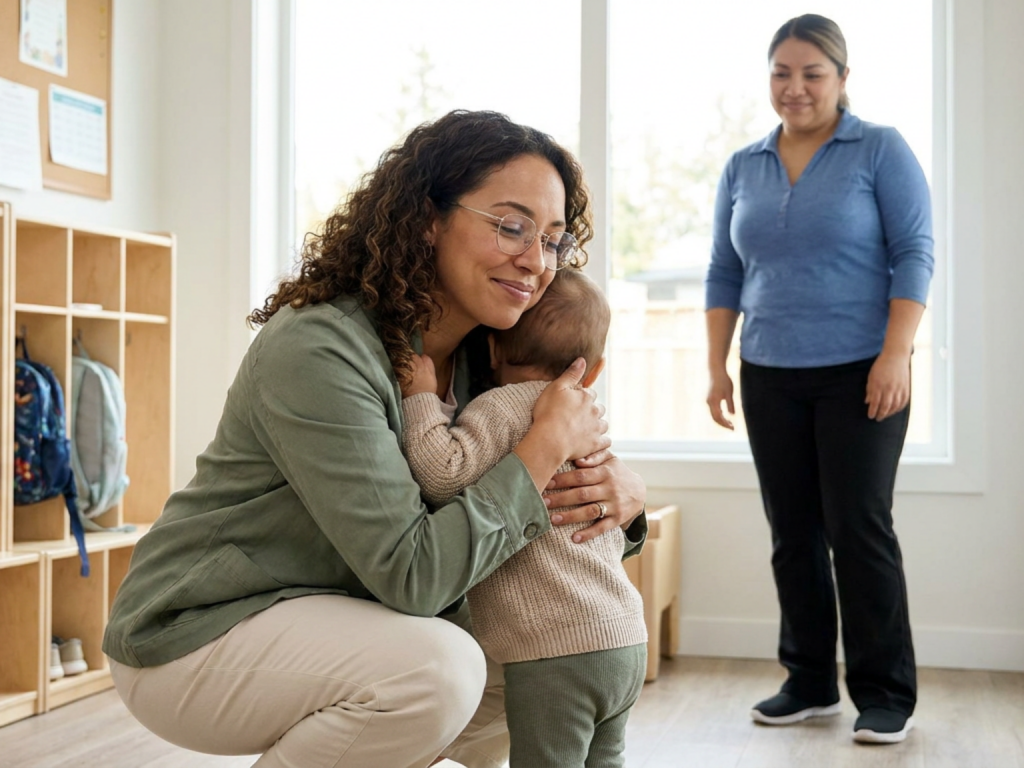
When a baby cries as a caregiver walks out of the room, it can feel heartbreaking, frustrating, and confusing all at once. Many caregivers wonder whether they have done something wrong, whether their baby is “too attached,” or whether the crying means something is medically wrong. In most cases, crying during separation is a normal expression of attachment and a sign that the baby is developing memory, recognition, and expectations about safety.
Separation-related crying is especially common from late infancy into toddlerhood. It often reflects separation anxiety: a developmentally expected stage in which a baby strongly prefers familiar caregivers and protests when they leave. Understanding the neurodevelopmental reasons behind this response can help caregivers respond with warmth, consistency, and confidence while also recognizing when distress deserves professional guidance.
Highlights
Crying when a caregiver leaves is commonly linked to normal separation anxiety, not manipulation or spoiled behavior.
Separation anxiety often begins around 6 to 12 months and usually improves gradually as language, memory, and coping skills mature.
Brief, predictable goodbyes and consistent return routines help babies learn that separations are temporary and safe.
Persistent, extreme, or function-limiting distress should be discussed with a pediatrician, health visitor, or child mental health professional.
The basic reason: your baby knows you matter
A baby cries when a caregiver leaves because that caregiver is a primary source of safety, regulation, feeding, comfort, and predictability. Babies are biologically prepared to seek proximity to trusted adults. From an evolutionary perspective, being close to a caregiver increases protection and survival; crying is an effective signal that brings an adult back.
This does not mean the baby is being difficult on purpose. Infant crying as communication is a normal, powerful way to express distress before a child can explain feelings with words. In separation situations, the message is often: “I noticed you are gone, I do not know when you will return, and I need help feeling safe.”
Attachment relationships also shape the intensity of the reaction. A baby who protests a caregiver’s departure may be showing that they recognize that person as emotionally important. Secure attachment does not mean a baby never cries. In fact, a securely attached baby may cry at separation and then gradually settle when comforted by another trusted adult or when the caregiver reliably returns.
Why it often starts around 6 to 12 months
Separation anxiety commonly emerges in the second half of the first year. Around this period, several developmental abilities become stronger. Babies recognize familiar people more clearly, remember that a caregiver exists even when out of sight, and distinguish trusted adults from unfamiliar people. These are major cognitive gains, but they can also make separations more upsetting.
A key concept is object permanence: the growing understanding that people and objects continue to exist when not visible. Earlier in infancy, a caregiver leaving the room may be less meaningful because the baby’s memory and expectations are still immature. Later, the baby may know the caregiver exists somewhere else but cannot yet understand time, plans, or reassurance such as “I’ll be back in 10 minutes.”
Emotional regulation is also immature. The infant nervous system depends heavily on co-regulation, meaning the caregiver helps the baby calm through voice, touch, feeding, rocking, or predictable routines. When the caregiver leaves, the baby may lose the main external support for regulating stress. This is one reason crying can be sudden and intense even when the baby is otherwise healthy.
What normal separation anxiety can look like
Normal separation anxiety varies in intensity. Some babies whimper briefly; others cry hard, cling, reach, crawl after the caregiver, refuse to be held by someone else, or become distressed at bedtime. Toddlers may add verbal protests, tantrums, or repeated questions about where the caregiver is going.
Common patterns include:
- Crying or clinging when a parent or familiar caregiver leaves the room.
- Distress at nursery, daycare, babysitter drop-off, or bedtime.
- Increased wariness around unfamiliar adults.
- Temporary regression, such as wanting more holding or waking more often at night.
- Calming after a transition period, especially with a familiar routine or trusted secondary caregiver.
Many children improve as they gain language, memory, and experience with safe separations. Cleveland Clinic notes that separation anxiety is a normal developmental stage that often begins around 6 to 12 months and commonly fades by age 2 to 3. However, timelines are not identical for every child. Temperament, illness, sleep disruption, family stress, childcare changes, and previous separation experiences can all influence how strongly a baby reacts.
Why leaving can feel worse at bedtime, daycare, or after changes
Separation crying often intensifies when a baby is tired, hungry, overstimulated, unwell, or adjusting to a new environment. Bedtime is a classic trigger because it combines separation, darkness, fatigue, and reduced stimulation. A baby who copes well during the day may cry when placed in a cot because the transition feels larger and the caregiver’s absence is more obvious.
Daycare or nursery drop-off can also be difficult. The baby must separate from a primary caregiver while adapting to different sounds, smells, routines, and adults. Even when the childcare setting is warm and safe, the transition may take time. A gradual introduction, a predictable goodbye ritual, and a consistent caregiver at the setting can reduce uncertainty.
Major life changes may temporarily increase separation distress. Examples include moving house, starting childcare, a caregiver returning to work, a new sibling, travel, hospitalization, illness, or changes in feeding and sleep routines. During these periods, a baby may seek more reassurance. This does not mean progress has been lost; it often means the baby is asking for extra co-regulation while the environment becomes predictable again.
How to respond without making goodbyes harder
A supportive response balances empathy with predictability. The goal is not to prevent every tear, because some crying is a normal protest. The goal is to help the baby learn that separations are safe, caregivers return, and other trusted adults can provide comfort.
Helpful strategies include:
- Practice short separations at home. Step into another room briefly, speak calmly, and return before distress escalates too far.
- Use a consistent goodbye routine. A short phrase, hug, wave, or song can become a cue that leaving is predictable.
- Keep goodbyes brief and confident. Long, anxious, repeated departures may communicate that something dangerous is happening.
- Avoid sneaking away when possible. Disappearing without a cue can increase vigilance because the baby cannot predict when separations happen.
- Offer a familiar comfort object if age-appropriate and safe. A small blanket or soft toy may help some older babies and toddlers, especially in childcare settings.
- Build trust with substitute caregivers. Let the baby see warm interaction between the primary caregiver and the other adult.
Caregiver response and crying are closely linked. A calm, consistent adult presence helps the infant nervous system settle over time. That said, caregivers are human. If crying is overwhelming, it is safer to place the baby in a safe sleep space and take a brief pause than to respond while dangerously stressed.
Could the crying be something other than separation anxiety?
Yes. Although separation anxiety is common, not every episode of crying when a caregiver leaves is purely emotional protest. Babies also cry because of physical needs or discomfort, and these can overlap with separation distress. Common reasons babies cry include hunger, fatigue, a wet or dirty nappy, reflux-like discomfort, gas, teething discomfort, temperature discomfort, overstimulation, or illness.
Consider the context. A baby who cries only at departures but feeds, sleeps, plays, and grows well may be showing typical separation-related distress. A baby who cries persistently whether or not the caregiver is present, refuses feeds, has fever, vomits repeatedly, has breathing difficulty, appears lethargic, or has a markedly different cry needs medical attention. Red flags for baby crying should be taken seriously, especially in young infants.
Sleep associations can also complicate the picture. If a baby usually falls asleep only while being held, rocked, or fed, they may cry when placed down because both separation and a change in soothing pattern occur at once. This is not “bad behavior”; it is a learned expectation. Families who want to change sleep routines should do so gradually and in a way that fits the baby’s age, health, feeding needs, and caregiver capacity.
When separation distress may need professional support
Most separation crying is developmentally normal, but persistent or extreme symptoms deserve discussion with a healthcare professional. The NHS advises speaking with a health visitor if a child’s distress continues or is difficult to manage. Pediatric guidance also emphasizes looking at severity, duration, and functional impact.
Professional advice is especially important if distress is intense beyond the expected developmental window, prevents childcare or normal family functioning, causes frequent vomiting or panic-like episodes, or is accompanied by developmental regression, trauma exposure, feeding problems, sleep disruption, or concerns about caregiver mental health. In older children, persistent, impairing fear of separation may raise concern for separation anxiety disorder, but diagnosis should be made only by qualified clinicians.
Caregivers should not feel they must solve severe separation distress alone. Pediatricians, health visitors, nurses, early childhood specialists, and child mental health clinicians can help assess medical, developmental, sleep, feeding, and family factors. Sometimes the most effective plan is not a single technique but a coordinated approach that supports both the baby and the adults caring for them.
Seek help promptly if crying is unusual or severe
- Call a healthcare professional urgently if crying is inconsolable, high-pitched, or very different from your baby’s usual cry.
- Seek medical advice if crying occurs with fever, breathing difficulty, repeated vomiting, poor feeding, lethargy, seizure-like activity, or signs of dehydration.
- Discuss persistent separation distress with a pediatrician or health visitor if it disrupts sleep, feeding, childcare, or family functioning.
- Never shake a baby. If you feel overwhelmed, place the baby safely on their back in a cot and step away briefly while you get support.
- If you are worried about your baby’s safety or your own ability to cope, contact emergency services or a crisis support line in your area.
Tools & Assistance
- A predictable goodbye phrase or song used every time you leave
- Short practice separations at home with calm returns
- A safe, familiar comfort object for an older baby or toddler when appropriate
- A written handover routine for daycare, nursery, or babysitters
- Advice from a pediatrician, health visitor, or child development professional if distress persists
FAQ
Is it bad if my baby cries every time I leave?
Not necessarily. Crying at separation is common in babies and toddlers, especially from about 6 to 12 months onward. It usually reflects attachment, developing memory, and immature emotional regulation rather than wrongdoing by the caregiver.
Should I sneak out so my baby does not cry?
Sneaking out may prevent crying in the moment, but it can make some babies more watchful and anxious later. A brief, calm, predictable goodbye is usually more helpful.
How long does separation anxiety last?
It varies. Many children improve gradually during toddlerhood, and it often fades by age 2 to 3. Temporary flare-ups can happen during illness, travel, daycare transitions, or family changes.
Can I comfort my baby too much?
Responsive comfort does not spoil a baby. Warm, consistent reassurance helps infants develop trust and regulation. The key is to pair comfort with predictable routines and gradual practice, not panic or repeated prolonged goodbyes.
When should I ask a doctor about separation crying?
Seek advice if the crying is extreme, persistent, associated with illness symptoms, causing major sleep or feeding disruption, or continuing in a way that significantly limits normal family or childcare routines.
Sources
- NHS — Separation anxiety
- Cleveland Clinic — Separation Anxiety in Toddlers & Babies
- Children's Hospital of Philadelphia — Separation anxiety
Disclaimer
This article is for general educational purposes and is not a diagnosis or treatment plan. If you are concerned about your baby’s crying, development, or health, consult a qualified healthcare professional.
















Please log in to leave a comment.