
Intro
Bathing a newborn can feel surprisingly high-stakes: your baby is small, slippery, and still learning to regulate temperature, while you may be recovering, tired, or anxious about doing everything correctly. The reassuring truth is that newborn bathing does not need to be elaborate. A calm setup, a shallow amount of warm water, continuous supervision, and careful newborn head and neck support are the core safety principles.
This guide explains how to bathe a newborn safely, including sponge baths before the umbilical cord stump has healed, tub baths afterward, hygiene for delicate skin folds, and practical ways to prevent chilling, scalds, and accidental submersion. It is educational and not a substitute for individualized advice from your midwife, pediatrician, health visitor, or other qualified healthcare professional.
Highlights
Newborns usually do not need a full bath every day; gentle washing of the face, neck, hands, and diaper area is often enough between baths.
Always gather supplies before starting, because a baby should never be left unattended in or near water, even briefly.
Bath water should feel warm, not hot, and the room should be comfortably warm to reduce heat loss.
Support the baby’s head, neck, and upper back throughout the bath, and keep most of the body covered by warm water or a towel when possible.
Use mild, fragrance-free products sparingly, because newborn skin has an immature barrier and can dry or irritate easily.
Start with realistic expectations
A newborn does not need a daily full bath unless your healthcare professional has advised otherwise. In the early weeks, many families use a pattern of topping and tailing, meaning they clean the face, neck, hands, and diaper area on non-bath days, and give a full bath a few times a week. This approach helps keep the baby clean without over-washing the skin.
Newborn skin is thin, delicate, and still adapting to the outside environment. Frequent bathing, hot water, and heavily fragranced cleansers can disrupt the skin barrier and contribute to dryness or irritation. If your baby has eczema, significant peeling, a rash, prematurity, low birth weight, or a medical condition, ask your pediatrician or neonatal team for individualized skin-care advice rather than adding products on your own.
Timing also matters. Choose a time when your baby is awake but not frantic with hunger, and when you are not rushed. Many caregivers prefer bathing after a feed has settled, but not immediately after a large feed if the baby tends to spit up. If either of you is stressed, it is fine to postpone the bath and do a simple face, hands, and diaper-area wash instead.
Prepare before you undress your baby
Preparation is a safety step, not just a convenience. Once the baby is undressed or in the water, you should keep one hand on them and remain within arm’s reach at all times. Put your phone away or ignore it, and do not leave to answer the door, collect a towel, or adjust the heating.
Set up the bath area with the following items close enough to reach without turning away:
- A clean baby bath, basin, or sink with a stable surface and no sharp edges
- Warm water, added to the bath before the baby is brought over
- Two soft washcloths or cotton pads, including one for the face
- A towel, preferably with a hood or an extra dry towel for warmth
- A clean diaper, clothing, and any prescribed or recommended skin product
- A mild, fragrance-free baby cleanser or shampoo if needed, used sparingly
Remove jewelry or watches that could scratch the baby. Wash your hands. If you are using a sink, clean it first and ensure the tap cannot drip hot water onto the baby. If you use a baby bath on a stand, check that the stand is locked and stable; many caregivers prefer placing the baby bath on the floor for extra stability.
Make the water and room safe
The room should be warm enough that your baby does not chill while undressed. Newborns lose heat quickly because they have a large surface area relative to body mass and immature thermoregulation. Close windows, avoid drafts, and have a towel ready before undressing the baby.
Fill the bath with a shallow amount of water. A common practical guide is about 5 cm, or 2 inches, of water for a newborn bath, although the exact amount depends on the bath shape. The goal is enough water to wash and keep the baby warm without creating unnecessary submersion risk.
Check the water temperature carefully before placing the baby in it. Mix the water well to eliminate hot spots, then test it with your wrist or elbow; it should feel warm, not hot. A bath thermometer can be helpful, with many baby-care resources suggesting around 37°C to 38°C, close to body temperature. If you use a thermometer, still test with your skin because devices can fail or be misread.
To reduce scald risk, run cold water into the bath first and then add hot water, or follow the safer sequence recommended by your local guidance and plumbing setup; in all cases, mix thoroughly and test before the baby enters. Never add hot water while the baby is in the bath.
Sponge bathing before the cord area has healed
Many newborns begin with sponge baths, especially while the umbilical cord stump is still attached or the area is healing. Follow the advice you were given at birth discharge, because recommendations may vary by setting and by the baby’s clinical situation. The general aim is to keep the baby warm, clean visible soiling, and avoid prolonged soaking of the cord area until it has separated and dried.
Place your baby on a safe, flat surface such as a changing mat on the floor, or another stable surface where there is no fall risk. Keep the baby partly wrapped in a towel and expose only the area you are washing. Use warm water and a soft cloth. Soap is usually unnecessary for the face and may irritate the eyes.
Clean the eyes from the inner corner outward using a fresh piece of cotton wool, cotton pad, or clean area of cloth for each eye. This reduces transfer of mucus or organisms from one eye to the other. Wipe around the ears but do not insert cotton buds or anything else into the ear canal. Clean under the chin, around the neck, behind the ears, under the arms, in the groin creases, and between fingers and toes, because milk, lint, and moisture can collect in these folds.
For the diaper area, wipe front to back, especially for babies with a vulva, to reduce fecal contamination near the urethra. Clean only what is visible. Do not forcibly retract a foreskin. Pat the skin dry, especially in creases, then apply a clean diaper and dress your baby promptly.
Lowering a newborn into the bath
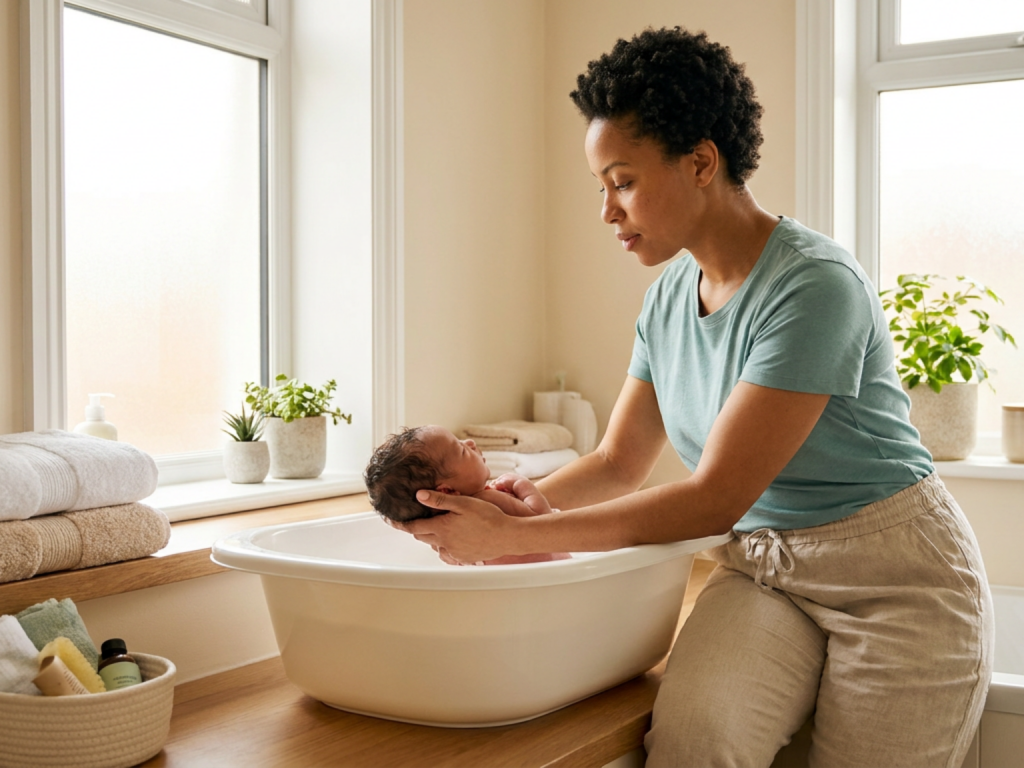
When you are ready for a tub bath, undress the baby last so they spend minimal time exposed. Hold the baby securely with one arm supporting the head, neck, and upper back, while your other hand supports the buttocks and thighs. This is where newborn head and neck support is especially important, because newborns cannot reliably control head position and their airway can be compromised by poor positioning.
Lower the baby feet first into the water, slowly and calmly. Keep the head and face well above the water. Once the baby is resting in the bath, continue supporting the head and shoulders with one hand and use the other hand to wash. Many caregivers find it helpful to rest the baby’s upper back along the forearm while the hand grips under the far arm, but use whatever technique allows secure, comfortable control.
Talk softly and keep movements unhurried. Some babies cry during baths because they are cold, hungry, overstimulated, or simply unfamiliar with the sensation. Crying does not mean you are doing it wrong. If the baby becomes very distressed, shivery, pale, unusually floppy, or difficult to settle, end the bath, dry and warm them, and seek professional advice if anything seems medically concerning.
Wash from cleanest to dirtiest areas
A simple order helps hygiene: face first, then scalp and body, then diaper area last. Use plain water for the face. Wipe each eye from the nose outward with separate clean cotton or cloth areas. Wash the rest of the face gently, including around the mouth where milk can dry. Avoid getting water or cleanser into the eyes.
For the scalp, you can use plain water or a tiny amount of mild baby shampoo if needed. Support the head carefully, wet the hair with your hand or a cloth, massage gently without scrubbing the fontanelles, and rinse by smoothing clean water backward away from the eyes. The fontanelles are protected by tough membranes, but gentle handling is still appropriate.
Wash the neck folds, armpits, palms, fingers, groin folds, knees, ankles, and toes. These creases trap moisture and debris, and incomplete drying can contribute to irritation. Use cleanser only where needed, and rinse it off well. For vernix, the white creamy coating some newborns have after birth, do not scrub aggressively; it often absorbs or comes away gradually.
Clean the diaper area last. If stool is present, remove most of it with wipes or cotton and water before putting the baby in the bath, so the bath water stays cleaner. After washing, lift the baby out with both hands, remembering that wet skin is slippery. Transfer immediately to a towel on a safe surface.
Dry, dress, and settle afterward
After the bath, wrap your baby quickly and pat dry rather than rubbing. Pay special attention to the neck, behind the ears, under the arms, between fingers and toes, and the groin creases. Moisture left in folds can macerate the skin, meaning the outer skin layer becomes overly hydrated and more vulnerable to friction and irritation.
If your clinician has recommended an emollient or barrier cream, apply it as directed. Otherwise, avoid routinely adding multiple lotions, powders, essential oils, or scented products. Talcum powder is generally discouraged because inhaled particles can irritate the lungs. If there is diaper rash, bleeding, blistering, pus, fever, spreading redness, or your baby seems unwell, consult a healthcare professional rather than trying stronger products without guidance.
Put on a clean diaper and clothing promptly. If your baby is sleepy after the bath, place them on a firm, flat sleep surface according to Safe sleep basics for newborn guidance. Avoid letting the baby sleep unattended in a bouncer, bath seat, adult bed, sofa, or on your chest if you might fall asleep.
Common safety mistakes to avoid
The highest-risk mistake is leaving a baby unattended near water. Babies can drown silently and quickly in very small amounts of water. Bath seats, rings, and supports are not substitutes for direct adult supervision. If you must leave, take the baby with you, even if that means wrapping them wet in a towel.
Another common problem is overheating or scalding. Adult hands can tolerate temperatures that are unsafe for newborn skin, and hot spots may remain if water is not mixed. Keep your household water heater set to a safe temperature if possible, and be cautious with taps that heat suddenly.
Finally, avoid over-cleaning. Newborns are not miniature adults; they do not need vigorous scrubbing, bubble baths, antiseptic washes, or fragranced products for routine care. Gentle water-based cleaning is usually adequate. If your baby has a medical device, surgical wound, cast, special skin condition, or was discharged from neonatal care with specific instructions, follow that care plan and ask the clinical team before changing the bathing routine.
Safety warnings
- Never leave a newborn alone in or near bath water, even for a few seconds.
- Do not add hot water while the baby is in the bath; remove the baby first if the temperature needs changing.
- Seek urgent medical help if your baby becomes blue, limp, unusually difficult to wake, or has breathing difficulty.
- Contact a healthcare professional for fever, spreading redness, discharge from the umbilical area, or a rash with illness.
- Do not use medicated creams, antiseptics, essential oils, or herbal treatments on newborn skin unless recommended by a clinician.
Tools & Assistance
- Digital bath thermometer plus wrist or elbow temperature check
- Stable baby bath or clean basin on a secure surface
- Soft washcloths, cotton pads, hooded towel, clean diaper, and fresh clothes
- Pediatrician, midwife, health visitor, or neonatal team for individualized advice
- Local urgent care or emergency services for breathing difficulty, color change, or severe lethargy
FAQ
How often should I bathe my newborn?
Many newborns only need a full bath a few times a week, with daily cleaning of the face, neck, hands, and diaper area. Ask your healthcare professional if your baby has skin problems, prematurity, or special care needs.
Can I bathe my baby before the umbilical cord stump falls off?
Many families use sponge baths until the stump has separated and the area is dry. Follow your discharge instructions and seek advice if the area smells bad, bleeds persistently, oozes pus, or becomes red and swollen.
What temperature should newborn bath water be?
The water should feel warm, not hot, when tested with your wrist or elbow. A bath thermometer reading around body temperature can help, but always mix the water well and confirm it by touch.
Do newborns need soap or shampoo?
Often, plain water is enough. If cleanser or shampoo is needed, choose a mild, fragrance-free baby product, use a small amount, and rinse thoroughly to reduce skin irritation.
What if my baby cries during every bath?
Try a warmer room, a shorter bath, feeding or settling beforehand, and keeping most of the body wrapped or covered. If crying is intense, persistent, or associated with illness signs, consult a healthcare professional.
Sources
- NHS — Washing and bathing your baby
- Mayo Clinic — Baby bath basics: A parent's guide
- Raising Children Network — Bathing a newborn
Disclaimer
This article is for general educational information only and does not replace medical advice, diagnosis, or treatment. Consult a qualified healthcare professional for concerns about your newborn’s skin, umbilical area, temperature, breathing, feeding, or overall condition.















Please log in to leave a comment.