
Intro
Encouraging independence by age parenting means giving children room to practice real-life skills while staying emotionally and physically safe. It is not permissive parenting, and it is not forcing children to “grow up” before their neurodevelopmental systems are ready. It is a gradual transfer of responsibility: adults provide structure, coaching, supervision, and repair while children build competence.
Highlights
Independence develops through repeated practice, not a single milestone. Age matters, but temperament, executive function, disability, family context, and safety all influence readiness.
The goal is scaffolded autonomy: parents stay close enough to protect and guide, but far enough back for the child to try, think, choose, and recover from small mistakes.
Children’s independent mobility, such as walking to a friend’s house or navigating local spaces, is best approached through family negotiation, environmental assessment, and gradual skill-building.
Self-help routines, household tasks, emotional regulation, and decision-making are all forms of independence. Each can be adapted to a child’s developmental stage.
What independence really means in child development
Independence is often misunderstood as doing everything alone. In healthy child development, independence is better understood as increasing self-efficacy: the child’s belief that they can act, solve problems, tolerate frustration, and ask for help when needed. This begins in infancy with co-regulation and gradually expands into self-regulation, executive function, social judgment, and practical life skills.
Parents do not “create” independence by withdrawing support. They create it by scaffolding independence skills: offering predictable routines, modeling steps, allowing practice, and slowly reducing assistance as competence improves. This is similar to motor learning or cognitive rehabilitation principles: repeated practice in a safe but meaningful context strengthens capability.
Research on children’s independent mobility highlights that independence is not simply determined by age. Families weigh the child’s maturity, neighborhood safety, traffic, social trust, cultural expectations, parental anxiety, and the child’s own confidence. Autonomy often emerges through negotiation between parent and child rather than through a rigid birthday-based rule.
Toddlers and twos: independence through safe choices and routines
Toddlers are neurologically wired to seek autonomy while still having immature impulse control, limited working memory, and rapidly fluctuating emotions. This is why a two-year-old may insist, “I do it myself,” then melt down when a sock will not cooperate. The parent’s task is to protect safety while making everyday routines practice grounds for competence.
Useful strategies include:
- Offer limited choices for toddlers, such as “blue cup or green cup,” rather than open-ended decisions that overwhelm.
- Create predictable routines for dressing, meals, toileting, handwashing, and sleep. Repetition reduces cognitive load.
- Give small responsibilities, such as putting napkins on the table, placing clothes in a basket, or choosing a book.
- Use respectful narration: “You are trying hard to pull your shoe on. I will help with the heel.”
- Allow extra time. Independence practice is often slow, messy, and inefficient at first.
At this age, parents should not expect consistent self-control. A toddler’s prefrontal cortex is still developing, so supervision remains essential around water, roads, choking hazards, pets, medication, and climbing risks. Independence means “try with me nearby,” not “manage danger alone.”
Preschool years: building self-help skills and frustration tolerance
Between ages three and five, many children can handle more self-help tasks, especially when adults break them into steps. Preschoolers may dress with partial assistance, clean up toys, help prepare simple food, carry their own small bag, and participate in family routines. They are also learning social independence: entering play, using words to ask for turns, and recovering from disappointment.
This stage benefits from visual cues, short instructions, and playful rehearsal. A picture chart for “brush teeth, pajamas, book, bed” supports sequencing and reduces repeated verbal reminders. Parents can also use “first-then” language: “First shoes, then playground.”
Natural consequences can be helpful when they are safe, immediate, and non-shaming. If a child refuses to put a toy in the backpack, the toy may not come to the park. If they spill water while pouring, they help wipe it up. The message is not “you failed,” but “actions have effects, and you can help repair them.”
School-age children: responsibility, problem-solving, and community skills
From about six to twelve years, children typically gain stronger language, memory, planning, and rule understanding, although executive function remains immature compared with adults. This is a prime period for age-appropriate household responsibilities and practical problem-solving.
School-age children can often learn to pack a school bag using a checklist, manage a morning routine with prompts, prepare simple snacks, care for belongings, complete homework in a structured setting, and help with chores such as feeding a pet, folding laundry, or setting the table. Parents can shift from doing tasks for the child to asking coaching questions: “What is your plan?” “What do you need first?” “How will you remember?”
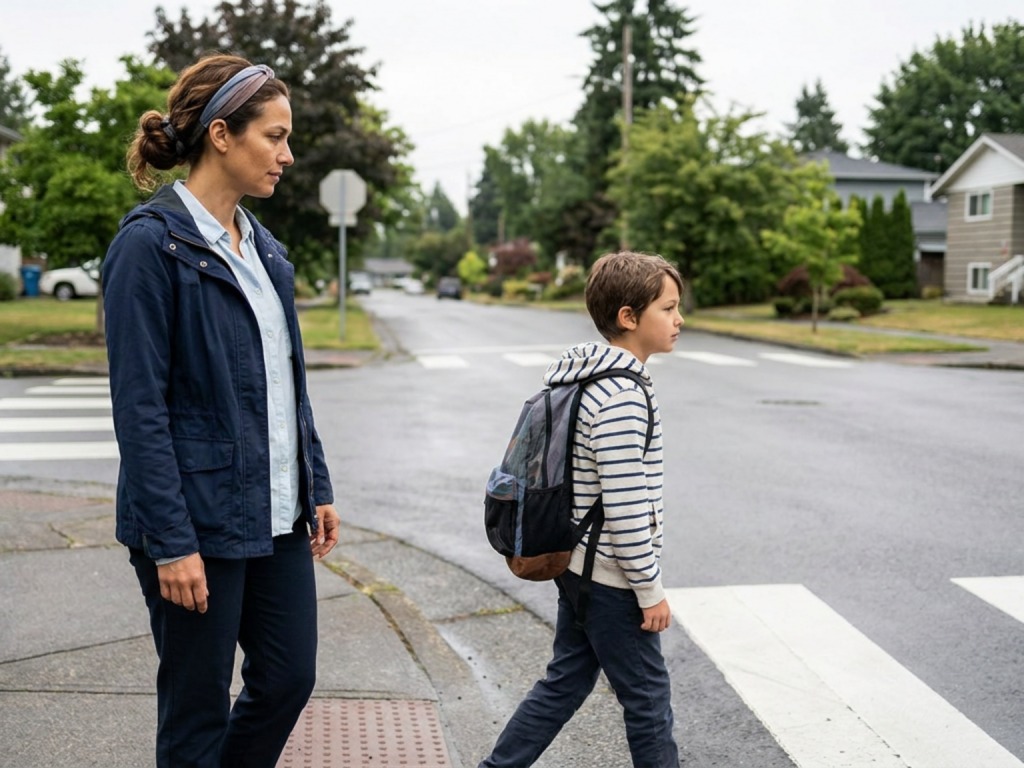
Independent mobility may begin in small steps depending on the child and environment. A child might first walk to a neighbor’s door while the parent watches, then walk with a sibling, then navigate a familiar route after practicing road safety. Families should consider traffic patterns, safe adults nearby, communication options, local laws or norms, and the child’s ability to follow safety rules under stress.
Middle childhood autonomy and monitoring should coexist. A child may have more freedom, but parents still need to know where they are, who they are with, and how they will get help. This is not intrusive; it is developmentally appropriate supervision.
Tweens and teenagers: transferring decision-making without disappearing
Adolescence brings major neurobiological changes. Reward sensitivity, peer salience, sleep phase shifts, and identity formation intensify, while prefrontal regulatory circuits continue maturing into young adulthood. This means teenagers need genuine autonomy and real accountability, but they still benefit from adult boundaries and calm guidance.
Teen independent decision-making can be practiced in increasingly consequential areas: managing spending money, planning transportation, communicating with teachers, organizing study time, cooking simple meals, applying for activities or jobs, and negotiating social plans. Parents can use collaborative problem-solving with adolescents: define the concern, listen to the teen’s perspective, brainstorm options, agree on a plan, and revisit it without humiliation.
Digital independence deserves special attention. Smartphones, social media, gaming, and online communities provide opportunities for learning and connection, but also expose adolescents to sleep disruption, exploitation, bullying, misinformation, and compulsive use patterns. Rather than relying only on surveillance, parents can teach risk assessment, privacy, consent, source evaluation, and how to exit unsafe interactions.
Independence in adolescence does not mean emotional detachment. Teens still need attachment security: a reliable adult who can tolerate disagreement, repair conflict, and remain available when judgment fails.
How to know when your child is ready for more independence
Readiness is not a single trait. A child may be ready to cook eggs but not ready to cross a busy road, or ready to manage homework but not ready to regulate group-chat conflict. Parents can assess readiness across several domains:
- Skill: Has the child practiced the task with supervision?
- Judgment: Can the child explain safety rules and likely consequences?
- Regulation: Can the child pause, ask for help, and recover from frustration?
- Reliability: Has the child shown consistency in lower-risk situations?
- Environment: Is the setting reasonably safe, predictable, and supportive?
- Backup: Does the child know who to contact and what to do if something goes wrong?
A practical approach is to use a “confidence ladder.” Start with watching, then doing together, then doing while the parent is nearby, then doing alone in a low-risk context, then expanding distance or complexity. This keeps the child challenged but not abandoned.
Supporting children who need a different pace
Some children need more time, more structure, or specialized support to build independence. Neurodevelopmental conditions, chronic illness, anxiety symptoms, trauma exposure, sensory processing differences, sleep disorders, language delays, motor coordination challenges, and learning differences can all affect readiness. This does not mean the child is incapable; it means the scaffolding may need to be more explicit and individualized.
Parents should avoid comparing siblings or peers. A child with executive function vulnerabilities may need checklists, timers, visual schedules, rehearsal, and environmental modifications long after another child no longer does. A child with medical needs may need stepwise teaching for medication awareness, symptom reporting, or emergency planning, guided by qualified clinicians.
If independence struggles are severe, sudden, associated with regression, panic, aggression, persistent school refusal, unsafe behavior, or impairment in daily functioning, it is wise to consult a pediatrician, child psychologist, occupational therapist, speech-language pathologist, or other appropriate healthcare professional. The goal is not to label the child casually, but to understand barriers and support development.
Parent habits that encourage autonomy
Children often become more independent when parents adjust their own responses. Many loving parents over-function because they are tired, rushed, anxious, or trying to prevent distress. This is understandable, but repeated rescuing can unintentionally reduce practice.
Helpful parent habits include:
- Pause before helping. Ask, “Do they need rescue, coaching, or just time?”
- Use process praise: “You kept trying different ways,” rather than only “You’re so smart.”
- Let safe mistakes happen. A forgotten library book or wrinkled shirt can teach more than a lecture.
- Separate support from control. You can offer structure without taking over.
- Repair after conflict. Saying “I was too sharp; let’s try again” models accountability.
- Build routines when everyone is calm, not during a crisis.
Independence grows best in a warm, authoritative environment: high responsiveness combined with clear expectations. Children need to feel both capable and connected.
When to slow down and seek support
- Do not leave a child unsupervised in situations involving water, traffic, fire, weapons, unsafe adults, or medications unless safety is clearly established and age-appropriate.
- Sudden loss of previously mastered skills, significant withdrawal, or major behavior change should be discussed with a healthcare professional.
- Persistent anxiety, panic, self-harm talk, aggression, or school refusal warrants timely professional evaluation.
- Children with chronic medical conditions may need clinician-guided plans before taking on health-related independence.
- Avoid using independence as punishment, shame, or emotional withdrawal.
Tools & Assistance
- Create a weekly independence ladder with one small new responsibility
- Use visual routines, timers, checklists, and labeled storage areas
- Hold brief family meetings to review chores, schedules, and problem-solving
- Practice community safety skills such as road crossing, trusted adults, and emergency contacts
- Consult a pediatrician, school counselor, occupational therapist, or child mental health professional when concerns persist
FAQ
Should independence be based strictly on age?
No. Age provides a general guide, but readiness also depends on temperament, skills, executive function, health, environment, and prior practice.
What if my child refuses to do tasks they can do?
Start with curiosity rather than criticism. Fatigue, anxiety, unclear steps, sensory discomfort, or a need for connection can look like refusal. Use routines, choices, and calm follow-through.
How much should I let my child fail?
Allow small, safe, recoverable mistakes. Do not allow failures that create significant risk to health, safety, dignity, or long-term wellbeing.
How can I encourage independence without becoming too permissive?
Pair autonomy with boundaries. Children can choose how to complete a task while parents define safety rules, family expectations, and respectful behavior.
When should a teen manage their own medical appointments or medication?
This should be individualized and discussed with the teen’s healthcare team, especially for chronic conditions, controlled medications, mental health treatment, or complex regimens.
Sources
- PubMed Central — Exploring Family Perspectives on Children's Independent Mobility
- National Association for the Education of Young Children — Growing Independence: Tips for Parents of Toddlers and Twos
- Michigan State University Extension — Developing independence in children
Disclaimer
This article is for educational purposes only and does not diagnose, treat, or replace medical, developmental, or mental health care. Consult a qualified healthcare professional for concerns about your child’s safety, development, behavior, or health needs.


















Please log in to leave a comment.