
Intro
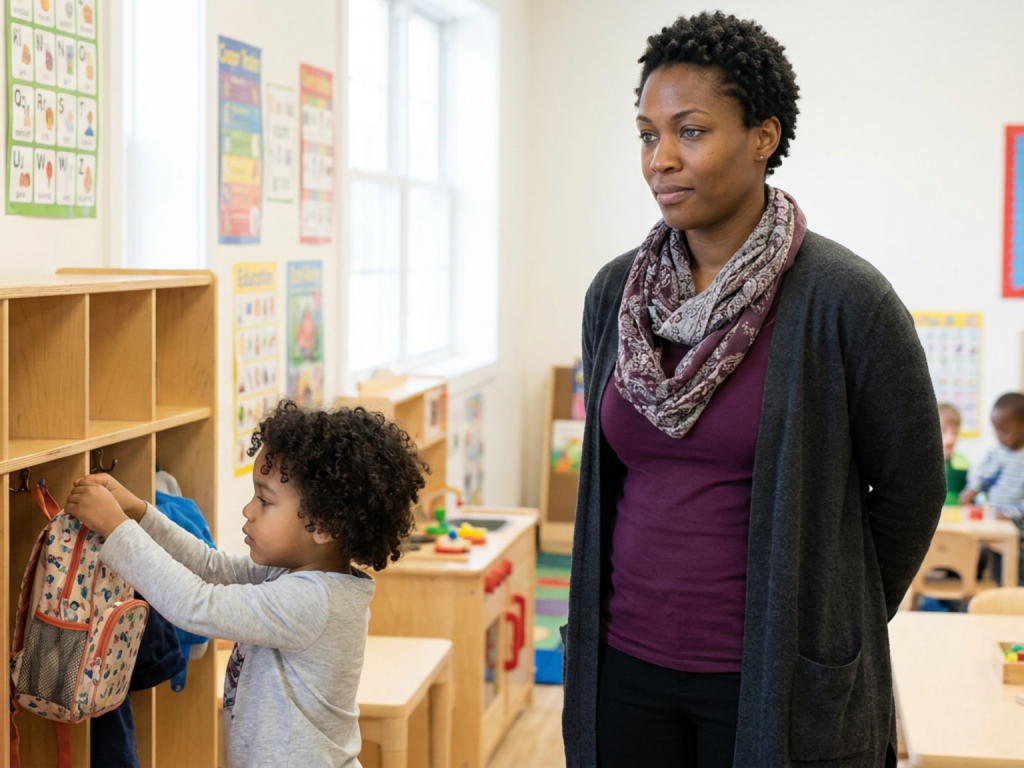
Building independence in children is not about pushing them to grow up faster. It is about giving them safe, developmentally appropriate opportunities to practice self-help, decision-making, emotional regulation, problem-solving, and responsibility while a caring adult remains nearby. Independence grows through repetition: a toddler trying to put shoes on, a preschooler choosing between two snacks, a school-age child packing a bag, or a teenager planning how to handle a social commitment.
For parents, this can be emotionally complicated. It is natural to want to protect children from frustration, mess, delay, or disappointment. Yet when adults do everything for a child, the child may have fewer chances to build executive functions such as planning, working memory, inhibitory control, and cognitive flexibility. The goal is not sudden freedom, but scaffolded autonomy: enough support to keep the child safe, and enough space for the child to experience competence.
Highlights
Independence develops gradually through repeated, age-appropriate practice rather than one dramatic milestone.
Warmth and structure work together: children need secure relationships and predictable limits in order to take healthy risks.
Small daily tasks, such as dressing, tidying, choosing, cooking, and planning, are powerful opportunities for autonomy.
Frustration is not always harmful; with supportive coaching, manageable struggle can strengthen resilience and problem-solving.
Children with developmental, medical, mental health, or sensory needs may need individualized supports from qualified professionals.
Start with a realistic view of independence
Independence is not the same as obedience, emotional detachment, or doing everything alone. A young child who asks for help is not failing; a teenager who wants privacy is not necessarily rejecting the family. Healthy autonomy means a child gradually learns, within a reliable relationship, to manage more of life with increasing competence.
Developmentally, children move from co-regulation to self-regulation. In infancy and early childhood, the nervous system relies heavily on adult support for calming, transitions, and organization. Over time, children internalize routines, language, and coping strategies. This is why a preschooler may need a visual reminder to wash hands, while an adolescent may be ready to manage homework deadlines with periodic check-ins.
A useful principle is to ask: “What part of this task can my child do now, and what part still requires adult support?” For example, a three-year-old may not be able to choose weather-appropriate clothing independently, but may choose between two parent-approved outfits. A nine-year-old may not manage a whole weekly schedule, but may pack sports gear the night before. A teenager may not make every high-stakes decision alone, but can increasingly participate in decisions about activities, friendships, money, and time management.
Use predictable routines as a platform for autonomy
Predictable routines reduce cognitive load. When the sequence of events is familiar, children do not have to use all their mental energy figuring out what comes next. This frees capacity for self-initiation: brushing teeth before pajamas, putting shoes by the door, placing homework in a backpack, or checking a calendar before leaving.
For toddlers and preschoolers, simple routines are especially helpful. Keep the sequence brief and concrete: wake up, use the bathroom, get dressed, eat breakfast, put dishes in the sink. Visual cues can help children who are not yet reading, and repetition matters more than perfection. If your child resists, the routine may be too long, too vague, or happening when the child is hungry, tired, or overstimulated.
For school-age children and teens, routines can become more collaborative. Instead of micromanaging, invite planning: “What do you need to do before school tomorrow?” or “When would be a good time to charge your device and pack your bag?” This supports executive function while preserving parental oversight.
Routines also prevent independence from becoming a daily negotiation. When the expectation is stable, parents do not need to re-decide every step. For more detail, an article on building routines for children can pair well with this approach.
Offer limited choices that are real and manageable
Choice is one of the simplest ways to build agency, but too many options can overwhelm children. Limited choices allow autonomy within safe boundaries. A toddler might choose between the blue cup and the green cup. A preschooler might choose whether to put on socks or pants first. A school-age child might choose whether to do reading before or after dinner. A teenager might choose which extracurricular activity fits their interests and schedule.
The key is that both options must be acceptable to the adult. Avoid offering a choice if there is no real choice. “Do you want to go to the doctor?” may create conflict if the visit is necessary. A better option is: “We are going to the appointment. Do you want to bring a book or a toy for the waiting room?”
Respectful language matters. Phrases such as “You are working hard on that” or “You figured out the first step” reinforce effort and competence. By contrast, constant correction can make children feel that independence is risky because mistakes lead to criticism.
Useful choice structures include:
- “You may choose between these two weather-appropriate outfits.”
- “Would you like to clean up blocks first or books first?”
- “Do you want help starting, or do you want to try for two minutes first?”
- “Which homework task do you plan to do before your break?”
- “What is your plan for getting home safely?”
Let children try hard things before stepping in
Many parents step in quickly because they are kind, busy, or worried the child will become upset. But if adults consistently rescue children at the first sign of difficulty, children may learn that frustration means they cannot cope. Tolerable frustration, supported by a calm adult, is different from neglect. It is a training ground for persistence.
A practical method is the pause-and-coach approach. First, pause for a few seconds instead of immediately taking over. Second, observe what the child is trying. Third, offer a cue rather than a full solution: “Look at where the zipper starts” or “What did you do last time?” If the child remains stuck, provide partial help. You might hold the coat steady while the child pulls the zipper, or read the first instruction while the child completes the next step.
This approach is sometimes called scaffolding. In developmental terms, it means placing support just below the level where the child would fail completely, while leaving enough challenge for learning. Scaffolding is especially important for children with neurodevelopmental differences, motor delays, anxiety, learning difficulties, or sensory processing differences; the same principle applies, but the amount and type of support may need adjustment.
Parents can use a simple ladder:
- Watch silently for a short period.
- Encourage effort: “Keep trying; I am here.”
- Ask a guiding question: “What is the next small step?”
- Demonstrate once, then return the task to the child.
- Help with only the hardest part.
- Take over only when safety, distress, or time truly requires it.
Use chores as skill-building, not punishment
Household tasks teach competence, sequencing, responsibility, and contribution. Chores should not be framed primarily as punishment; they are part of belonging to a family. Even very young children can participate when tasks are simple, safe, and matched to their abilities.
Toddlers may place clothes in a hamper, wipe a small spill with help, or put toys into a bin. Preschoolers can set napkins on the table, feed a pet with supervision, or sort socks. School-age children can pack lunch with guidance, load parts of the dishwasher, fold laundry, or manage a checklist. Teenagers can cook simple meals, handle transportation planning, budget for small expenses, or take responsibility for recurring household jobs.
Expect imperfect results. A child learning to sweep may leave crumbs; a child learning to pack a bag may forget something. The teaching response is more effective when it stays calm and specific: “The folder is missing. Let us add that to your checklist for tomorrow.” Shame may produce short-term compliance but can reduce willingness to try.
To make chores more successful, keep instructions concrete, model the task, use checklists when needed, and praise completion and effort rather than perfection.
Balance independence with boundaries and safety
Independence does not mean children set all limits for themselves. The most effective parenting approaches tend to combine warmth with firm, consistent boundaries. Children need enough freedom to practice judgment and enough structure to prevent preventable harm.
For young children, safety boundaries are direct: hold hands near traffic, use helmets, keep medicines and cleaning products locked away, and supervise water activities. For school-age children, boundaries may include screen time rules, sleep routines, internet safety, and expectations about where they may go. For adolescents, independence often includes negotiating curfews, driving safety, substance-use conversations, sexual health education, online privacy, and peer pressure.
Open communication is essential in the teen years. The Centers for Disease Control and Prevention emphasizes encouraging adolescents to make decisions, participate in activities outside the home, and communicate openly while parents continue to provide guidance and structure. This does not mean approving every choice. It means staying connected enough that the teenager can seek help before a problem becomes dangerous.
When setting limits, explain the reason briefly, especially as children mature. “You cannot ride there alone because the route crosses a high-traffic road” is more useful than “Because I said so.” For further support, resources on setting boundaries and rules for children, communicating with children effectively, and practicing authoritative parenting fit naturally with independence-building.
Support emotional independence without emotional abandonment
Children become emotionally independent by first feeling emotionally safe. A child who is distressed does not need a lecture about independence; they need co-regulation, validation, and then problem-solving. Validation is not the same as giving in. You can say, “You are disappointed that I will not tie your shoes for you. I know it is frustrating. I will sit here while you try the first loop.”
Emotional independence includes naming feelings, tolerating delay, recovering from mistakes, apologizing, asking for help appropriately, and making repairs after conflict. These are learned skills. Parents model them when they say, “I was frustrated and raised my voice. I am sorry. I am going to try again.”
Some children have a lower threshold for distress because of temperament, anxiety, sleep deprivation, trauma exposure, neurodevelopmental differences, chronic illness, or family stress. If a child’s distress is intense, persistent, or impairing daily life, it is wise to consult a pediatrician, child psychologist, developmental-behavioral pediatrician, occupational therapist, or school support team as appropriate. The aim is not to label a child unnecessarily, but to understand what supports may help.
Adjust your role as children grow
Independence is a moving target. What is supportive at age three may be intrusive at age thirteen. Parents often need to shift from manager, to coach, to consultant.
In early childhood, parents provide structure and hands-on help. In middle childhood, they increasingly ask questions, use checklists, and allow natural consequences when safe. In adolescence, parents should still monitor risk, but also invite the young person to think through consequences: “What are your options? What could go wrong? Who can you call if you need help?”
Natural consequences can be powerful, but they should be safe and proportionate. A child who forgets a library book may experience a small inconvenience. A child who forgets medication, medical equipment, or a safety plan may need adult intervention. Children with health conditions such as asthma, diabetes, epilepsy, severe allergies, or psychiatric vulnerabilities require individualized independence plans developed with healthcare professionals.
Healthy independence is not a straight line. Children often regress during illness, transitions, family stress, new school settings, or developmental leaps. Temporary extra support does not erase progress; it can preserve trust until the child is ready to resume practicing.
When to seek extra support
- A child’s anxiety, anger, sadness, or avoidance significantly interferes with school, sleep, eating, friendships, or family life.
- A child loses previously acquired self-care, communication, academic, or social skills.
- Independence tasks are unsafe because of impulsivity, self-harm risk, substance use, unsafe peers, or dangerous environments.
- A medical condition, disability, pain, fatigue, or medication effect appears to limit daily functioning.
- Parent-child conflict around autonomy becomes frequent, intense, or frightening for anyone in the home.
Tools & Assistance
- Create a short visual or written routine checklist for one daily task.
- Offer two acceptable choices instead of open-ended or unlimited options.
- Use a pause-and-coach method before taking over a difficult task.
- Assign one age-appropriate household responsibility and teach it step by step.
- Consult a pediatrician, school counselor, child psychologist, occupational therapist, or developmental specialist when independence is unusually difficult or unsafe.
FAQ
At what age should children start becoming independent?
Independence begins in small ways during toddlerhood, such as choosing between two options or helping put toys away. The expectations should match the child’s developmental stage, safety needs, and individual abilities.
What if my child gets upset when I ask them to do things alone?
Stay calm, validate the feeling, and reduce the task to a smaller step. Distress does not always mean the task is inappropriate, but severe or persistent distress may require professional guidance.
Is it harmful to help too much?
Frequent over-helping can limit practice with problem-solving and self-regulation. However, children still need support; the goal is gradual scaffolding, not forcing independence before they are ready.
How can I encourage independence in a teenager without losing control?
Shift from direct management to structured coaching. Keep clear safety limits, ask teens to plan and problem-solve, encourage outside activities, and maintain open communication.
Do children with developmental or medical needs build independence differently?
They may need more individualized pacing, adaptive tools, therapeutic support, or medical planning. Families should work with qualified healthcare and educational professionals to set safe, realistic goals.
Sources
- Child Mind Institute — How to Build Independence in Preschoolers
- National Association for the Education of Young Children — Growing Independence: Tips for Parents of Toddlers and Twos
- Centers for Disease Control and Prevention — Tips for Encouraging Independence
Disclaimer
This article is for general educational purposes and is not a substitute for medical, mental health, or developmental evaluation. Consult qualified healthcare professionals for concerns about your child’s behavior, safety, development, or medical needs.


















Please log in to leave a comment.