
Intro
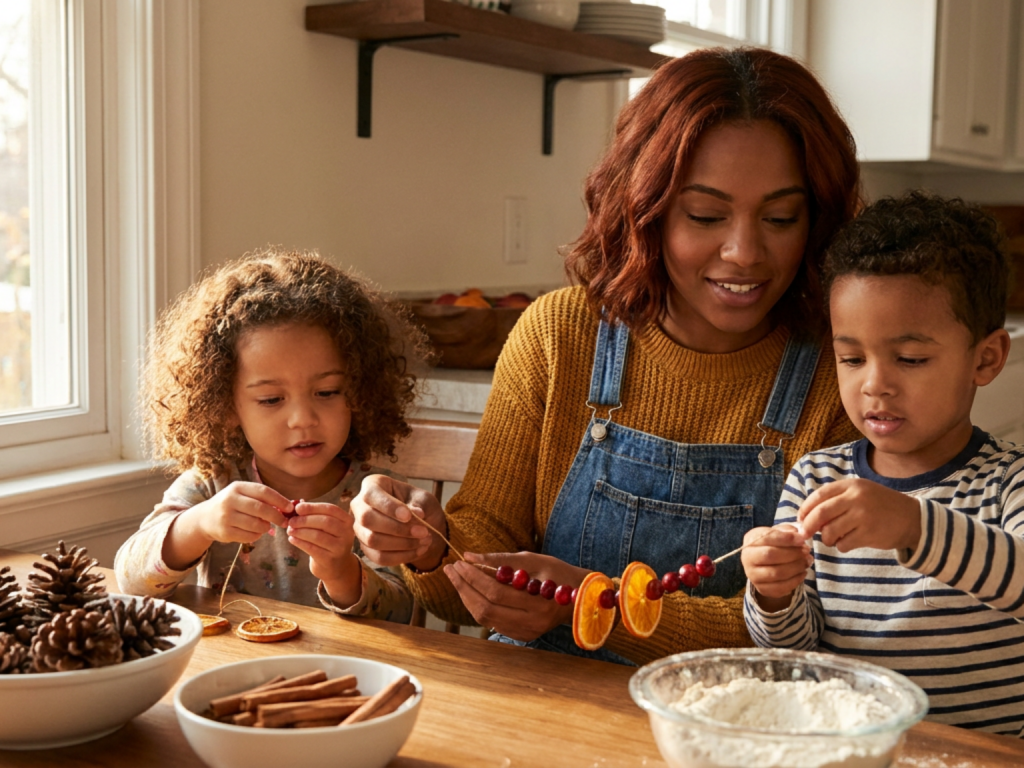
Holiday traditions with children can become much more than seasonal entertainment. Predictable, meaningful rituals help children understand belonging, family identity, cultural continuity, and emotional connection. For many families, these moments also create a protective rhythm during a time of year that can be joyful, overstimulating, financially pressured, or emotionally complicated.
Highlights
Children often benefit from rituals that are predictable, participatory, and emotionally warm rather than elaborate or expensive.
Holiday traditions can support child mental health by strengthening connection, identity, and a sense of safety.
The best traditions are flexible enough to fit a child’s developmental stage, sensory needs, temperament, and family circumstances.
Caregivers can reduce holiday stress by choosing a few meaningful rituals and letting go of perfection.
Why holiday traditions matter to children
Children learn about family life through repetition. A song sung every year, a meal prepared together, a candle lit, a story read, a neighborhood walk, or a small act of service can become a form of emotional scaffolding. These repeated experiences communicate, “This is who we are, this is how we care for one another, and you have a place here.”
From a developmental perspective, rituals support autobiographical memory, identity formation, attachment security, and social learning. Younger children may not understand the full meaning of a tradition, but they register the affective tone: warmth, shared attention, laughter, reverence, or calm. Older children and adolescents may begin to connect traditions with values, cultural heritage, spirituality, gratitude, generosity, or resilience.
The Kids Mental Health Foundation emphasizes that holiday traditions can strengthen family bonds and children’s sense of connection. It also notes that children benefit when adults explain the meaning behind a tradition and allow them to participate in age-appropriate ways. In other words, the emotional value does not come from a perfect table, flawless photos, or an expensive trip; it comes from shared meaning and belonging.
Start with connection, not perfection
Many caregivers feel pressure to create magical holidays. Social media, extended family expectations, financial constraints, and a child’s excitement can turn traditions into a source of stress. A supportive starting point is to ask: “What do we want our child to feel and remember?” Common answers include safe, included, loved, curious, grateful, proud of their culture, or connected to family.
Once the emotional goal is clear, the tradition can be simple. A child may remember decorating one corner of the kitchen more vividly than an elaborate party. They may treasure choosing one ornament, helping stir a familiar recipe, drawing cards for relatives, setting out special pajamas, or making a paper chain countdown. Focus on the Family’s parenting guidance highlights practical ways to update traditions, such as involving children in decorating, choosing ornaments, creating family cards, or selecting a service project together.
It is also acceptable to retire traditions that no longer fit. A ritual that worked when children were toddlers may feel forced when they become teenagers. A large gathering may be too much after a family illness, divorce, relocation, bereavement, or financial setback. Updating a tradition does not mean the family failed; it means the tradition is alive enough to grow with the people it serves.
Match traditions to developmental stage
Children’s needs change quickly. A holiday plan that ignores developmental capacity can lead to frustration for both caregivers and children.
- Toddlers and preschoolers: Short, sensory-rich rituals work best. Examples include hanging soft decorations, tasting one ingredient, singing a simple song, or placing a sticker on a countdown calendar. Expect limited impulse control, variable attention, and emotional dysregulation when routines are disrupted.
- School-age children: Children in this stage often enjoy having a real job. They can help measure ingredients, wrap simple gifts, choose a charity item, make place cards, or interview grandparents about past holidays. Explaining the “why” behind customs supports moral reasoning and cultural understanding.
- Adolescents: Teenagers may want autonomy and may resist traditions that feel childish. Invite them to modify rituals: choosing music, planning a meal, organizing a movie night, leading a service activity, or deciding which gathering matters most. Respectful negotiation can preserve connection without creating a power struggle.
- Neurodivergent children: Children with autism spectrum disorder, attention-deficit/hyperactivity disorder, sensory processing differences, anxiety, or learning differences may need visual schedules, previewing, quieter spaces, simplified choices, and permission to opt out of overwhelming activities. Families should consider individualized supports and consult clinicians or therapists who know the child if holiday disruption regularly leads to significant distress.
Build predictable family routines around the holiday
Holiday excitement often disrupts sleep, meals, screen limits, and transitions. Some flexibility is healthy, but children’s nervous systems still depend on regulation cues. Predictable family routines can reduce meltdowns, irritability, and conflict, especially for younger children or children with anxiety, ADHD, or sensory sensitivities.
Consider keeping a “minimum version” of core routines: a consistent wake time when possible, a calming bedtime sequence, regular access to protein- and fiber-containing foods, movement breaks, and a predictable plan for departures. If a gathering will run late, tell the child what will happen: “We will eat, play with cousins, change into pajamas there, and then drive home.” This kind of previewing supports executive function and reduces uncertainty.
Caregivers can also create transition rituals. Before leaving a party, a child might say goodbye to three people, choose one snack for the ride, and put on their coat after a five-minute warning. For adolescents, the transition may be more collaborative: “We need to leave by 9:30. What would help you wrap up with your friends?”
Invite children to contribute meaningfully
Children are more likely to value a tradition when they have a role in it. Contribution supports competence, relatedness, and self-efficacy. Even small tasks can matter: sprinkling cinnamon, choosing a candle, placing stamps on cards, recording a family recipe, reading a poem, or helping pack donations.
Try offering limited choices rather than open-ended responsibility. For example: “Would you like to help bake cookies or draw gift tags?” is easier than “What should we do for the holidays?” For older children, ask what tradition they would keep, change, or drop this year. Their answers may reveal what feels meaningful and what has become burdensome.
Service-oriented traditions can be powerful when handled thoughtfully. Families might choose groceries for a community pantry, write notes to isolated neighbors, shovel a walkway, donate warm clothing, or participate in a local volunteer project. Keep the focus on dignity and empathy rather than saviorism. Children can learn generosity without being frightened, shamed, or overwhelmed by adult-level problems.
Make room for culture, faith, and blended family realities
Holiday traditions often carry cultural, religious, or intergenerational meaning. Children benefit when caregivers explain the story behind a ritual: why a food is prepared, why a song is sung, why a prayer is said, why a decoration is used, or why a day is observed. These explanations help children connect behavior with identity and values.
In blended, adoptive, foster, migrant, or multicultural families, traditions may need extra sensitivity. A child may be grieving a previous home, missing a parent, navigating two households, or trying to understand multiple cultural practices. Rather than forcing uniformity, families can create a respectful bridge: “In this home we do this, and we also want to honor what has mattered to you.”
If co-parenting is involved, try to reduce loyalty conflicts. Children should not feel they must rank one household’s traditions above another’s. A simple repeated ritual, such as a breakfast, a walk, or a bedtime call, can provide continuity even when the holiday schedule changes yearly.
Protect sleep, nutrition, and sensory regulation
Holiday traditions with children are easier when basic physiologic needs are protected. Sleep restriction can worsen emotional lability, impulsivity, pain sensitivity, and attention. Large amounts of sugar are not usually the sole cause of behavioral difficulties, but irregular meals, hunger, dehydration, overstimulation, and fatigue can combine to make self-regulation much harder.
Families can plan supportive family health routines without turning the holiday into a set of rigid rules. Offer familiar foods alongside special foods. Bring noise-reducing headphones, a comfort object, or a quiet activity for children who become overwhelmed. Build in outdoor movement or a brief decompression break between events. For children with food allergies, diabetes, gastrointestinal disorders, feeding difficulties, or medication schedules, discuss holiday planning with the child’s healthcare team as needed.
Screen use also deserves planning. Holiday movies, video calls, and games may be part of the fun, but unlimited screen time can displace sleep and increase transition conflict in some children. A clear plan, such as one movie after dinner or a set time for gaming with cousins, is usually easier than negotiating repeatedly in the moment.
When holidays bring grief, stress, or big feelings
Holidays can intensify grief, separation, infertility struggles, family conflict, financial strain, trauma reminders, or loneliness. Children may show distress through irritability, regression, clinginess, somatic complaints, sleep disruption, withdrawal, or behavioral outbursts. These reactions do not automatically indicate a psychiatric disorder, but they deserve compassionate attention.
It can help to name reality in developmentally appropriate language: “This holiday feels different because Grandpa died,” or “We are spending less money this year, but we will still choose one special thing to do together.” Avoid pretending everything is fine if children can sense tension. Honest, calm communication is usually more regulating than secrecy.
If a child has persistent sadness, severe anxiety, self-harm statements, aggression that creates safety concerns, trauma symptoms, marked sleep or appetite changes, or functional decline at school or home, caregivers should consult a pediatrician, licensed mental health professional, or emergency services when safety is immediate. Holiday traditions can support connection, but they are not a substitute for clinical care when a child is struggling significantly.
When to seek extra support
- A child talks about self-harm, wanting to die, or not being safe.
- Aggression, elopement, or impulsive behavior creates immediate safety concerns.
- Sleep, appetite, school functioning, or social engagement changes markedly and persists.
- Holiday events trigger panic, traumatic memories, or severe emotional dysregulation.
- Caregiver stress becomes unmanageable or interferes with safe, responsive parenting.
Tools & Assistance
- Create a short list of two or three traditions that matter most this year.
- Use a visual calendar or written plan so children know what to expect.
- Prepare a quiet space, sensory supports, snacks, and a realistic exit plan for gatherings.
- Ask children which tradition they would keep, change, or skip.
- Consult a pediatrician, therapist, dietitian, or other clinician for child-specific medical or mental health concerns.
FAQ
Do holiday traditions need to be the same every year?
No. Repetition helps children, but flexibility keeps traditions healthy. A smaller or updated version can preserve meaning when family circumstances change.
What if my child refuses a tradition I loved as a child?
Try to understand what feels uncomfortable or uninteresting to them. You can preserve the value behind the ritual while changing the format, length, or role your child plays.
How many traditions are enough?
A few consistent, emotionally warm rituals are enough. Children usually benefit more from connection and predictability than from a crowded holiday schedule.
How can I help an overwhelmed child during a gathering?
Offer a calm break, reduce sensory input, provide food or water if needed, and use simple language. If overwhelm is frequent or severe, consider discussing strategies with a healthcare or mental health professional.
Sources
- The Kids Mental Health Foundation — Holiday Traditions Build Connections
- Focus on the Family — Updating Tired Traditions
- The Kids Mental Health Foundation — Holiday Traditions Build Connections
Disclaimer
This article is for educational purposes only and does not provide diagnosis or treatment. Consult a qualified healthcare professional for concerns about a child’s physical health, mental health, development, or safety.


















Please log in to leave a comment.