
Intro
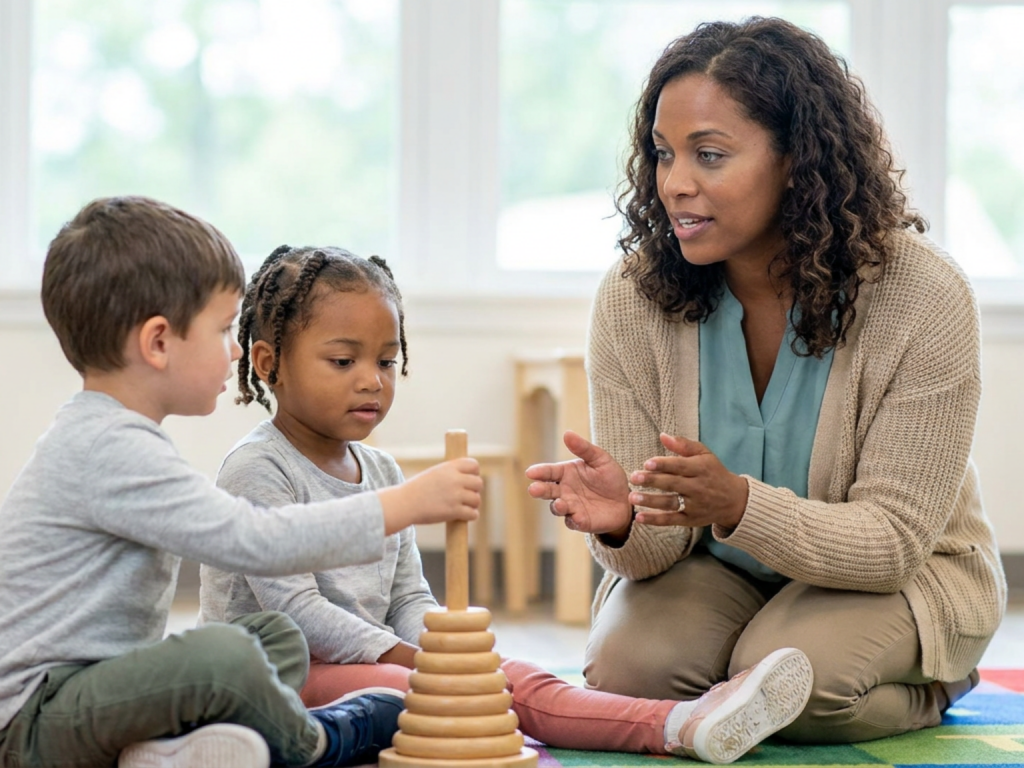
Teaching respect is not a single conversation, a poster on the wall, or a rule that children either obey or reject. It is a repeated relational experience: children learn what respect feels like when adults listen, set limits calmly, repair mistakes, and treat them as people whose emotions matter. This is especially true in early childhood, when social learning, emotional regulation, and perspective-taking are still developing.
For medically literate parents and caregivers, it can help to think of respect as a skill supported by neurodevelopment. Young children are not born with mature impulse control, frustration tolerance, or cognitive empathy. They acquire these capacities gradually through co-regulation, consistent boundaries, language modeling, and safe attachment relationships. The goal is not to raise a child who never disagrees, but one who can disagree without demeaning others, express needs without aggression, and recognize the dignity of people around them.
Highlights
Children learn respectful behavior primarily by observing how adults speak, listen, apologize, and manage conflict.
Respectful parenting is not permissive parenting; warmth works best when paired with clear, consistent boundaries.
Young children need concrete language, repetition, and practice because impulse control and perspective-taking are still maturing.
Apologizing to a child after an adult mistake strengthens trust and models accountability rather than weakening authority.
Persistent aggression, severe defiance, or major functional impairment may warrant consultation with a pediatrician, mental health professional, or developmental specialist.
Respect begins with what children experience
Children do not learn respect only from being told, “Be respectful.” They learn it from the tone adults use when frustrated, the way family members talk about neighbors or service workers, whether adults interrupt, and how mistakes are handled. Michigan State University Extension emphasizes that preschoolers learn respect through everyday interactions with adults who model respectful behavior, use polite language, and treat children with mutual respect.
This does not mean adults must be perfectly calm at all times. In real family life, parents get tired, overstimulated, and impatient. What matters is the overall pattern and the willingness to repair. A child who sees a caregiver say, “I spoke too sharply. I am sorry. I should have used a calmer voice,” learns that respect includes accountability.
From a developmental perspective, modeling works because children are highly attuned to social cues. They imitate not only words but also facial expression, prosody, body posture, and conflict style. A child who repeatedly sees contempt, sarcasm, or humiliation may copy those patterns even if the household rule is “use kind words.” Conversely, a child who sees adults pause, listen, and choose words carefully is given a living template for self-regulation.
Use respectful language without giving up parental authority
Some caregivers worry that speaking respectfully to a child means negotiating every limit or allowing disrespect in return. In fact, respect and authority are not opposites. The most effective parenting approaches often combine warmth with structure: the adult remains responsible for safety and limits while communicating in a way that preserves the child’s dignity.
Respectful language is concrete and calm. Instead of “You are so rude,” try, “I will listen when your voice is quieter.” Instead of “Stop being dramatic,” try, “You are very upset, and the answer is still no.” This separates the child’s worth from the behavior that needs correction. It also gives the child a replacement behavior, which is more useful than global criticism.
Practical respectful phrases include:
- “I hear that you are angry. You may not hit.”
- “Try again with words I can understand.”
- “I will not let you speak to your sister that way. You can say, ‘I need a turn.'”
- “It is okay to disagree. It is not okay to insult.”
- “I made a mistake, and I am going to fix it.”
These statements are firm, not indulgent. They teach that respect includes both emotional honesty and behavioral limits.
Listening is one of the strongest models of respect
Children are more likely to listen respectfully when they have repeated experiences of being listened to. Attentive listening does not require agreeing with the child or granting every request. It means pausing long enough to understand the message behind the behavior. Prevent Child Abuse America notes that children need to see that they are respected first, which can strengthen their capacity to show respect to others.
Active listening can be brief. A parent might say, “You wanted more time at the park, and leaving feels unfair.” That one sentence can reduce escalation because it signals recognition. The boundary can then follow: “We still need to leave now.” This sequence validates emotion without surrendering structure.
Listening also teaches conversational reciprocity. When adults put down the phone during a child’s story, wait before responding, and avoid mocking questions or ideas, children learn that people’s words deserve attention. Over time, this becomes a model for how they treat siblings, classmates, teachers, and peers.
When a child interrupts, demands, or talks over others, respond by teaching the skill rather than only punishing the interruption. For example: “I want to hear you. I am finishing one sentence, then it will be your turn.” This models turn-taking, impulse control, and respect for shared space.
Teach empathy and perspective-taking in everyday moments
Respect becomes deeper when children begin to understand that other people have feelings, needs, boundaries, and viewpoints. This capacity, often called perspective-taking or cognitive empathy, develops gradually. Preschoolers may show compassion one moment and appear self-centered the next; this inconsistency is developmentally common and does not necessarily reflect poor character.
Stories, pretend play, and daily routines are useful tools. After reading a book, ask, “How do you think that character felt when no one listened?” At the grocery store, you might say, “The cashier is helping many people. We can use patient voices while we wait.” If a child grabs a toy, try, “Look at your brother’s face. He looks upset. What could we do to help repair this?”
Avoid using empathy as a form of shame. “How could you be so mean?” often triggers defensiveness. A more effective approach is to name the impact and guide repair: “When you pushed, she got hurt and scared. You need to help make it right. You can bring the toy back or ask if she needs space.”
Repair matters because respect is not simply the absence of misbehavior. It is the presence of responsibility. Children need practice apologizing, replacing damaged items when appropriate, checking on someone they hurt, and trying a different behavior next time.
Set boundaries that protect dignity
Respectful families still have rules. In fact, predictable boundaries often make respectful behavior easier because children know what to expect. Boundaries reduce ambiguity, and ambiguity can increase dysregulation, especially for children who are tired, hungry, anxious, neurodivergent, or struggling with transitions.
A respectful boundary has three parts: the limit, the reason when appropriate, and the follow-through. For example: “You may not call people names. Name-calling hurts and does not solve the problem. If it continues, we will pause the game.” The follow-through should be related, proportionate, and delivered without humiliation.
Harsh discipline, public shaming, threats, or ridicule may produce short-term compliance, but they do not reliably teach internalized respect. They can also increase fear, resentment, or imitation of aggressive communication. Children who are humiliated may learn to hide mistakes rather than repair them.
Healthy limits are especially important during conflict. If a child yells, the adult can lower their own volume and say, “I will talk with you when we are both using safe voices.” If a child hits, safety comes first: block gently if possible, create space, and state the limit clearly. After the child is regulated, revisit the event and practice alternatives.
Model apologies, accountability, and conflict repair
One of the most powerful ways to teach respect is to let children see adults repair harm. Apologizing does not erase parental authority; it demonstrates that authority can coexist with humility. Children who receive sincere apologies learn the structure of accountability: name the action, acknowledge the impact, and describe what will change.
A useful adult apology might sound like: “I interrupted you while you were explaining. That was disrespectful. I am sorry. I will listen first, then respond.” This is different from an apology that shifts blame, such as, “I am sorry I yelled, but you made me so angry.” The second version teaches that someone else is responsible for our behavior. The first teaches self-regulation and repair.
Children can learn the same pattern. Instead of forcing a quick, insincere “sorry,” guide them through repair when they are calm enough to participate. Ask: “What happened? Who was affected? What can you do now? What will you try next time?” For younger children, offer choices: “You can give the block back, help rebuild the tower, or draw a picture for your friend.”
This approach also supports emotional literacy. The child learns that guilt can lead to constructive repair rather than collapse into shame. In psychological terms, the adult is helping the child move from dysregulated affect to reflective functioning: the ability to think about one’s own mind and the minds of others.
Respect is shaped by stress, temperament, and neurodevelopment
When children are persistently disrespectful, it is helpful to look beyond the surface behavior. Hunger, sleep deprivation, sensory overload, family stress, inconsistent routines, trauma exposure, learning difficulties, anxiety, language delays, attention regulation problems, and developmental differences can all affect behavior. This does not excuse harmful actions, but it changes how adults respond.
A child with limited expressive language may yell or grab because they lack efficient communication tools. A child with sensory sensitivities may appear defiant when overwhelmed by noise or touch. A child with poor sleep may have reduced inhibitory control, making respectful responses much harder. In each case, the goal is to teach respectful behavior while also addressing the underlying stressor.
Parents should avoid diagnosing a child based only on disrespect, tantrums, or defiance. However, if behavior is intense, persistent, escalating, or impairing school, family, sleep, safety, or peer relationships, consultation is appropriate. A pediatrician, child psychologist, developmental-behavioral pediatrician, school counselor, or licensed family therapist can help assess contributing factors and recommend evidence-informed supports.
Seek urgent help if a child is causing serious injury, making threats of self-harm or harm to others, showing sudden major behavioral changes, or behaving in ways that feel unsafe to manage at home. Safety planning and professional guidance are essential in these situations.
Build a home culture where respect is practiced daily
Respect grows through repetition. A family culture of respect is built in small routines: greeting people, knocking before entering, asking before borrowing, using calm corrections, thanking children for cooperation, and speaking about absent people with basic dignity. These habits give children scripts they can use outside the home.
It can help to define respect in observable terms. A young child may not understand “be respectful,” but they can understand: “Use a calm voice,” “Wait for a turn,” “Keep hands off other people’s bodies,” “Say what you need without insults,” and “Listen when someone says stop.” Specific expectations are easier for children to remember and for adults to reinforce consistently.
Family meetings can also support respect, particularly for school-age children. Keep them short and practical. Let each person share one concern and one possible solution. Adults should retain responsibility for final decisions, but children benefit from seeing that their input is taken seriously. This builds agency and reduces the need to seek power through defiance.
Finally, notice respectful behavior when it occurs. Positive attention strengthens repetition. Instead of a vague “good job,” say, “You were angry and still used words instead of hitting,” or “You waited while I finished talking, and that was respectful.” Labeled praise helps children connect the behavior with the value.
When to seek extra support
- Get professional guidance if aggression, threats, or unsafe behavior is escalating.
- Consult a pediatrician if sudden behavior changes occur with sleep problems, appetite changes, headaches, abdominal pain, or school refusal.
- Ask for developmental or mental health support if disrespect is persistent and impairs family, peer, or school functioning.
- Avoid using humiliation, physical punishment, or fear-based discipline as a teaching strategy.
- Seek urgent help if a child talks about self-harm, harming others, or you feel unable to maintain safety.
Tools & Assistance
- Create a short family respect agreement with three to five observable behaviors.
- Use calm scripts for recurring conflicts, such as turn-taking, name-calling, or transitions.
- Schedule a pediatric visit if behavior changes are sudden, severe, or associated with sleep, learning, or emotional concerns.
- Ask teachers or childcare providers what respectful behavior looks like in that setting and coordinate language across environments.
- Use brief repair conversations after conflict: what happened, who was affected, and what can be done next.
FAQ
Does respecting my child mean letting them argue with every rule?
No. Respect means preserving the child's dignity while maintaining appropriate adult authority. You can listen to feelings and still hold a firm limit.
Should I make my child apologize immediately?
A forced apology may be less useful than guided repair. Once the child is calm, help them name what happened, understand the impact, and choose a concrete way to make amends.
What if I lose my temper and model disrespect?
Repair it. A sincere apology and a plan for doing better can teach accountability, emotional regulation, and respect more effectively than pretending nothing happened.
Why is my child respectful at school but rude at home?
Children often release stress where they feel safest. This does not make disrespect acceptable, but it may signal fatigue, transitions, unmet needs, or the need for clearer home routines.
When is disrespect more than a normal behavior issue?
Consider professional support when behavior is persistent, severe, unsafe, suddenly different, or interfering with relationships, learning, sleep, or daily functioning.
Sources
- Michigan State University Extension — Teaching respect to preschoolers can help build character
- Prevent Child Abuse America — Parenting Tip of the Week - Model Respectful Behavior
- Kangaroo Kids — How to Teach Respect to Students: Modelling Behaviour for Kids
Disclaimer
This article is for informational and educational purposes only and does not diagnose or treat behavioral, developmental, or mental health conditions. Consult a pediatrician or qualified mental health professional for concerns about your child's behavior or safety.















Please log in to leave a comment.