
Intro
Exercise in pregnancy is not about “pushing through” or proving fitness; it is about supporting cardiovascular health, musculoskeletal comfort, metabolic resilience, mood, sleep, and functional strength as the body adapts. For many pregnant people without medical or obstetric contraindications, regular physical activity is recommended and can be safely continued or started gradually with professional guidance.
The safest routine is individualized. A person with an uncomplicated pregnancy who was already active may often continue many activities with modifications, while someone new to exercise may begin gently. Across the first, second, and third trimester, the overall goal remains consistent: moderate, sustainable movement, good hydration, avoidance of overheating and trauma, and close attention to warning symptoms.
Highlights
Most pregnant people without contraindications are encouraged to aim for about 150 minutes of moderate-intensity aerobic activity each week, often divided across several days.
Walking, swimming, stationary cycling, low-impact aerobics, and modified yoga or Pilates are commonly considered appropriate options, while contact sports, high fall-risk activities, scuba diving, and hot yoga should be avoided.
Exercise tolerance often changes as pregnancy progresses, so intensity, position, balance demands, and recovery time usually need adjustment by trimester.
Strengthening the hips, back, core, and pelvic-support muscles can help with posture, low back discomfort, pelvic girdle symptoms, and preparation for daily functional demands.
Core principles for exercising safely in pregnancy
Professional guidance from obstetric organizations generally supports physical activity during pregnancy for people without contraindications. A common target is 150 minutes per week of moderate-intensity aerobic activity. “Moderate intensity” means breathing and heart rate increase, but conversation remains possible. Many people use the talk test rather than a strict heart-rate target, because pregnancy changes resting heart rate, blood volume, and perceived exertion.
Exercise in pregnancy may reduce the risk of gestational diabetes, hypertensive disorders such as preeclampsia, cesarean delivery, low back pain, and pelvic girdle pain. It can also improve stamina, sleep quality, constipation, mood, and general function. These benefits are population-level associations, not guarantees for an individual pregnancy, and exercise should complement, not replace, prenatal care.
A balanced weekly plan often includes aerobic activity, light-to-moderate resistance training, mobility work, and pelvic-floor awareness. Good choices include brisk walking, swimming, water aerobics, stationary cycling, low-impact aerobics, and modified yoga or Pilates. Strength exercises may include wall pushups, supported squats, step-ups, resistance-band rows, and modified planks or side planks, provided they are comfortable and technically controlled.
First trimester: building consistency while respecting fatigue and nausea
The first trimester can be physically demanding even before the pregnancy is visibly advanced. Nausea, vomiting, breast tenderness, fatigue, dizziness, and sleep disruption may affect exercise tolerance. If there are no medical restrictions, the priority is usually consistency rather than intensity. Short sessions, such as 10 to 20 minutes of walking, gentle cycling, swimming, or light strength work, may be more realistic than longer workouts.
People who exercised before pregnancy can often continue many familiar activities, while avoiding new high-risk challenges. Those beginning exercise for the first time should progress gradually, such as starting with low-impact movement several days per week and increasing duration as tolerated. Warm-ups and cool-downs are especially helpful because lightheadedness can occur with rapid changes in position.
Practical first-trimester strategies include:
- Choose times of day when nausea is least intense.
- Eat a small snack if exercising on an empty stomach worsens symptoms.
- Hydrate before, during, and after activity.
- Use the talk test to stay in a moderate range.
- Avoid overheating, especially in hot rooms or humid outdoor conditions.
If bleeding, significant cramping, faintness, chest pain, severe shortness of breath, or other concerning symptoms occur, exercise should stop and a healthcare professional should be contacted.
Second trimester: adapting to posture, balance, and abdominal growth
Many people feel more energetic in the second trimester, making it a useful window for developing a sustainable routine. At the same time, the center of gravity shifts, joints may feel more mobile due to hormonal effects on connective tissue, and the abdomen begins to change exercise mechanics. Balance-conscious choices become increasingly important.
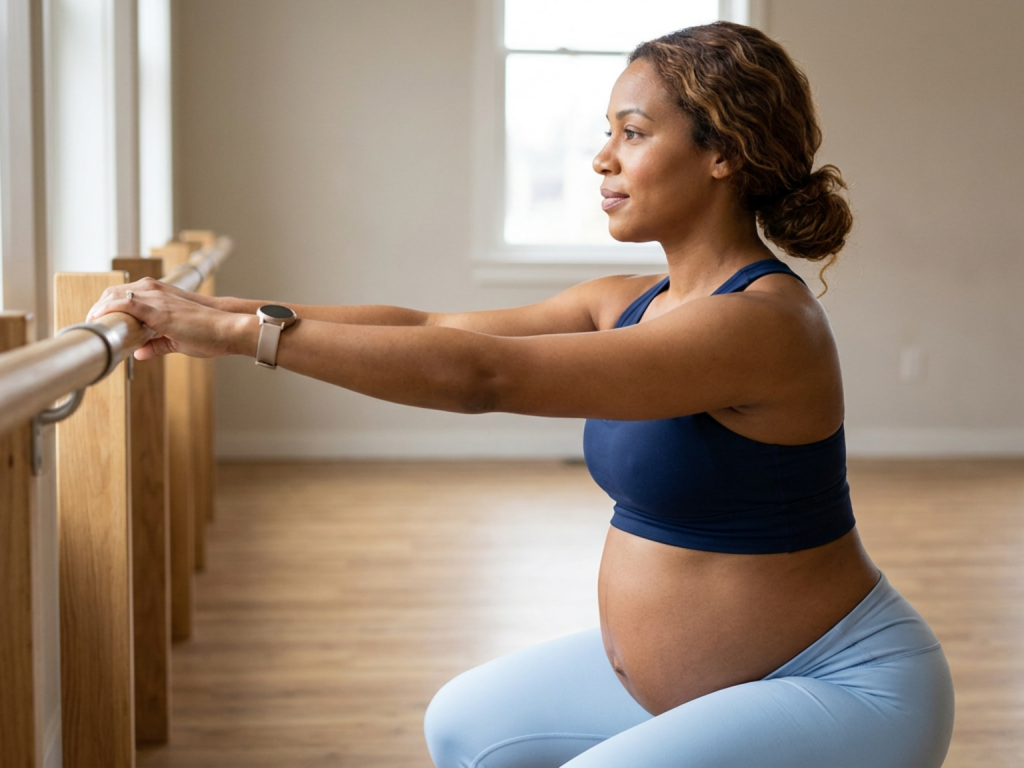
Aerobic activities such as walking, swimming, stationary cycling, and low-impact classes are often well tolerated. Resistance training can focus on functional movements: squatting to a comfortable depth, hip hinges with excellent form, band rows for upper-back strength, wall pushups, step-ups with stable support, and side-lying or elevated core variations. The aim is controlled breathing and alignment, not maximal lifting.
After the first trimester, prolonged exercise flat on the back may be uncomfortable for some and may contribute to lightheadedness due to pressure from the uterus on major blood vessels. This does not mean every brief supine position is dangerous for everyone, but modifications are prudent. Incline positions, side-lying work, seated exercises, standing exercises, and hands-and-knees variations can reduce discomfort and improve circulation.
Second trimester modifications often include:
- Use a wider stance during squats if it feels more stable.
- Hold a wall, rail, or stable surface for balance-heavy movements.
- Replace jump-based movements with step-based alternatives.
- Reduce load or range of motion if pelvic pressure or joint discomfort appears.
- Pause exercises that cause abdominal coning, doming, pain, or breath-holding.
Third trimester: prioritizing comfort, circulation, and functional strength
In the third trimester, reduced exercise tolerance is common. Breathlessness with exertion, pelvic pressure, reflux, sleep disruption, swelling, and low back or pelvic girdle discomfort may change what feels possible. This is not a failure of fitness; it reflects normal physiologic and mechanical demands. The best routine may become shorter, slower, and more frequent.
Walking, swimming, water exercise, prenatal mobility work, supported strength training, and stationary cycling may remain helpful. Water-based exercise can feel particularly comfortable because buoyancy reduces joint loading. Strength sessions can emphasize daily-life movements: sit-to-stand practice, supported squats, wall pushups, band rows, gentle hip strengthening, calf raises, and breathing-coordinated core engagement.
Intensity should generally be moderate and flexible. A person who previously exercised vigorously may need to scale back, especially if recovery takes longer or symptoms appear. More rest intervals, lower resistance, shorter sets, and avoiding prolonged standing in heat can be valuable. The third trimester is also a good time to rehearse body mechanics for lifting, getting out of bed, carrying objects, and changing positions with less strain.
Pelvic-floor exercises can be useful, but they should not be approached only as “tightening.” Many pregnant people benefit from learning both contraction and relaxation, coordinated with breathing. A pelvic-floor physical therapist can help if there is pelvic pain, urinary leakage, heaviness, or uncertainty about technique.
Exercises that are commonly suitable, with trimester-aware modifications
The following exercise categories are commonly used in pregnancy, but individual medical guidance matters, especially with high-risk pregnancy, placenta-related concerns, cervical insufficiency, significant anemia, cardiopulmonary disease, uncontrolled hypertension, or other complications.
- Walking: Accessible and adjustable. In later pregnancy, choose even surfaces, supportive footwear, and routes with places to rest.
- Swimming and water aerobics: Low-impact and often comfortable for back, hip, and pelvic symptoms. Avoid overheating in hot pools or spas.
- Stationary cycling: Reduces fall risk compared with road cycling and can be adjusted for posture as the abdomen grows.
- Modified yoga or Pilates: Can support mobility, breathing, and strength when adapted for pregnancy. Avoid hot yoga, hot Pilates, deep twists, extreme stretches, and positions that provoke dizziness or pain.
- Resistance training: Wall pushups, supported squats, resistance-band rows, step-ups, and modified side planks may support posture and function. Avoid breath-holding and maximal-effort lifts unless specifically cleared and supervised.
A gradual progression is safer than sudden increases. A useful rule is to change one variable at a time: duration, frequency, resistance, or intensity. If soreness, pelvic pressure, contractions, or unusual fatigue increases, the plan may need to be scaled back and discussed with a clinician.
Activities and conditions to avoid
Pregnancy changes balance, thermoregulation, oxygen demand, and injury risk. Some activities carry risks that are not worth the potential benefit. Activities typically discouraged include contact sports, activities with a high risk of falling, scuba diving, skydiving, hot yoga, hot Pilates, and prolonged exercise in high heat or humidity. Exercise at high altitude also requires medical discussion, particularly for people who are not acclimatized.
Examples of higher-risk activities may include soccer, basketball, ice hockey, downhill skiing, horseback riding, gymnastics, outdoor cycling on busy or uneven roads, and racquet sports with collision or fall risk, depending on skill level and circumstances. This does not mean all movement must be cautious to the point of inactivity; rather, it means choosing options that preserve fitness while minimizing abdominal trauma, falls, overheating, and oxygen-related stress.
Breath-holding during heavy lifting, also called the Valsalva maneuver, is usually discouraged because it can sharply alter intrathoracic pressure and blood pressure. A safer approach is controlled breathing: exhale during effort, inhale during the easier phase, and reduce the load if technique deteriorates.
When to stop exercise and seek medical advice
Even a well-designed routine should stop immediately if warning symptoms occur. Pregnancy exercise is meant to feel challenging but safe, not alarming. Contact a healthcare professional promptly if symptoms suggest possible cardiopulmonary stress, obstetric complications, dehydration, or neurologic concerns.
Stop exercising and seek advice for vaginal bleeding, fluid leakage, regular painful contractions, chest pain, severe shortness of breath before exertion, dizziness, fainting, calf pain or swelling, severe headache, or new weakness. Also pause and ask for guidance if fetal movement patterns seem reduced after the point in pregnancy when movement monitoring is relevant, or if exercise repeatedly causes pelvic heaviness, abdominal pain, or persistent uterine tightening.
People with medical or pregnancy complications should ask their obstetric clinician what level of activity is appropriate. In some situations, exercise may need modification or temporary restriction. In others, supervised activity may still be beneficial. The safest answer is individualized.
Exercise warning signs
- Stop exercising and seek medical advice for vaginal bleeding, fluid leakage, or regular painful contractions.
- Chest pain, fainting, severe dizziness, or shortness of breath before exertion require prompt clinical guidance.
- Avoid contact sports, high fall-risk activities, scuba diving, hot yoga, and hot Pilates.
- Do not exercise to exhaustion, in extreme heat, or while dehydrated.
- Discuss exercise plans with a clinician if pregnancy is high risk or complicated by cardiovascular, placental, cervical, hypertensive, or other medical concerns.
Tools & Assistance
- Ask your obstetric clinician or midwife to review your exercise plan at a prenatal visit.
- Use the talk test to keep most sessions at moderate intensity.
- Track weekly minutes, symptoms, hydration, and recovery in a simple log.
- Consider referral to a pelvic-floor or prenatal physical therapist for pain, leakage, heaviness, or exercise modifications.
- Choose stable, low-impact environments such as a pool, indoor track, or stationary bike when balance becomes difficult.
FAQ
Can I start exercising if I was inactive before pregnancy?
Often yes, if your clinician has not identified contraindications. Start gradually with low-impact activity such as walking or swimming, and increase duration slowly.
Is strength training safe during pregnancy?
For many people, light-to-moderate resistance training is appropriate when technique is controlled, breathing is steady, and exercises are modified for comfort and balance. Avoid maximal lifts and breath-holding unless specifically cleared and supervised.
How hard should exercise feel in the third trimester?
It should usually feel moderate and sustainable. You may need shorter sessions, more rest, lower resistance, and fewer balance-demanding movements as pregnancy advances.
Are abdominal exercises allowed?
Some core exercises can be appropriate, especially modified side planks, elevated planks, breathing-based core work, and functional stability exercises. Stop movements that cause pain, dizziness, breath-holding, or abdominal doming.
When should I avoid exercise entirely?
Do not exercise against medical advice. Certain obstetric or medical complications may require restriction or individualized supervision, so ask your healthcare professional if you have bleeding, placenta-related concerns, cervical problems, significant cardiopulmonary disease, uncontrolled hypertension, or other high-risk conditions.
Sources
- American College of Obstetricians and Gynecologists — Exercise During Pregnancy
- NCBI Bookshelf — Pregnancy And Exercise
- Mayo Clinic — Pregnancy exercises
Disclaimer
This article is for general educational purposes only and is not a substitute for medical advice, diagnosis, or treatment. Consult your obstetric clinician or qualified healthcare professional before starting or changing exercise during pregnancy.
















Please log in to leave a comment.