
Intro
Pregnancy changes how the body moves through space. A shifting center of gravity, ligamentous laxity mediated partly by relaxin, fatigue, nausea, urinary frequency, and later reduced visibility of the feet can make ordinary home hazards more consequential. Preparing the home is not about creating a perfect, risk-free environment; it is about reducing preventable injuries, exposures, and emergencies in a practical, compassionate way.
Many home-safety recommendations were developed for fall prevention in older adults or people with mobility limitations, but the same principles often help pregnant people: clear pathways, good lighting, stable surfaces, bathroom safety, safe food handling, and emergency planning. If you have pelvic girdle pain, dizziness, syncope, hypertensive disorders, anemia, diabetes, neurologic symptoms, multiple gestation, or a prior fall, discuss home safety with your obstetric clinician, midwife, physical therapist, or occupational therapist.
Highlights
Most household risk reduction begins with simple modifications: removing clutter, improving lighting, securing rugs, and keeping frequently used items within easy reach.
Falls in pregnancy can have maternal and fetal implications, so dizziness, abdominal trauma, vaginal bleeding, contractions, fluid leakage, or reduced fetal movement after a fall should be assessed promptly.
Bathroom, stairs, kitchen, and nighttime pathways deserve special attention because moisture, poor lighting, fatigue, and urgent toileting can combine to increase risk.
Reducing household exposures also includes ventilation, safe chemical use, food-safety routines, medication storage, smoke and carbon monoxide alarms, and emergency readiness.
Why home safety deserves attention in pregnancy
Pregnancy can alter gait, posture, joint stability, cardiopulmonary reserve, and reaction time. Early pregnancy may bring nausea, vomiting, dehydration, orthostatic dizziness, and profound fatigue. Later, abdominal enlargement shifts the center of mass forward, lumbar lordosis increases, and the pelvic joints may become more mobile. These changes do not mean a pregnant person is fragile, but they can make common hazards such as loose rugs, wet floors, poor stair lighting, and cluttered hallways more risky.
Falls are a major reason for home modification guidance in many populations. Medically reviewed fall-prevention resources recommend removing clutter, securing or removing rugs, improving lighting, using non-slip surfaces, installing handrails and grab bars where needed, and keeping pathways clear. In pregnancy, these steps can be especially helpful at night, when urinary frequency, sleep disruption, or low lighting can increase missteps.
Risk reduction also supports mental well-being. Many people feel overwhelmed by long pregnancy safety lists. A useful approach is to focus on high-yield changes first: prevent falls, prevent fire and carbon monoxide exposure, reduce toxic exposures where feasible, and ensure fast access to help in an emergency.
Start with a home safety walk-through
A structured walk-through helps transform vague worry into manageable tasks. Move through the home at the times you actually use it: early morning, nighttime bathroom trips, meal preparation, laundry, and entering or leaving with bags. Notice where you reach, bend, climb, twist, or rush.
- Clear pathways: Remove shoes, bags, cords, toys, laundry baskets, and boxes from walking routes, especially between the bed and bathroom.
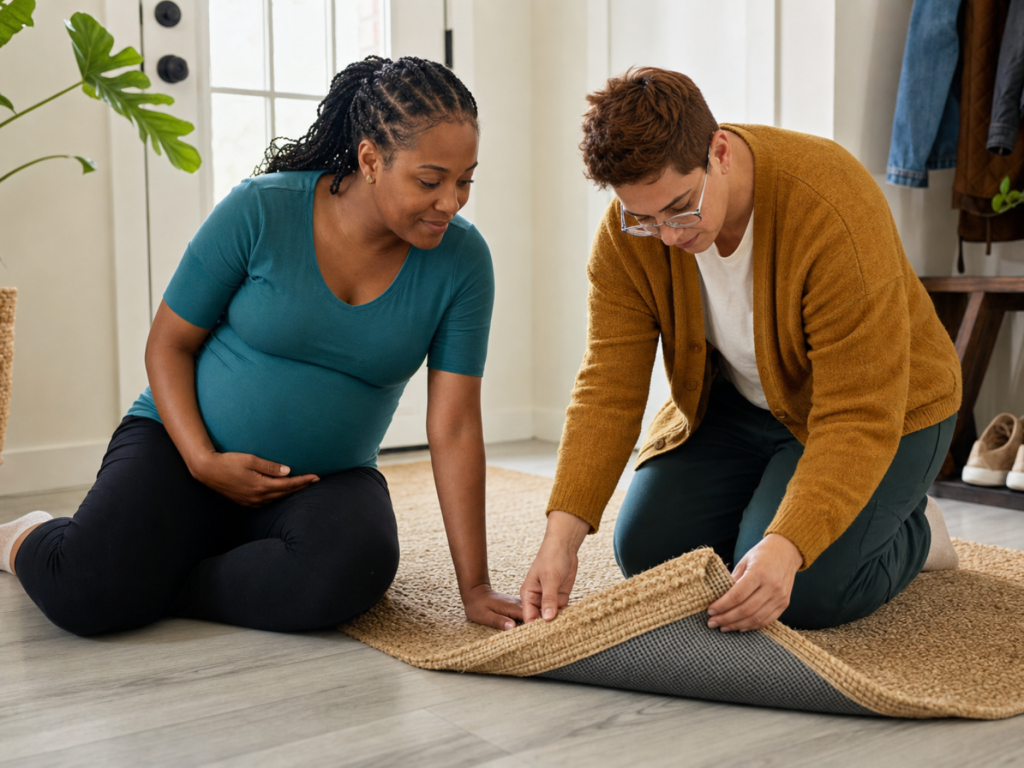
- Secure floor surfaces: Remove throw rugs when possible. If a rug must remain, use non-slip backing and ensure corners lie flat.
- Improve lighting: Add night-lights in hallways, bathrooms, and near stairs. Consider motion-sensor lighting for frequent nighttime routes.
- Reduce reaching and climbing: Move commonly used items to waist-to-shoulder height. Avoid step stools when possible, particularly if dizzy, tired, or carrying objects.
- Check thresholds and transitions: Uneven flooring, raised thresholds, and curled mats can catch the foot, especially when the belly limits downward visibility.
If you rent, many changes are still possible: removable non-slip strips, plug-in night-lights, cord covers, furniture repositioning, and safer storage. For more complex needs, an occupational therapist can assess the home environment and suggest adaptations that fit your body, budget, and living situation.
Bathroom, bedroom, and nighttime safety
The bathroom is one of the highest-risk rooms because water, smooth surfaces, urgency, and awkward body mechanics occur together. Non-slip bathmats, textured adhesive strips, a stable shower chair when clinically appropriate, and grab bars installed into wall studs can improve stability. Towel bars are not designed to bear body weight and should not be used as grab bars.
Keep shampoo, soap, and towels within easy reach so you do not need to twist or bend repeatedly in the shower. If hot water temperature is adjustable, consider setting it to reduce scald risk, particularly as the household prepares for a newborn. Ventilation also matters: good airflow helps reduce moisture accumulation and mold growth.
In the bedroom, keep a clear path from bed to bathroom. Place a lamp, phone, water, and any clinician-approved medications within reach. Rising slowly from bed may help reduce orthostatic symptoms. If you experience recurrent dizziness, palpitations, fainting, severe shortness of breath, or chest pain, contact your healthcare team rather than simply modifying the environment.
Stairs, entryways, and mobility routes
Stairs deserve careful attention throughout pregnancy and postpartum. Handrails should be secure, continuous when possible, and easy to grip. Stairways should be well lit at both the top and bottom, with no objects stored on steps. If carpeting is loose or stair treads are slippery, repair or add non-slip tread solutions.
Entryways can be deceptively hazardous. Wet leaves, ice, uneven pavement, loose doormats, and poor lighting increase fall risk. Keep the entrance clear, add adequate lighting, and use a stable place to sit while putting on shoes. Choose footwear with supportive soles and good traction, especially if pelvic pain, edema, or balance changes are present.
Evidence-based home adaptation literature also discusses design features such as zero-step entrances, curbless showers, glare-free flooring, and motion-sensor lighting. Not every household can remodel, but the principles are useful: reduce abrupt level changes, reduce glare, support stable movement, and make hazards visible before they are underfoot.
Kitchen safety, food handling, and burn prevention
The kitchen is a place where balance, temperature, sharp objects, foodborne pathogens, and chemical exposures meet. Store heavy pots, pans, and frequently used foods at accessible heights. Avoid carrying large hot containers across cluttered floors. Turn pot handles inward, use oven mitts in good condition, and keep a stable stance when lifting from the oven.
Pregnancy increases vulnerability to certain foodborne infections, including listeriosis, which can be severe even when maternal symptoms are mild. Home preparation routines matter: wash hands, clean cutting boards, separate raw meat from ready-to-eat foods, cook foods to safe internal temperatures, refrigerate perishables promptly, and follow pregnancy-specific guidance for high-risk foods. If you are uncertain whether a food is safe, ask your obstetric clinician or a registered dietitian familiar with pregnancy nutrition.
Medication and supplement storage is also part of kitchen safety in many homes. Keep all prescription medicines, over-the-counter drugs, vitamins, iron, and cleaning products in clearly labeled containers and away from children or pets. Do not start, stop, or combine medications or supplements during pregnancy without professional guidance.
Reducing chemical, air-quality, and environmental exposures
Household exposure reduction should be realistic, not fear-based. The goal is to reduce avoidable high-risk exposures while recognizing that modern environments cannot be made completely toxin-free. Prioritize ventilation, safe product use, and avoidance of known hazards.
- Smoke and carbon monoxide: Ensure smoke alarms and carbon monoxide detectors work and are placed appropriately. Avoid indoor tobacco smoke, cannabis smoke, and fuel-burning appliances that are poorly ventilated.
- Cleaning products: Use products according to the label, avoid mixing bleach with ammonia or acids, ventilate the room, and consider fragrance-free or lower-irritant options if nausea or asthma is triggered.
- Pesticides: Use integrated pest management when possible: seal gaps, remove food sources, use traps, and seek professional advice for infestations rather than applying unnecessary chemicals.
- Lead and renovation dust: Homes built before lead restrictions may require special caution during renovation. Pregnant people should avoid sanding, scraping, or disturbing old paint without proper assessment and containment.
- Mold and moisture: Fix leaks, improve ventilation, and seek remediation guidance for significant mold growth, especially if respiratory symptoms or asthma are present.
If you are planning preconception or already pregnant and concerned about solvents, plastics, pesticides, lead, or occupational exposures, discuss your specific environment with a healthcare professional. Risk depends on substance, dose, route, timing, ventilation, and individual medical factors.
Ergonomics, lifting, and daily tasks
Pregnancy can change tolerance for lifting, prolonged standing, and repetitive bending. There is no single safe weight limit that applies to everyone; recommendations depend on gestational age, obstetric history, baseline fitness, work demands, pelvic floor symptoms, pain, and medical conditions. Ask your clinician or physical therapist for individualized advice if your job or home responsibilities involve heavy lifting or repetitive strain.
Practical strategies include dividing loads into smaller amounts, using carts or rolling laundry baskets, keeping loads close to the body, avoiding twisting while lifting, and asking for help with high or unstable objects. For laundry, consider raising baskets to a comfortable height and using a front-loading machine pedestal if available. For cleaning, long-handled tools can reduce bending, and taking breaks may reduce dizziness or musculoskeletal pain.
If you develop persistent pelvic girdle pain, sciatica-like symptoms, wrist numbness, severe back pain, or functional limitations, seek assessment. Physical therapy in pregnancy can often provide posture strategies, strengthening, support garments when appropriate, and safer movement patterns.
Emergency readiness and postpartum planning
Emergency planning is a form of risk reduction. Keep important numbers accessible: obstetric triage, midwife or clinician, local emergency services, poison control if available in your region, and a trusted support person. Know which symptoms your care team wants reported urgently, and clarify where to go after hours.
Prepare for power outages, storms, or transport barriers if relevant to your location. Keep flashlights accessible, maintain a charged phone or power bank, and ensure essential medications are not close to running out. If you have diabetes, hypertension, anticoagulation therapy, asthma, epilepsy, or other chronic conditions, ask your care team what supplies and monitoring plans are appropriate.
Postpartum safety is worth planning before birth. Consider where you will feed the baby, recover from delivery, store supplies, and move at night while sleep-deprived. A safe sleep space for the infant, a clutter-free nighttime feeding route, and easy access to water, snacks, sanitary supplies, and prescribed medications can reduce stress and injury risk during recovery.
Seek urgent medical advice after these events
- A fall, abdominal impact, car crash, or significant blow to the body during pregnancy.
- Vaginal bleeding, leaking fluid, contractions, severe abdominal pain, or reduced fetal movement after trauma.
- Fainting, chest pain, severe shortness of breath, neurologic symptoms, or repeated dizziness.
- Suspected carbon monoxide exposure, smoke inhalation, chemical poisoning, or major pesticide exposure.
- High fever, severe vomiting, dehydration, or symptoms after eating a high-risk food.
Tools & Assistance
- Schedule a home-safety review with an occupational therapist if mobility, pain, disability, or prior falls are concerns.
- Ask your obstetric clinician for individualized guidance on lifting, dizziness, pelvic pain, and work-related risks.
- Install and test smoke alarms, carbon monoxide detectors, night-lights, non-slip mats, and secure handrails.
- Create a visible emergency contact list and clarify your obstetric triage instructions.
- Use local public health, housing, or environmental health services for lead, mold, pest, or air-quality concerns.
FAQ
Do I need to renovate my home before the baby arrives?
Usually no. High-yield safety steps are often simple: clear pathways, improve lighting, secure rugs, check alarms, reduce chemical exposures, and prepare emergency contacts. Larger modifications may help if you have mobility limitations or a high-risk home layout.
Are grab bars only for older adults?
No. Properly installed grab bars can help anyone with balance changes, pelvic pain, dizziness, disability, or postpartum recovery needs. They must be installed securely; towel bars are not safe substitutes.
What should I do if I fall while pregnant?
Contact your obstetric clinician, midwife, or triage service for guidance, especially after abdominal impact or if you have bleeding, pain, contractions, fluid leakage, dizziness, or reduced fetal movement. Do not rely on symptoms alone to judge risk.
Which household exposures should I prioritize reducing?
Prioritize tobacco and cannabis smoke, carbon monoxide, lead dust, unsafe pesticide use, poor ventilation with strong chemicals, significant mold, and foodborne infection risks. Your clinician can help interpret specific exposures.
Can a physical therapist help with household safety?
Yes. A physical therapist can address pain, gait, strength, balance, and movement mechanics. An occupational therapist can assess daily tasks and recommend home adaptations.
Sources
- MedlinePlus — Home modification and safety | Falls
- National Institute on Aging — Home Safety and Fall Prevention
- PubMed Central — Assessing and Adapting the Home Environment to Reduce Falls and Improve Safety for Older Adults
Disclaimer
This article is for informational purposes only and does not replace individualized medical advice. Consult your obstetric clinician, midwife, or other qualified healthcare professional about pregnancy symptoms, falls, exposures, medications, and home-safety concerns.













Please log in to leave a comment.