
Intro
Back pain and lower back discomfort in pregnancy are extremely common, and they can be physically limiting as well as emotionally frustrating. Many pregnant people expect some aches, but persistent lumbar soreness, sacroiliac pain, buttock pain, or pain that worsens with walking, standing, rolling in bed, or lifting can make ordinary days feel much harder.
Although pregnancy-related back pain is often related to normal biomechanical and hormonal adaptations, it should not be dismissed as something you simply have to endure. Different pain patterns may have different contributors, and the safest, most effective approach is usually individualized: careful assessment, sensible activity modification, exercise or physiotherapy when appropriate, and prompt medical review if warning symptoms appear.
Highlights
Pregnancy-related back discomfort may involve the lumbar spine, pelvic girdle, or both; the location and triggers can guide management.
Common contributors include weight gain, altered posture, abdominal muscle stretching, ligament laxity, fatigue, and changes in gait and movement strategy.
Most self-care focuses on safe movement, posture support, strengthening, heat or cold comfort measures, and avoiding activities that clearly aggravate pain.
Severe pain, neurological symptoms, fever, urinary symptoms, trauma, contractions, or vaginal bleeding should be discussed urgently with a healthcare professional.
Why pregnancy can strain the back
Pregnancy changes the body’s mechanics gradually and profoundly. As the uterus enlarges, the center of gravity shifts forward. Many people respond by increasing lumbar lordosis, widening their stance, or changing how they walk, sit, and rise from chairs. These adaptations are useful, but they can increase load through the lumbar spine, sacroiliac joints, hip muscles, and pelvic floor.
Hormonal factors also matter. Relaxin, progesterone, and other pregnancy-related hormonal changes influence connective tissue and ligamentous laxity. This does not mean joints become unstable in a dangerous way for most people, but it can alter how forces are distributed across the pelvis and lower back. At the same time, the abdominal wall stretches, which can reduce the ability of the trunk muscles to provide familiar support.
Weight gain, breast enlargement, fatigue, reduced sleep quality, and less time for exercise can all contribute. For some people, back discomfort is mild and intermittent. For others, it becomes a recurring pain pattern that affects work, childcare, intimacy, sleep, and mood. That impact is real, and it is appropriate to ask for help.
Low back pain versus pelvic girdle pain
A useful distinction is between pregnancy-related low back pain and pregnancy-related pelvic girdle pain. They can overlap, but they are not identical. Low back pain is typically felt around the lumbar spine, often above the sacrum, and may behave like mechanical back pain outside pregnancy: worse with prolonged sitting or standing, lifting, bending, or sustained posture.
Pelvic girdle pain is more often felt near the sacroiliac joints at the back of the pelvis, the buttocks, the side of the hips, the pubic symphysis at the front, or the groin. It may worsen with single-leg loading such as climbing stairs, getting dressed while standing on one leg, walking long distances, turning in bed, or getting in and out of a car. Some people describe a sharp, catching, or deep aching sensation.
This distinction matters because advice can differ. A person with mostly lumbar pain may benefit from posture changes and graded trunk strengthening, while someone with pelvic girdle pain may need strategies to reduce asymmetrical loading, such as taking stairs one at a time, keeping knees together when rolling in bed, using a pillow between the knees, or considering a pelvic support belt after professional guidance. A clinician or physiotherapist can help identify the dominant pattern and screen for non-musculoskeletal causes.
Everyday measures that may reduce discomfort
Self-care should be gentle, realistic, and adapted to the stage of pregnancy. The aim is not perfect posture or complete avoidance of movement; it is to reduce repeated strain while keeping the body active and confident.
- Use neutral, supported positions. When standing, try to distribute weight evenly and avoid locking the knees. When sitting, use a small lumbar roll or cushion if it feels helpful, and keep the feet supported.
- Lift with care. Bend at the knees and hips, hold objects close to the body, and avoid twisting while carrying. Ask for help with heavy or awkward loads.
- Choose supportive footwear. Low, stable shoes may reduce strain compared with high heels or unsupportive flat shoes, especially when walking or standing for long periods.
- Sleep with alignment support. Side-lying with a pillow between the knees and another supporting the abdomen can reduce pulling through the pelvis and lower back.
- Use heat or cold cautiously. A warm pack on the lower back or a cold pack over sore areas may be soothing. Avoid overheating, burns, and applying heat directly to the abdomen unless advised by a clinician.
It can also help to break tasks into shorter intervals. For example, alternating standing chores with seated rest, using grocery delivery, or placing frequently used items at waist height can reduce repeated bending and reaching. These adaptations are not signs of weakness; they are practical load management.
Exercise, movement, and physiotherapy
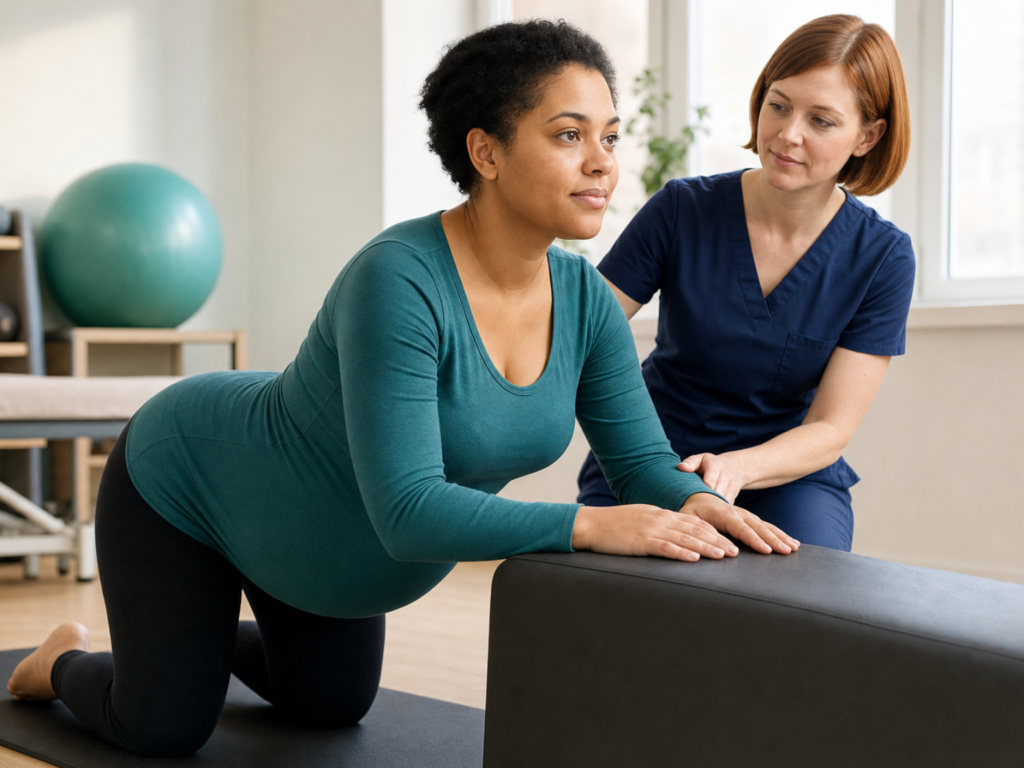
Regular activity is often beneficial for uncomplicated pregnancy-related back discomfort, but the best exercise depends on pain pattern, fitness level, obstetric factors, and previous injuries. Many people do well with walking, swimming, prenatal yoga, pelvic tilts, gentle hip mobility work, and strengthening exercises for the gluteal, deep abdominal, and back muscles. However, exercises that increase pain sharply or cause pelvic instability sensations should be modified or stopped until reviewed.
A physiotherapist with experience in pregnancy can assess movement, strength, pelvic girdle provocation signs, and functional triggers. Management may include education, individualized exercises, manual therapy in selected cases, support belts, pacing strategies, and advice on work or childcare ergonomics. The goal is usually not to “put something back in place,” but to improve load tolerance, reduce symptom flares, and maintain daily function.
Exercise should be approached with medical caution if there are obstetric complications, significant bleeding, dizziness, chest pain, severe shortness of breath, calf swelling, preterm labor concerns, or other red flags. If you are unsure whether a movement program is safe for you, consult your midwife, obstetrician, primary care clinician, or physiotherapist before starting.
Pain relief options and medical caution
It is understandable to want quick relief, especially when back pain disrupts sleep. Non-drug options such as position changes, warm showers, stretching, massage from a trained professional, and physiotherapy are often considered first. Some people also benefit from a maternity support belt, particularly when pelvic girdle symptoms are prominent, but fit and timing matter.
Medication decisions in pregnancy should be made with a healthcare professional who knows your gestational age, medical history, allergies, and current medicines. Do not start anti-inflammatory medicines, muscle relaxants, herbal products, or topical pain preparations without checking whether they are appropriate in pregnancy. Even familiar over-the-counter products may have trimester-specific considerations.
If pain is severe, persistent, one-sided, associated with systemic symptoms, or different from your usual musculoskeletal discomfort, it deserves assessment rather than self-treatment alone. Back pain can occasionally be related to urinary tract infection, kidney problems, preterm labor, neurological conditions, trauma, or other medical issues.
How back pain can affect sleep, mood, and daily life
Lower back discomfort is not only a physical symptom. Pain can reduce sleep quality, make it harder to exercise, and increase stress. Fatigue may then lower pain tolerance, creating a cycle in which discomfort and exhaustion reinforce each other. Pregnant people who already care for children, work long shifts, or live with chronic pain may feel especially stretched.
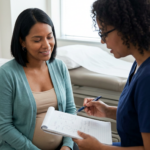
It is reasonable to discuss practical accommodations. These may include more frequent breaks, modified duties at work, a chair with better lumbar support, help with lifting, or a referral to physiotherapy. If pain is affecting mood, sleep, or your ability to function, tell your maternity care team. Support should address the whole person, not only the painful area.
Some abdominal or pelvic sensations can overlap in description. For example, mild stretching or cramping sensations may be benign in some contexts, while rhythmic tightening, bleeding, or escalating pain requires review. When in doubt, it is safer to contact your healthcare professional and describe the timing, location, severity, associated symptoms, and what makes the pain better or worse.
Preparing for later pregnancy and postpartum recovery
Back pain may fluctuate as pregnancy progresses. Symptoms can increase in the third trimester because of greater mechanical load, but some people improve with targeted strategies. Planning ahead can help: arrange sleeping support, reduce avoidable lifting, practice safe ways to get out of bed, and learn feeding or baby-care positions that protect the back after birth.
Postpartum back or pelvic pain often improves, but it does not always disappear immediately. Recovery is influenced by birth experience, sleep deprivation, feeding posture, abdominal wall recovery, pelvic floor function, and the physical demands of caring for a newborn. If pain persists after birth, causes limping, limits walking, or interferes with daily care, postpartum physiotherapy or medical review may be helpful.
Above all, pregnancy-related back pain should be treated as manageable, not inevitable suffering. Early advice, individualized movement, and compassionate support can make a meaningful difference.
Seek medical advice promptly if
- Back pain is severe, sudden, worsening, or follows a fall, accident, or injury.
- Pain is accompanied by vaginal bleeding, fluid leakage, regular contractions, or pelvic pressure.
- You have fever, chills, burning when urinating, flank pain, or feel generally unwell.
- There is numbness, weakness, tingling, loss of bladder or bowel control, or pain radiating strongly down the leg.
- Pain is one-sided and intense, or it feels different from your usual pregnancy-related discomfort.
Tools & Assistance
- Discuss symptoms with your midwife, obstetrician, family doctor, or primary care clinician.
- Ask for referral to a physiotherapist experienced in pregnancy-related low back pain and pelvic girdle pain.
- Track pain location, triggers, severity, relieving positions, and associated symptoms before appointments.
- Use workplace or home ergonomic adjustments such as supported seating, task breaks, and reduced lifting.
- Contact urgent maternity triage or emergency services if warning signs occur.
FAQ
Is lower back pain normal in pregnancy?
It is common, especially as posture, weight distribution, hormones, and muscle support change. Common does not mean it should be ignored; persistent, severe, or unusual pain should be assessed.
What is the difference between pelvic girdle pain and ordinary low back pain?
Low back pain is usually centered around the lumbar spine. Pelvic girdle pain is often felt near the sacroiliac joints, buttocks, hips, groin, or pubic bone and may worsen with stairs, turning in bed, or standing on one leg.
Can I exercise if my back hurts during pregnancy?
Many pregnant people can continue gentle, appropriate activity, but exercise should be individualized. Stop movements that sharply worsen pain and ask a healthcare professional if you have obstetric complications or warning symptoms.
Are support belts useful?
Some people find maternity or pelvic support belts helpful, particularly for pelvic girdle pain. They should fit properly and are best used as part of a broader plan that includes movement and load management.
When should I call my clinician about back pain?
Call if pain is severe, persistent, worsening, associated with bleeding, contractions, fever, urinary symptoms, neurological symptoms, trauma, or if you feel worried that something is not right.
Sources
- PubMed / National Library of Medicine — Pregnancy-related low back pain and pelvic girdle pain: an approach to classification and management
- NHS — Low back pain during pregnancy
- Mayo Clinic — Back pain in pregnancy
Disclaimer
This article is for general informational purposes only and does not replace medical advice, diagnosis, or treatment. Always consult a qualified healthcare professional about pain, medications, exercise, or concerning symptoms in pregnancy.














Please log in to leave a comment.