
Intro
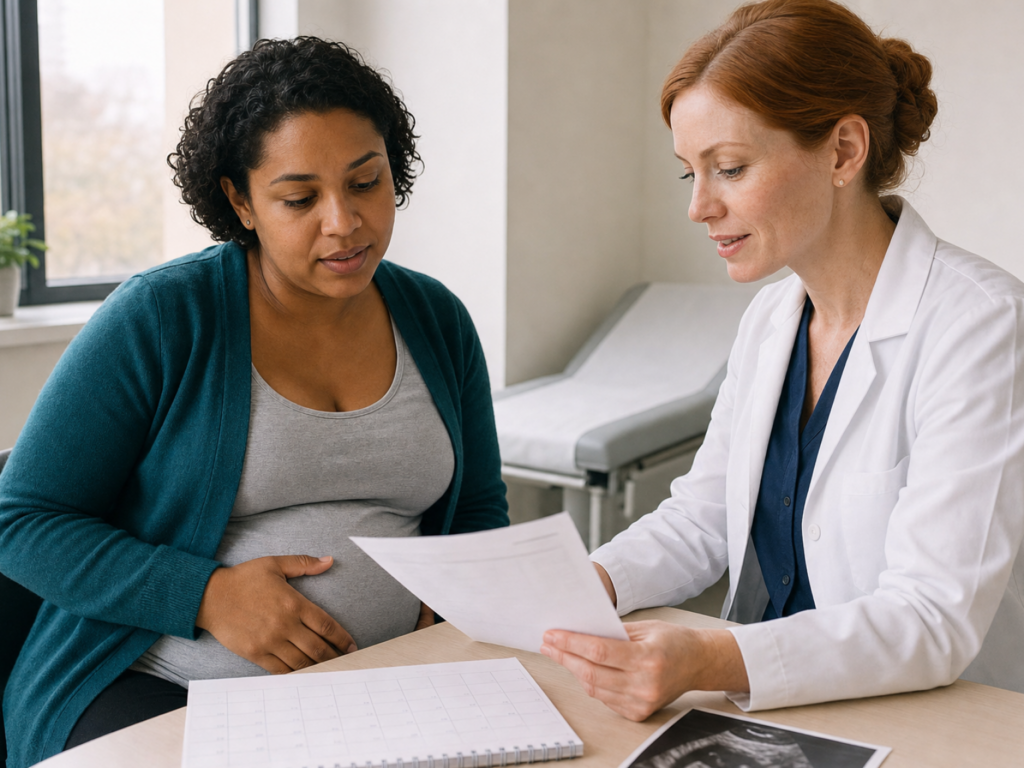
The first six weeks of pregnancy can feel paradoxical: medically, a great deal is happening, but emotionally and physically you may have little certainty at first. Pregnancy dating also adds confusion because week 1 begins on the first day of the last menstrual period, before ovulation and fertilization have occurred. By week 6, however, the embryo is developing rapidly, early placental structures are producing hormones, and many people are starting to notice unmistakable early pregnancy symptoms.
This guide walks through weeks 1 to 6 with a medically informed but supportive approach. It explains what is likely happening biologically, what you may notice in your body, and when to seek professional advice. Individual pregnancies vary widely, so use this as orientation rather than a diagnosis or a substitute for care from your midwife, obstetrician, family doctor, or reproductive health clinician.
Highlights
Pregnancy weeks are counted from the first day of your last menstrual period, so weeks 1 and 2 usually occur before conception.
Fertilization typically occurs around ovulation, and implantation usually follows several days later as the blastocyst attaches to the uterine lining.
By weeks 5 to 6, rising human chorionic gonadotropin, progesterone, and estrogen can contribute to nausea, breast tenderness, fatigue, urinary frequency, and mood changes.
Early embryonic development is rapid: the neural tube, primitive heart structures, and early limb buds begin forming in the first trimester.
Severe pain, heavy bleeding, fainting, shoulder-tip pain, or significant dehydration should be assessed urgently.
Understanding pregnancy dating before you start
Clinicians usually date pregnancy from the first day of the last menstrual period, often abbreviated LMP. This convention is used because the exact date of ovulation or fertilization is often uncertain, while the LMP is usually easier to recall. It means that during week 1 and much of week 2, you are not yet biologically pregnant in the sense of having an embryo implanted in the uterus.
A 40-week pregnancy is therefore an estimate based on menstrual dating, not a precise countdown from conception. If you have irregular cycles, recently stopped hormonal contraception, are breastfeeding, or conceived through assisted reproduction, dating may need adjustment. Early ultrasound, when clinically appropriate, can help estimate gestational age by measuring embryonic structures.
It is also normal to feel uncertain in these early weeks. Some people are tracking ovulation closely, while others only realize they might be pregnant after a missed period. If you are trying to conceive, learning about the timeline from fertilization to implantation can help make sense of the days before a pregnancy test becomes reliable.
Week 1: menstrual period and preparation of the uterine lining
Week 1 starts with menstrual bleeding. In a typical cycle, shedding of the endometrium, the uterine lining, is followed by hormonal signals that begin preparing the ovaries and uterus for a possible pregnancy. Follicle-stimulating hormone supports the maturation of ovarian follicles, while estrogen gradually rises and helps rebuild the endometrial lining.
Although conception has not yet occurred, week 1 can still matter for pregnancy planning. Preconception care focuses on reducing avoidable risks and supporting healthy early embryonic development, often before pregnancy is confirmed. A healthcare professional can advise on folic acid or prenatal vitamin needs, medication safety, management of chronic conditions, vaccination status, occupational exposures, and lifestyle factors such as smoking, alcohol, and nutrition.
If you are not trying to become pregnant, week 1 is still within the window when contraception choices matter. If you are trying, it can be emotionally tiring to treat every cycle as a potential pregnancy. Try to frame early preparation as risk reduction rather than a demand for perfection.
Week 2: ovulation approaches
During week 2 in a standard 28-day cycle, ovulation is approaching. Rising estrogen contributes to a surge of luteinizing hormone, which triggers release of an oocyte from the ovary. The fertile window includes the days before ovulation and the day of ovulation because sperm can survive in the reproductive tract for several days, while the egg is viable for a shorter period after release.
Some people notice cervical mucus becoming clearer, stretchier, and more slippery around this time. Others feel mild one-sided pelvic discomfort known as mittelschmerz, though many notice nothing at all. Ovulation predictor kits, cycle tracking, and basal body temperature charts can be helpful for some, but they are not required for conception and can sometimes increase stress.
If sperm reaches the fallopian tube around ovulation, fertilization may occur there. The resulting zygote begins cell division as it travels toward the uterus. For a deeper explanation of what happens right after conception, a dedicated early pregnancy overview week 1 to 6 can complement this week-by-week guide.
Week 3: fertilization, cell division, and implantation begins
Week 3 is often when conception occurs in menstrual dating. After fertilization, the zygote divides into a cluster of cells and becomes a morula, then a blastocyst. The blastocyst contains an inner cell mass, which will become the embryo, and an outer trophoblast layer, which contributes to the placenta and related tissues.
As the blastocyst reaches the uterine cavity, it begins the implantation sequence by interacting with the endometrium. Implantation is not a single instant but a coordinated biological event involving adhesion, invasion into the uterine lining, and early communication between embryonic and maternal tissues. Human chorionic gonadotropin, or hCG, begins to rise after implantation starts, but levels may still be too low for detection on many home pregnancy tests.
You may not feel any different at week 3. Some people report mild cramping or very light spotting around implantation, but these signs are nonspecific and can also occur before a period. Avoid interpreting every sensation as confirmation or exclusion of pregnancy. If you have severe pain, heavy bleeding, or feel unwell, seek medical advice promptly.
Week 4: missed period and early pregnancy testing
By week 4, many people are near the time their period is due. If implantation has occurred, hCG production increases and may be detectable in urine. A home pregnancy test is generally most reliable from the day of a missed period, although timing varies by test sensitivity, ovulation date, urine concentration, and individual hCG patterns.
Early symptoms may include breast tenderness, mild pelvic cramping, fatigue, bloating, mood changes, and increased sensitivity to smells. These overlap substantially with premenstrual symptoms because progesterone is involved in both the luteal phase and early pregnancy. A positive pregnancy test is more informative than symptoms alone.
If the test is negative but your period does not arrive, repeating the test in a few days can be reasonable. If periods are irregular, or if there is persistent pelvic pain, unusual bleeding, or concern about ectopic pregnancy, contact a healthcare professional. People with a history of ectopic pregnancy, tubal surgery, pelvic inflammatory disease, or fertility treatment may need earlier clinical guidance.
Week 5: the gestational sac and rapid embryonic organization
At week 5, many people have confirmed pregnancy or are strongly suspecting it. The embryo is still extremely small, but development is accelerating. The gestational sac may be visible on transvaginal ultrasound in some clinical contexts, although ultrasound findings vary and interpretation depends on exact dating and hCG levels. It is not always necessary or helpful to scan this early unless there is a medical reason.
Important embryonic structures begin organizing. The neural tube, which will form the brain and spinal cord, is developing. This is one reason folic acid is emphasized before conception and in early pregnancy. Early cardiovascular structures also begin forming, and the foundations of the placenta continue to develop as maternal blood supply and trophoblast tissue interact.
Symptoms may intensify because hCG and progesterone are rising. Fatigue can be profound, and nausea may start, with or without vomiting. Breast fullness or tenderness, urinary frequency, food aversions, metallic taste, constipation, and emotional lability are common. These experiences can be reassuring for some and overwhelming for others; neither the presence nor absence of symptoms reliably predicts pregnancy outcome.
Week 6: early heartbeat activity and first-trimester symptoms
By week 6, the embryo is still very small but more complex. Early cardiac activity may be detectable by transvaginal ultrasound, depending on gestational age accuracy and equipment. The neural tube is continuing to close, and early limb buds, facial structures, and organ primordia are developing. This stage is sometimes described as a period of organogenesis, meaning the early formation of major organs.
For the pregnant person, week 6 is commonly when symptoms become harder to ignore. Nausea and vomiting of pregnancy may peak later, but it often begins around this time. Small, frequent meals, hydration, rest, and avoiding known triggers may help some people, but persistent vomiting, inability to keep fluids down, weight loss, dizziness, or reduced urination warrants medical assessment because dehydration and electrolyte imbalance can occur.
Mild cramping can occur as the uterus and surrounding tissues respond to pregnancy, but pain should not be dismissed if it is severe, one-sided, worsening, or associated with bleeding, faintness, shoulder-tip pain, or rectal pressure. Early pregnancy loss and ectopic pregnancy are sensitive topics, and seeking help is not overreacting. Compassionate, timely assessment matters.
Practical care from weeks 1 to 6
Early pregnancy care is partly about reducing risk and partly about making sure you are not carrying the uncertainty alone. If pregnancy is possible or confirmed, consider contacting a healthcare professional or local maternity service to ask when to book the first appointment. Timing varies by country, risk factors, medical history, and local pathways.
- Review prescription, over-the-counter, and herbal medicines with a qualified clinician or pharmacist rather than stopping essential treatment abruptly.
- Avoid alcohol and smoking, and ask for support if stopping feels difficult.
- Discuss folic acid or prenatal supplementation, especially if you take anti-seizure medication, have diabetes, have a higher body mass index, or have a history of neural tube defects, as dosing advice may differ.
- Seek individualized advice about exercise, work exposures, travel, infections, and food safety.
- Prioritize sleep, hydration, and emotional support; early pregnancy can be physically draining even before it is visible.
If you were preparing before conception, your pre-pregnancy health basics remain relevant, but early pregnancy is not a test of whether you did everything perfectly. Many people discover they are pregnant after ordinary exposures or imperfect timing. When in doubt, ask a clinician for personalized risk assessment rather than relying on guilt or internet speculation.
Seek urgent medical advice if you have
- Heavy vaginal bleeding, passing large clots, or bleeding with significant pain.
- Severe, worsening, or one-sided pelvic or abdominal pain.
- Fainting, collapse, shoulder-tip pain, or marked dizziness.
- Persistent vomiting, inability to keep fluids down, or signs of dehydration.
- Fever, severe weakness, or symptoms that feel alarming or rapidly worsening.
Tools & Assistance
- Home pregnancy test used from the day of a missed period or repeated a few days later if uncertain.
- Appointment with a family doctor, midwife, obstetrician, or reproductive health clinic.
- Medication review with a clinician or pharmacist for prescription, over-the-counter, and herbal products.
- Pregnancy symptom and bleeding log to document dates, pain location, test results, and concerns.
- Local urgent care, emergency department, or maternity triage service for red-flag symptoms.
FAQ
Am I pregnant in week 1 or week 2?
Usually not yet. Pregnancy is dated from the first day of the last menstrual period, so weeks 1 and 2 typically occur before ovulation and fertilization.
When can a home pregnancy test become positive?
Many tests are most reliable from the day of a missed period. Testing earlier can give a false negative if hCG has not risen enough.
Is light spotting always a sign of implantation?
No. Light spotting can occur for several reasons, including hormonal changes or the start of a period. Heavy bleeding, pain, or feeling faint should be assessed.
Should I worry if I have no symptoms at week 5 or 6?
Not necessarily. Symptom intensity varies widely and does not reliably indicate whether a pregnancy is healthy. Contact a healthcare professional if you have specific concerns.
Is an ultrasound necessary at 6 weeks?
Not always. Early ultrasound may be recommended for pain, bleeding, uncertain dates, previous ectopic pregnancy, fertility treatment, or other clinical reasons.
Sources
- NHS — Pregnancy week by week
- Pregnancy, Birth and Baby — Pregnancy week by week
- Mayo Clinic — Pregnancy week by week First trimester
Disclaimer
This article is for general medical information only and does not diagnose, treat, or replace care from a qualified healthcare professional. Seek urgent care for severe pain, heavy bleeding, fainting, or symptoms that concern you.












Please log in to leave a comment.