
Intro
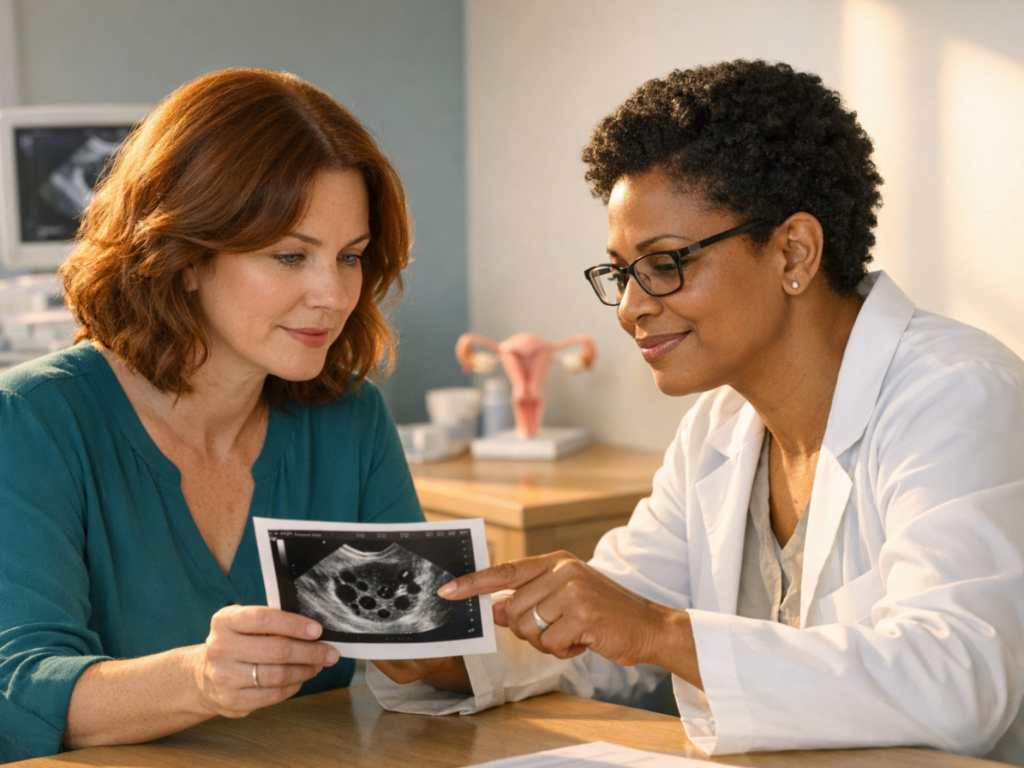
Egg quality is one of the most important, and often most emotionally charged, topics in fertility. It can feel unfair because much of it is tied to biology that is not directly visible or fully controllable. If you are trying to conceive, considering fertility testing, or navigating IVF, understanding what clinicians mean by egg quality can help you interpret results with more clarity and less self-blame.
Highlights
Egg quality generally refers to an egg’s ability to mature, fertilize, support normal embryo development, and contribute to a healthy pregnancy.
Age is the strongest known influence on egg quality because the proportion of eggs with chromosomal abnormalities rises over time.
Lifestyle, medical conditions, ovarian reserve, sperm quality, and chance all interact with egg quality; no single test can perfectly measure it in advance.
Improving overall reproductive health may support fertility, but no supplement or lifestyle change can reliably reverse age-related chromosomal changes in eggs.
A fertility specialist can help interpret ovarian reserve tests, treatment options, and timing in a way that fits your goals and medical history.
What clinicians mean by egg quality
Egg quality, or oocyte competence, describes whether an egg has the cellular and genetic capacity to complete maturation, be fertilized, divide normally as an embryo, implant, and contribute to an ongoing pregnancy. It is not simply about whether ovulation occurs. A person may ovulate regularly and still have eggs that are less likely to form chromosomally normal embryos.
At the cellular level, a high-quality egg must complete meiosis, organize its chromosomes correctly, maintain adequate mitochondrial energy production, and coordinate early embryonic development before the embryo’s own genome becomes active. If chromosome separation is abnormal, the resulting embryo may have aneuploidy, meaning too many or too few chromosomes. Many aneuploid embryos do not implant; some implant and then miscarry; a smaller proportion can lead to chromosomal conditions in a pregnancy.
This is why egg quality is closely linked with time to pregnancy, IVF embryo development, implantation rates, and miscarriage risk. However, it is important to hold this information gently: egg quality is not a measure of personal worth, effort, femininity, or whether someone has done something wrong.
Egg quality versus ovarian reserve
Egg quality and ovarian reserve are related but not the same. Ovarian reserve refers to the approximate quantity of remaining eggs and how the ovaries may respond to stimulation. Egg quality refers to the developmental potential of those eggs.
Common ovarian reserve markers include anti-Müllerian hormone, often abbreviated AMH; antral follicle count by transvaginal ultrasound; and sometimes day-3 follicle-stimulating hormone, or FSH, with estradiol. These tests can help estimate expected response to fertility medications, particularly in IVF. They do not directly prove whether a specific egg is chromosomally normal.
For example, a younger person with low AMH may produce fewer eggs during IVF but may still have a relatively higher proportion of chromosomally normal eggs for their age. An older person with reassuring AMH may produce a good number of eggs, but the proportion of euploid, chromosomally typical embryos may still be lower because age affects egg chromosome integrity. This distinction can be reassuring and also clinically important when discussing prognosis.
Why age matters so strongly
Age is the most powerful predictor of egg quality at a population level. People with ovaries are born with a finite number of oocytes, and those eggs remain arrested in an early stage of meiosis for years or decades. Over time, the cellular structures that help chromosomes separate accurately become more vulnerable to error. As a result, the chance that an ovulated egg is chromosomally abnormal increases with age, especially in the late 30s and 40s.
This does not mean pregnancy is impossible after a certain birthday, and many people conceive healthy pregnancies in their late 30s or beyond. It does mean that monthly fecundability, the probability of pregnancy in one cycle, tends to decline, while miscarriage risk tends to increase. The decline is gradual for some and steeper for others, which is one reason individual counseling is so valuable.
Age also affects treatment decisions. In IVF, older age is often associated with fewer eggs retrieved, fewer blastocysts, and a lower proportion of euploid embryos. Some patients may discuss options such as embryo genetic testing, fertility preservation, donor eggs, or modified stimulation strategies. These are personal and medical decisions that deserve careful conversation rather than pressure or panic.
Can egg quality be tested directly?
There is no routine blood test or ultrasound that directly measures the quality of an individual egg before it is ovulated or retrieved. Clinicians infer egg quality from age, reproductive history, ovarian response, fertilization patterns, embryo development, embryo chromosomal testing when used, and pregnancy outcomes.
In IVF, embryology data can provide indirect clues. The number of mature eggs, fertilization rate, blastocyst formation, and embryo morphology may suggest how eggs and sperm are functioning together. Preimplantation genetic testing for aneuploidy, or PGT-A, can assess chromosome copy number in embryo biopsy samples, but it does not test egg quality alone. It also has limitations and should be discussed with a reproductive endocrinologist or genetics-informed clinician.
Because egg quality is inferred rather than directly measured, it is easy to overinterpret single-cycle results. One IVF cycle with few embryos or a pregnancy loss can be devastating, but it may not fully predict every future attempt. Conversely, reassuring tests cannot guarantee conception. Fertility is probabilistic, and a supportive clinician can help separate meaningful patterns from normal biological variability.
Lifestyle and medical factors that may influence egg health
No lifestyle change can guarantee better egg quality, and it is especially important not to blame yourself if pregnancy is taking time. Still, overall health can affect ovulation, inflammation, endocrine function, and the ovarian environment. Evidence-based preconception care aims to optimize the factors that are reasonably modifiable.
- Smoking and nicotine exposure: Tobacco smoke is associated with reduced fertility, earlier menopause, and poorer reproductive outcomes. Avoiding smoking and seeking cessation support is one of the clearest fertility-positive steps.
- Body weight and metabolic health: Both undernutrition and metabolic dysfunction can affect ovulation and pregnancy outcomes. For people with polycystic ovary syndrome, insulin resistance, or thyroid disease, medical management may improve reproductive function.
- Alcohol, cannabis, and other substances: Heavy use can impair fertility and early pregnancy health. Discuss substance use openly with a clinician so advice can be individualized and nonjudgmental.
- Sleep, stress physiology, and exercise: Moderate physical activity and adequate sleep support general endocrine health. Severe overtraining or significant caloric restriction can disrupt ovulation.
- Environmental exposures: Some endocrine-disrupting chemicals, pesticides, solvents, heavy metals, and high-heat occupational exposures may be relevant depending on work and home environment.
Medical conditions such as endometriosis, autoimmune disease, prior ovarian surgery, chemotherapy, radiation exposure, pelvic infection, and genetic conditions can also affect fertility. If any of these apply, earlier fertility consultation may be appropriate even if you have not been trying to conceive for a full year.
Supplements, antioxidants, and the limits of control
Many people searching for egg quality support encounter supplements such as coenzyme Q10, vitamin D, omega-3 fatty acids, melatonin, inositol, DHEA, or antioxidant blends. Some have plausible biological mechanisms, especially related to mitochondrial function or oxidative stress, and some have limited supportive data in specific groups. However, evidence quality varies, doses are not standardized, and benefits are not guaranteed.
It is particularly important to avoid starting hormone-active supplements, such as DHEA, without medical supervision. Supplements may interact with medications, affect laboratory results, or be inappropriate for certain conditions. A prenatal vitamin with folic acid or folate is commonly recommended before conception to reduce neural tube defect risk, but your clinician can advise on the right formulation and whether additional nutrients are needed.
A compassionate way to think about this is: support your body where possible, but do not expect yourself to overcome chromosomal biology through perfection. Egg quality is influenced by factors inside and outside your control.
Egg quality is only one part of fertility
Conception requires multiple steps: ovulation, open fallopian tubes, adequate sperm number and function, successful fertilization, embryo development, uterine receptivity, and appropriate hormonal support. Egg quality matters, but it is not the whole story.
Sperm quality contributes half of the embryo’s genetic material and can influence fertilization, blastocyst development, miscarriage risk, and assisted reproduction outcomes. Semen analysis is a basic, noninvasive fertility test and should not be delayed simply because ovulation or egg quality is being evaluated. Tubal disease, uterine polyps or fibroids, endometriosis, luteal function, thyroid disease, and prolactin abnormalities may also affect the probability of pregnancy.
Timing is another practical factor. The egg is fertilizable for a limited period after ovulation, while sperm can survive for several days in fertile cervical mucus. Intercourse or insemination in the days leading up to and including ovulation generally offers the best chance of conception. Cycle tracking can help, but it should support your life rather than take it over.
When to seek fertility evaluation
General guidance is to consider evaluation after 12 months of trying to conceive if the person with ovaries is under 35, after 6 months if age 35 or older, and sooner if age 40 or older or if there are known risk factors. Earlier assessment is also reasonable with irregular or absent periods, known endometriosis, recurrent pregnancy loss, prior pelvic surgery, suspected tubal disease, chemotherapy or radiation history, or known male-factor concerns.
A fertility evaluation may include cycle history, ovulation assessment, ovarian reserve testing, pelvic ultrasound, uterine and tubal evaluation, semen analysis, and targeted labs such as thyroid-stimulating hormone or prolactin when indicated. The goal is not to label you, but to identify which steps in reproduction may need support.
If IVF is being considered, discussion may include stimulation protocols, expected egg yield, embryo development, whether PGT-A is appropriate, and alternatives such as intrauterine insemination, timed intercourse, fertility preservation, donor gametes, or adoption. Good fertility care should include emotional support, clear explanation of probabilities, and respect for your values.
When medical guidance is especially important
- Seek urgent care for severe pelvic pain, fainting, shoulder-tip pain, or heavy bleeding, especially after a positive pregnancy test.
- Consult a fertility specialist sooner if you are 35 or older, have irregular cycles, known endometriosis, or recurrent pregnancy loss.
- Do not start hormone-active fertility supplements or medications without clinician guidance.
- If cancer treatment, pelvic radiation, or ovarian surgery is planned, ask promptly about fertility preservation.
- A normal AMH or regular ovulation does not rule out other fertility factors, including sperm, tubal, or uterine causes.
Tools & Assistance
- Preconception visit with an obstetrician-gynecologist, reproductive endocrinologist, or qualified fertility clinician
- Ovarian reserve testing such as AMH and antral follicle count when clinically appropriate
- Semen analysis for the partner or sperm source
- Ovulation tracking with cycle history, luteinizing hormone tests, or clinician-guided monitoring
- Medication and supplement review before trying to conceive or starting fertility treatment
FAQ
Can I improve egg quality naturally?
You may be able to support overall reproductive health through smoking avoidance, balanced nutrition, sleep, appropriate exercise, and management of medical conditions. However, no natural method can reliably reverse age-related chromosomal changes in eggs.
Does low AMH mean poor egg quality?
Not necessarily. AMH mainly reflects ovarian reserve and expected response to stimulation, not the chromosomal quality of each egg. Age is usually more informative for egg quality than AMH alone.
Can regular periods mean my egg quality is good?
Regular cycles suggest ovulation is likely, but they do not directly measure egg quality. A person can ovulate regularly and still have age-related or other fertility challenges.
Is miscarriage always caused by poor egg quality?
No. Many early miscarriages are due to embryonic chromosomal abnormalities, which often relate to egg or sperm genetics, but uterine, hormonal, immune, medical, and unexplained factors can also contribute.
When should I ask about IVF or egg freezing?
It is reasonable to ask whenever timing, age, medical treatment, or fertility history makes future pregnancy uncertain. A consultation does not commit you to treatment; it can clarify options and probabilities.
Sources
- Mayo Clinic — Female fertility: Why lifestyle choices count
- American College of Obstetricians and Gynecologists — Evaluating infertility
- American Society for Reproductive Medicine — Age and fertility
- Eunice Kennedy Shriver National Institute of Child Health and Human Development — Infertility
Disclaimer
This article is for informational purposes only and does not replace individualized medical advice, diagnosis, or treatment. Please consult a qualified healthcare professional for fertility concerns or before starting supplements or treatment.
















Please log in to leave a comment.