
Intro
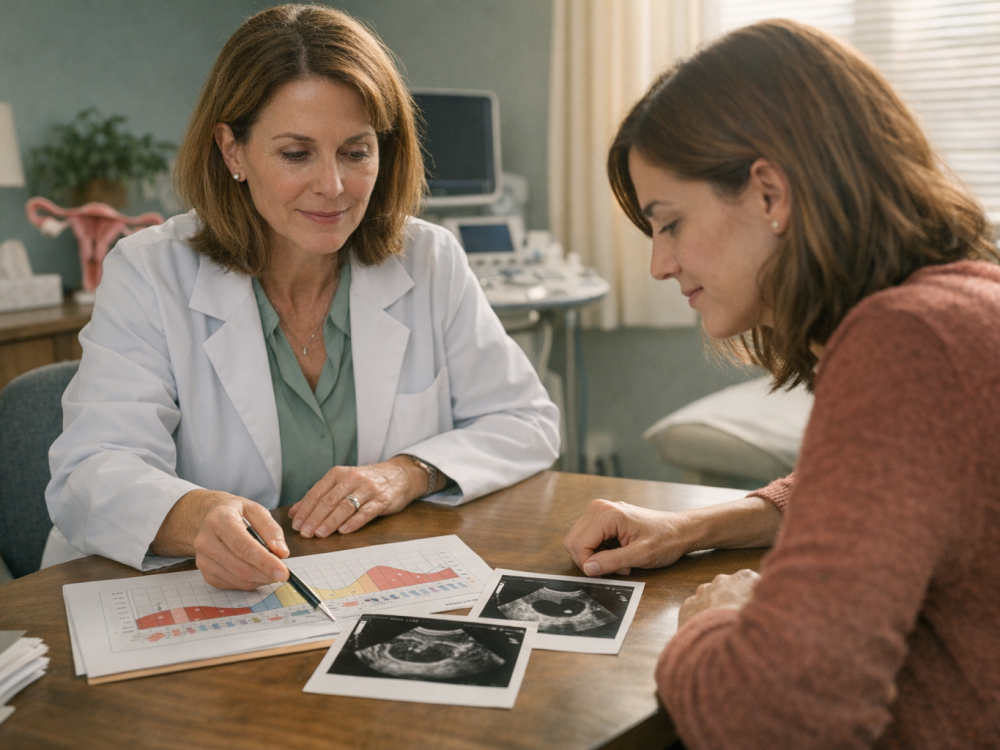
Age is one of the most important biological influences on fertility, but it can also be one of the most emotionally difficult to discuss. Many people hear that fertility declines with age and understandably wonder whether that means ovulation itself changes: Are eggs released less often? Is ovulation later or earlier? Are ovulation tests still reliable? The answer is nuanced. Age affects not only whether ovulation occurs, but also the quality of the oocyte released, the hormonal environment around ovulation, and how predictable fertile-window timing may be from cycle to cycle.
It is also important to separate probability from possibility. Many people conceive in their 30s and 40s, while others experience difficulty at younger ages. Age-related reproductive aging is real, but it is not a personal failure, and it does not mean every cycle is the same. Understanding the biology can help you make informed choices, recognize when to seek support, and use ovulation tracking tools with realistic expectations.
Highlights
Egg number and egg quality decline with age, with a more noticeable acceleration after the mid-30s.
Ovulation may still occur regularly in the late reproductive years, but the chance that a released egg is chromosomally normal decreases.
Cycle length and ovulation timing can become more variable as ovarian reserve declines and perimenopause approaches.
Lifestyle can support general reproductive health, but it cannot reverse age-related loss of oocyte quantity or quality.
If pregnancy is taking longer than expected, earlier medical evaluation is often recommended for people in their mid-30s or older.
Age affects ovulation through both egg quantity and egg quality
is the release of a mature oocyte from an follicle. At first glance, it may seem like a monthly yes-or-no event: either an egg is released, or it is not. But age changes the biology behind that event in two major ways: the number of remaining follicles declines, and the developmental competence of the oocytes also declines.
People ovaries are born a finite pool of primordial follicles. This pool gradually decreases through life, long menstrual cycles begin and continuing across the years. Ovarian reserve refers broadly to the remaining quantity of eggs, hough common clinical markers such as anti-Müllerian hormone, antral follicle count, and do not directly measure egg quality. As the follicle pool becomes smaller, the ovary may become less responsive to the usual signals from the brain.
Egg quality, or oocyte competence, refers to the egg’s ability to complete maturation, be fertilized, support early embryonic development, and contribute to a chromosomally normal embryo. With age, errors in chromosome separation during meiosis become more common. Mitochondrial function, spindle integrity, DNA repair, and the follicular environment can also be affected. This is why a person may still ovulate but have a lower of pregnancy per cycle and a higher risk of early pregnancy loss.
Ovulation can remain regular while fertility per cycle declines
A common misconception is that fertility decline begins only when cycles become irregular. In reality, many people continue to ovulate regularly through their 30s, yet the probability of conception per ovulatory cycle gradually falls. This is because ]] is necessary for natural conception, but it is not sufficient on its own. The oocyte must be developmentally competent, sperm must reach and fertilize it, the must develop normally, and implantation must occur in a receptive endometrium.
The is largely driven by the decreasing proportion of eggs capable of producing chromosomally normal s. The American Society for Reproductive Medicine notes that egg number and quality decline naturally with age, with a more rapid decline after the mid-30s. This helps explain why timing intercourse perfectly around may not lead to pregnancy as quickly at 38 as it might have at 28, even when cycles still look regular.
This distinction can be emotionally important. If you are tracking carefully and not conceiving, it does not necessarily mean you are missing or doing something wrong. Age changes the underlying odds in each cycle, and professional evaluation can help clarify whether other factors, such as sperm parameters, tubal patency, endometriosis, uterine factors, thyroid , or ovulatory , may also be contributing.
How timing may change from the 20s to the 40s
In younger reproductive years, often occurs with a relatively consistent pattern for a given individual, although normal variation is still common. A classic 28-day cycle with ]] around day 14 is only one example, not a universal rule. The follicular phase, which runs from menstruation to , is the most variable part of the cycle. The luteal phase, after , is usually more consistent for an individual.
As ovarian reserve declines, the hormonal conversation between the hypothalamus, pituitary gland, and ovary can shift. may rise earlier in the cycle as the body tries to recruit a follicle. Some people notice shorter cycles because follicular recruitment occurs sooner, leading to earlier . Others experience more variable or longer cycles, particularly as perimenopause approaches, because follicular development may be delayed or unsuccessful in some cycles.
Age-related changes are not identical for everyone. A person in their late 30s may have very predictable , while someone younger may have irregular due to polycystic ovary syndrome, hypothalamic dysfunction, thyroid disease, hyperprolactinemia, recent postpartum changes, or other factors. Age is powerful, but it is not the only determinant of timing.
Predictability: why fertile-window tracking can become harder
prediction depends on identifying patterns. Common tools include cycle calendars, observations, basal body temperature charting, urinary tests, and sometimes ultrasound or serum hormone testing in clinical settings. With age, these tools can still be useful, but interpretation may require more caution if cycles become variable.
Urinary LH tests detect the LH surge that usually precedes by about 24 to 36 hours. However, LH patterns can vary. Some people have short surges, multiple LH rises, or surges that are harder to capture with once-daily testing. In later reproductive years, hormonal fluctuations may become less predictable, and a positive LH test does not guarantee that successfully occurred. Basal body temperature can confirm a post-ovulatory effect retrospectively, but it cannot predict in advance.
Calendar-based apps are most reliable when cycles are stable. If varies significantly, an app may estimate the too early or too late. In that situation, combining methods may be more informative: observing , using LH tests over a wider window, and discussing persistent irregularity with a clinician. For people trying to conceive, the practical aim is usually not to pinpoint to the exact hour, but to have sperm present in the reproductive tract during the several days before ovulation and on the day of ovulation.
Perimenopause and the shift from predictable ovulation to intermittent ovulation
Perimenopause is the transition leading up to menopause, marked by fluctuating ovarian function. It can begin years before the final menstrual period. During this time, may become intermittent. Some cycles are ovulatory, some may be anovulatory, and can become noticeably irregular. Bleeding patterns may change as well, including skipped periods, heavier or lighter bleeding, or shorter intervals between periods.
Hormonal variability is a hallmark of this transition. Estrogen may be high in one cycle and lower in another. Progesterone exposure may be reduced in because progesterone is primarily produced after ovulation by the corpus luteum. This can make symptoms and cycle signs more confusing: cervical mucus may appear at unexpected times, LH tests may be inconsistent, and a period-like bleed may occur without a clearly confirmed ovulation.
Pregnancy is still possible during perimenopause if ovulation occurs, so contraception remains relevant for those avoiding pregnancy until menopause is confirmed according to medical guidance. Conversely, for those trying to conceive, irregular cycles in the 40s often warrant earlier consultation because time-sensitive decisions may be involved, including assessment of ovarian reserve, partner sperm testing, and discussion of available fertility options.
Egg quality is not the same as cycle regularity
One of the most frustrating aspects of aging is that standard cycle signs cannot reliably show egg quality. A regular period, a clear LH surge, fertile cervical mucus, and a temperature rise can all suggest occurred, but they cannot confirm that the released egg was chromosomally normal or developmentally competent.
This is why the phrase “improving egg quality” should be used carefully. General health measures, such as not smoking, moderating alcohol, maintaining a medically appropriate weight, managing chronic conditions, treating thyroid or disorders when present, and getting adequate sleep, can and overall health. However, major medical organizations emphasize that lifestyle cannot reverse the natural age-related decline in egg number and quality.
That said, ive health behaviors still matter. Preconception care can identify medications that need review, ensure folic acid or prenatal supplementation is appropriate, update vaccinations when indicated, and optimize conditions such as diabetes, hypertension, autoimmune disease, or epilepsy before pregnancy. These steps do not make ovaries biologically younger, but they can reduce preventable risks and support the healthiest possible environment for conception and pregnancy.
When to seek medical guidance
Medical evaluation is not a sign that you have failed to try long enough. It is a way to gather information. General fertility guidance often suggests evaluation after 12 months of trying to conceive if the female partner or person trying to conceive is under 35, and after about 6 months if age 35 or older. People over 40, or those with known risk factors, may be advised to seek care even sooner. Recommendations vary by individual circumstances, so a clinician can help tailor the timing.
Earlier consultation is also appropriate if cycles are very irregular, periods are absent, bleeding is unusually heavy or prolonged, there is known endometriosis or pelvic inflammatory disease, there have been recurrent pregnancy losses, prior chemotherapy or ovarian surgery, suspected premature ovarian insufficiency, or a male partner has known sperm concerns. A fertility workup may include assessment, ovarian reserve testing, pelvic ultrasound, uterine and tubal evaluation, and semen analysis.
For medically literate readers, it is worth emphasizing that ovarian reserve tests help estimate expected ovarian response, especially in assisted reproduction, but they do not perfectly predict spontaneous pregnancy in every individual. Age remains a central predictor because it correlates strongly with oocyte aneuploidy risk and embryo competence. Interpreting these tests is best done with a reproductive endocrinologist, gynecologist, or qualified fertility clinician.
When changes deserve prompt attention
- Periods stopping for 3 months or more when you are not pregnant, postpartum, or using a medication known to suppress cycles
- Very heavy bleeding, bleeding between periods, or bleeding after sex
- Cycles consistently shorter than 21 days or longer than 35–40 days, especially if this is new
- Severe pelvic pain, fever, or symptoms suggesting infection or ectopic pregnancy
- Trying to conceive at age 35 or older for 6 months without pregnancy, or at age 40 or older at any duration
- A history of recurrent miscarriage, chemotherapy, ovarian surgery, or suspected premature ovarian insufficiency
Tools & Assistance
- Track cycle length, bleeding days, cervical mucus, LH test results, and basal body temperature for several cycles.
- Schedule preconception counseling with an obstetrician-gynecologist, midwife, or reproductive endocrinologist.
- Ask about ovarian reserve testing, thyroid and prolactin testing, and semen analysis when clinically appropriate.
- Use a wider fertile-window strategy if ovulation timing is variable rather than relying only on a calendar app.
- Seek urgent medical care for severe pain, heavy bleeding, fainting, or a positive pregnancy test with one-sided pelvic pain.
FAQ
Does older age mean I do not ovulate?
Not necessarily. Many people continue to ovulate regularly into their late 30s and early 40s. However, egg quality declines with age, and ovulation may become less consistent as perimenopause approaches.
Can I have regular periods but poor egg quality?
Yes. Regular cycles can suggest regular ovulation, but they do not measure chromosomal normality or developmental competence of the egg. Egg quality is strongly age-related and cannot be confirmed by cycle tracking alone.
Do ovulation predictor kits work after 35?
They can still be useful, especially if cycles are regular. If cycles become variable or LH surges are brief or inconsistent, testing over a wider window or combining methods may help, but a clinician can advise if results are confusing.
Can lifestyle reverse age-related fertility decline?
Healthy habits can support general reproductive health and pregnancy readiness, but they cannot reverse the natural age-related decline in egg number and egg quality.
When should I get fertility advice if I am trying to conceive?
Many guidelines suggest seeking evaluation after 12 months if under 35, after 6 months if 35 or older, and sooner if over 40 or if there are irregular cycles, known reproductive conditions, or recurrent losses.
Sources
- American Society for Reproductive Medicine — Does My Age Affect My Fertility?
- National Library of Medicine / PubMed Central — Oocyte quality and aging
- Your Fertility — How Age Matters For Your Fertility
Disclaimer
This article is for informational purposes only and is not a substitute for professional medical advice, diagnosis, or treatment. Consult a qualified healthcare professional for personal guidance about ovulation, fertility, or pregnancy planning.












Please log in to leave a comment.