
Intro
Low ovarian reserve, also called diminished ovarian reserve, means the ovaries are thought to contain fewer remaining eggs than expected for a person’s age. Hearing this phrase can feel frightening, especially if you are trying to conceive now or hoping to preserve fertility for later. It is important to know that low ovarian reserve does not mean pregnancy is impossible, and it does not define your worth, femininity, or future as a parent.
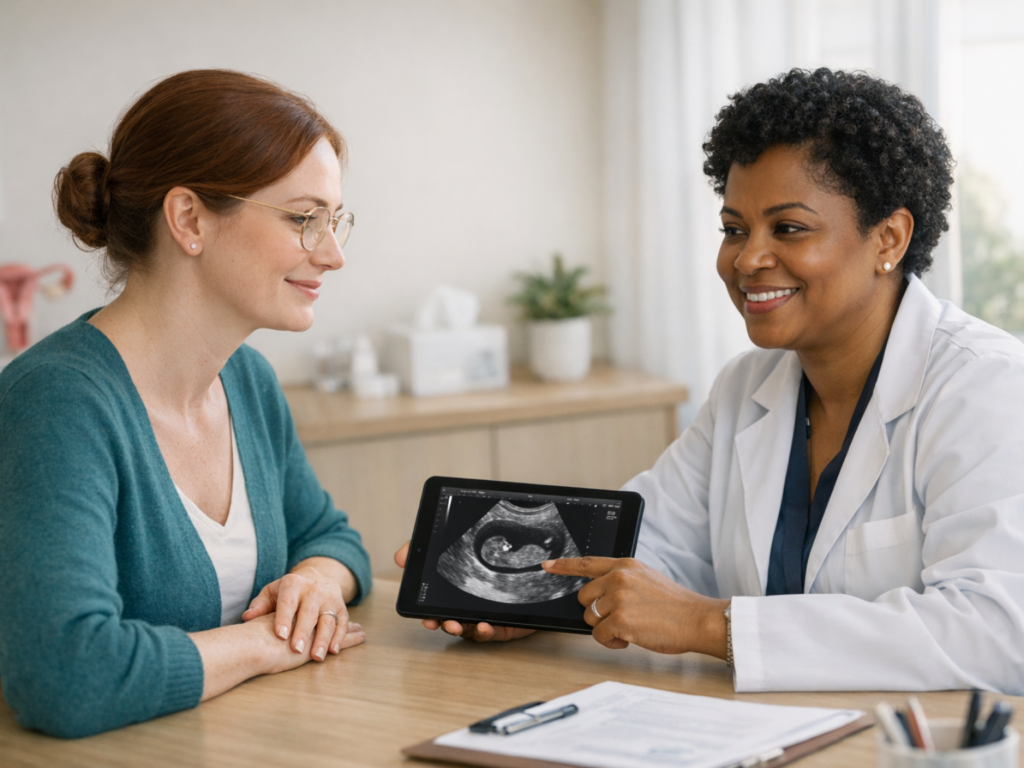
Medically, ovarian reserve testing helps clinicians estimate how the ovaries may respond to fertility treatment, particularly how many eggs might be retrieved during ovarian stimulation. These tests can provide useful information, but they cannot perfectly predict whether you will conceive naturally in a given month or guarantee the outcome of treatment. A careful interpretation with a reproductive endocrinologist or fertility specialist can help turn confusing numbers into a practical plan.
Highlights
Low ovarian reserve means having fewer eggs than expected for age, but it is not the same as having no eggs or being unable to get pregnant.
Common tests include anti-Müllerian hormone, follicle-stimulating hormone, estradiol, and antral follicle count; each has limitations and must be interpreted in context.
Age remains central because egg quantity and egg chromosomal quality both decline over time, but genetics, surgery, autoimmune disease, cancer therapy, and environmental exposures can also contribute.
Treatment decisions may involve trying sooner, fertility medications, IVF, fertility preservation, donor eggs, or addressing other fertility factors, depending on goals and medical circumstances.
Emotional support matters: low ovarian reserve can bring grief, urgency, and uncertainty, and compassionate care should include both medical guidance and psychological support.
What does low ovarian reserve mean?
Ovarian reserve refers to the remaining supply of oocytes, or eggs, within the ovaries. Everyone with ovaries is born with a finite number of immature eggs. This number declines throughout life, including before puberty, and the decline accelerates as reproductive age advances. Low ovarian reserve means the number of remaining eggs appears lower than expected for someone’s chronological age.
This is sometimes called diminished ovarian reserve. It is related to, but not identical with, infertility. Fertility depends on many factors: ovulation, egg quality, sperm quality, fallopian tube function, uterine health, timing of intercourse or insemination, endocrine conditions, and chance. A person may have low ovarian reserve and still ovulate regularly. Another person may have normal ovarian reserve markers but experience infertility for another reason.
The phrase can be emotionally loaded because it sounds absolute. In clinical practice, however, it is usually a risk marker. It may suggest a shorter reproductive window, a potentially lower response to ovarian stimulation, or a need to avoid unnecessary delay. It does not automatically mean that natural conception cannot occur.
Ovarian reserve versus egg quality
Ovarian reserve is mainly about quantity: how many recruitable follicles may be present. Egg quality is different. In fertility medicine, egg quality often refers to the egg’s ability to mature normally, fertilize, support embryo development, and contain the correct number of chromosomes. Age strongly affects egg quality because chromosomal errors become more common over time.
This distinction matters. A younger person with low ovarian reserve may produce fewer eggs during IVF, but the eggs retrieved may still have a relatively higher chance of being chromosomally normal compared with eggs from someone older. Conversely, a person in their early 40s may have an acceptable number of follicles but still face reduced pregnancy rates because egg chromosomal quality is lower on average.
Clinicians therefore interpret ovarian reserve markers alongside age, menstrual history, prior pregnancies, ultrasound findings, medical history, partner or donor sperm factors, and previous responses to fertility medication. Numbers alone rarely tell the whole story.
How low ovarian reserve is tested
Ovarian reserve testing commonly includes blood tests and ultrasound. These tests are useful, but they are not crystal balls. The American Society for Reproductive Medicine emphasizes that ovarian reserve tests are best understood as predictors of ovarian response, especially expected egg yield during stimulation, rather than definitive predictors of natural fertility.
- Anti-Müllerian hormone (AMH): AMH is produced by small developing follicles. Lower AMH may suggest fewer remaining recruitable follicles. AMH can be measured at many points in the menstrual cycle, although values can vary by laboratory, assay, contraceptive use, and medical context.
- Antral follicle count (AFC): AFC is the number of small follicles seen on transvaginal ultrasound, usually early in the cycle. A lower count may suggest reduced ovarian reserve. Accuracy depends on ultrasound quality and operator experience.
- Follicle-stimulating hormone (FSH): FSH is often measured on cycle day 2, 3, or 4. Higher early-cycle FSH can reflect that the brain is signaling harder to stimulate the ovaries. However, FSH can fluctuate from cycle to cycle.
- Estradiol: Early-cycle estradiol is often interpreted together with FSH. A higher estradiol level can sometimes suppress FSH and make the FSH result look deceptively normal.
No single test should be used in isolation to label someone’s fertility future. A result that is concerning in one context may be less meaningful in another. If results are unexpected, repeat testing or a specialist interpretation may be appropriate.
Causes and risk factors
Age is the most common reason ovarian reserve declines. This decline is biologically expected, although the timing and pace vary between individuals. Some people have lower-than-expected reserve in their 20s or 30s, while others maintain higher markers for longer. Family history can offer clues, especially if a close relative experienced early menopause.
Other possible contributors include genetic factors, autoimmune conditions, endometriosis-related ovarian damage, prior ovarian surgery, pelvic radiation, chemotherapy, and certain medical treatments. Surgery for ovarian cysts or endometriomas can sometimes reduce healthy ovarian tissue. Cancer treatments may damage follicles directly, depending on medication type, dose, radiation field, and age at treatment.
Research also explores broader influences, including inflammation, metabolic health, environmental exposures, medications, smoking, and socioeconomic factors. These associations are complex. They do not mean an individual caused their low reserve, and they should not be used for blame. Often, no single cause is found.
Possible signs and why many people have none
Low ovarian reserve often has no obvious symptoms. Many people continue to have regular cycles and positive ovulation predictor tests. Because ovulation can still occur, a person may not suspect anything until fertility testing is done after difficulty conceiving or before fertility preservation.
Some people notice shorter menstrual cycles, skipped periods, or changes in bleeding pattern, especially if ovarian reserve decline is more advanced or approaching primary ovarian insufficiency or menopause. However, cycle changes can also be caused by thyroid disease, prolactin abnormalities, polycystic ovary syndrome, stress, weight changes, medications, uterine conditions, and perimenopause.
If periods become very irregular, stop unexpectedly, or are accompanied by hot flashes, night sweats, vaginal dryness, or new pelvic pain, medical evaluation is important. These symptoms do not diagnose low ovarian reserve by themselves, but they can signal hormonal or gynecologic conditions that deserve attention.
How it can affect conception and IVF
For natural conception, low ovarian reserve may indicate that time is more limited, but it does not necessarily prevent ovulation or fertilization. If tubes are open, sperm parameters are adequate, and ovulation occurs, pregnancy can still happen. The probability depends heavily on age and other fertility factors.
In assisted reproduction, low ovarian reserve is most relevant because it may predict a lower response to ovarian stimulation. In IVF, fewer follicles may develop, fewer eggs may be retrieved, and there may be fewer embryos available for transfer or freezing. This can affect cumulative pregnancy chances across one or more cycles. Still, egg number is not the same as embryo potential, and individual outcomes vary.
A fertility specialist may discuss modified stimulation protocols, realistic expectations for egg yield, whether to proceed quickly, whether embryo or egg freezing is reasonable, or whether donor eggs are an option. The best path depends on age, AMH and AFC, prior response to medications, sperm factors, medical risks, finances, values, and how urgently pregnancy is desired.
When to seek professional guidance
General fertility guidance often recommends evaluation after 12 months of trying to conceive if under 35, after 6 months if 35 or older, and sooner if there are known risk factors. People with a history of chemotherapy, radiation, ovarian surgery, endometriosis, very irregular cycles, early menopause in the family, or previous low AMH or AFC may benefit from earlier consultation.
It can be helpful to bring cycle dates, prior lab results, ultrasound reports, surgery records, cancer treatment summaries, medication lists, and partner semen analysis if applicable. A clinician may evaluate ovarian reserve alongside other essential fertility factors, including tubal patency, uterine cavity assessment, ovulation confirmation, thyroid function, prolactin, and sperm health.
If you are not ready to conceive but are worried about reproductive timing, a preconception or fertility preservation consultation can be informative. The goal is not to pressure you, but to help you understand options while they are still available.
Coping with the emotional impact
Low ovarian reserve can create a sudden sense of urgency. People may feel grief, anger, guilt, jealousy, numbness, or pressure to make decisions quickly. These reactions are understandable. Fertility information can be medically useful and emotionally destabilizing at the same time.
Support can include counseling with a therapist familiar with infertility, a reproductive endocrinology nurse educator, peer support groups, or conversations with a trusted partner or friend. It may also help to ask your clinician for clear next steps: what is known, what remains uncertain, what choices are time-sensitive, and what can wait.
Compassionate care should include room for your priorities. Some people want the most aggressive treatment available; others need time, a lower-intervention approach, or information about donor eggs, adoption, or living child-free. There is no single correct emotional or medical response.
When to get medical advice promptly
- You are 35 or older and have been trying to conceive for 6 months without pregnancy.
- Your periods stop unexpectedly, become very irregular, or are associated with hot flashes or night sweats.
- You have a history of chemotherapy, pelvic radiation, ovarian surgery, or severe endometriosis.
- You have abnormal ovarian reserve results and are unsure how to interpret them.
- You have pelvic pain, heavy bleeding, or symptoms that could suggest another gynecologic condition.
Tools & Assistance
- Schedule a consultation with a reproductive endocrinologist or fertility specialist.
- Request a clear explanation of AMH, FSH, estradiol, and antral follicle count in your age context.
- Keep a menstrual cycle log and gather prior surgery, oncology, ultrasound, and laboratory records.
- Consider partner semen analysis when trying to conceive, because fertility assessment should include both partners when relevant.
- Ask about fertility preservation or treatment timelines if pregnancy is a future goal.
FAQ
Does low ovarian reserve mean I cannot get pregnant naturally?
No. Low ovarian reserve can make conception more difficult and may suggest a shorter reproductive window, but spontaneous pregnancy can still occur if ovulation, sperm, tubes, and other factors are favorable.
Is AMH a fertility score?
Not exactly. AMH is useful for estimating ovarian response to stimulation, but it does not perfectly predict natural conception or whether a specific egg will lead to pregnancy.
Can low ovarian reserve be reversed?
There is no proven way to restore the original egg supply. Management usually focuses on timing, identifying other fertility factors, optimizing general health, and choosing appropriate reproductive options with a clinician.
Can I still do IVF with low ovarian reserve?
Many people with low ovarian reserve pursue IVF, but they may retrieve fewer eggs. A specialist can discuss expected response, protocol options, success rates for your age, and alternatives such as donor eggs if appropriate.
Should I test ovarian reserve if I am not trying to conceive yet?
Testing can be useful in some situations, especially with risk factors or concerns about delaying pregnancy. However, results need careful counseling because they cannot precisely predict future fertility.
Sources
- Cleveland Clinic — Diminished Ovarian Reserve: Causes, Symptoms & Treatment
- American Society for Reproductive Medicine — Testing and interpreting measures of ovarian reserve: a committee opinion (2020)
- PubMed Central — Potential factors result in diminished ovarian reserve
Disclaimer
This article is for informational purposes only and does not replace medical evaluation, diagnosis, or treatment. Discuss fertility concerns and test results with a qualified healthcare professional.














Please log in to leave a comment.