
Intro
Peer influence is a normal part of growing up. Children and adolescents look to friends and classmates for cues about how to act, what is acceptable, and where they belong. That influence can be helpful or harmful, and it often changes with age, personality, and the social setting.
This article explains the difference between positive and negative peer influence in a child-friendly way. It focuses on how peer groups can strengthen prosocial behavior, rule compliance, and confidence, but also how they can increase risk-taking, rule breaking, and distress when group norms become unhealthy.
Highlights
Peer influence is not always harmful. In supportive groups, it can improve kindness, cooperation, and confidence.
Negative peer pressure can be subtle. A child may copy friends to avoid rejection, even without direct coercion.
The preteen and adolescent years are especially sensitive because belonging and social approval matter more during development.
Parents, teachers, and caregivers can help by noticing patterns early and responding without shame or panic.
What peer influence means
Peer influence is the way children change their thoughts, emotions, or behavior in response to classmates, teammates, friends, or online groups. It can happen directly, such as when a friend says, “Let’s do this,” or indirectly, when a child notices what their group praises, ignores, or punishes. Much of it is driven by social conformity, the tendency to match group norms to maintain acceptance.
In healthy settings, peers can encourage fair play, school participation, patience, and helpfulness. In unhealthy settings, the same social need to belong can pull a child toward teasing, secrecy, lying, risky dares, or other unsafe choices. That is why peer influence is often described as a double-edged sword: the group can build up a child or quietly shape behavior in a harmful direction.
It also helps to remember that peer influence is not limited to adolescence. Children begin to care about acceptance early, but the strength of this influence usually grows as social comparison, identity formation, and independence become more important.
Why preteens and adolescents are especially sensitive
Peer influence tends to intensify in the preteen and adolescent years because development is changing quickly. Young people are not simply “being difficult”; their brains, social goals, and self-concept are reorganizing. During this period, reward sensitivity increases, so approval from peers can feel especially powerful. At the same time, executive function, the set of skills used for planning, inhibition, and decision-making, is still maturing.
Research on adolescent social influence shows that peer behavior can strongly shape what a young person sees as normal. When a group is fair, compliant, and respectful, it can promote rule compliance and prosocial behavior. When a group is disobedient, selfish, or dismissive of rules, it can increase rule breaking and reduce helpful behavior.
This is one reason can feel so intense. A child may not want to copy a risky action because they believe in it; they may do it to avoid being left out. The emotional force of belonging can be stronger than the child’s internal safety alarm, especially in unfamiliar, exciting, or status-driven settings.
What positive peer influence looks like
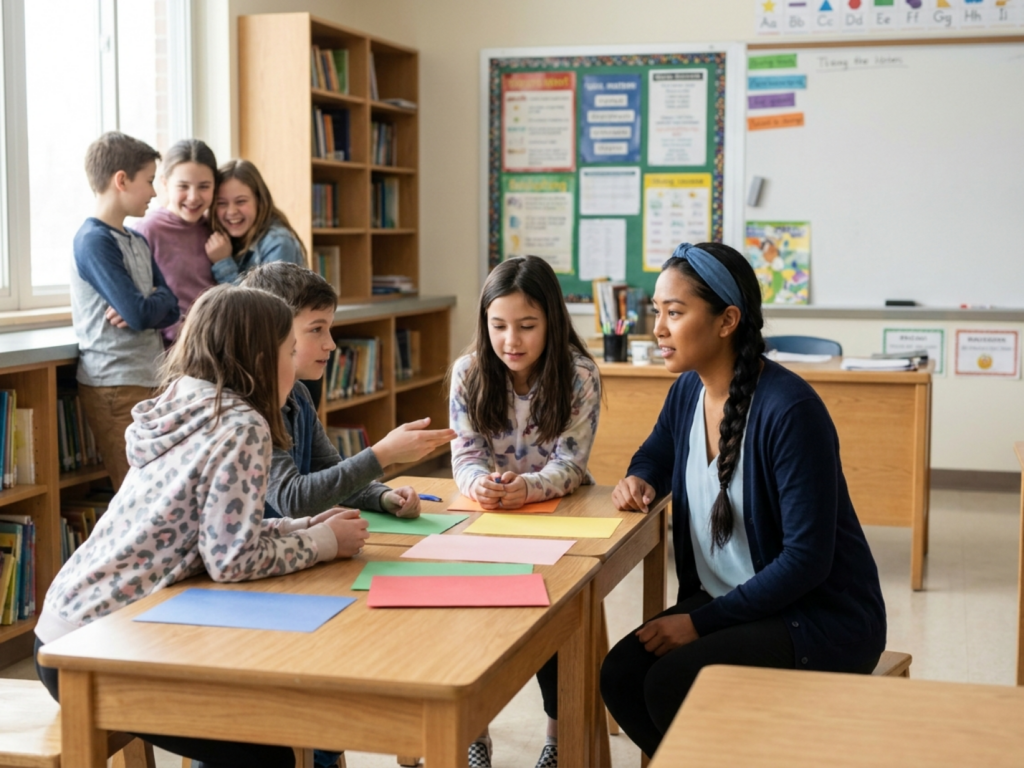
Positive peer influence for children often appears ordinary rather than dramatic. A friend models taking turns, finishing homework, asking for help, or including someone who is sitting alone. A team rewards encouragement instead of humiliation. A classroom group treats rules as shared commitments rather than obstacles. In these settings, the child experiences belonging without having to trade away safety or values.
Positive peer influence can support several healthy outcomes:
- Prosocial behavior: sharing, cooperating, comforting, and helping others.
- Rule compliance: following agreed boundaries because the group respects them.
- Confidence: feeling more secure when friendships are stable and respectful.
- Skill building: practicing communication, conflict repair, and empathy.
Friends can also make healthy behavior feel more normal. A child who sees peers reading, joining clubs, or speaking up kindly may feel more willing to try those actions too. In this way, peers can reinforce growth rather than simply pressuring conformity. The key difference is that the child is being invited into a safer pattern of behavior, not pushed away from their values.
How negative peer influence develops
Negative peer influence is not always loud or openly aggressive. Sometimes it is a slow process of adjustment: a child notices what earns laughs, attention, or status, then begins to copy it. Over time, this can turn into a pattern of deviant peer association, meaning repeated contact with peers who normalize rule breaking, aggression, dishonesty, vaping, substance use, or other risky behaviors.
Peer pressure can be explicit, such as “Do it or you are not part of the group.” It can also be quiet and social, such as exclusion, eye-rolling, group chat silence, or the fear of being mocked. A child may take part in harmful behavior not because they want to, but because they are trying to protect their place in the group.
Negative peer influence can affect emotions too. A child may become more irritable, secretive, anxious, or withdrawn. Schoolwork may slip, sleep may become irregular, and family relationships may feel more tense. These changes do not prove a serious mental health condition, but they can be clues that the social environment is becoming stressful or unsafe.
Signs a peer group is helping or hurting
Adults often want a simple test for whether a friendship group is good or bad. In real life, the signs are usually mixed, so it helps to look for patterns over time. A healthy peer group usually leaves a child feeling included, respected, and able to say no without fear. A harmful group often leaves the child tense, guarded, or oddly preoccupied with what others think.
Helpful signs include:
- The child can disagree without being shamed.
- Peers encourage school, sportsmanship, or kindness.
- Boundaries are respected, even during disagreements.
- The child seems calmer after spending time with friends.
Warning signs include:
- Sudden secrecy about plans, messages, or locations.
- Frequent rule breaking that seems tied to the group.
- Loss of interest in old hobbies or trusted friends.
- Fear of rejection that seems to drive most decisions.
It is also worth noticing whether the child changes only around certain peers. That pattern often reveals the social context more clearly than the behavior itself. For example, a child may be thoughtful at home but impulsive in a group that rewards daring or mockery.
How adults can respond with support
Adults do not need to control every friendship to help a child make safer choices. The more effective approach is usually curious, steady, and non-shaming. Start by asking what the child likes about the group, what feels hard, and whether they ever feel pressured to do things that do not fit their values. Listening first helps the child feel understood rather than interrogated.
Practical support can include role-playing refusal lines, arranging supervised activities with healthier peer groups, and helping the child notice the difference between belonging and compliance. Simple language can help: “A real friend can handle your no.” or “You do not have to earn safety by copying something risky.”
For some children, especially those in contexts, the goal is not to eliminate peer influence but to strengthen decision-making under social stress. That may mean practicing pause skills, planning exit options, or identifying one trusted adult to contact if a situation feels unsafe. When possible, adults should work with the child on values-based decision-making so choices are guided by their own priorities, not just the loudest group voice.
When to seek professional help
Most peer conflicts are part of normal development, but some situations deserve extra attention. Seek professional guidance if peer dynamics are linked to persistent anxiety, school avoidance, depression, self-harm thoughts, aggression, substance use, or a major drop in functioning. A pediatrician, child psychologist, school counselor, or adolescent mental health specialist can help sort out whether the issue is mainly social stress, a broader emotional concern, or both.
Professional support may also be helpful if a child seems trapped between wanting to belong and feeling unsafe, especially when bullying, coercion, or exclusion is involved. In cases of digital harassment or group chat humiliation, the social stress can continue long after school hours, so adult support matters.
Above all, try to avoid framing the child as the problem. Peer influence is a relationship issue as much as a behavior issue. When adults respond with calm curiosity, children are more likely to share what is really happening and accept help before the situation escalates.
When peer influence needs attention
- A child starts lying, hiding messages, or changing plans to avoid a peer group.
- Behavior changes are sudden, severe, or linked to bullying, exclusion, or threats.
- The child shows repeated rule breaking, aggression, or unsafe risk-taking with friends.
- There are signs of anxiety, depression, self-harm, or school refusal.
- The child says they feel forced to do things to keep friends.
Tools & Assistance
- Talk with your child in a calm setting and ask what friendship feels safe, stressful, or confusing.
- Contact a school counselor if peer conflict, exclusion, or bullying is affecting learning or attendance.
- Use a pediatrician visit to discuss behavior changes, sleep disruption, anxiety, or safety concerns.
- Practice short refusal scripts and exit plans for parties, hangouts, and online group chats.
- Look for supervised activities that match the child’s interests and values.
FAQ
Is all peer influence bad?
No. Peers can strongly support kindness, confidence, and healthy rule-following when the group norms are respectful.
Why do children copy friends even when they know better?
Belonging can feel urgent. A child may conform to avoid rejection, especially when reward, status, or fear of exclusion is involved.
What is the difference between peer pressure and peer influence?
Peer pressure usually means direct or indirect push to act a certain way. Peer influence is broader and includes any way peers shape behavior, values, or choices.
When should I worry about my child’s friends?
Worry more if friendships are linked to secrecy, fear, aggression, school problems, or risky behavior that does not fit your child’s usual pattern.
Sources
- Proceedings of the Royal Society B: Biological Sciences — Social influence in adolescence as a double-edged sword
- PubMed Central — Toward Understanding the Functions of Peer Influence: A Summary and Synthesis of Recent Empirical Research
- PubMed Central — Peer Influence in Children and Adolescents
Disclaimer
This article is for educational purposes only and is not a diagnosis or treatment plan. If a child has concerning behavior, anxiety, depression, self-harm thoughts, or safety risks, please consult a qualified healthcare or mental health professional.
















Please log in to leave a comment.