
Intro
Children do not learn relationship problem solving in a single lesson. They build it through repeated moments of disagreement, repair, and guidance from adults who stay calm enough to coach the next step. When a child can say what is wrong, listen to another view, and try a fair solution, that child is practicing both emotional regulation and social cognition.
These skills matter at home, on the playground, in class, and later in adolescence. They are shaped by temperament, language, executive function, and the kind of conflict children see around them. The goal is not to prevent every argument. It is to help children handle conflict safely, respectfully, and with enough flexibility to keep relationships intact.
Highlights
Conflict is normal in childhood; the key skill is learning how to repair it safely.
Most children solve peer conflict through a mix of assertion and discussion, not a single perfect technique.
Family conflict styles can spill over into friendships, so everyday home interactions matter.
Adults support growth best when they coach, model calm language, and keep expectations realistic.
Frequent aggression, withdrawal, or sudden behavior change deserves professional attention.
What relationship problem solving means for children
Problem solving in relationships is more than telling children to be nice. It means helping them move from emotion to action without ignoring either one. A child has to notice the conflict, label the feeling, consider the other person’s point of view, and choose a response that protects both safety and the relationship. That process uses language, , and emotion regulation, all of which are still developing across childhood.
is usually gradual, not linear. A younger child may need an adult to translate the conflict into a simple choice, while an older child can begin to compare options and predict consequences. Even then, the first response may be anger, blame, or tears. That is not a failure. It is part of learning how to pause, think, and try again. Over time, children learn that disagreement does not have to mean rejection.
In practical terms, good relationship problem solving includes four repeating steps: noticing the problem, naming the need, listening to the other person, and trying a repair or compromise. Children do not need to master every step at once. They need repeated chances to practice the sequence in safe, supported moments.
How children solve conflict with friends
Research on middle childhood shows that children most often use assertion and discussion when they resolve conflict with friends, and they often combine more than one strategy in the same interaction. Assertion means stating a need clearly, such as saying that a turn is wanted now. Discussion means talking through what happened, what seems fair, and what each child can do next. In other words, many children are already building conflict repair through conversation, not just avoidance or adult intervention.
This finding is encouraging because it shows that peer conflict resolution strategies are often flexible rather than rigid. A child may try compromise, seek help from an adult, ignore a small insult, or walk away when safety is low. The best outcome is not always instant agreement. Sometimes the healthiest step is a pause, a clearer boundary, or a repair conversation later when emotions are calmer. Children learn that conflict can be worked through rather than simply endured.
These school-age problem-solving skills improve with practice. Low-stakes disagreements over games, seating, turn-taking, and fairness give children a chance to rehearse negotiation. Adults can help by naming what the child did well, such as using words instead of hitting, and by teaching a next step that is specific and concrete.
Why family patterns shape friendships
Children do not keep relationship skills in separate boxes. A longitudinal study found spillover between adolescent-parent relationships and adolescent friendships: positive problem solving, conflict engagement, and withdrawal in one setting were linked to similar styles in the other. This matters because it shows that family interaction patterns can influence how children handle conflict with peers. The home is not the only place where social habits are learned, but it is one of the strongest training grounds.
This does not mean parents are to blame when a child struggles. It means children absorb patterns through repetition. If conflict at home is usually handled with yelling, silent treatment, or abrupt control, those approaches may feel familiar. If adults use calm turn-taking, short pauses, and clear statements of concern, children have a different model to copy. Even when a family is under stress, small moments of respectful problem solving can matter.
Stress also affects thinking. When a child feels overwhelmed, cognitive flexibility can narrow and impulse control may drop. That is one reason a child may argue more at home than in a classroom or vice versa. The same child can show different skills in different settings, which is why context matters so much when adults are trying to understand behavior.
How adults can coach without taking over
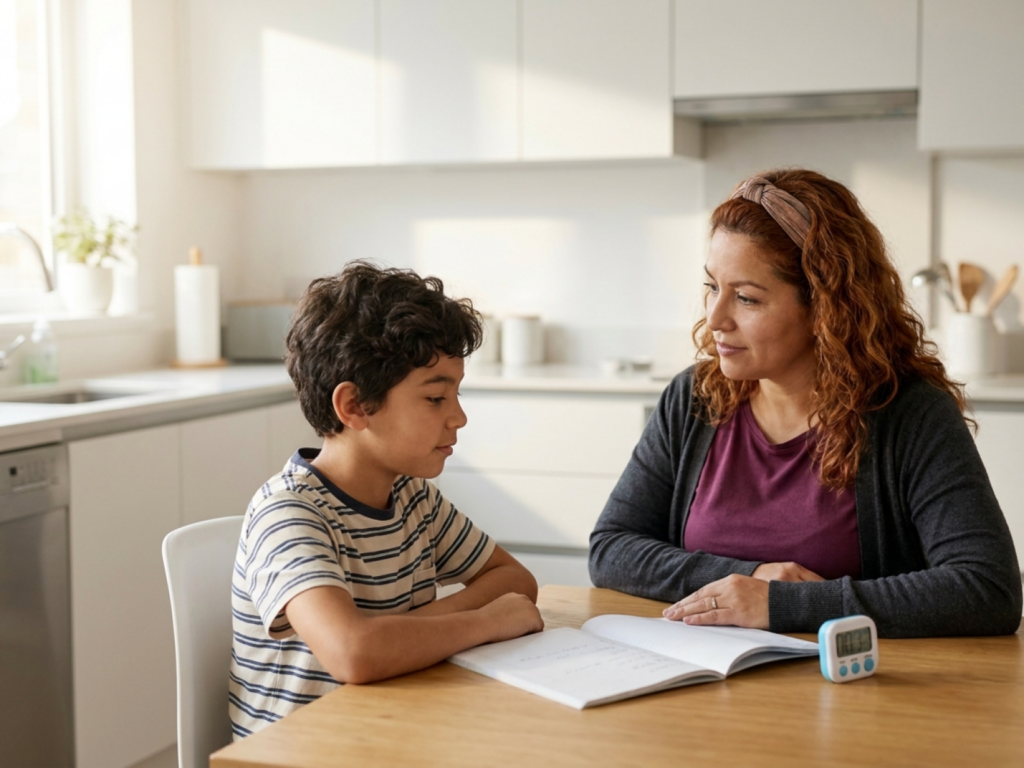
Adults help children most when they scaffold the process instead of rescuing them from every disagreement. A research-based approach called Collaborative Problem Solving is designed to reduce stress, increase empathy, and improve parent-child relationships by making the child’s concern visible while still holding the adult’s limit. It is not about letting children do whatever they want. It is about solving the real problem together so the child can succeed more often next time.
A practical version starts with co-regulation before self-regulation. First, lower the emotional temperature. Then describe each person’s point of view without blame. Next, name the shared goal, such as safety, fairness, or turn-taking. After that, brainstorm a few realistic options and agree on one to test. A brief repair conversation later can help children reflect on what worked and what needs to change.
- Use a calm voice and simple language.
- Reflect the child’s concern before offering a solution.
- Ask what feels hard about the moment instead of asking why the child behaved badly.
- Practice short repair phrases such as ‘I was upset’ or ‘Can we try again?’
- Praise specific problem-solving behaviors, not just the final outcome.
This style of coaching can lower caregiver stress because it reduces repeated power struggles. It also teaches children that conflict can be handled with structure, empathy, and practice.
When conflict needs extra support
Some disagreements are a normal part of development. Others are a sign that the child needs more support. Consider professional guidance if conflict is frequent, intense, or linked with aggression, threats, panic, , sleep disruption, somatic complaints, or strong social withdrawal. Sudden behavior change, loss of previously mastered skills, or repeated fear of a person or setting should also be taken seriously.
A pediatrician, school counselor, child psychologist, or family therapist can help sort out whether the main issue is developmental, environmental, or part of a broader emotional or behavioral condition. Children with language delay, attention problems, trauma exposure, autism spectrum differences, anxiety, or mood symptoms may need more tailored communication and support strategies. The goal is not to label the child. It is to understand what is making relationship problem solving harder and what kind of help is realistic.
If a child talks about self-harm, serious violence, or not feeling safe, seek urgent professional help right away. When safety is the issue, the priority is immediate assessment, not negotiation.
When to seek help sooner
- Aggression, threats, or self-harm statements need prompt assessment.
- Frequent withdrawal, panic, sleep changes, or school refusal may signal more than ordinary conflict.
- Repeated fear of one person, place, or activity should not be ignored.
- A sudden drop in language, social skills, or self-control deserves professional review.
Tools & Assistance
- Pediatrician or primary care clinician
- School counselor or school social worker
- Child psychologist or licensed family therapist
- Collaborative Problem Solving parent coaching
- School-based social-emotional learning supports
FAQ
Is it normal for children to argue with friends?
Yes. Conflict is common in childhood, and learning to repair it is part of healthy social development.
Should parents step in every time children disagree?
Not always. Adults should step in when safety is at risk or when the child is too upset to think, but many conflicts can become learning opportunities with coaching.
What if my child shuts down instead of talking?
Some children use withdrawal when overwhelmed. A calm pause, simple language, and a later repair conversation can help; frequent shutdowns may warrant professional advice.
Can relationship skills really be taught?
Yes. Children improve through repeated practice, modeling, and supportive feedback, especially when adults use predictable routines and calm problem solving.
Sources
- PubMed — Conflict resolution between friends during middle childhood
- PubMed — Longitudinal spillover effects of conflict resolution styles between adolescent-parent relationships and adolescent friendships
- Think:Kids — Collaborative Problem Solving Supports Healthy Parent-Child Relationships
Disclaimer
This article is for educational purposes only and does not replace evaluation or treatment by a qualified clinician. If a child is unsafe, severely distressed, or behavior changes suddenly, seek professional help promptly.
















Please log in to leave a comment.