
Intro
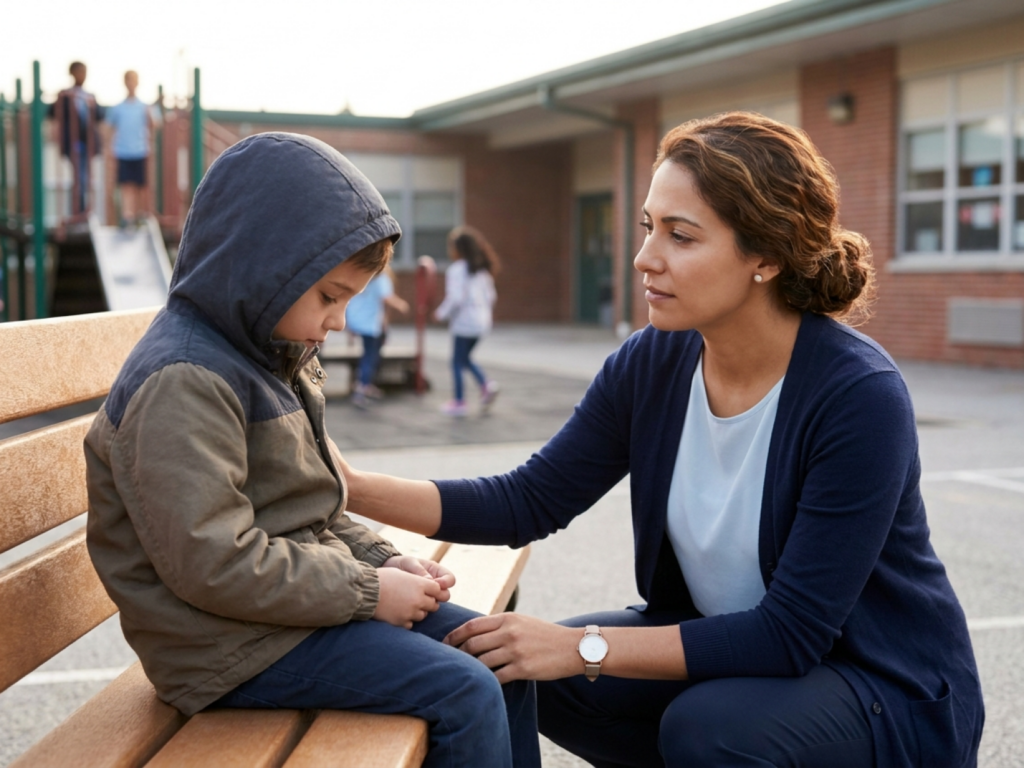
For many children, social life is a central part of growth, identity, and confidence. Friendships, play, classroom teamwork, and online interaction all ask children to notice cues, manage emotion, and recover from small conflicts. When those skills are still developing, or when the environment is especially demanding, a child may feel left out, confused, worried, or exhausted.
Social challenges are common, and they do not always mean a child has one clear-cut problem. They can reflect temperament, language or communication differences, anxiety, bullying, family stress, or broader disruptions such as the COVID-19 pandemic. A careful, supportive response helps adults see what is happening without blaming the child for struggling.
Highlights
Social challenges can affect how children join play, interpret cues, and repair conflict, not just how outgoing they seem.
Bullying and cyberbullying can increase anxiety, reduce self-esteem, and lead to school avoidance or absenteeism.
Large disruptions such as school closures and social isolation can weaken a child’s chances to practice peer skills.
Behavioral and social skills interventions can improve social function and social cognition when they are structured and repeated.
The most helpful response is early, compassionate support rather than waiting for a child to outgrow the problem.
What social challenges can look like in daily life
Social development is not a straight line. Some children are chatty but miss cues. Others are quiet, cautious, or need a long warm-up before they feel safe with peers. A concern becomes more important when the difficulty is persistent, distressing, or interferes with school, play, or family life.
Common signs include trouble joining a game, keeping a conversation going, waiting for a turn, understanding teasing, or repairing a disagreement after conflict. Adults may notice child social communication concerns in the way a child uses language socially, while others show broader social communication in children through difficulty with eye contact, reciprocity, or flexible play. These patterns do not automatically point to one diagnosis; they simply show that the child may need more support, observation, or practice.
- frequent misunderstandings with peers
- difficulty reading facial expressions or body language
- preferring solitary play far beyond what is typical for that child
- intense worry before school or social events
- repeated conflict, exclusion, or frustration in groups
Why some children struggle socially
Social difficulties often arise from a mix of developmental, emotional, family, and environmental factors. A child with language differences, ADHD, autism, anxiety, sensory sensitivity, or executive-function difficulties may struggle to keep pace with fast-moving peer interactions. Temperament matters too; some children are naturally cautious and need more time to build confidence.
Context can be just as important. Conflict at home, exposure to violence, unstable housing, poverty, or caregiver stress can reduce a child’s bandwidth for social learning. During the COVID-19 pandemic, many children experienced social isolation, school closures, financial hardship, and mental health strain. Those disruptions reduced daily practice with peers and weakened routines that support confidence. The result is often not a character flaw but a mismatch between the child’s current skills and the demands around them.
- language or pragmatic communication delays
- attention and impulse-control problems
- anxiety that makes social risk feel unsafe
- sensory overload in loud or crowded settings
- limited chances to practice play and cooperation
Bullying, exclusion, and cyberbullying
Bullying is one of the most common and painful social challenges children face. It may be obvious, such as hitting, name-calling, or threats, or it may be subtle, such as exclusion, rumor-spreading, mocking, or deliberate silence. Cyberbullying can extend the harm into the child’s home through messages, posts, and group chats, making recovery harder because the child may never feel fully off duty.
From a health perspective, bullying matters because it is linked with anxiety, low self-esteem, school problems, absenteeism, and broader emotional distress. The stress may show up as stomachaches, headaches, sleep disruption, irritability, or a sudden refusal to go to school. When adults recognize peer bullying and mental health as a connected issue, they are more likely to respond early and consistently.
- watch for changes after online activity or school events
- take reports of exclusion or humiliation seriously
- save messages or screenshots if digital harassment is involved
- work with the school rather than placing the burden on the child
How social stress affects learning and wellbeing
Social stress does not stay in the social domain. For some children it affects concentration, classroom participation, and academic confidence. A child who spends energy scanning for danger or replaying social mistakes has less attention available for learning. Over time, this can look like falling grades, missed assignments, or disengagement from school, a pattern that may be described as academic decline and emotional distress.
Long periods of isolation can also slow practice with conversation, negotiation, and play. That was one reason clinicians and researchers were concerned about the long-term effects of the pandemic on children and families: disrupted routines, fewer peer contacts, and family strain could all affect development and wellbeing. Not every child was affected in the same way, but the overall principle is clear: when children lose safe chances to connect, social confidence often weakens.
Social difficulty can also increase the risk of internalizing symptoms, such as sadness, worry, shame, or withdrawal. Some children become quiet and compliant; others become irritable or defensive. These responses are understandable coping strategies, not moral failings.
What helps at home and school
Help works best when it is practical, predictable, and relationship-based. Evidence from behavioral intervention research shows that social and behavioral programs can improve social function and social cognition across diagnoses, especially when goals are specific and practice is repeated in real settings. In other words, children often benefit from coached repetition, not only from being told to be nicer or make friends.
Helpful supports may include structured peer activities, explicit teaching of conversation skills, role-play, visual prompts, parent coaching, and school-based planning. For some children, short successful interactions are easier than unstructured group time. For others, support may focus on emotion regulation, problem-solving, or helping adults reduce overload so the child can participate more calmly.
- practice one skill at a time, such as joining play or asking to take a turn
- use clear scripts for greetings, repairs, and conflict resolution
- choose settings with supervision and predictable routines
- coordinate home and school expectations so the child hears the same message
- protect time for restorative play, sleep, and downtime
When schools respond early, children are less likely to internalize shame and more likely to rebuild confidence. The goal is not perfection; it is safe practice and gradual success.
When to seek professional support
Consider professional input when social struggles are persistent, worsening, or clearly affecting daily life. Good starting points include a pediatrician, family doctor, school counselor, psychologist, or speech-language pathologist, depending on the main concern. Teachers’ notes can be very useful, especially when they describe teacher observations of peer interactions, classroom participation, or patterns across the day.
Families should seek prompt help if a child is being bullied, avoids school, loses interest in friends, shows marked anxiety, or seems hopeless or unsafe. If there are statements about self-harm, a sudden major change in functioning, or severe mood change, urgent evaluation is appropriate. Asking for help early does not mean something is wrong with the child; it means the adults are noticing stress before it becomes entrenched.
In many cases, the most useful next step is a broad, compassionate review: how the child communicates, how peers respond, what the school sees, and what supports already help. That kind of developmental surveillance for social concerns can point toward the right services without labeling the child too quickly.
When to act quickly
- A child suddenly stops attending school or refuses most social contact.
- Bullying, cyberbullying, or exclusion is repeated or escalating.
- The child talks about self-harm, hopelessness, or not wanting to be here.
- Social struggles are causing major distress at home, at school, or in activities.
- You notice a sharp change in mood, sleep, or behavior after peer conflict.
Tools & Assistance
- Pediatrician or family doctor
- School counselor, psychologist, or special education team
- Speech-language pathologist for pragmatic communication concerns
- Trusted school reporting pathway for bullying or cyberbullying
- Child and adolescent mental health services
FAQ
How do I know if my child is just shy or facing a social challenge?
Shyness usually improves as a child becomes comfortable. A social challenge is more concerning when it is persistent, distressing, or interferes with friendships, school, or daily life.
Can bullying affect physical health?
Yes. Children may have headaches, stomachaches, sleep problems, appetite changes, or school refusal when bullying or exclusion is ongoing.
Do social skills programs actually help?
Often, yes. Structured behavioral and social skills interventions can improve social function and social cognition, especially when practiced in real-life settings.
Who should I talk to first?
A pediatrician, school counselor, psychologist, or speech-language pathologist may be a good starting point, depending on the child’s main difficulty.
Sources
- PubMed — Behavioral Intervention for Social Challenges in Children and Adolescents: A Systematic Review and Meta-Analysis
- PubMed — Addressing the Long-Term Effects of the COVID-19 Pandemic on Children and Families
- MedlinePlus — Bullying and Cyberbullying
Disclaimer
This article is for general information only and does not replace individualized medical, psychological, or educational assessment. If you are worried about a child’s safety, mood, or functioning, please speak with a qualified health professional.















Please log in to leave a comment.