
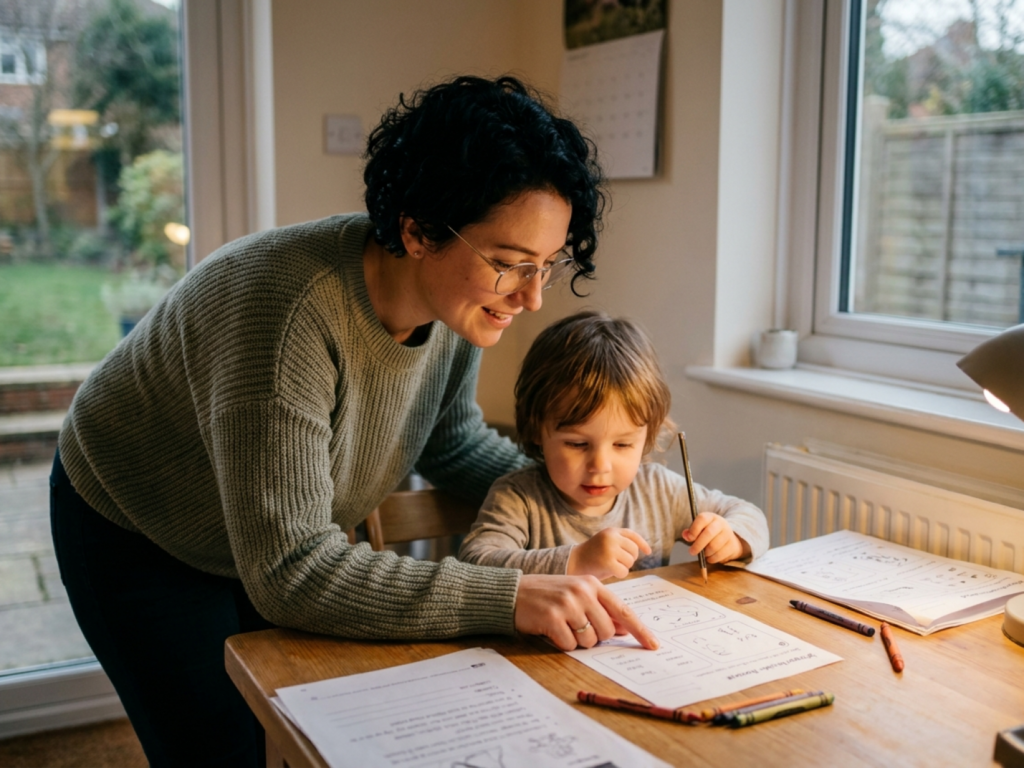
Intro
Most parents, caregivers, and educators do not set out to make mistakes. They are usually trying to protect, guide, and prepare a child for life. Still, some everyday habits can quietly make learning harder, increase conflict, or reduce a child’s confidence. The good news is that many of these patterns are recognizable and changeable.
This article looks at common mistakes in child education through a practical, evidence-informed lens. It focuses on how adults can support emotional regulation, motivation, routines, and resilience without becoming overly harsh or permissive. The goal is not perfection. It is to create a steadier, safer environment in which children can learn from correction without feeling ashamed or afraid.
Highlights
Harsh punishment may stop behavior briefly, but it often teaches fear instead of judgment or self-control.
Inconsistent rules and unpredictable routines make it harder for children to understand expectations.
Shaming reactions to mistakes can increase avoidance, anxiety, and perfectionism.
Warmth, sensitivity, shared reading, and predictable structure are strongly linked to better child outcomes.
Repair is possible: small changes in how adults respond can improve learning and trust.
Why common educational mistakes matter
Common mistakes in child education are often subtle. They are not always dramatic episodes of conflict or neglect; more often, they are repeated patterns that shape the child’s stress response, self-efficacy, and attachment security over time. A child learns not only from words, but from how adults respond when the child is tired, upset, curious, or disappointed.
When the environment is calm, predictable, and responsive, children are more likely to treat mistakes as information. When it is chaotic, harsh, or emotionally cold, they may become hypervigilant, avoidant, or oppositional. Evidence summarized by NCBI and the OECD points to the value of warmth, sensitivity, routines, shared reading, and less harsh discipline. These are not abstract ideals; they are practical behaviors associated with better cognitive, emotional, social, and physical outcomes.
That is why child education is not only about teaching facts or enforcing rules. It is also about creating a developmental climate in which learning feels safe enough to continue after frustration, correction, or failure.
Harsh punishment, sarcasm, and shaming
One of the most damaging mistakes is relying on punishment, sarcasm, or humiliation to control behavior. Harsh discipline may stop a problem in the short term, but it often teaches fear rather than judgment. A child who is shamed for spilling milk, forgetting homework, or acting impulsively may comply temporarily yet miss the deeper lesson: how to repair, plan, and try again.
This matters because children are still developing inhibitory control and executive function, the mental skills used to pause, organize, and self-correct. Adults who respond with yelling or labeling can unintentionally amplify stress and model the very loss of regulation they want to prevent. Over time, children may learn to hide mistakes instead of learning from them.
A calmer approach is usually more effective: set a clear limit, give a brief explanation, and offer a chance to repair. That does not mean being permissive. It means teaching behavior without making the child feel small, unsafe, or fundamentally bad.
Inconsistency, mixed messages, and vague limits
Another frequent mistake is inconsistency. Rules that change depending on an adult’s mood create unpredictable reinforcement, which makes behavior harder to learn and harder to trust. A child may not know whether a given action is acceptable, so they test boundaries repeatedly or simply give up. Mixed messages also happen when one caregiver permits behavior that another caregiver punishes, or when routines around sleep, meals, screen time, and homework are constantly changing.
Consistency does not mean rigidity. It means expectations that are age-appropriate, clearly stated, and repeated in a stable way. It also means following through without turning every disagreement into a crisis. Children usually cope better when the environment is structured enough to feel safe, but flexible enough to allow illness, fatigue, and ordinary human error.
Parents and educators often underestimate how much predictability supports learning. Routines reduce cognitive load, which can free attention for language, problem-solving, and self-control. In that sense, stable limits are not merely disciplinary tools; they are part of the learning environment itself.
Emotional invalidation and fear of mistakes
Some adults try to protect children by dismissing feelings: “You’re fine,” “Stop crying,” or “It’s not a big deal.” Well-meant as that may be, chronic emotional invalidation can leave children without language for frustration, grief, embarrassment, or disappointment. They may then express distress through tantrums, shutdown, headaches, stomachaches, or avoidance. In child development, behavior often communicates what words cannot yet explain.
How adults respond to mistakes matters as much as the mistake itself. A recent study found that the way mothers talk with children about failure and setbacks is related to their children’s fear of failure. Over time, overly critical reactions can foster fear of mistakes in children and, in some cases, perfectionism in anxious children. The child begins to treat every error as a threat to belonging or self-worth.
A better pattern is to name the error, acknowledge the disappointment, and separate the child from the behavior: “That did not work, but you can try a different strategy.” This style supports emotional regulation while preserving dignity. It also makes it more likely that the child will re-engage rather than avoid the task entirely.
Perfectionism, comparison, and excessive pressure
Another common mistake is confusing high expectations with constant pressure. Children need challenge, but they do not thrive when every task becomes a performance review. Comparison with siblings, classmates, or cousins can erode intrinsic motivation, the internal drive to learn for mastery rather than approval. When approval feels conditional, children may hide errors, cheat to avoid embarrassment, or avoid new activities altogether.
Process praise is usually more helpful than outcome praise. Saying, “You kept trying different ways to solve that puzzle,” reinforces persistence, strategy, and cognitive flexibility. Saying, “You’re the smartest,” may sound positive, but it can imply that worth depends on being correct. If a child brings home a disappointing grade or a messy drawing, the adult response should emphasize feedback, not identity.
This is especially important for children who are already temperamentally sensitive or anxious. Excessive pressure can magnify anticipatory anxiety, while measured encouragement helps build resilience. The message should be: mistakes are part of learning, not proof of inadequacy.
Skipping routines, shared reading, and responsive learning
Many educational mistakes happen in the routines around learning, not only in formal teaching. Sleep deprivation, skipped meals, chaotic mornings, and constant screen use can reduce attention, emotional regulation, and memory consolidation. Likewise, many families underestimate how much shared reading, conversation, and predictable play strengthen language, symbolic thinking, and parent-child connection. These daily habits are simple, but they are biologically meaningful.
Neglectful parenting is not only about absence; it can also look like chronic low responsiveness, where a child’s bids for attention, comfort, or curiosity go unanswered. Over time, that pattern can weaken trust and motivation. A warm, attentive adult does not need to be perfect or endlessly available, but the child should reliably experience, “My needs are noticed, and I matter.”
Reading together, asking open-ended questions, and following the child’s interests all support learning without turning every interaction into a lesson. When education is responsive rather than controlling, children are more likely to stay curious and less likely to become defensive.
How to repair mistakes and build a healthier approach
Repair is always possible. Parents and caregivers often feel guilt after they realize they have been too harsh, too inconsistent, or too distant. The useful next step is not self-blame; it is adjustment. Start with one or two concrete changes: shorten corrections, create a simple routine, reduce power struggles, and pause before reacting. If you lose your temper, return later and repair the relationship with a calm explanation and apology.
It also helps to choose one goal at a time. A child does not need every problem solved in one day. Small, repeated improvements are usually more effective than occasional bursts of intense discipline. If multiple adults care for the child, they should agree on basic expectations so the child is not forced to navigate different rule systems every hour.
If a child shows persistent anxiety, school refusal, aggression, developmental regression, sleep problems, or intense fear around mistakes, consult a pediatrician, child psychologist, or other qualified professional. These signs do not automatically mean a disorder, but they can signal stress that deserves assessment. Good child education is not about perfection. It is about steadily creating a climate where learning, boundaries, and emotional safety can coexist.
When to pause and seek help
- Do not use humiliation or sarcasm as teaching tools.
- Do not assume a child is lazy when stress, fatigue, or anxiety may be involved.
- Do not ignore persistent aggression, school refusal, regression, or sleep disturbance.
- Do not change rules constantly or correct only when angry.
Tools & Assistance
- A simple family routine chart for mornings, homework, meals, and bedtime.
- A brief behavior-and-mood log to spot patterns over time.
- A daily shared reading routine of 10 to 15 minutes.
- A pediatrician, child psychologist, or family therapist when concerns persist.
FAQ
What is the most common mistake in child education?
Usually it is either being too harsh or being too inconsistent. Children learn best when limits are clear, calm, and steady.
Is praise always helpful?
Yes, but the type matters. Praise focused on effort, strategy, and persistence is usually better than praise that only labels the child as smart.
Should I correct every mistake immediately?
Not necessarily. Some moments are teachable, while others are better handled later with a calmer conversation and a chance to repair.
When should I seek professional help?
If a child has persistent anxiety, school refusal, aggression, sleep problems, or strong fear of making mistakes, professional assessment is wise.
Sources
- National Institutes of Health, NCBI Bookshelf — Parenting Knowledge, Attitudes, and Practices
- PubMed Central — How mothers talk to their children about failure, mistakes and setbacks is related to their children's fear of failure
- Organisation for Economic Co-operation and Development — Why parenting matters for children in the 21st century
Disclaimer
This article is for general educational purposes only and does not replace individualized advice from a pediatrician, child psychologist, or other qualified clinician.














Please log in to leave a comment.