
Intro
Naps are a normal part of childhood sleep biology, but they are not identical at every age. In infancy, daytime sleep is expected and often essential; in toddlerhood and the preschool years, naps usually begin to shrink, become less predictable, or disappear entirely. For many families, the challenge is not whether a child naps, but how to tell whether a nap is supporting healthy sleep or starting to interfere with nighttime rest.
This article explains how naps fit into a child’s total sleep over 24 hours, why nap needs change with development, and what patterns are typical across infancy, toddlerhood, and early childhood. It also highlights when a nap schedule may deserve a closer look from a pediatric clinician, especially if there are concerns about persistent sleep loss, bedtime struggles, snoring, or unusual daytime sleepiness.
Highlights
Naps are part of the total sleep budget, not extra sleep. A child’s daytime sleep needs must be interpreted together with nighttime sleep.
Nap needs usually decline with age. Many children nap less often after age 2, and some preschoolers move to quiet time instead of sleep.
A late or long nap can sometimes push bedtime later. Research has linked napping beyond age 2 with later sleep onset and shorter or lighter night sleep in some children.
There is no single perfect nap pattern. Temperament, developmental stage, schedule, and nighttime sleep quality all shape whether naps are helpful.
Persistent sleepiness, snoring, or major changes in nap habits are reasons to speak with a healthcare professional.
What naps do in a child’s sleep system
Naps are not just a pause in the day; they are part of the child’s overall sleep regulation. From a sleep physiology perspective, daytime sleep reduces accumulated sleep pressure, the drive to sleep that builds with wakefulness. That can be restorative when a child is genuinely tired, but it can also make it harder to fall asleep at night if the nap is too long or too late in the day.
In early life, naps are often scattered across the day because infants and young toddlers have not yet developed mature sleep consolidation. Over time, circadian rhythm and wakefulness can become more organized, and sleep begins to cluster more predictably at night. This maturation is one reason the meaning of a nap changes so much from infancy to preschool age.
For families, the practical question is not whether naps are “good” or “bad.” It is whether the nap is matching the child’s developmental stage and total sleep need. A well-timed nap can improve mood, attention, and tolerance for daily demands. An ill-timed nap can sometimes create a bedtime battle or shorten night sleep.
How much sleep children need across the day and night
Sleep recommendations are usually expressed as total sleep over 24 hours, because a child’s need is distributed across nighttime sleep and, when relevant, naps. The American Academy of Pediatrics and the American Academy of Sleep Medicine both emphasize age-based ranges rather than a single fixed number.
For children ages 1 to 2 years, the usual recommendation is 11 to 14 hours of sleep in 24 hours, including naps. For children ages 3 to 5 years, the recommendation is 10 to 13 hours in 24 hours, which may still include a nap for some children. These ranges are helpful because they show that daytime sleep remains developmentally normal well into early childhood for many children.
Infants generally need even more total sleep and typically nap multiple times per day, but the exact pattern varies widely. Some babies nap briefly and often; others take longer naps with fewer sleep periods. The important point is that nap frequency decreases as the child matures, and the balance shifts toward longer, more stable nighttime sleep.
If a child is routinely sleeping far less than the age-expected range, or if naps seem to be compensating for chronically insufficient night sleep, that pattern deserves attention. It may simply reflect a busy schedule, but it can also signal a sleep routine that is not meeting the child’s biological needs.
Why nap needs change from infancy to the preschool years
Nap patterns change because the brain and body are maturing. Infants sleep in short cycles and depend heavily on naps. Toddlers, in contrast, are usually beginning to consolidate more sleep at night, though many still need one daytime nap. By the preschool years, some children continue to nap regularly, while others stop napping altogether without any problem.
Research reviewed in early childhood sleep literature suggests that napping beyond age 2 is often associated with later sleep onset and shorter or lower-quality night sleep. That association does not mean naps are inherently harmful, and it does not mean every child who naps after age 2 will sleep poorly at night. It does mean that the sleep system is changing, and a nap that once helped may begin to compete with bedtime.
Developmental differences matter too. A child who is growing rapidly, adjusting to a new schedule, or recovering from a disrupted night may still need daytime sleep even if peers do not. Temperament also plays a role. Some children show clear sleepy cues and benefit from a predictable nap, while others resist sleep but still need quiet rest.
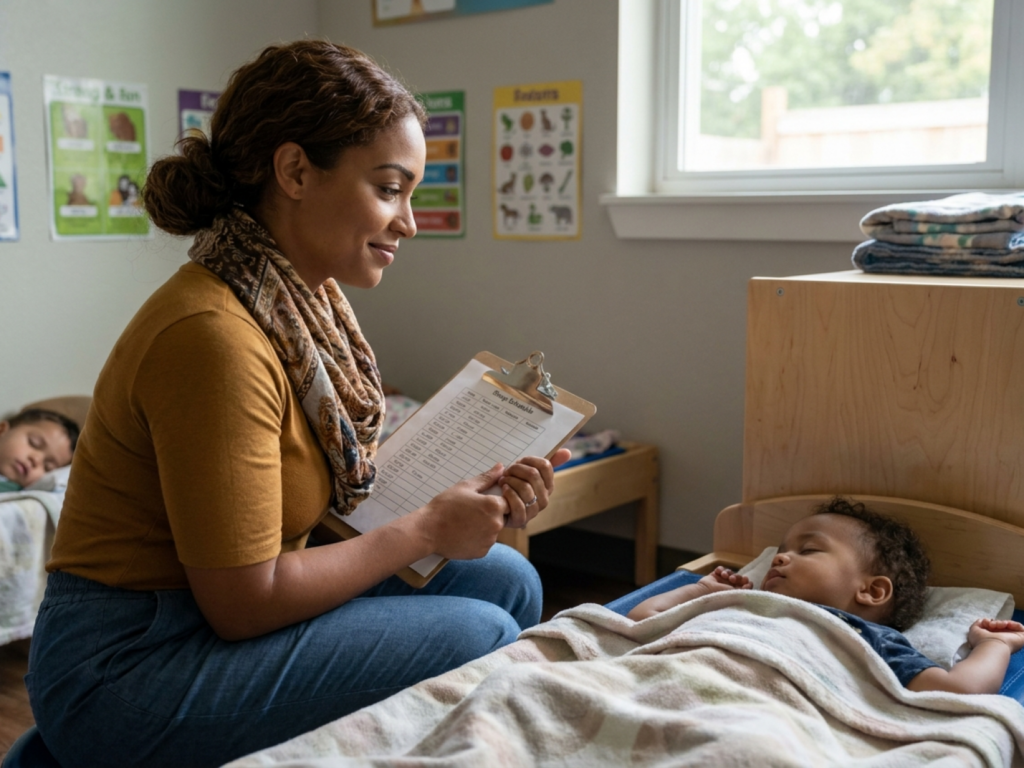
Family routines, childcare schedules, and day length can all influence nap behavior. A child may nap at daycare but not at home, or vice versa, because environmental cues and social expectations are different. That variation is common and not automatically a sign of a problem.
When a nap is helping and when it may be getting in the way
A helpful nap usually leaves the child more settled, not more dysregulated. After a good nap, many children are easier to engage, more emotionally even, and better able to participate in afternoon activities. Nighttime sleep also remains reasonably intact, with no major delay in sleep onset.
By contrast, a nap may be getting in the way if bedtime becomes consistently later, the child takes a long time to fall asleep, or night sleep becomes shorter. Some children also wake from a nap irritable or groggy, especially if they were roused mid-cycle. That does not always mean the nap was wrong; it may simply have been too long, too late, or not needed that day.
Parents often wonder whether a child is napping because of true sleep need or because the routine has become a habit. The answer is often mixed. A child may be genuinely tired and also accustomed to sleeping at a certain time. Over several days, patterns usually become clearer than any single nap.
One useful observation is whether the child can reach bedtime calmly without extreme overtiredness. If the nap is consistently protecting the evening, it may still be valuable. If it is repeatedly causing bedtime resistance in toddlers or frequent night delay, it may be time to adjust the schedule gently.
How families can support healthy nap habits
The most effective nap strategy is usually the simplest one: follow the child’s age, cues, and bedtime pattern rather than forcing a rigid rule. A consistent daily rhythm helps children anticipate rest. Many children do best with a similar nap window, a quiet environment, and a brief pre-nap wind-down that does not become a second bedtime ritual.
It can help to protect naps that are truly restorative while avoiding overly late naps that may interfere with nighttime sleep. If a child is nearing the age where naps naturally fade, many families do well with quiet time instead of naps. Quiet time still gives the child’s nervous system a break without insisting on sleep that may no longer come easily.
For preschoolers, predictability matters. A child who no longer sleeps may still benefit from lying down with books, soft music, or low-stimulation play. This can preserve rest without turning the afternoon into a conflict. In some families, bedtime may need to be adjusted slightly earlier on no-nap days to prevent overtiredness.
If a child seems chronically sleepy despite adequate sleep opportunity, avoid assuming it is just a personality trait. Persistent sleepiness may reflect fragmented sleep, poor sleep quality, or another medical issue. A pediatrician can help interpret the pattern in context.
When nap changes deserve medical attention
Most changes in napping are developmental, but some patterns warrant professional review. Seek medical advice if a child has excessive daytime sleepiness that does not fit the usual age pattern, suddenly stops napping with marked fatigue, or needs unusually long naps yet still seems unrefreshed. Loud habitual snoring, pauses in breathing, restless sleep, or mouth breathing are also important because they can suggest sleep-disordered breathing.
It is also worth discussing nap concerns if a child has growth concerns, behavioral regression, developmental delays, or frequent nighttime waking that seems out of proportion to age. In older toddlers and preschoolers, sleep issues may show up as irritability, inattention, or hard-to-explain daytime meltdown patterns rather than obvious sleepiness.
Healthcare professionals can help distinguish between normal nap transition, insufficient sleep, and conditions that need evaluation. Sometimes the most useful next step is simply reviewing the total sleep over 24 hours, bedtime timing, wake time, nap length, and snoring history together. That broader picture is often more informative than any single nap.
If you are unsure whether your child’s nap pattern is age-appropriate, it is reasonable to ask your pediatrician. You do not need to wait until the problem feels severe before seeking guidance.
When to seek advice sooner
- A child is excessively sleepy despite enough time for sleep.
- Naps are regularly followed by very late bedtimes or long sleep-onset delays.
- There is loud habitual snoring, breathing pauses, or restless sleep.
- Daytime sleepiness is paired with poor growth, developmental concerns, or behavior changes.
- A once-stable nap pattern changes abruptly without an obvious reason.
Tools & Assistance
- Keep a 1 to 2 week sleep diary with nap time, nap length, bedtime, wake time, and night waking.
- Review the child’s age-based sleep targets with your pediatrician using total sleep over 24 hours.
- Create a calm nap space with dim light, low noise, and a predictable pre-nap routine.
- If naps are fading, replace them with quiet time instead of naps rather than forcing sleep.
FAQ
Is it normal for a child to stop napping early?
Yes. Nap needs vary widely, and some children stop napping earlier than others without any medical problem if total sleep and daytime functioning remain appropriate.
Can naps cause bedtime problems?
Sometimes. A long or late nap can reduce sleep pressure and make bedtime harder, especially in toddlers and preschoolers.
Should I wake my child from a nap?
Sometimes families do, especially if the nap is consistently pushing bedtime too late. The best approach depends on age, nighttime sleep, and how the child functions the next day.
What if my preschooler does not nap but seems tired?
Quiet time instead of naps can be useful. If tiredness is persistent or severe, discuss it with a healthcare professional to review total sleep and possible causes.
Sources
- HealthyChildren.org / American Academy of Pediatrics — Sleep: How Many Hours Does Your Child Need?
- PubMed — Napping, development and health from 0 to 5 years
- American Academy of Sleep Medicine — Recommended Amount of Sleep for Pediatric Populations
Disclaimer
This article is for general information only and does not replace individualized medical advice. If you are worried about your child’s sleep, growth, breathing, or daytime functioning, please consult a qualified healthcare professional.
















Please log in to leave a comment.