
Intro
When a child says their head hurts, it can be worrying, especially if they are too young to describe the pain clearly. The good news is that most headaches in children are not caused by a dangerous disease, but they still deserve careful attention because pain can affect sleep, school, mood, and family life.
Children get headaches for many reasons: primary headache disorders such as migraine, common infections, dehydration, stress, sleep disruption, head injury, vision strain, and, rarely, serious neurologic or systemic illness. Understanding the patterns can help families know when supportive care may be reasonable and when professional evaluation is important.
Highlights
Migraine is a common primary headache disorder in children and adolescents, and it can look different from adult migraine.
Illnesses such as viral infections, sinus symptoms, fever, and ear problems can trigger head pain in children.
Lifestyle factors, including sleep loss, missed meals, dehydration, screen strain, and stress, often interact rather than act alone.
Red flags such as sudden severe headache, neurologic signs, persistent vomiting, or headache after significant head injury need urgent medical attention.
Headaches in children: common, real, and often treatable
Headache is one of the most frequent pain complaints in childhood. Some children have an occasional headache during a viral illness or after a long, tiring day. Others have recurrent headaches in children that interfere with school attendance, sports, sleep, concentration, or mood. Both situations are real; a normal examination does not mean the pain is imaginary.
Clinicians usually think about pediatric headaches in two broad categories. Primary headaches arise from pain-processing networks in the nervous system rather than from another disease. Migraine and tension-type headache are the best-known examples. Secondary headaches occur because something else is irritating pain-sensitive structures, such as fever, sinus inflammation, head trauma, high blood pressure, medication effects, or, rarely, intracranial disease.
Age matters. A preschool child may simply cry, hold the head, avoid light, or vomit. A school-age child may describe pressure, throbbing, or pain behind the eyes. Adolescents may report patterns that resemble adult headache disorders. Because young children may not have the language to explain severity or associated symptoms, caregiver observations are medically important.
Migraine and other primary headache disorders
Migraine is the most common primary headache diagnosis in many pediatric headache settings. In children, migraine attacks may be shorter than in adults and can affect both sides of the head rather than one side only. The pain may be throbbing or pounding, but some children describe it as tightness, pressure, or simply “bad.” Nausea, vomiting, abdominal pain, pallor, dizziness, sensitivity to light, sensitivity to sound, and a desire to sleep are common clues.
Some children experience aura, which means transient neurologic symptoms before or during the headache, such as visual shimmering, blind spots, tingling, or speech difficulty. Aura symptoms should be discussed with a clinician, especially if they are new, prolonged, one-sided, or difficult to distinguish from other neurologic events.
Tension-type headache is another primary headache disorder. It is often described as bilateral pressure or a band-like tightness without prominent vomiting or light sensitivity. In real life, the boundaries can blur: a child with migraine may also have milder tension-type headaches between attacks.
Primary headaches often reflect a genetically influenced nervous system that is sensitive to internal and external triggers. A family history of migraine is common. This does not mean a child is destined to suffer; it means pattern recognition, trigger management, and appropriate medical guidance can make a meaningful difference.
Infections, fever, and inflammation
Many childhood headaches happen during infections. Fever itself can amplify pain sensitivity, and inflammatory chemicals released during illness can make the head ache. Viral upper respiratory infections are common culprits, often accompanied by sore throat, cough, runny nose, fatigue, or body aches. A child may also complain of head pressure when nasal congestion and sinus drainage are prominent.
True bacterial sinusitis is less common than ordinary viral congestion, but persistent or worsening nasal discharge, facial pain, fever, or symptoms lasting longer than expected should be assessed by a healthcare professional. Ear infection in children can also cause head or facial discomfort, especially in younger children who may not localize pain well. Dental infections, jaw problems, and throat infections can produce referred pain that a child experiences as headache.
More serious infections are uncommon but important. Meningitis or encephalitis can cause headache with fever, neck stiffness, confusion, extreme sleepiness, rash, persistent vomiting, seizure, or light sensitivity. These combinations are medical emergencies. Families should not try to determine at home whether a severe febrile headache is “just a virus” if the child appears very ill or neurologically abnormal.
Dehydration, meals, sleep, and daily rhythms
Children’s bodies are sensitive to routine disruption. Skipping breakfast, long gaps between meals, inadequate fluid intake, heat exposure, intense exercise, and poor sleep can all lower the threshold for headache. Hydration and childhood headaches are especially relevant during hot weather, sports, vomiting illnesses, or busy school days when children may not drink enough.
Sleep disturbances in children can contribute to headaches in several ways. Too little sleep, irregular bedtimes, oversleeping on weekends, obstructive sleep apnea, nightmares, and anxiety-related insomnia may all alter pain regulation. A child who wakes unrefreshed, snores loudly, has pauses in breathing, or has morning headaches should be evaluated.
Screen use can be a trigger for some children, not because screens are inherently harmful, but because they may combine bright light, visual focusing, posture strain, reduced blinking, delayed meals, and later bedtimes. Vision problems can also contribute to eye strain or frontal headaches, although many children with migraine have normal eye examinations.
A practical approach is to look for patterns rather than blame one factor. Does the headache happen after missed lunch, on test days, after late nights, during sports practice, or after prolonged gaming? A headache diary for children can capture timing, severity, meals, sleep, hydration, stress, menstrual cycle in adolescents, medications taken, and recovery time.
Stress, anxiety, school pressure, and the brain-body connection
Emotional stress can cause or worsen headaches, but this does not mean the pain is “all in the child’s head.” Stress activates physiologic pathways involving muscle tension, autonomic arousal, cortisol, sleep disruption, appetite changes, and heightened pain sensitivity. Children may experience these body signals before they can name worry, sadness, bullying, academic pressure, family conflict, or sensory overload.
Psychosocial risk factors are increasingly recognized in pediatric headache care. Anxiety, depression, trauma exposure, perfectionism, school avoidance, and social stress can contribute to headache frequency and disability. Conversely, frequent headaches can create stress by causing missed school, missed activities, and fear of the next attack. This feedback loop can become exhausting for the child and family.
Supportive responses matter. Children benefit when adults validate the pain while also helping them return to manageable routines. For example, a plan may include rest during severe attacks, predictable hydration and meals, sleep regularity, reduced overload, and coordination with school. If headaches are associated with panic symptoms, persistent sadness, withdrawal, or functional impairment, mental health support may be part of comprehensive care.
Head injury, exertion, and environmental triggers
Headache after a bump, fall, collision, or sports injury deserves special attention. Mild headache can occur after minor head trauma, but worsening headache, repeated vomiting, confusion, abnormal behavior, seizure, weakness, severe drowsiness, or loss of consciousness requires urgent medical assessment. Post-concussion headache can persist for days or weeks and should be managed with professional guidance, especially before return to sports.
Some children develop headaches with exertion, coughing, straining, or sudden position changes. Many exertional headaches are benign, but new, severe, or reproducible headaches triggered by exertion should be discussed with a clinician to decide whether further evaluation is needed.
Environmental factors can also trigger headaches in susceptible children. These may include bright light, strong odors, loud noise, heat, poor air quality, motion sickness, and, in adolescents, alcohol, nicotine, or other substances. Caffeine can be complicated: abrupt withdrawal may cause headache, while excessive intake may worsen sleep and headache frequency.
Medication-overuse headache in children is another consideration when pain relievers are used very frequently. Families should ask a clinician or pharmacist about safe dosing and frequency rather than escalating over-the-counter medication on their own.
Rare but serious causes clinicians consider
Most pediatric headaches are not caused by tumors, bleeding, or dangerous neurologic disease. Still, clinicians take certain patterns seriously because early recognition matters. A headache that is sudden and maximal at onset, progressively worsening over time, consistently waking a child from sleep, or associated with neurologic deficits needs prompt medical evaluation.
Other conditions that may be considered include high blood pressure, intracranial hypertension, hydrocephalus, autoimmune or inflammatory disease, carbon monoxide exposure, medication adverse effects, endocrine disorders, and vascular problems. In adolescents, pregnancy-related conditions may also be relevant depending on the situation.
Medical evaluation typically begins with a detailed history and neurologic examination. The clinician may ask about onset, location, duration, severity, associated symptoms, fever, trauma, family history, school impact, sleep, diet, medication use, and psychosocial context. Imaging or laboratory tests are not always necessary; they are usually guided by red flags, examination findings, and clinical judgment. If headaches are frequent, disabling, diagnostically unclear, or associated with neurologic symptoms, a pediatric neurologist for headaches may be recommended.
How families can prepare for a healthcare visit
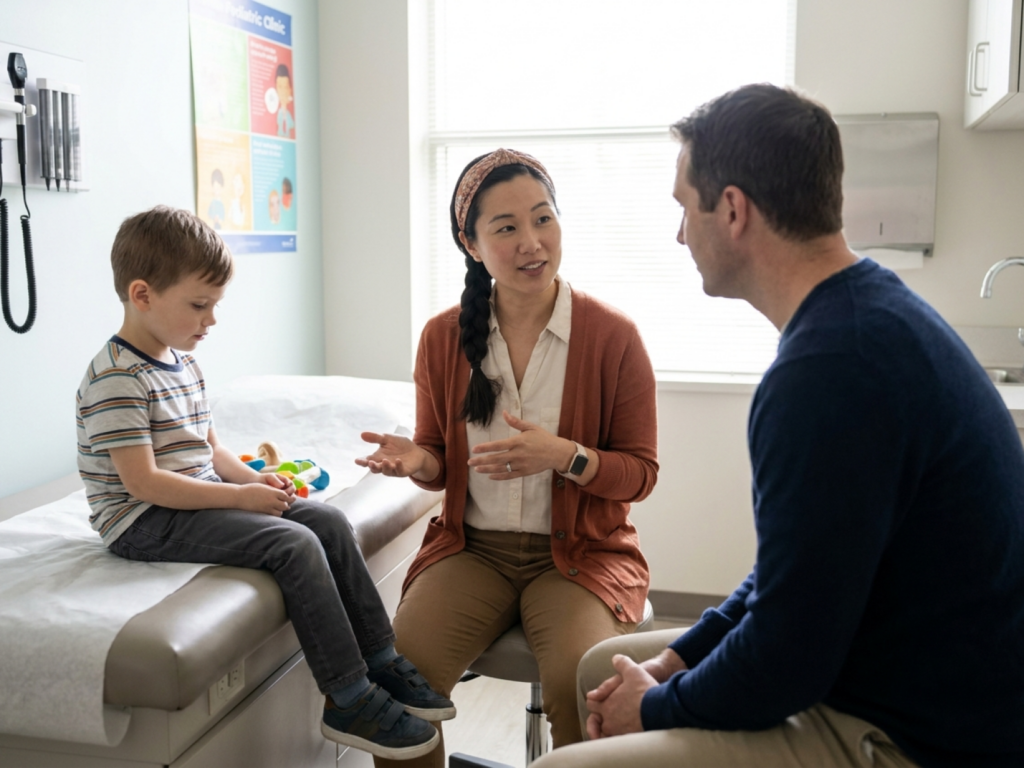
Parents and caregivers do not need to solve the diagnosis before seeking help. Their most valuable role is to observe patterns and communicate clearly. Bring notes about when headaches started, how often they occur, how long they last, what the child does during an attack, whether vomiting or light sensitivity occurs, and what helps or worsens the pain.
It is also useful to record school absences, activity avoidance, sleep schedule, meals, fluid intake, menstrual timing in adolescents, stressors, recent infections, head injuries, and all medications or supplements. If the child can draw where the pain is or rate it on an age-appropriate scale, that can help the clinician.
Seek routine medical advice for recurrent, worsening, or function-limiting headaches even if there are no emergency signs. Pediatric headache home care may be appropriate for occasional mild headaches, but persistent patterns deserve assessment. A compassionate, structured approach can reduce fear: the goal is not only to rule out dangerous causes, but also to help the child feel better and participate in daily life.
Seek urgent medical care if
- A headache is sudden, severe, and unlike any previous headache.
- Headache occurs with confusion, weakness, seizure, fainting, stiff neck, or trouble speaking or walking.
- Headache follows a significant head injury or is worsening after trauma.
- Headache is accompanied by persistent vomiting, high fever, rash, or extreme sleepiness.
- Headaches are progressively worsening, waking the child from sleep, or causing major functional decline.
Tools & Assistance
- Keep a headache diary with timing, triggers, symptoms, sleep, meals, fluids, and medicines used.
- Arrange a visit with the child’s pediatrician for recurrent or disabling headaches.
- Ask about school accommodations if headaches affect attendance, testing, or concentration.
- Consult urgent care or emergency services for red-flag symptoms.
- Consider referral to a pediatric neurologist if headaches are frequent, atypical, or difficult to control.
FAQ
Are headaches in children usually serious?
Most are not caused by dangerous disease, but recurrent, severe, worsening, or unusual headaches should be assessed by a healthcare professional.
Can children really get migraines?
Yes. Migraine is common in children and adolescents, though attacks may be shorter and may include abdominal pain, vomiting, dizziness, or sensitivity to light and sound.
Can dehydration cause a child’s headache?
Yes. Inadequate fluid intake, heat, exercise, vomiting, or missed meals can contribute, especially in children already prone to headaches.
Should every child with headaches get a brain scan?
No. Imaging is usually guided by the history, neurologic examination, and red flags. A clinician can decide whether testing is needed.
What should I track before the appointment?
Track frequency, duration, severity, location, associated symptoms, sleep, meals, hydration, stress, injuries, medications, and impact on school or activities.
Sources
- PubMed / NIH — Headache in Children and Adolescents
- Mayo Clinic — Headaches in children: Symptoms & causes
- MedlinePlus — Headache in children
Disclaimer
This article is for general educational purposes and is not a diagnosis or treatment plan. Consult a qualified healthcare professional for concerns about a child’s headache, especially if symptoms are severe, recurrent, or worsening.
















Please log in to leave a comment.