
Intro
Traveling with a baby can be rewarding, but it often requires more planning than caregivers anticipate. Infants have immature thermoregulation, feeding patterns that may change quickly, limited mobility, and sleep needs that do not pause for airports, road trips, or unfamiliar rooms. Many travel problems arise from understandable attempts to simplify the journey, such as skipping a safety check, packing too little, or expecting the baby's routine to remain unchanged.
The goal is not a flawless trip. A safer approach is to anticipate predictable hazards, build in extra time, and seek advice from a pediatrician when the baby's age, medical history, vaccination status, or destination creates additional risk. The following common mistakes can often be prevented with practical preparation and flexible expectations.
Highlights
A car seat or approved child restraint should be treated as essential safety equipment, not optional luggage.
Infants may need more frequent feeding, diaper changes, rest, and temperature monitoring than adults expect.
Sedating medicines should not be used to manage flight behavior unless specifically directed by a healthcare professional.
A flexible itinerary usually supports infant well-being better than a tightly packed schedule.
Travel plans should account for the destination's infectious, environmental, and medical risks.
Mistake 1: Treating transport safety as an afterthought
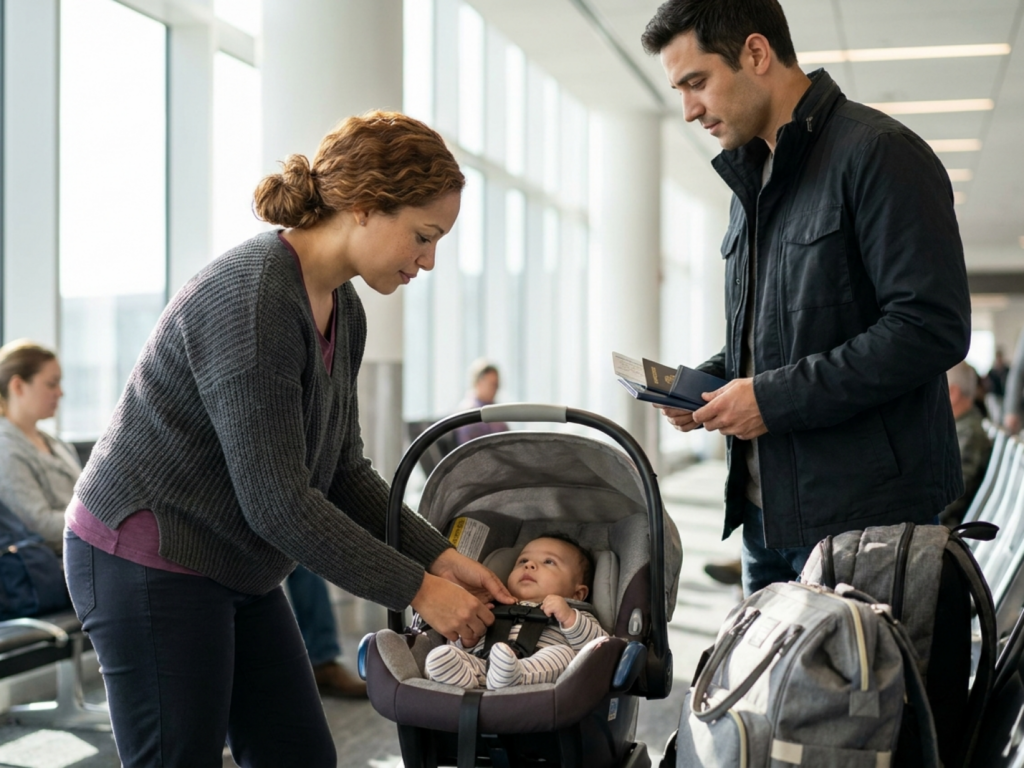
One of the most consequential mistakes is beginning a journey without confirming that the baby’s restraint is appropriate, correctly installed, and compatible with the vehicle or aircraft. In a car, infants generally need a properly installed rear-facing car seat that matches their size and the manufacturer’s instructions. The seat should not be used loosely, placed in an unsafe seating position, or substituted with an adult’s arms during sudden braking or a collision.
For air travel, holding a baby as a lap passenger may feel simpler, particularly when the infant is small or the flight is short. However, an assigned seat with an airline-approved child restraint can provide more protection during turbulence and other unexpected forces. Contact the airline before departure to clarify approved equipment, seating requirements, baggage rules, and boarding assistance. Verify installation instructions in advance rather than trying to solve them at the gate.
Do not place a rear-facing infant seat in front of an active passenger airbag. During ground transportation, remove bulky outerwear that can interfere with harness fit, and check that straps are snug without being twisted. A certified child passenger safety technician can help assess installation when available.
Mistake 2: Overpacking familiar equipment and underpacking essentials
Caregivers often bring too many comfort items while overlooking supplies that affect basic physiology and hygiene. A practical packing list should cover feeding, safe water or prepared formula requirements, diapers, wipes, spare clothing, prescribed medicines, a thermometer, hand hygiene supplies, and documents such as immunization and medical records when appropriate. Keep essential supplies in carry-on or immediately accessible luggage rather than in checked baggage.
Pack more feeding and diapering supplies than the minimum for the planned travel time because delays, cancellations, traffic, and lost luggage are common sources of stress. If breastfeeding, consider where privacy, pumping, refrigeration, and cleaning will be available. If using formula, follow safe preparation and storage guidance; do not improvise with uncertain water sources or leave prepared feeds at room temperature longer than recommended.
At the same time, avoid bringing unfamiliar products merely because they promise convenience. A new bottle, pacifier, detergent, skin product, or food may cause feeding difficulty, irritation, or gastrointestinal upset at an inconvenient time. Use familiar items when possible, label containers clearly, and divide supplies between bags so one misplaced bag does not remove every backup.
Mistake 3: Expecting the usual routine to continue unchanged
Travel commonly disrupts naps, feeding intervals, bowel habits, and nighttime sleep. Trying to force the home schedule minute by minute can increase caregiver fatigue and make ordinary infant fussiness feel like an emergency. A flexible baby routine is usually more realistic: preserve key anchors such as regular feeds, opportunities for sleep, and a familiar bedtime sequence, while allowing the timing to shift.
Plan fewer activities than an adult-only itinerary would include. Infants may need a quiet interval after a busy airport, a break from heat or crowds, or an additional nap after a poor night. Build transition time into the schedule and identify a calm location for feeding and settling. If the baby is transported in a stroller or carrier, monitor positioning, airway visibility, and temperature rather than assuming that sleep automatically means the setup is safe for prolonged rest.
Caregiver exhaustion is itself a safety concern. Adults who are sleep-deprived may miss feeding cues, misread medication labels, or fall asleep while holding a baby. Arrange clear handoffs between caregivers, take turns resting, and avoid combining infant care with alcohol, sedating medicines, or other impairing substances.
Mistake 4: Using medication to control crying or sleep
Some caregivers consider antihistamines, sleep aids, motion-sickness products, or other medicines to make a flight easier. This can be dangerous because infants may respond unpredictably, and sedation can affect respiratory drive, arousal, feeding, and the ability to protect the airway. A medicine that caused drowsiness in an older child or adult is not automatically appropriate for a baby.
Do not give a sedating medicine for travel behavior unless a qualified healthcare professional has specifically recommended it for that infant and explained the dose, timing, contraindications, and monitoring requirements. Never use another person’s prescription, an adult formulation, or a medication left over from a previous illness. Read labels carefully because combination products may contain overlapping ingredients.
For ear-pressure discomfort during takeoff and landing, age-appropriate feeding, sucking, or swallowing may help some infants, but caregivers should ask a clinician or airline about practical options for their baby’s developmental stage. Persistent crying is not proof that medication is needed. Comfort, holding, feeding, a quiet voice, and a planned break may be safer responses.
Mistake 5: Neglecting infection and environmental risks
Airports, stations, cruise ships, and crowded attractions increase exposure to respiratory viruses and gastrointestinal pathogens. Infants have less physiologic reserve than adults, so prevention deserves attention. Wash or sanitize hands before feeding, after diaper changes, and after contact with high-touch surfaces. Avoid sharing utensils or pacifiers, and keep the baby away from people who are acutely ill when feasible.
Review destination-specific advice with a clinician well before travel. The discussion may include routine and destination-related vaccines, malaria or other vector-borne disease prevention, food and water safety, altitude, air quality, extreme heat, and access to emergency care. A young infant, premature infant, or baby with chronic cardiopulmonary, neurologic, immunologic, or nutritional conditions may need individualized recommendations or a different travel plan.
Temperature exposure is another common oversight. Babies can overheat or become cold more quickly than adults. Use breathable layers, avoid covering a stroller with a blanket in warm weather because it can impair ventilation, and check the baby’s chest or back rather than relying only on hands and feet. Protect skin from direct sun according to pediatric guidance, and plan shade and cooling breaks.
Mistake 6: Assuming every sleep location is safe
Unfamiliar accommodations can create hazards that are easy to miss when caregivers are tired. A hotel bed, sofa, recliner, car seat, or adult’s arms may seem convenient after a long day, but these locations can increase risks of suffocation, entrapment, or positional asphyxia. Before arrival, ask whether a crib or portable crib is available and inspect it when you check in.
The baby should have a firm, flat, separate sleep surface with no loose pillows, blankets, bumper pads, or stuffed items. Check for missing hardware, gaps, broken rails, and excessive softness. Do not place the crib near window cords, heaters, lamps, pools, balconies, or furniture that could be climbed later in infancy. If the provided equipment looks damaged, incomplete, or unsuitable, request a replacement or use a verified alternative.
When an infant falls asleep in a car seat, stroller, or carrier, transfer the baby to a safe sleep surface as soon as reasonably possible. Supervise positioning during transit, keep the airway visible, and avoid attaching unapproved accessories that could obstruct breathing. A short-term travel arrangement should not become the baby’s routine sleep environment simply because it is convenient.
Mistake 7: Failing to plan for delays and urgent care
Travel plans often assume that every connection will be on time and every destination will have familiar services. Babies do not follow transportation schedules, and a minor delay can become significant when it overlaps with feeding, medication, or sleep. Identify pharmacies, urgent-care facilities, hospitals, and emergency numbers near the destination. Carry a written list of the baby’s allergies, diagnoses, medicines, clinician contact information, and insurance details if relevant.
Ask the baby’s healthcare professional which symptoms require urgent assessment during travel. Seek prompt medical help for breathing difficulty, bluish or gray discoloration, marked lethargy, a seizure, severe dehydration concerns, repeated vomiting, or a fever in an age group for which fever requires urgent evaluation. Do not delay care because the family is scheduled to depart.
Travel insurance and medical evacuation coverage may be worth considering for international or remote trips. Check whether the policy covers infants, pre-existing conditions, emergency transport, and care outside the home country. A realistic backup plan reduces pressure on caregivers to continue traveling when the baby needs assessment or recovery time.
Mistake 8: Leaving all planning to the day of departure
Last-minute preparation makes it harder to identify problems with documents, restraints, feeding supplies, or the baby’s health. Start by discussing the itinerary with the baby’s clinician when there are medical concerns, recent illness, prematurity, or travel to a destination with unusual infectious or environmental exposures. Confirm airline and border requirements, including documentation for medications or expressed milk.
Perform a short practice run. Install the car seat, use the carrier or stroller, prepare the diaper bag, and test how feeding and changing will work in the expected setting. This can reveal missing adapters, uncomfortable straps, leaking containers, or equipment that cannot be used safely in transit. Keep a small, accessible change of clothing for both baby and caregiver because spills and diaper leaks are difficult to manage without backups.
Finally, communicate responsibilities. One adult can manage documents and transport equipment while another monitors feeding and the baby’s cues, but the arrangement should be explicit. Before boarding or beginning a long drive, pause for a final check: restraint secured, essentials accessible, baby appropriately dressed, and the next safe feeding or rest opportunity identified.
When to pause travel and seek medical advice
- Breathing difficulty, unusual limpness, bluish discoloration, or a seizure requires urgent medical attention.
- A fever in a young infant may require prompt evaluation; ask the baby's clinician about age-specific thresholds before travel.
- Do not use sedating medicines, leftover prescriptions, or adult products to make travel easier.
- Never leave a baby unattended in a vehicle, near water, or in an unfamiliar sleep environment.
- Stop or modify the itinerary if the baby shows signs of significant dehydration, repeated vomiting, or worsening illness.
Tools & Assistance
- Pre-travel pediatric appointment
- Airline and airport accessibility services
- Certified child passenger safety technician
- Destination pharmacy, urgent-care clinic, and emergency contact list
- Written feeding, medication, allergy, and medical-information checklist
FAQ
Is it safe to fly with a newborn?
The answer depends on the baby's age, health, gestational history, destination, and airline policy. Ask the baby's healthcare professional and confirm the carrier's requirements before booking or flying.
Should a baby sleep in a car seat during a trip?
Car seats are designed for travel restraint, not routine sleep. Monitor positioning during transit and move the baby to a firm, flat, separate sleep surface when it is safe and practical to do so.
Can I give my baby medicine to help with a flight?
Do not give a sedating or sleep-inducing medicine for travel unless the baby's healthcare professional has specifically advised it. Infants can have unpredictable respiratory and neurologic responses.
What should I do if travel disrupts feeding or naps?
Offer regular feeding opportunities, watch the baby's cues, provide quiet rest periods, and keep the routine flexible. Seek medical advice if intake drops substantially, vomiting persists, or dehydration is a concern.
How can I make hotel sleep safer?
Request a suitable crib or bring a verified portable crib, inspect it for damage and gaps, and use a firm, flat, separate sleep surface without loose bedding or soft objects.
Sources
- Centers for Disease Control and Prevention — Traveling Safely with Infants and Children
- HealthyChildren.org / American Academy of Pediatrics — Flying With Baby: Parent FAQs & Tips for Safer, Easier Air Travel
- Mayo Clinic — Air travel with infant: Is it safe?
Disclaimer
This article provides general educational information and does not diagnose, treat, or replace advice from a pediatrician or other qualified healthcare professional. Seek individualized medical guidance before travel, especially for a premature infant or a baby with medical conditions.













Please log in to leave a comment.