
Intro
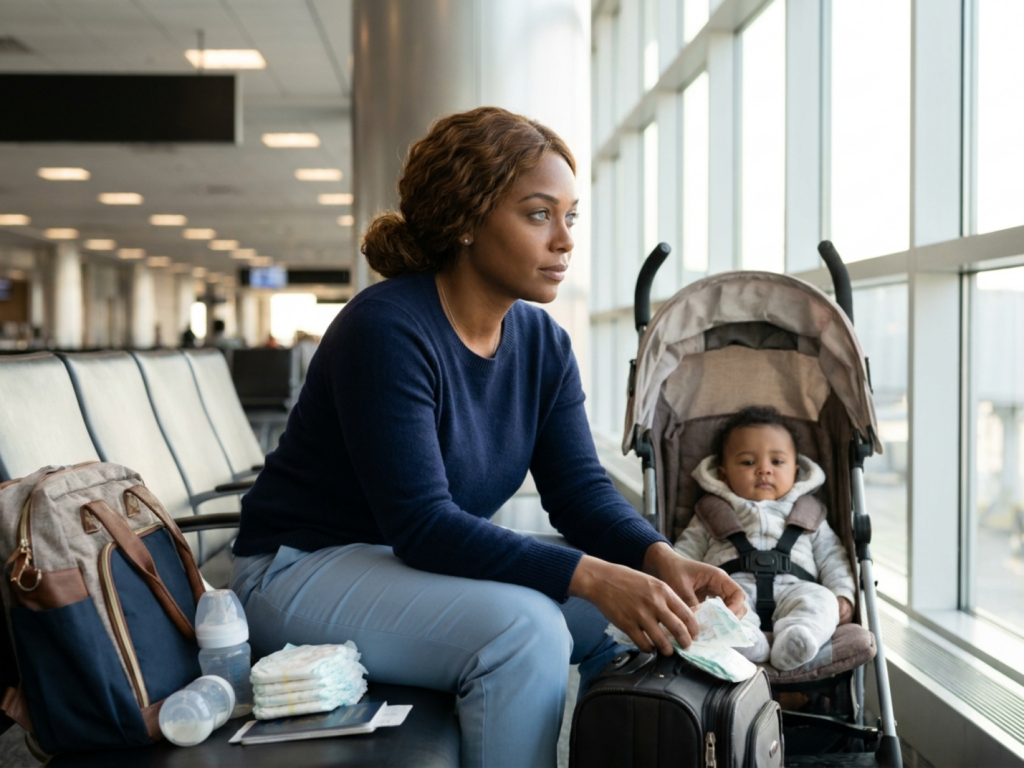
Travel with a baby can bring excitement, disruption, and a level of responsibility that feels unusually intense. Many parents worry about crying in public, missed naps, feeding logistics, illness far from home, and the possibility that their own exhaustion will make every problem harder to manage.
These reactions are understandable. Preparation can reduce avoidable stress, but a successful trip does not require a perfectly quiet baby or a perfectly controlled schedule. It means making reasonable plans, responding safely to your baby’s needs, and recognizing when you need support.
Highlights
Parent stress often rises when travel removes familiar routines, privacy, and easy access to supplies. Anticipating common disruptions can make the uncertainty more manageable.
A flexible plan for feeding, sleep, transit delays, and caregiver breaks is usually more protective than attempting to preserve every home routine exactly.
Babies may cry, feed differently, or sleep poorly while traveling without this meaning that the trip has harmed them. Persistent symptoms or signs of illness still deserve clinical advice.
Caregiver regulation matters: hydration, food, rest, and asking for help can improve decision-making when travel becomes demanding.
Why travel can feel disproportionately stressful
Travel changes many of the conditions that help parents feel competent: familiar rooms, predictable feeding supplies, a reliable sleep space, private places to soothe a crying baby, and proximity to trusted clinicians or family. The cognitive load can become substantial. A caregiver may be simultaneously monitoring hunger cues, diaper needs, wake windows, boarding announcements, luggage, safety equipment, and other people’s reactions.
Stress is not evidence that you are failing. It is a normal response to increased demands and reduced control. Sleep deprivation can also heighten irritability, reduce working memory, and make ordinary setbacks feel urgent. Parents with anxiety, depression, postpartum mood symptoms, prior traumatic birth experiences, or a baby with medical needs may find travel especially activating.
Try to identify the specific worry beneath the general sense of dread. It may be fear of judgment if the baby cries, concern about ear discomfort during a flight, worry about a delayed feed, or uncertainty about what to do if the baby becomes ill. Naming the problem allows a more concrete response. For example, a feeding plan, a clinician-approved medication list, or an agreement about who handles bags can reduce uncertainty more effectively than trying to reassure yourself that nothing will go wrong.
Plan for flexibility rather than perfect routines
Use a simple travel plan built around essential needs: feeding, diapers, warmth or cooling, sleep, safe restraint, and access to medical information. Pack crucial baby items in the carry-on or within immediate reach rather than distributing them across checked bags. Include more diapers, wipes, feeding supplies, and one or two changes of clothing than the expected travel time suggests, because delays are common and spills are ordinary.
For breastfed babies, consider how you will feed and express milk during transit if needed. For formula-fed babies, plan for safe water access and cleaning requirements at the destination. If your baby has medications, carry them in their original labeled containers and keep a current list of doses, indications, allergies, diagnoses, and prescriber contact details. Ask your pediatric clinician before departure about any condition-specific considerations.
It can help to distinguish non-negotiables from preferences. A safe sleep surface and safe infant restraint in transit are non-negotiable. The exact timing of a nap, a spotless outfit, or an uninterrupted meal may not be. This distinction protects energy for decisions that have real safety consequences. Build margin into the itinerary, including extra time for feeding, diaper changes, security procedures, and settling the baby before the next transition.
- Choose seating and transportation arrangements before travel where possible.
- Keep a small accessible kit for one feeding, one diaper change, and one clothing change.
- Confirm lodging can support a separate, appropriate infant sleep surface.
- Share the plan with another caregiver so one person is not carrying every decision.
Managing stress during flights and long journeys
Air travel can concentrate parental stress into a small space with limited privacy. Babies may become unsettled because of fatigue, hunger, temperature changes, unfamiliar sounds, or the pressure changes associated with ascent and descent. Feeding or offering a pacifier during takeoff and landing may encourage swallowing, which can help some infants manage ear pressure. Do not force feeding if the baby refuses or is too distressed; respond calmly and use the approach that is appropriate for your baby.
Crying is communication, not misconduct. Other passengers may be understanding, indifferent, or occasionally unkind, but their response does not determine whether you are caring for your child appropriately. Focus on the baby’s observable needs: hunger, burping, diapering, overheating, overstimulation, or a need for close contact. A quiet, repetitive sequence can help: check the basics, reduce sensory input if possible, hold or rock safely, and pause before moving to another strategy.
In a car, safe restraint takes priority over attempts to prevent every protest. Plan regular stops based on your baby’s age, feeding needs, and clinician guidance. Never hold an infant while a vehicle is moving or use unapproved positioning devices in the car seat. If a baby becomes persistently inconsolable, appears unwell, or has breathing difficulty, stop in a safe location and seek medical advice as appropriate.
Parents can also use brief regulation techniques: relax the jaw and shoulders, take several slow breaths, drink water, and state the next single task aloud. This is not a cure for anxiety, but it can interrupt escalation when your nervous system is overloaded.
Protecting baby sleep and caregiver capacity
Sleep disruption is one of the most common reasons travel feels overwhelming. New light exposure, noise, altered feeding times, changes in activity, and an unfamiliar sleep space can all affect infant sleep. Some babies sleep more during travel; others resist naps and become overtired. Neither pattern means you need to abandon all structure or attempt to control every minute.
Preserve a few recognizable cues when feasible, such as a familiar sleep sack, a short bedtime sequence, or the same calming song. Keep sleep safety central: use a firm, flat, separate sleep surface intended for infants, and follow current safe sleep guidance from your baby’s healthcare team. Avoid relying on sofas, adult beds, or improvised arrangements when you are exhausted. A portable sleep environment can reduce both practical stress and nighttime uncertainty.
Caregiver fatigue deserves equal attention. Before departure, decide how adults will divide tasks such as driving, carrying luggage, preparing feeds, and responding overnight. If you are traveling alone, simplify aggressively: fewer activities, direct routes, delivery or grocery pickup at the destination, and permission to rest instead of sightseeing. Eat regular meals and hydrate, particularly when breastfeeding or recovering postpartum. These basic needs are clinically relevant because dehydration, hunger, and sleep loss can intensify anxiety and impair concentration.
Expect a transition period after arrival and after returning home. A disrupted schedule often settles gradually. Responsive caregiving during travel, rather than rigid schedule enforcement, can help the baby feel secure while routines are rebuilt.
Handling uncertainty, illness concerns, and emergencies
Preparation is useful when it targets plausible problems. Before leaving, identify the destination’s emergency number, nearby pediatric-capable services, pharmacy access, and the location of urgent care if relevant. Keep insurance details, vaccination information, and a baby medical summary available offline as well as on paper. For international travel, discuss destination-specific health considerations with a qualified clinician well in advance.
Travel-related behavior changes can be expected, including more crying, altered feeding rhythm, clinginess, or temporary sleep disruption. However, do not assume all distress is simply travel. Contact a healthcare professional promptly for concerns such as difficulty breathing, blue or gray coloration, unusual lethargy or poor responsiveness, signs of dehydration, repeated vomiting, fever in a young infant, poor feeding, or symptoms that worry you. The threshold for seeking advice should be lower for infants with prematurity, chronic disease, immune compromise, cardiac or respiratory conditions, or other complex medical needs.
Medication decisions require particular caution. Do not start sedating medicines, over-the-counter remedies, or motion-sickness products solely to make travel easier unless your baby’s clinician has specifically advised their use. Age, weight, medical history, and drug interactions matter. Professional guidance is also appropriate when a parent’s anxiety becomes persistent, causes panic symptoms, interferes with sleep beyond the travel disruption, or makes it difficult to care for the baby safely.
A baby-specific emergency travel plan can reduce panic because it replaces vague fear with clear information and actions. It cannot prevent every problem, but it helps caregivers act sooner and communicate accurately if care is needed.
Setting compassionate expectations for the trip
A realistic goal is not a seamless itinerary. It is a trip in which the baby is cared for safely and the caregiver remains sufficiently supported to make good decisions. Delays, missed reservations, feeding changes, and tears are not proof that the trip was a mistake. They are common features of moving through an adult-designed world with a developing infant nervous system.
Consider choosing one priority for each day, rather than trying to complete a full pre-baby itinerary. Leave open time around transportation. Accept help when it is offered by a trusted travel companion. Use convenience options without guilt when they protect rest or safety. You may need to step away from a meal, skip an attraction, or return to the accommodation early. Those choices can be signs of attentive caregiving, not limitation.
It can also be helpful to speak openly with a partner or support person before stress peaks. Agree on a neutral phrase that means, “I need a break” or “Please take the next task.” Brief handoffs can prevent resentment and allow one caregiver to reset. If you are alone, contact a trusted person by phone when possible and reduce optional demands.
After travel, give both yourself and your baby time to recover. Resume familiar feeding and sleep routines gradually, unpack essential items first, and notice what worked. Each trip provides information for the next one. A calmer travel experience often comes from accumulating practical confidence, not from achieving perfection on the first attempt.
When to seek help
- Seek urgent medical care for breathing difficulty, blue or gray color, seizure activity, or markedly reduced responsiveness.
- Contact a clinician promptly for dehydration concerns, persistent vomiting, poor feeding, or fever in a young infant.
- Do not use sedating or over-the-counter medicines for travel without individualized advice from your baby’s healthcare professional.
- Use approved infant restraint systems and an appropriate separate sleep surface; exhaustion can increase unsafe sleep or transport decisions.
- Seek mental health support if anxiety, panic, hopelessness, or exhaustion makes it difficult to care for yourself or your baby safely.
Tools & Assistance
- Pediatric clinician consultation before departure for infants with medical conditions or medication needs
- Airline infant-travel policy and approved child restraint guidance
- Destination pharmacy, urgent care, and emergency number lookup
- Printed baby medical summary, insurance details, and medication list
- Simple shared caregiver task plan for transit and overnight care
FAQ
Is it normal to feel anxious about flying with a baby?
Yes. Loss of routine, public crying, safety concerns, and fatigue can make air travel stressful. Planning key logistics and lowering perfection-based expectations can help.
How can I help with ear pressure during a flight?
Feeding or offering a pacifier during ascent and descent may encourage swallowing, which can help some babies. Ask your pediatric clinician for individualized advice if your baby has ear or respiratory concerns.
Should I keep my baby's sleep schedule exactly the same while traveling?
Usually, maintaining a few familiar sleep cues is more realistic than preserving every timing detail. Prioritize safe sleep and respond to your baby’s fatigue cues.
What should I do if my baby cries for a long time during travel?
Check feeding, diaper, temperature, burping, fatigue, and overstimulation, then use familiar soothing strategies. Seek medical advice if crying is unusual for your baby or occurs with illness symptoms.
Sources
- Cleveland Clinic — Flying With a Baby: Your Questions Answered
- NPR — Tips For Anxious Parents Flying With Infants
- Postpartum Support Charleston — Traveling With Littles: How to Manage the Stress
Disclaimer
This article provides general educational information and is not a substitute for medical or mental health care. Consult a qualified healthcare professional for advice tailored to your baby and your circumstances.

















Please log in to leave a comment.