
Intro
Setting up a crib can feel deceptively simple, especially when many nursery products are marketed as comforting or protective. In practice, a safe sleep space is intentionally minimal: it reduces opportunities for airway obstruction, entrapment, strangulation, and falls.
This guide focuses on common setup errors and practical ways to reassess the crib as your baby grows. The goal is not perfection; it is to make each sleep period as consistently safe as possible.
Highlights
A crib should contain only a firm mattress that fits properly and a tightly fitted sheet. Decorative or comforting additions can create hazards during unsupervised sleep.
A crib's condition matters as much as its contents. Loose hardware, broken parts, missing components, and older designs may create entrapment or collapse risks.
Crib safety changes with mobility. Lowering the mattress and moving nearby cords or furniture becomes urgent when an infant starts sitting, pulling up, or climbing.
Mistake 1: Treating the crib like a cozy nest
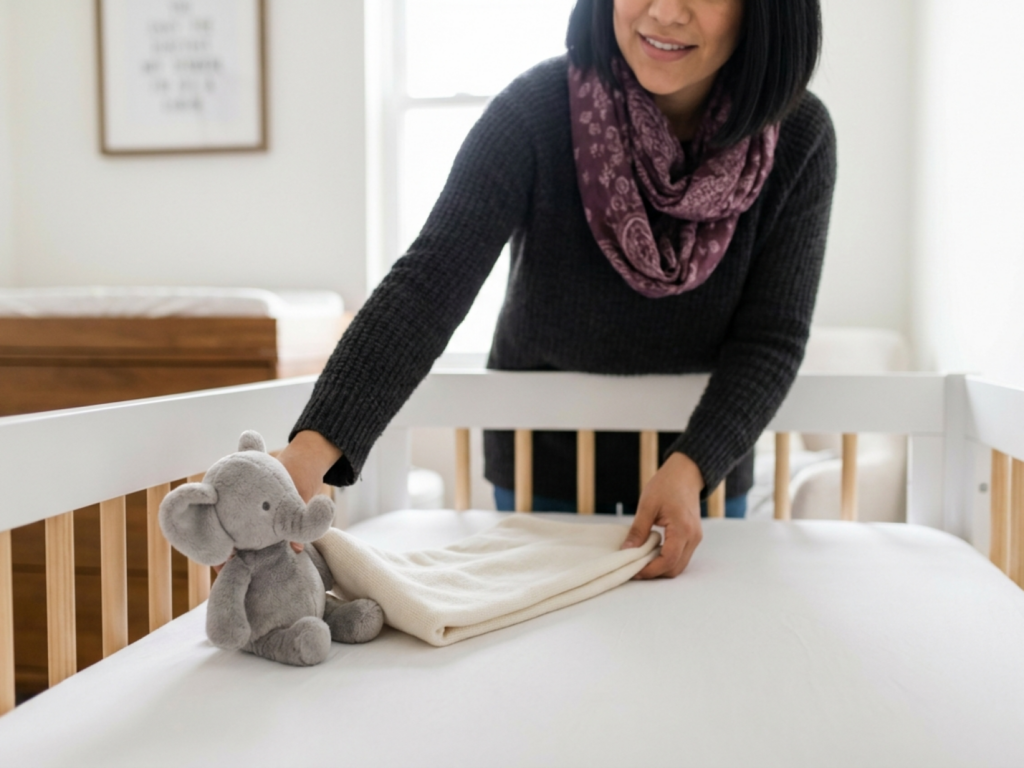
One of the most frequent crib setup mistakes is adding pillows, quilts, loose blankets, stuffed animals, sleep positioners, nests, or padded inserts to make the space look or feel more comfortable. For an infant, however, these items can obstruct the nose and mouth or create a situation in which the baby cannot reposition their head effectively. This is particularly relevant before a child has reliable head and trunk control, but an uncluttered crib remains the safer approach throughout infancy.
A bare infant sleep space can look stark compared with nursery photographs or gift displays. That simplicity is purposeful. Use a firm crib mattress covered by a fitted sheet made for that mattress, and keep loose objects out of the crib during sleep. Avoid using a blanket to fill space around a baby or to compensate for a mattress that does not fit correctly.
Wearable blankets may help families manage warmth without loose bedding, but choose products appropriate for the child’s size and developmental stage. Avoid weighted sleep products unless a child’s clinician has given specific guidance. Dress the baby appropriately for the room temperature and reassess when clothing, bedding, or sleep routines change.
Mistake 2: Using bumper pads or products marketed as protective
Crib bumper pads are often bought with the intention of preventing bumps against crib rails or limbs slipping between slats. Yet padded bumpers may introduce a more serious hazard: an infant can press their face against padding, become entangled in ties, or use the bumper as a climbing aid later in development. The same caution applies to many mesh liners, padded rail covers, and products promoted as ways to improve positioning or prevent rolling.
Normal minor contact with crib rails is generally less concerning than the potential risks created by added padding. A crib that meets applicable safety requirements, has appropriately spaced slats, and is kept free of attachments does not need bumpers. Do not secure padding with strings, ribbons, clips, or improvised fasteners, even if it appears firmly attached at first.
Marketing language can make a product sound medically necessary when it is not. Claims about preventing suffocation, reflux-related events, or positional head changes should be discussed with a pediatric healthcare professional rather than addressed by modifying the crib. Infants with medical complexity, prematurity, airway concerns, or feeding difficulties may need individualized advice, but that does not make consumer sleep accessories inherently safe.
Mistake 3: Overlooking mattress fit and sleep-surface firmness
A mattress that is too small, too soft, damaged, or not intended for the specific crib can create avoidable risk. Gaps between the mattress and crib sides may permit entrapment. A soft surface can conform around an infant’s face, potentially interfering with airflow. The intended setup is a snugly fitting crib mattress that lies flat and level, with no sagging, gaps, or added layers.
Use the mattress supplied with the crib when applicable, or select a replacement specifically designed for that exact crib model. Do not substitute an adult mattress, a cushion, folded towels, foam padding, or a mattress designed for another sleep product. A sheet must also fit tightly; loose fabric can bunch or detach. Check the mattress support and its fasteners whenever the crib is assembled, moved, cleaned, or adjusted.
Parents sometimes add a pillow, incline, rolled towel, or wedge because of spit-up, congestion, reflux symptoms, or worry about flat spots on the head. Altering the sleep angle or adding props can introduce hazards. Seek clinical advice for persistent vomiting, breathing concerns, poor feeding, unusual sleepiness, or questions about positioning. A clinician can help distinguish common infant behavior from symptoms requiring evaluation.
Mistake 4: Missing assembly defects, wear, or outdated design features
A crib can appear sturdy while still having a critical structural problem. Loose, missing, or damaged screws, brackets, mattress supports, and slats can allow components to shift or fail. Before first use, follow the manufacturer’s instructions precisely and keep the manual available. Recheck all hardware periodically, particularly after relocation, disassembly, or an older sibling has handled the crib.
Do not use a crib with missing parts, cracked wood, bent metal, splintered surfaces, loose slats, or modifications made outside the manufacturer’s instructions. Homemade repairs and substitute hardware may change how the crib bears weight or create sharp edges and gaps. A drop-side crib should not be used; these designs have been associated with hazardous failures and are not permitted under current U.S. crib safety standards.
Secondhand cribs require extra caution. Confirm the model has not been recalled, ensure all original parts and assembly instructions are available, and verify that the crib meets current safety expectations. Decorative cutouts in headboards or footboards, protruding corner posts, and overly wide spaces between slats can pose entrapment or clothing-catch risks. When the crib’s history or completeness is uncertain, replacing it is often the more prudent choice.
Mistake 5: Failing to adapt the mattress height to new mobility
Crib safety is not a one-time setup task. An infant’s motor development can change quickly, and a mattress position that was appropriate for a newborn may become unsafe when the child can sit independently, pull to stand, or climb. Leaving the mattress too high raises the risk of a fall over the crib rail. Review the manufacturer’s height-adjustment instructions and lower the mattress promptly as development advances.
Do not rely on a child’s age alone to decide when an adjustment is needed. Some infants become mobile earlier than expected, and a first attempt at pulling up may happen overnight. Keep the area around the crib clear of furniture that could provide leverage or cushion a fall. Avoid placing storage bins, toys, chairs, or changing tables close enough for a child to use as a step or to reach into.
Mobiles and hanging toys also need routine reassessment. They may be suitable only while they remain well beyond a baby’s reach. Remove them once the child can push up, sit, or reach toward them, following the product instructions. Strings, cords, and hanging attachments can become strangulation hazards if they enter the sleep space or are accessible from the crib.
Mistake 6: Ignoring hazards beside and above the crib
A safe crib can still sit in an unsafe location. Position it away from windows, blind cords, curtain ties, lamps, wall hangings with strings, monitors with accessible cords, and shelves or artwork that could fall. A child can become entangled in a cord or pull an item into the crib even when an adult assumes it is out of reach. Reassess the room from the height and reach of a standing infant rather than from an adult viewpoint.
Place the crib away from radiators, heaters, and direct sun exposure that may contribute to overheating. Ensure smoke and carbon monoxide alarms are installed and functioning as appropriate for the home. Avoid draping blankets over the crib to block light or create a more enclosed environment; draped fabric can fall into the crib and may also reduce airflow around the sleep area.
Room-sharing without bed-sharing may make overnight care more manageable while preserving a separate infant sleep surface. However, proximity should not lead to cords, adult bedding, feeding supplies, or other loose items accumulating in the crib. A brief reset before every sleep period is useful: check the mattress, fitted sheet, crib contents, and the space within reach of the rails. Consistent checks are especially valuable when several caregivers share infant care.
When to act immediately
- Stop using a crib with broken, loose, missing, or improvised hardware.
- Remove pillows, loose blankets, stuffed toys, bumper pads, and positioning devices before sleep.
- Move the crib away from window-blind cords, curtain ties, electrical cords, and hanging objects within reach.
- Lower the mattress as soon as your child shows signs of sitting, pulling up, or climbing.
- Contact a pediatric healthcare professional for individualized sleep guidance when your baby has medical or developmental concerns.
Tools & Assistance
- Manufacturer's assembly manual and current product recall search
- A fitted crib sheet made for the exact mattress
- A regular crib hardware inspection checklist
- Pediatric healthcare professional or pediatric sleep guidance service
FAQ
Can I use a thin blanket tucked tightly under the mattress?
Avoid placing loose blankets or improvised bedding in the crib. Use a fitted sheet designed for the mattress and discuss warmth concerns with a pediatric healthcare professional.
Is a mesh crib liner safer than a padded bumper?
Avoid adding liners or bumpers unless a qualified clinician gives individualized advice. A crib with appropriate slat spacing does not need a liner for routine sleep.
How often should crib hardware be checked?
Check it during assembly and periodically afterward, especially after moving, adjusting, cleaning, or reassembling the crib. Stop using the crib if any part is loose, missing, or damaged.
When should the crib mattress be lowered?
Lower it according to the crib manufacturer's instructions as soon as your baby begins to sit, pull up, or show other new mobility skills.
Sources
- U.S. Consumer Product Safety Commission — Crib Safety Tips
- HealthyChildren.org / American Academy of Pediatrics — Make Baby's Room Safe: Parent Checklist
- Nationwide Children's Hospital — Nursery Safety
Disclaimer
This article is for general educational purposes and does not replace individualized medical or safety advice. Consult a pediatric healthcare professional for concerns about your baby's sleep, breathing, feeding, or development.














Please log in to leave a comment.