
Intro
For babies, the right length of an activity is rarely a fixed number of minutes. A useful activity is one that matches the baby's current state: alert enough to engage, comfortable enough to explore, and able to stop before fatigue or distress becomes overwhelming.
Parents and clinicians often look for a timetable, especially when developmental opportunities feel important. In practice, activity duration is best guided by the baby's age, feeding and sleep needs, temperament, medical history, and observable cues. Brief, repeated opportunities for movement, interaction, and sensory exploration can be more appropriate than trying to extend a single session.
Highlights
For infants, responsive pacing is more useful than a rigid session length. Stop or change course when the baby shows fatigue, stress, hunger, or loss of engagement.
Short periods of awake play and movement can add up across the day. Daily care routines also provide meaningful opportunities for interaction and motor practice.
Formal weekly activity targets published for adults and older children should not be used as exercise prescriptions for babies.
Babies born preterm, those with cardiopulmonary, neuromuscular, feeding, or developmental concerns may need individualized advice from their healthcare team.
There is no universal infant session length
Babies do not have a single evidence-based target for the length of play, floor time, sensory activities, or caregiver-led movement. Unlike adults and school-age children, infants are rapidly changing in sleep regulation, feeding frequency, motor control, visual attention, and tolerance for stimulation. A duration that feels pleasant one day may be too much the next.
It can help to replace the question, “How many minutes should this last?” with three questions: Is my baby alert and willing to participate? Is the activity physically safe and developmentally appropriate? Does my baby remain regulated, or are they beginning to disengage? This approach respects infant neurodevelopment and avoids turning ordinary play into a performance target.
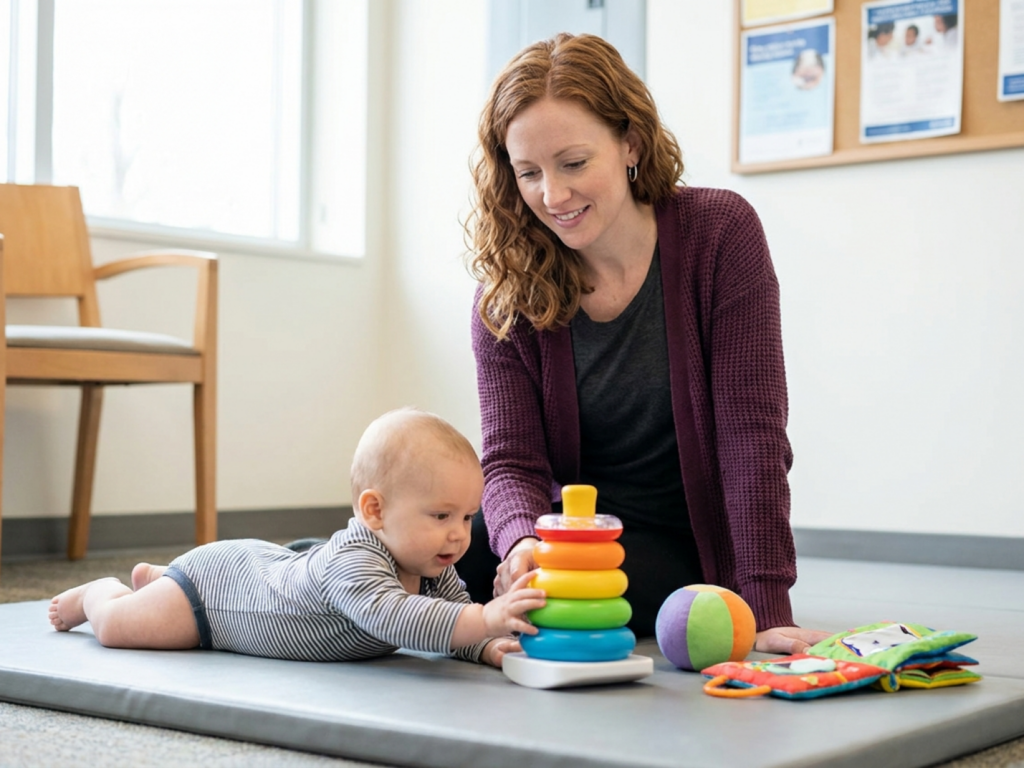
For a young baby, an activity may be only a few minutes of face-to-face interaction, looking at a high-contrast object, or supervised movement on a firm floor. Older babies may remain engaged longer when they can choose objects, change position, crawl, cruise, or communicate interest. The endpoint should be the baby’s cues, not the timer.
Activities also need not be separate events. Feeding, dressing, diaper changes, carrying, singing, and pauses for eye contact are all relational experiences. Routine care developmental moments can provide repeated, low-pressure practice without requiring a long planned session.
Use engagement and regulation as the clock
Babies communicate readiness and fatigue through behavior and body state. Signs of engagement may include quiet alertness, relaxed limbs, steady visual attention, cooing, smiling, reaching, kicking, or returning attention to a person or object. These signs suggest the activity can continue while the baby remains comfortable.
Early signs of overload are often subtle: looking away repeatedly, becoming less coordinated, rubbing the face, yawning, hiccupping, finger splaying, fussing, arching, or losing interest in an object that was previously engaging. Crying is a late cue for many babies, not a signal that a caregiver should push through. A calm pause, a position change, reduced noise or visual input, feeding when appropriate, or transition toward sleep may be more helpful than extending the activity.
Babies can also become overstimulated when an otherwise appropriate activity includes too many simultaneous inputs. Loud toys, multiple people talking, bright screens, rapid movement, and prolonged handling may exceed an infant’s capacity for sensory processing. Reduce the intensity before assuming the baby needs more stimulation. One voice, one toy, slower movement, and quiet observation can be enough.
This cue-based method is especially valuable because wake time between naps varies. A baby may tolerate movement practice near the beginning of a wake period and need a quieter activity later. Individual patterns matter more than comparing one baby with another.
Think in short, repeated opportunities
In physical activity guidance for adults and older children, total activity volume can be accumulated rather than completed in one uninterrupted session. Although those numerical recommendations do not apply directly to infants, the underlying practical principle is useful for families: meaningful movement and interaction can occur in many small opportunities across the day.
For babies, supervised tummy time while awake is a common example. Some infants initially tolerate very little prone play, particularly in the early weeks. Beginning with brief, calm attempts and repeating them when the baby is comfortable can be more realistic than expecting one long period. Caregivers may use the floor, their chest while reclined and awake, or another stable, supervised surface appropriate to the baby’s abilities. The baby should be moved if they become distressed or fall asleep.
As tolerance and motor skills grow, varied awake positions can include reaching in side-lying, rolling practice, sitting with appropriate support, crawling toward a toy, or standing with stable support when the child is developmentally ready. The goal is not to train a particular milestone on a schedule. It is to offer safe movement opportunities and let the baby explore.
Repeated short periods also make activity easier to fit around feeding, hygiene, naps, and family responsibilities. They reduce pressure on caregivers and often lead to a more positive experience for the baby. A predictable but flexible rhythm is usually more sustainable than a strict daily quota.
Match the activity to age and daily state
In early infancy, awake windows may be brief and irregular. A newborn may only have capacity for a few moments of quiet connection before needing feeding, comfort, or sleep. A short baby bath, gentle talking during a diaper change, looking at a caregiver’s face, and a brief period of supervised floor time can be sufficient. Longer activity is not inherently better when a baby is still adapting to life outside the womb.
By later infancy, many babies can participate in longer stretches of self-directed exploration, especially when well rested and fed. However, mobility increases the need for active supervision and environmental safety. As attention shifts quickly from one object or action to another, a caregiver can follow the baby’s lead rather than trying to hold them at a station or continue a planned game.
Corrected age should be considered for babies born preterm when discussing developmental expectations. Corrected age adjusts chronological age for the number of weeks a baby was born before term and can give a more appropriate frame for early skills and tolerance. A pediatric clinician, developmental specialist, or therapist can help families understand how it applies to their child.
Illness, immunizations, poor sleep, travel, teething discomfort, and changes in feeding can all shorten tolerance temporarily. On these days, comfort and recovery take priority. Returning to usual activities gradually when the baby seems well is generally more appropriate than trying to make up missed play time.
Keep movement safe rather than prolonged
Activity duration cannot be separated from safety. Babies need direct, attentive supervision for awake floor play, tummy time, water activities, and exploration around furniture or toys. A caregiver should be close enough to respond immediately, particularly when an infant is prone, on an elevated surface, near water, or learning a new motor skill.
Sleep spaces are not play spaces. If a baby falls asleep during tummy time or another awake activity, move them to a safe sleep surface according to current local safe-sleep guidance. Avoid using seated devices, swings, car seats, or bouncers as a substitute for active play or routine sleep outside their intended use. These devices may limit free movement, and an infant’s positioning needs careful attention.
Screen-based entertainment is not needed to lengthen or improve infant activities. Babies learn most effectively through responsive interaction, real objects, movement, language, and sensory experiences in their environment. A pause without stimulation is also valuable; infants need time to observe, process, and regulate.
For water play, the practical limit is often comfort and thermoregulation rather than a developmental target. Keep bathing brief enough that the baby remains warm and calm, and maintain hands-on supervision throughout. For guidance on a safe newborn bathing routine, use recommendations tailored to the baby’s age and home setting.
When to seek individualized guidance
A baby who routinely cannot tolerate even very brief awake activity, seems unusually floppy or stiff, has persistent asymmetry, or consistently avoids using one side of the body should be discussed with a pediatric healthcare professional. These observations do not establish a diagnosis, but they can help clinicians decide whether assessment is needed.
Seek timely medical advice for breathing difficulty, color change, sweating or marked fatigue with ordinary handling or feeding, repeated vomiting associated with distress, loss of previously acquired skills, unusual episodes of unresponsiveness, or inconsolable crying. Urgent evaluation may be needed depending on the symptom, its severity, and the baby’s age. Follow local emergency guidance if a baby has severe breathing problems, blue or gray color, a seizure, is difficult to wake, or appears acutely unwell.
Families may also benefit from professional input when activity has become stressful. A pediatrician can review feeding, sleep, growth, tone, and medical history. A pediatric physical therapist or occupational therapist may advise on positioning, handling, motor opportunities, and sensory regulation when indicated. This is particularly relevant for babies with prematurity, congenital conditions, neurologic differences, hip concerns, or recovery from illness or surgery.
The most helpful routine is one that leaves both baby and caregiver with capacity for the next part of the day. Brief, responsive activity periods are not a lesser version of a long session; for many babies, they are exactly what healthy participation looks like.
Safety and medical caution
- Do not leave a baby unattended during tummy time, bathing, climbing practice, or play on any raised surface.
- Move a sleeping baby from an awake activity to an appropriate safe sleep surface.
- Stop an activity for persistent distress, breathing changes, color change, marked lethargy, or signs of pain.
- Ask a pediatric healthcare professional for individualized activity advice after prematurity, surgery, illness, or when developmental concerns are present.
- Use urgent or emergency services for severe breathing difficulty, blue or gray color, seizure activity, or a baby who is difficult to wake.
Tools & Assistance
- Discuss activity tolerance and developmental questions at routine pediatric visits
- Ask a pediatric physical therapist or occupational therapist about individualized positioning and movement support
- Use a simple daily note to track sleep, feeds, alert periods, and activities that your baby enjoys
- Review current local safe-sleep and infant safety guidance
- Contact urgent medical services for acute warning signs
FAQ
Should I time my baby's play sessions?
Timing can help you notice patterns, but it should not override your baby's cues. End or simplify an activity when engagement decreases or fatigue and distress appear.
Can several short tummy-time periods count?
Yes. For many babies, especially early on, brief supervised awake periods repeated through the day are more tolerable than one long session.
Does a baby need structured activities every day?
No. Responsive interaction and safe movement during ordinary care can be meaningful. Babies do not need a packed schedule to benefit from play and connection.
What if my baby cries as soon as an activity begins?
Pause and check basic needs such as hunger, fatigue, temperature, discomfort, and overstimulation. Try again later with a shorter, calmer version; seek clinical advice if distress is persistent or paired with concerning symptoms.
Sources
- World Health Organization — WHO Guidelines on Physical Activity and Sedentary Behaviour
- U.S. Department of Health and Human Services — Physical Activity Guidelines for Americans, 2nd Edition
- National Library of Medicine / PMC — An Overview of Current Physical Activity Recommendations in Primary Care
Disclaimer
This article provides general educational information and is not a substitute for medical diagnosis or individualized care. Consult a qualified healthcare professional about your baby's activity tolerance, development, or symptoms.















Please log in to leave a comment.