
Intro
Travel can be wonderful and necessary, but it can also make baby sleep feel fragile. A new crib, unfamiliar sounds, disrupted feeds, airport delays, and time-zone changes can all affect a baby’s circadian rhythm, the internal biological clock that coordinates sleep, wakefulness, hormones, body temperature, and appetite.
The goal is not to create a perfect schedule in an imperfect situation. The goal is to protect safety, reduce overtiredness, use light and routine strategically, and respond to your baby’s age, temperament, feeding needs, and medical context. If your baby was premature, has reflux, respiratory disease, feeding difficulties, neurologic concerns, or uses medications or medical equipment, discuss travel plans with your pediatric clinician before you leave.
Highlights
Most babies do best when caregivers preserve the familiar sequence of bedtime while flexing the exact clock time during travel.
Light exposure, meal timing, and morning wake time are the strongest non-medication tools for shifting a baby’s body clock.
Short trips may not require a full time-zone adjustment, especially if the destination is only one to two hours different.
Travel days often require temporary sleep support, extra naps, and lower expectations while still maintaining safe sleep practices.
Medical caution matters: persistent lethargy, breathing difficulty, dehydration, fever in a young infant, or unsafe sleep situations should be addressed promptly.
Why travel disrupts baby sleep
Baby sleep is regulated by several interacting systems: sleep pressure, circadian rhythm, feeding rhythm, sensory input, and caregiver co-regulation. Sleep pressure builds the longer a baby is awake. Circadian rhythm helps organize day and night through signals such as morning light, darkness, feeding patterns, and social interaction. When travel changes those signals all at once, sleep can become fragmented even in a baby who usually sleeps predictably.
Jet lag is essentially a mismatch between the body clock and the local environment. After crossing time zones, the baby’s brain may still expect sleep, hunger, bowel activity, and alertness according to the previous schedule. Daylight is a particularly powerful zeitgeber, or time cue, because it suppresses melatonin and helps reset the circadian clock. Meal timing and consistent wake time also help the body adapt.
Age matters. Newborn sleep is often feeding-driven and not yet strongly circadian. Older infants may have clearer nap patterns and more sensitivity to overtiredness. Toddlers may resist sleep because of novelty, separation anxiety, or boundary testing. If you normally follow a Baby nap schedule by age, use it as a flexible map rather than a strict rule during transit.
Decide whether to stay on home time or switch to local time
Before changing anything, decide whether the trip is long enough to justify a full schedule shift. For a short trip of two or three days, especially across only one or two time zones, many families find it easier to keep the baby close to home time. This may mean naps, feeds, and bedtime happen at unusual local clock times, but it can reduce disruption when you return.
For longer trips, or for travel across three or more time zones, shifting toward local time is usually more practical. A gradual sleep schedule adjustment can begin several days before departure if your itinerary allows. Move bedtime, wake time, naps, and meals by 15 to 30 minutes per day in the direction of the destination. Eastward travel usually requires earlier sleep and wake times; westward travel usually requires later sleep and wake times.
If gradual preparation is impossible, do not panic. Babies can adapt after arrival with consistent cues. Aim for a reasonable morning wake time in the new location, expose your baby to daylight early in the day, keep naps age-appropriate, and make evenings dim and quiet. It is normal for adjustment to take several days, and some babies need longer depending on temperament, age, and the number of time zones crossed.
Prepare in the days before departure
Preparation works best when it is gentle. Abruptly keeping a baby awake for long periods to force sleep later can backfire, causing cortisol-mediated overtiredness, more night waking, and shorter naps. Instead, adjust the whole daily rhythm: wake time, light exposure, feeds, naps, play, and bedtime routine.
For eastward travel, you can start waking your baby slightly earlier, offering morning light earlier, and shifting naps and feeds earlier. For westward travel, you can allow bedtime and wake time to drift later in small increments. Keep the bedtime routine stable even when the clock time changes. The sequence, such as feed, bath or wipe-down, sleep sack, book or lullaby, and crib, gives the nervous system a familiar pattern.
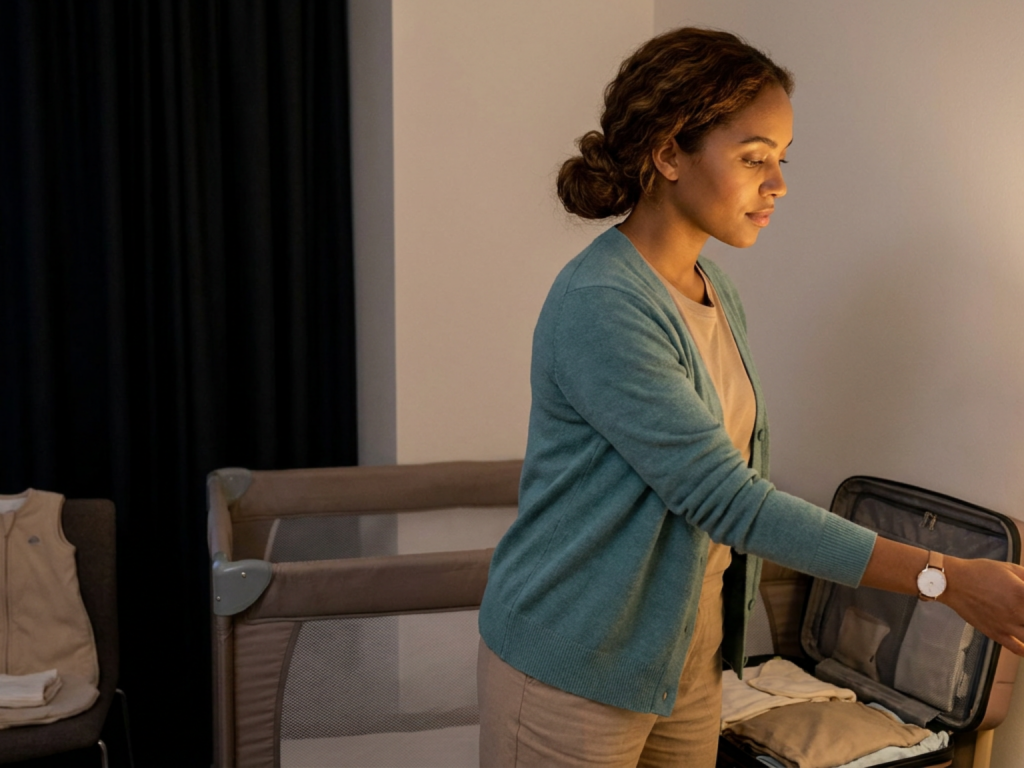
Also pack for sleep, not just for clothing and diapers. Useful items may include a familiar sleep sack, portable white-noise machine used at a safe volume and distance, blackout shade solution, travel crib that meets safety standards, spare pacifiers if used, and a written note of the baby’s usual wake windows and feeding rhythm. Adjusting care routines while traveling is easier when caregivers share the same plan and know which parts are flexible and which are non-negotiable.
Manage sleep on the travel day
Travel day is usually not the day to insist on perfect independent sleep. Delays, boarding times, car transfers, stimulation, and missed feeds may require a responsive approach. The priority is safety, adequate hydration and feeding, and preventing extreme overtiredness.
Offer naps when possible, even if they happen in a stroller, carrier, car seat during active travel, or in your arms. However, car seats and other sitting devices are not intended for routine sleep outside travel; move the baby to a firm, flat sleep surface as soon as practical when you are not in transit. If naps are short, an extra nap may help protect bedtime. A slightly earlier bedtime after arrival can also be reasonable if the baby is exhausted.
During flights or long car rides, keep expectations realistic. Some babies sleep more because of motion and white noise; others sleep less because of novelty and noise. Feeding during takeoff and landing may help with ear pressure for some babies, but follow your baby’s feeding cues and any medical advice specific to reflux, aspiration risk, prematurity, or feeding therapy. Keep nighttime interactions calm and low-light, even if the setting is chaotic.
Use light, darkness, and meals to reset the clock
After arrival, light timing is one of the most useful tools for adjusting a baby sleep schedule during travel. Morning daylight supports an earlier circadian phase and helps the body recognize the new day. Outdoor light is typically stronger than indoor light, even on cloudy days. A stroller walk, breakfast near a bright window, or gentle outdoor play can be effective.
In the evening, reduce bright light and stimulating activity. Keep the room dim during night feeds and wakings. Avoid turning on overhead lights if a small, warm, low-level light is enough for safe caregiving. Darkness supports endogenous melatonin signaling, although infants vary by age in melatonin rhythm maturity.
Meals and feeds also act as time cues. For babies eating solids, shift meals toward local breakfast, lunch, and dinner times. For breastfed or formula-fed infants, continue responsive feeding while gently aligning daytime calories with the new daytime. Do not restrict feeds to force sleep, especially in young infants or babies with growth or hydration concerns. If your baby has a medical feeding plan, follow it and consult the clinician who manages it before making schedule changes.
Protect naps without letting them take over the day
Naps are protective because they prevent overtiredness, but very long or late naps can make local bedtime harder. The balance depends on age. A younger infant may need frequent naps and may not tolerate much capping. An older infant or toddler may benefit from waking after a very long nap to preserve bedtime, especially after westward travel when the local day feels longer.
A practical approach is to anchor the morning. Wake your baby within a reasonable local morning window, offer daylight and a feed, and then follow age-appropriate wake windows as closely as travel allows. If the first nap is unusually short, the next nap may need to be earlier. If all naps fail, use a rescue nap, but try to avoid a long nap too close to bedtime.
Overtired signs can include fussiness, rubbing eyes, turning away, hyperactivity, glazed staring, or difficulty feeding. Undertired signs may include cheerful crib play, prolonged babbling, or repeated standing and sitting without distress. Neither pattern means you have failed; it is information. Baby routine during growth spurts may also look temporarily different, so consider whether appetite, developmental milestones, or illness are contributing alongside travel.
Recreate the home sleep environment safely
Familiar sensory cues can help babies sleep in an unfamiliar place. Use the same sleep sack, bedtime phrase, lullaby, or white noise your baby knows. A dark room can be especially helpful when local sunset does not match your baby’s internal clock. Portable blackout curtains, removable shades, or carefully secured temporary solutions may reduce early waking.
Safety must come before convenience. A baby should sleep on a firm, flat surface designed for infant sleep, with no loose blankets, pillows, adult bedding, stuffed toys, or padded positioners. Check that a travel crib is assembled correctly and that the mattress fits as intended. Avoid placing the sleep space near cords, blind strings, heaters, unstable furniture, or windows that create overheating or fall risks.
Room sharing without bed sharing is often the most practical travel arrangement for infants. If you are staying with relatives or in a rental, inspect the sleep area before bedtime rather than discovering hazards at 2 a.m. Safe sleep practices can feel harder away from home, but they are especially important when caregivers are tired, routines are disrupted, and unfamiliar equipment is involved.
Returning home and knowing when to ask for help
After returning home, expect a re-entry period. Many babies need several nights to re-align, especially after long-haul travel. Reintroduce the usual wake time, daytime light, nap rhythm, feeding pattern, and bedtime routine. If your baby wakes at odd hours, keep the interaction calm and boring during biological night, then provide strong morning cues at the desired wake time.
Avoid making major sleep-training decisions during the first one to three nights after travel, illness, or significant schedule disruption. What looks like a new sleep problem may simply be circadian readjustment. If you use a responsive infant sleep routine, return to the familiar structure gradually and give your baby time to settle.
Seek professional guidance if sleep disruption is accompanied by concerning symptoms: poor feeding, fewer wet diapers, persistent vomiting, fever in a young infant, labored breathing, unusual lethargy, inconsolable crying, or signs of pain. Also talk with a pediatric clinician if your baby has complex medical needs, was born prematurely, or if travel-related sleep disruption persists and is affecting feeding, growth, safety, or caregiver functioning.
When to be extra cautious
- Never use sedating medicines, antihistamines, supplements, or melatonin for a baby’s travel sleep unless a qualified clinician specifically advises it.
- Move a sleeping baby from a car seat, swing, or sitting device to a firm, flat sleep surface when active travel has ended.
- Seek urgent care for breathing difficulty, blue color, severe dehydration signs, or unusual unresponsiveness.
- Call a clinician promptly for fever in a young infant or if your baby has significant medical conditions and becomes unwell during travel.
- Avoid unsafe soft bedding or improvised sleep surfaces, even for one night.
Tools & Assistance
- Create a written travel sleep plan with local-time wake, nap, feed, and bedtime targets.
- Pack a safe travel crib, fitted sheet, familiar sleep sack, and blackout solution.
- Use morning outdoor light and dim evening lighting to support circadian adjustment.
- Keep a simple log of feeds, naps, wet diapers, medications, and symptoms during travel.
- Consult your pediatric clinician before travel if your baby has medical complexity or feeding concerns.
FAQ
How long does it take a baby to adjust to a new time zone?
Many babies begin adjusting within a few days, but the timeline depends on age, temperament, number of time zones crossed, light exposure, feeding rhythm, and illness or developmental changes.
Should I wake my baby in the morning after travel?
Often, a consistent local morning wake time helps reset the body clock. Be gentle and consider age, total sleep, illness, and feeding needs rather than using a rigid rule.
Is it better to keep my baby on home time for a short trip?
For short trips across one or two time zones, staying close to home time can be easier. For longer trips or larger time changes, shifting toward local time is usually more practical.
Can I give my baby melatonin for jet lag?
Do not give melatonin or other sleep aids to a baby unless a qualified healthcare professional specifically recommends it for your child.
What if naps are terrible during the trip?
Use flexible rescue naps, protect an earlier bedtime when needed, and return to the usual rhythm after travel. If poor sleep is paired with illness signs or feeding problems, seek medical advice.
Sources
- Huckleberry — Adjusting Baby Sleep Schedules While Traveling
- Taking Cara Babies — Traveling Between Time Zones with a Baby
- NHS — What Is Jet Lag?
Disclaimer
This article is for general informational purposes and does not replace medical advice. Consult your pediatric clinician for guidance specific to your baby, especially with illness, prematurity, medications, or medical conditions.


















Please log in to leave a comment.