
Intro
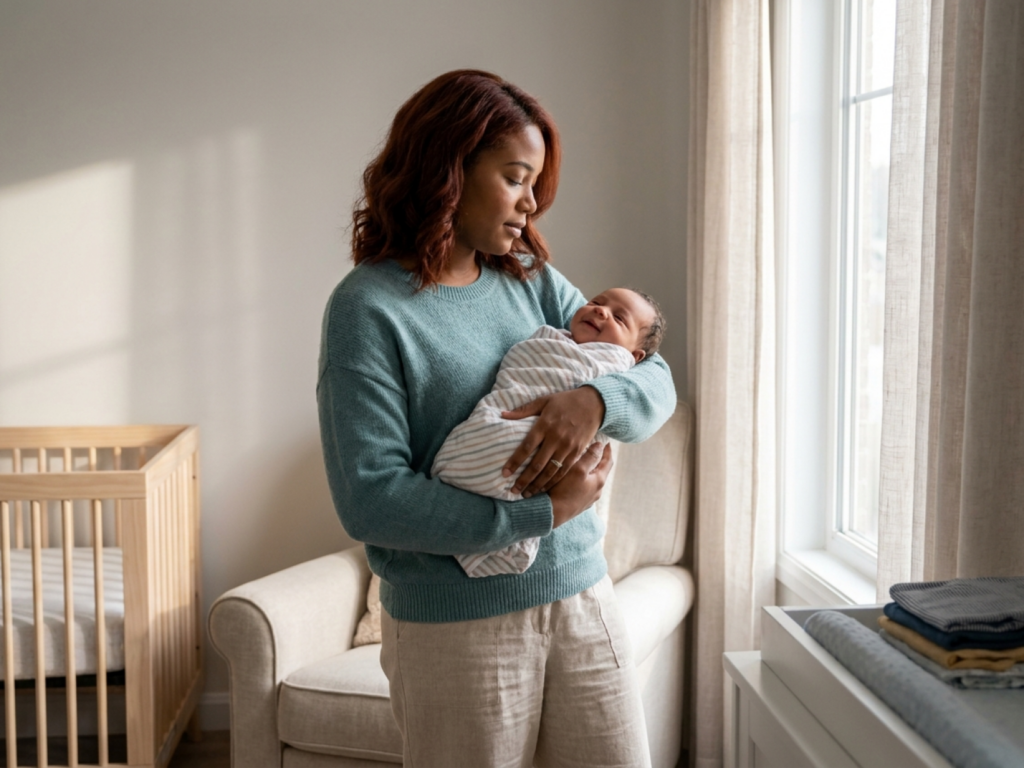
It can be surprising and even moving when a baby smiles at the ceiling, during sleep, or seemingly into empty space. Many caregivers immediately wonder whether the smile means recognition, comfort, or happiness. In early infancy, the answer is often more complicated, and usually less worrisome, than it first appears.
Random-looking smiles are a normal part of early neurodevelopment. In the first weeks, babies may show spontaneous facial movements that resemble social smiles, and later, true social smiling emerges as vision, arousal regulation, and caregiver interaction mature. Understanding the difference can help you enjoy the moment without overinterpreting it.
Highlights
Early smiles are often spontaneous motor events rather than a deliberate emotional response.
Newborn smiles can appear in both sleep and wakefulness, especially during active sleep or calm alert states.
True social smiling develops over time through face-to-face interaction, mutual gaze, and caregiver responsiveness.
Variation in timing is common, and corrected age matters for preterm babies.
A smile by itself is rarely a warning sign; the broader pattern of responsiveness matters more.
Early smiles are often spontaneous, not social
In newborns, a smile does not always mean the baby is expressing pleasure in the adult sense. Early facial smiles are frequently spontaneous, endogenous events that arise from immature nervous-system activity rather than from an external social cue. They can appear briefly and vanish just as quickly, which is why they often seem random to caregivers.
Researchers have observed that newborn smiling can occur during communicative wakefulness and also during active sleep. That is an important clue: if a smile can happen in a sleeping infant, it cannot always be a response to a face, voice, or emotional exchange. These early expressions are often described as reflex smiles in newborns, although they are not a single simple reflex in the same way as a knee jerk. Instead, they reflect a developing system in which brainstem and subcortical circuits can generate patterned facial movement before higher-level social communication is fully established.
This is why a baby may smile while asleep, just after feeding, or during a quiet pause when no obvious trigger is present. The smile is real, but its meaning is still emerging.
Sleep state, arousal, and touch can shape a smile
Newborn behavior is strongly influenced by state regulation. Babies cycle through active sleep, quiet sleep, drowsiness, and brief alert states, and facial expression may change dramatically across those states. A smile may appear in active sleep because the nervous system is producing transient motor patterns while the baby is not socially engaged. It may also appear when the baby is drowsy or just beginning to wake.
Touch and arousal level also matter. A gentle hold, skin-to-skin contact, feeding, or a soothing voice can coincide with increased smiling frequency, but that does not necessarily mean the baby is intentionally responding to the person in the moment. Sometimes the body is simply settling into a comfortable physiological state, and the smile appears alongside that relaxation. From the outside, the expression can look very purposeful even when it is not yet linked to a clear social message.
This is one reason baby smiles can feel unpredictable. They are often less about the emotional content we imagine and more about the infant nervous system organizing itself from one state to another.
The social smile develops through face-to-face exchange
As babies grow, smiling becomes increasingly connected to people. Over the first 12 weeks, social smiling becomes more reliable, especially when babies are visually engaged and when caregivers respond warmly. Mutual gaze, maternal smiling, imitation, and other forms of serve-and-return interaction help shape this shift from random-looking facial movement toward a deliberate social smile.
In practice, this means a baby begins to learn that a face, a voice, and a predictable back-and-forth exchange matter. A caregiver leans in, the baby looks, the caregiver smiles back, and the infant starts to link that interaction with comfort and attention. The smile becomes less like a spontaneous motor burst and more like part of early social communication. Many parents notice that the smile appears most often when the baby is awake, calm, and looking directly at a familiar face.
This developmental change does not happen all at once. It emerges gradually, and the transition can be subtle. A brief smile today may look random, but over time it can become a clear social signal that the baby is beginning to participate in shared attention.
Why the timing varies from baby to baby
There is a wide normal range for when smiling becomes clearly social. Some babies show earlier, more frequent smiling; others take longer to settle into that pattern. Differences in alertness, sleep organization, visual attention, temperament, and daily routines can all affect how often a smile is seen. A baby who spends more time drowsy, or who is easily overstimulated, may smile less often in face-to-face moments even while developing normally.
For preterm babies, corrected age for preterm babies is the more useful way to think about milestone timing. A baby born early may reach social smiling later than a term baby when measured from birth, but that difference may reflect maturity rather than a problem. This is one reason developmental timelines should be interpreted carefully and in context rather than by a single observation.
It also helps to remember that a smile is only one signal among many. Babies vary in how expressive they are, and some communicate more through gaze, body relaxation, vocalizations, or quiet attention than through frequent smiling. A baby who smiles less in a given week is not automatically unhappy or delayed.
What to look for instead of the smile alone
When you are trying to understand whether a smile is social, the broader pattern matters more than the smile itself. A genuine social smile often appears together with other signs of engagement: the baby looks toward a face, seems briefly alert, calms to a familiar voice, or pauses as if taking in the interaction. In contrast, an isolated smile during sleep or drowsiness is more likely to be spontaneous.
Useful cues to notice include:
- brief eye contact or visual fixation on a caregiver
- relaxation of the body during interaction
- cooing, soft sounds, or other early infant communication cues
- repeated smiling during face-to-face moments
- interest that increases when the caregiver smiles, talks, or pauses for a response
These cues fit the broader picture of social responsiveness in infants. They are also more informative than the number of smiles alone. A baby may smile once in a sleepy state and then later show clear social interest in a face-to-face exchange. That progression is usually more meaningful than any single grin.
When to seek medical advice
Most random-looking baby smiles are normal, but concerns should be taken seriously when they occur alongside other signs of reduced responsiveness or illness. If a baby seems unusually hard to wake, has poor feeding, loses previously acquired skills, or shows limited interest in faces and voices over time, a pediatric clinician should assess the situation. Likewise, unusual episodes that include stiffening, repeated staring, color change, or rhythmic jerking need prompt medical attention.
It is also reasonable to bring up concerns if the baby rarely makes eye contact, does not respond to familiar voices, or seems persistently difficult to engage. Those patterns are not diagnosed by smile timing alone, but they can be part of a broader developmental picture that deserves review. When in doubt, a short video and a brief history of what you have noticed can be very helpful during a visit.
The main idea is reassuring: a random smile by itself is usually not a problem. It becomes more important when it is one small part of a larger change in how the baby eats, wakes, looks, moves, or interacts.
When to get medical advice quickly
- Seek prompt care if smiling episodes come with staring spells, stiffening, color change, or unusual repetitive movements.
- Talk to a pediatrician if your baby has poor feeding, lethargy, or a clear drop in responsiveness.
- Do not use smile timing alone to judge attachment, temperament, or developmental risk.
- If your baby is born preterm, use corrected age when comparing social milestones.
- Any loss of previously seen skills should be reviewed by a healthcare professional.
Tools & Assistance
- Keep a short note of when the smile happens, whether the baby is asleep or awake, and what else is going on.
- Record a brief phone video if the smile or related behavior worries you.
- Bring questions about social smiling and eye contact to your pediatrician or child health nurse.
- Use calm face-to-face time when the baby is alert to observe social engagement.
FAQ
Is a random baby smile always a sign of happiness?
No. In early infancy, many smiles are spontaneous and may occur during sleep or drowsiness without a clear emotional meaning.
Why do babies smile in their sleep?
Sleep state can trigger brief spontaneous facial movements, especially in active sleep, so a sleeping smile is usually not a social response.
When does a smile become a social smile?
Social smiling typically becomes clearer over the first few months, often around the first 12 weeks, as babies engage more with faces and voices.
Should I worry if my preterm baby smiles later?
Not necessarily. Corrected age is the better way to compare development in preterm babies, but discuss any concerns with a pediatric clinician.
Sources
- PubMed — The interactive development of social smiling
- ScienceDirect — Smiling in newborns during communicative wake and active sleep
- SAGE Journals — The Emergence of Social Smiling
Disclaimer
This article is for educational purposes only and does not replace evaluation by a pediatrician or other qualified clinician. If you are worried about your baby's smiling, responsiveness, or development, seek professional medical advice.














Please log in to leave a comment.