
Intro
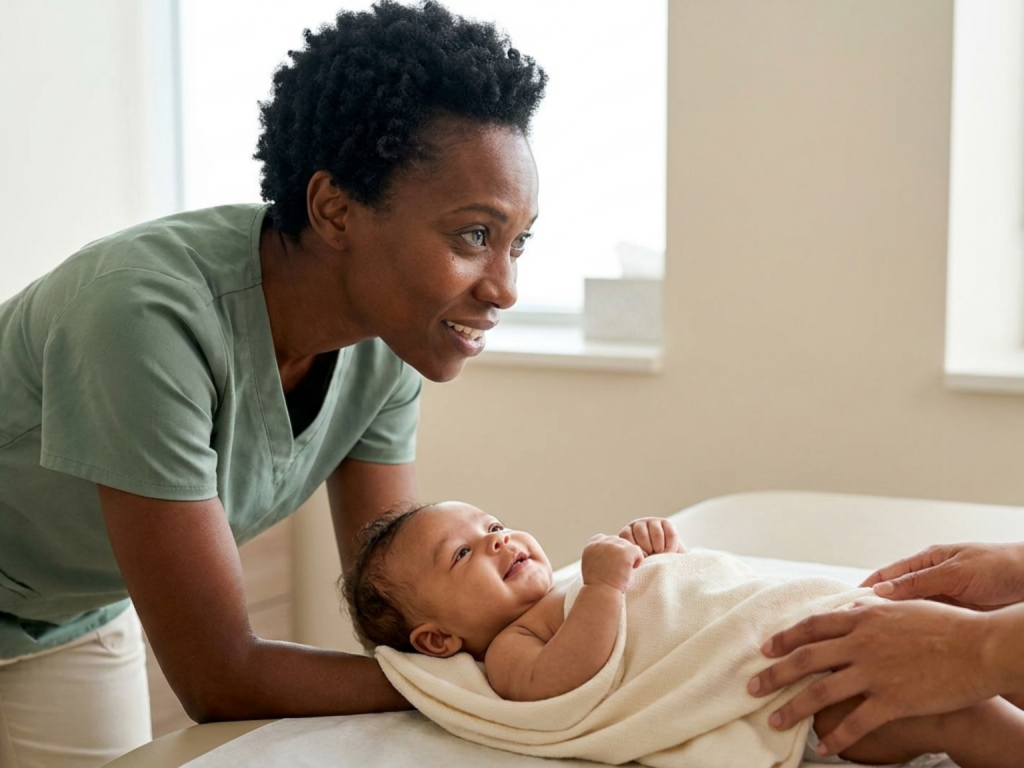
A baby's smile is one of the earliest signs of emerging social communication, but smiles do not all mean the same thing. Newborns may smile briefly during sleep or after feeding because of reflexive activity, while a social smile is a more intentional response to a caregiver's face, voice, or interaction.
Most babies begin smiling socially between 6 and 8 weeks, and the American Academy of Pediatrics notes that a first social smile usually appears by the end of the second month. The timeline is a guide rather than a deadline. Babies develop at different rates, and factors such as prematurity, temperament, alertness, vision, hearing, and overall health can influence when smiling becomes consistent.
Highlights
Reflex smiles may appear in the newborn period, whereas social smiles usually emerge around 6 to 8 weeks.
By 3 to 4 months, many babies smile more deliberately to engage caregivers and may begin laughing.
A baby may smile inconsistently when tired, hungry, overstimulated, or unwell; one quiet day is usually not meaningful by itself.
Patterns matter more than a single milestone, especially when considering social responsiveness, visual attention, vocalization, and movement together.
What counts as a baby's first smile?
In the first weeks of life, caregivers often notice a fleeting smile while a baby is asleep, drowsy, passing stool, or settling after a feed. These early expressions are commonly described as reflex smiles. They are normal, but they do not necessarily indicate that the baby is responding intentionally to another person.
A social smile is different. It usually occurs when a baby looks toward a caregiver’s face, hears a familiar voice, or participates in a face-to-face exchange. The smile may be accompanied by sustained eye contact, widened eyes, relaxed body movements, cooing, or an attempt to keep the interaction going. Social smiling reflects maturing neural networks involved in visual attention, emotional regulation, and early communication.
There is no need to test a newborn or repeatedly prompt a smile. Babies may be most socially available after sleeping and feeding, while fatigue, hunger, illness, or excessive stimulation can temporarily reduce responsiveness.
Smiling from birth to 1 month
During the newborn period, smiling is usually reflexive rather than socially directed. A baby may briefly raise the corners of the mouth during sleep or in response to internal sensations. These expressions can be emotionally meaningful for caregivers even when they are not yet intentional communication.
At this stage, infants are gradually learning to organize visual and auditory information. They may look briefly at a face, prefer a human voice, startle at sudden sounds, and settle when held or spoken to. Their periods of alertness are short, so an interaction may last only a few seconds. Smiling is not expected to be consistent at 1 month.
Caregivers can support early social development through calm, responsive contact: hold the baby safely, speak softly, imitate simple sounds, and pause to notice the baby’s cues. These exchanges help build the foundation for serve-and-return interaction, in which the infant and caregiver take turns using gaze, movement, sound, and facial expression.
Smiling at 2 months
Between 6 and 8 weeks, many babies begin to show a recognizable social smile. By the end of the second month, a baby may smile when a caregiver approaches, speaks, sings, or makes a gentle facial expression. Early social smiles can be brief and irregular, and the baby may respond more readily to familiar people than to unfamiliar adults.
Some babies first smile while looking at a face; others seem to respond primarily to a voice. The response may occur only when the baby is rested and comfortable. It is also common for a baby to smile one day and appear less expressive the next. Developmental milestones describe a range of typical behavior, not a performance that should occur on demand.
At the same time, clinicians consider a broader pattern of social responsiveness in infants. Useful observations include whether the baby sometimes fixes on or follows a face, reacts to sound, calms with a familiar caregiver, and shows periods of quiet alertness. A parent who has concerns can record observations and discuss them at a routine visit.
Smiling at 3 months
At around 3 months, social smiling often becomes easier to elicit and more varied. A baby may smile in response to a familiar face, voice, or playful interaction and may look away briefly before returning attention. Smiling may occur alongside cooing, reciprocal vocal exchanges, increased eye contact, and more purposeful body movement.
Many infants begin to appear more socially engaged during this period. They may watch a caregiver move across the room, respond to an animated voice, or smile when a familiar routine begins. These behaviors are early forms of communication, although they remain dependent on the baby’s state. A baby who is hungry or overtired may not participate, even when social skills are progressing normally.
Responsive caregiving is more useful than trying to produce a particular number of smiles. Follow the baby’s gaze, pause after speaking, copy a sound, and give the baby time to respond. Gentle face-to-face interaction should stop when the infant turns away, fusses, stiffens, or becomes overstimulated.
Smiling and laughing at 4 to 6 months
From 4 to 6 months, many babies smile deliberately to obtain attention and may smile when a caregiver reappears after a short separation. Facial expression can become more selective: a baby may show a broad smile for a familiar person, respond to playful anticipation, or use a smile as part of an ongoing interaction.
Laughter commonly develops later than social smiling. Cleveland Clinic describes laughter as often emerging around 4 to 6 months, although there is considerable individual variation. Early laughter may be a breathy chuckle or squeal before it becomes a sustained laugh. Games involving gentle vocal play, exaggerated but comfortable facial expressions, and predictable pauses may invite a response.
Social communication at this age is multidimensional. Smiling should be interpreted with eye gaze, vocal turn-taking, orientation toward sounds, interest in people, and the ability to settle with support. No single behavior establishes whether development is typical or atypical.
Smiling from 7 to 9 months
During the second half of the first year, smiles often become more context-sensitive. A baby may smile to share enjoyment, respond to a familiar game, or seek reassurance from a caregiver. Social referencing may begin to emerge: the infant looks toward a trusted adult’s face to help interpret an unfamiliar person, object, or situation.
Stranger wariness and separation-related distress may also become more noticeable. These behaviors can coexist with frequent smiling toward familiar caregivers. A baby may smile less at unfamiliar people without this representing a problem. Temperament, sensory sensitivity, fatigue, and the social environment all affect how openly an infant responds.
Caregivers can continue supporting communication by naming what the baby is looking at, taking turns with sounds, and responding consistently to gestures and facial expressions. Everyday routines such as feeding, bathing, and dressing provide repeated opportunities for warm, predictable interaction.
Smiling from 10 to 12 months
By 10 to 12 months, many babies use smiling as part of a broader intentional communication system. They may smile while pointing, showing an object, initiating a game, greeting someone familiar, or checking a caregiver’s reaction. Smiles may be paired with gestures, babbling, vocal imitation, clapping, or movement toward a desired person or activity.
At this stage, caregivers may notice clear differences in social style. Some infants are highly expressive, while others communicate more through gaze, gestures, sounds, or body movement. A quieter facial style is not automatically concerning when the baby demonstrates reciprocal engagement in other ways and continues to gain skills.
What matters clinically is the developmental trajectory. A baby who gradually adds social responses and communication behaviors is showing a different pattern from one who loses previously established smiling, eye contact, gestures, or vocal interaction. Any regression should be discussed promptly with a healthcare professional.
How to support healthy social smiling
Social smiling grows through repeated, emotionally safe interaction rather than formal exercises. Choose moments when the baby is awake and regulated. Hold the baby securely, position your face within a comfortable viewing distance, use a warm voice, and wait after speaking so the infant has time to respond.
Follow the baby’s cues. If the baby looks toward you, smile back and describe what is happening. If the baby turns away, yawns, becomes fussy, or changes muscle tone, reduce stimulation and allow a break. Respecting these signals supports self-regulation and makes interaction more predictable.
Simple activities can include singing, copying coos, making pauses during a familiar song, reading picture books, and playing brief face-to-face games. There is no requirement for constant engagement, and screen-based interaction does not replace responsive human contact. Adequate sleep, feeding support, and routine medical care also create conditions in which babies can participate socially.
When to discuss smiling with a healthcare professional
Variation is normal, but caregivers should raise concerns when a baby is not showing expected social responses or when several developmental signals seem absent together. If a baby has not shown a social smile by about 2 to 3 months, mention it to the pediatrician or other qualified healthcare professional, particularly if the baby also has limited eye contact, does not respond to sounds, or rarely appears interested in people.
Earlier discussion is appropriate when there are concerns about vision, hearing, feeding, muscle tone, alertness, or general health. A clinician may review the infant’s medical history, observe interaction, assess hearing and vision when indicated, and determine whether developmental surveillance, screening, or referral is appropriate. This is an evaluation process, not a diagnosis based on smiling alone.
For babies born preterm, developmental expectations may be interpreted using corrected age for preterm babies, especially during the first two years. Ask the baby’s clinician how corrected age should be calculated and applied. Prompt attention is particularly important if a baby loses a previously present social smile or other communication skill.
When to seek medical guidance
- No clear social smile by approximately 2 to 3 months, especially alongside limited eye contact or poor response to sound
- Loss of a previously established smile, eye contact, vocalization, gesture, or other social skill
- Possible vision or hearing concerns, including difficulty tracking faces or responding to familiar voices
- Marked lethargy, feeding difficulty, poor weight gain, or other signs of illness
- Any developmental concern that persists or worries the caregiver
Tools & Assistance
- Keep a brief dated record of smiles, eye contact, vocal responses, and situations in which the baby is most alert.
- Bring developmental observations and questions to routine pediatric visits.
- Ask about hearing or vision assessment if social responses seem limited.
- Discuss corrected age with the clinician when the baby was born prematurely.
- Request information about early intervention services for infants when a professional identifies a developmental concern.
FAQ
Can babies smile at birth?
Newborns can make smile-like facial expressions, often during sleep or after feeding. These are usually reflexive. A social smile directed toward a caregiver commonly appears between 6 and 8 weeks.
What if my 2-month-old smiles only occasionally?
Early social smiles may be brief and inconsistent, especially when a baby is tired, hungry, or overstimulated. Consider the overall pattern of eye contact, response to sound, alertness, and interaction, and discuss concerns at a medical visit.
When do babies usually laugh?
Laughter often develops after social smiling, commonly around 4 to 6 months. Some babies laugh earlier or later, and early laughter may begin as brief chuckles or squeals.
Does a premature baby smile later?
A premature baby's milestones may be interpreted using corrected age, particularly in the early years. The appropriate approach depends on gestational age and the child's medical history, so ask the healthcare professional who follows the baby.
Is a lack of smiling alone a diagnosis?
No. Smiling is only one aspect of social-emotional development. A clinician considers the infant's full developmental profile, health history, hearing, vision, and trajectory before recommending any evaluation or support.
Sources
- HealthyChildren.org, American Academy of Pediatrics — When do babies first smile?
- Cleveland Clinic — When Do Babies Start Smiling and Laughing?
- Pathways.org — When will my baby smile?
Disclaimer
This article is for general educational purposes and does not diagnose, treat, or replace advice from a qualified healthcare professional. Contact your baby's clinician with individual concerns or urgent symptoms.










Please log in to leave a comment.