
Intro
Meat-free infant feeding can provide adequate nutrition when meals are planned around iron, protein, energy, and developmental needs. Vegetarian patterns may include eggs and dairy, while vegan patterns exclude all animal-derived foods and require particularly careful attention to vitamin B12 and other nutrients.
From around 6 months, complementary foods gradually add nutrients and textures alongside breast milk or an appropriate infant formula. A supportive approach focuses on repeated exposure, responsive feeding, safe preparation, and individualized advice from a pediatrician or registered dietitian.
Highlights
Build most meals around an iron-rich food, an energy-containing food, and vegetables or fruit.
Legumes, tofu, eggs, dairy foods, and iron-fortified cereals can contribute protein and iron without meat.
Breast milk or infant formula remains an important source of nutrition during the first year.
Vegan feeding requires professional guidance about vitamin B12 and other potentially limiting nutrients.
Texture, choking prevention, food safety, and developmental readiness are as important as nutrient variety.
Start With the Nutrients Babies Need Most
After about 6 months, infants need increasing amounts of nutrients that may be difficult to obtain from a limited or poorly planned vegetarian diet. Iron is a central concern because infant iron stores begin to decline during this period. Iron supports hemoglobin production, oxygen transport, neurodevelopment, and cellular metabolism. Vegetarian sources include iron-fortified infant cereal, lentils, beans, chickpeas, tofu, eggs, and some dark green vegetables.
Protein is needed for growth, tissue repair, enzymes, hormones, and immune function. In a meat-free pattern, protein can come from legumes, tofu, eggs, yogurt, cheese, and age-appropriate nut or seed products. Energy density also matters: babies have small stomachs but high nutrient needs per kilogram of body weight. Meals should therefore include foods such as full-fat yogurt, avocado, olive or canola oil mixed into suitable foods, smooth nut butter thinned appropriately, or other developmentally safe sources of fat.
Vitamin C can improve absorption of non-heme iron, the form found in plant foods. Pairing lentils with soft broccoli, beans with tomato-based vegetables, or iron-fortified cereal with mashed fruit can support this principle. A balanced meal does not need to contain every nutrient in perfect proportions; consistency across the day and week is more realistic and clinically useful.
Use a Simple Meal-Building Framework
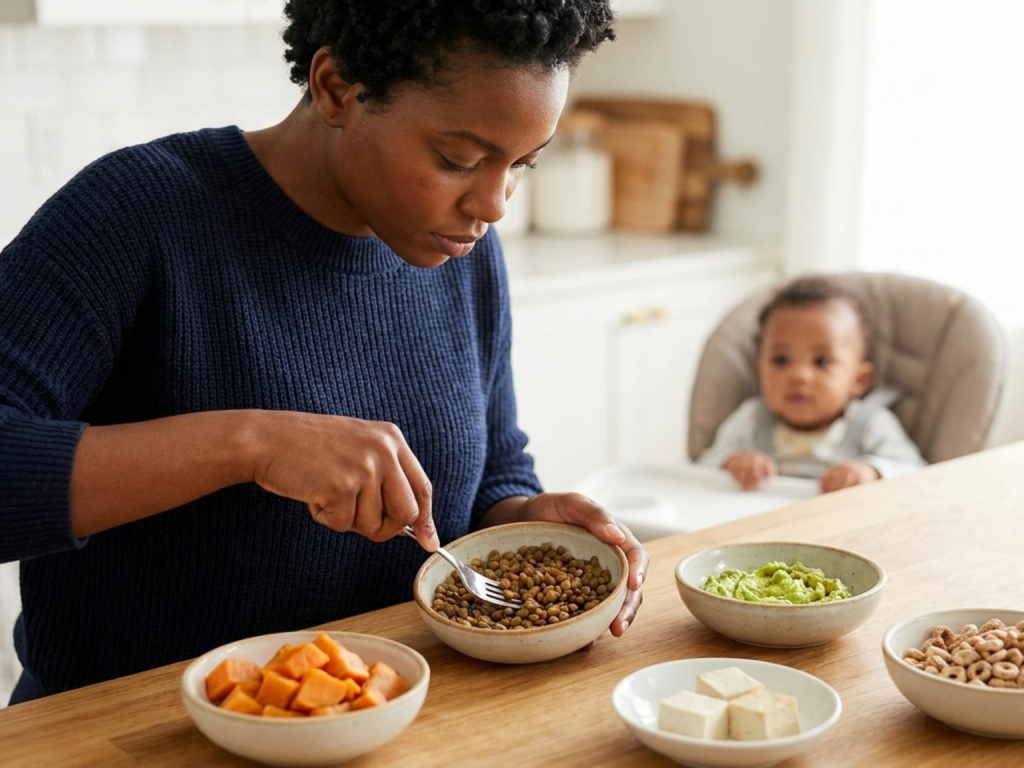
A practical structure is to combine three elements: an iron- and protein-containing food, a grain or starchy food, and a vegetable or fruit. For example, mashed lentils with soft oatmeal and pureed pear provide legumes, grain, and fruit. Tofu blended with sweet potato and finely softened peas offers protein, energy, and vegetables. Iron-fortified cereal mixed with yogurt and mashed berries can work for a vegetarian infant who eats dairy.
Government guidance for infants in vegetarian and vegan families commonly emphasizes offering two to three complementary meals daily between 6 and 12 months, alongside breast milk or infant formula. The exact amount varies with developmental stage, appetite, feeding history, and clinical circumstances. Some babies begin with a few teaspoons and gradually progress toward larger portions, while others advance more slowly.
Think in terms of food groups rather than rigid menus. Across the day, offer several opportunities for iron-rich foods, a variety of vegetables and fruits, grains or other starchy foods, and suitable protein sources. For vegetarian families, eggs and dairy can make nutrient coverage easier. For vegan families, fortified products and prescribed supplements may be necessary, especially for vitamin B12.
- Iron-rich or protein-rich food: lentils, beans, tofu, egg, yogurt, or fortified cereal.
- Energy-containing accompaniment: oats, potato, sweet potato, rice, quinoa, avocado, or a small amount of suitable oil.
- Produce: soft vegetables or fruit, prepared in a texture the baby can manage.
Plan Iron and Vitamin B12 Deliberately
Iron deserves deliberate planning because plant-based iron is non-heme iron and is generally less bioavailable than heme iron from animal tissues. This does not make vegetarian feeding unsuitable, but it does make regular iron-rich choices important. Iron-fortified infant cereal is often useful early in complementary feeding. Legumes and tofu can be served repeatedly in different forms, such as smooth purees, thick mashes, or soft patties when developmentally appropriate.
Vitamin B12 is naturally present in animal-derived foods, including eggs and dairy, but not reliably in unfortified plant foods. A baby following a vegan diet needs a dependable B12 source under the direction of a healthcare professional. Depending on the overall diet and local recommendations, clinicians may also assess vitamin D, iodine, calcium, zinc, omega-3 fatty acids, and total energy intake. Supplement selection and dosage should be individualized rather than inferred from general online advice.
Calcium can be supplied by yogurt, cheese, tofu made with calcium salts, and appropriately fortified foods. Zinc is found in legumes, tofu, whole grains, eggs, dairy, nuts, and seeds, although preparation methods and overall diet affect absorption. Omega-3 fatty acids may be obtained from foods such as ground chia or flaxseed in suitable forms, but families should ask a clinician or dietitian how to meet an infant’s specific requirements.
Do not replace breast milk or infant formula with plant beverages during the first year unless a qualified clinician has given explicit guidance. Many plant beverages do not provide the protein, fat, micronutrients, or overall nutritional composition that infants require.
Practical Meal Ideas for Different Stages
Early complementary feeding is primarily about learning to eat, not immediately replacing milk feeds. Begin with smooth or appropriately mashed foods and progress gradually as the baby demonstrates readiness and improved oral-motor control. A meal might include iron-fortified oat cereal mixed with breast milk or formula, followed by a small amount of mashed fruit. Another option is smooth red lentils blended with cooked carrot and a little olive oil.
As texture skills develop, meals can become thicker and more varied. Try mashed chickpeas with soft-cooked zucchini, finely crumbled egg mixed into potato, or silken tofu blended with avocado and a soft fruit. Full-fat plain yogurt with mashed peach can provide energy and protein, while a soft quinoa and bean mash can introduce a different grain and legume combination.
For older infants who manage soft finger foods, offer strips or florets that are soft enough to squash between fingers, such as roasted sweet potato, steamed broccoli, ripe avocado, or soft toast spread thinly with smooth nut butter. Beans can be gently flattened, and tofu can be cut into soft pieces. Continue to include spoon-fed foods if helpful, but let the baby participate actively and respond to hunger and satiety cues.
Meal plans should remain flexible. A baby may reject a food several times before accepting it, and intake can vary substantially from one meal to the next. Repeated, pressure-free exposure is more productive than forcing a certain quantity. Responsive feeding also helps caregivers notice when the baby is full, tired, uncomfortable, or distracted.
Protect Against Choking and Foodborne Illness
Nutrition cannot be separated from feeding safety. Before starting solids, review developmental readiness for solids with a healthcare professional or trusted public health resource. Readiness usually involves appropriate postural stability, interest in food, and the ability to bring objects to the mouth, but individual assessment remains important.
Always supervise a baby while eating and keep the baby upright. Avoid hard, round, sticky, or rubbery foods that can obstruct the airway. Whole nuts, spoonfuls of nut butter, whole grapes, raw firm vegetables, popcorn, and chunks of cheese are examples of hazards unless modified into safe forms. Smooth nut butter should be spread thinly or diluted into a soft mixture, not offered by the spoonful.
Prepare foods with clean hands and utensils, cook eggs thoroughly, and avoid unpasteurized dairy products. Honey should not be given before 12 months because of the risk of infant botulism. Limit added salt and sugar. Some foods, such as large amounts of rice-based products, may contribute disproportionate exposure to contaminants, so variety across grains is sensible.
Introduce common allergens in safe textures and appropriate amounts when the baby is ready, following current local guidance. If the baby has severe eczema, an existing food allergy, or a strong family history of allergy, discuss the introduction plan with a clinician. Seek urgent medical help for breathing difficulty, facial or tongue swelling, marked lethargy, or other signs of a severe allergic reaction.
Monitor Growth and Get Individualized Support
A balanced meal pattern is evaluated over time, not by one isolated serving. Growth trajectory, milk intake, feeding behavior, stool patterns, and dietary variety all provide useful context. A healthcare professional may review weight and length measurements, developmental progress, and the family’s chosen dietary pattern. Laboratory testing is not required for every infant, but a clinician may recommend assessment when there are risk factors, restricted intake, poor growth, pallor, persistent gastrointestinal symptoms, or suspected deficiency.
Families who avoid all animal products should arrange nutrition guidance before or soon after complementary feeding begins. A pediatric dietitian can help calculate adequate energy and protein intake, identify fortified foods, select an age-appropriate supplement strategy, and adjust the plan for allergies or cultural food preferences. Families using eggs and dairy may still benefit from guidance if the baby’s intake is very limited or if dairy is excluded because of suspected intolerance.
Concerns about feeding can be emotionally difficult. A baby who eats small amounts, makes a mess, or refuses a new texture is not necessarily failing to thrive. At the same time, persistent feeding difficulty should not be dismissed. Discuss concerns promptly, particularly if the baby coughs or chokes regularly, has prolonged mealtimes, vomits repeatedly, appears unusually fatigued, or is not following an expected growth pattern.
For caregivers who are also adjusting breastfeeding, resources about complementary feeding while breastfeeding can help clarify how solids and milk feeds coexist. If stools become hard or painful after dietary changes, review Baby constipation after solids with a clinician rather than making major dietary changes independently.
Safety reminders
- Do not use plant beverages as a replacement for breast milk or infant formula during the first year without clinical direction.
- Vegan infants need a reliable vitamin B12 plan supervised by a healthcare professional.
- Never leave a baby unattended while eating, and modify choking hazards into safe textures.
- Seek medical advice for poor growth, persistent vomiting, recurrent choking, marked pallor, or unusual lethargy.
- Avoid honey before 12 months and use pasteurized dairy products and thoroughly cooked eggs.
Tools & Assistance
- A weekly meal planner organized by iron-rich foods, protein sources, grains, vegetables, and fruit
- A consultation with a pediatrician or registered dietitian experienced in infant vegetarian or vegan nutrition
- A growth and feeding record for discussing intake, tolerance, and developmental progress at health visits
- A local public health guide covering infant feeding, allergen introduction, and choking prevention
- A food-preparation checklist for safe texture, cooking, storage, and supervision
FAQ
Can a baby get enough protein without meat?
Yes. Legumes, tofu, eggs, yogurt, cheese, fortified cereals, and other suitable foods can provide protein when offered in a varied, energy-adequate pattern. A dietitian can assess adequacy if intake is restricted.
How often should meat-free babies eat iron-rich foods?
Iron-rich foods should appear regularly in complementary meals, often daily. Useful options include iron-fortified cereal, lentils, beans, tofu, and eggs. Pairing plant iron sources with vitamin C-containing produce may improve absorption.
Is a vegan diet appropriate for an infant?
It can be nutritionally adequate when carefully planned, but it requires professional supervision. Vitamin B12 is essential, and clinicians may also review vitamin D, iodine, calcium, zinc, omega-3 fatty acids, iron, and energy intake.
What should a first balanced meat-free meal contain?
A suitable example is iron-fortified cereal with breast milk or formula and mashed fruit. Another is smooth lentils with soft-cooked vegetables and a small amount of energy-dense fat, prepared in a developmentally safe texture.
What if my baby refuses a meat-free food?
Continue offering it calmly on different occasions without pressure, while maintaining variety. Refusal is common during texture learning. Seek advice if intake remains very limited or growth, swallowing, or feeding comfort becomes a concern.
Sources
- Israel Ministry of Health — Infant Nutrition in Vegetarian and Vegan Families
- Unlock Food — Sample Meal Plans for Feeding Your Vegetarian Baby
- HealthLink BC — Vegetarian feeding guidelines for babies and toddlers
Disclaimer
This article provides general educational information and is not a diagnosis or individualized medical treatment plan. Consult your pediatrician or a registered dietitian for advice tailored to your baby's age, growth, feeding pattern, allergies, and medical history.

















Please log in to leave a comment.