
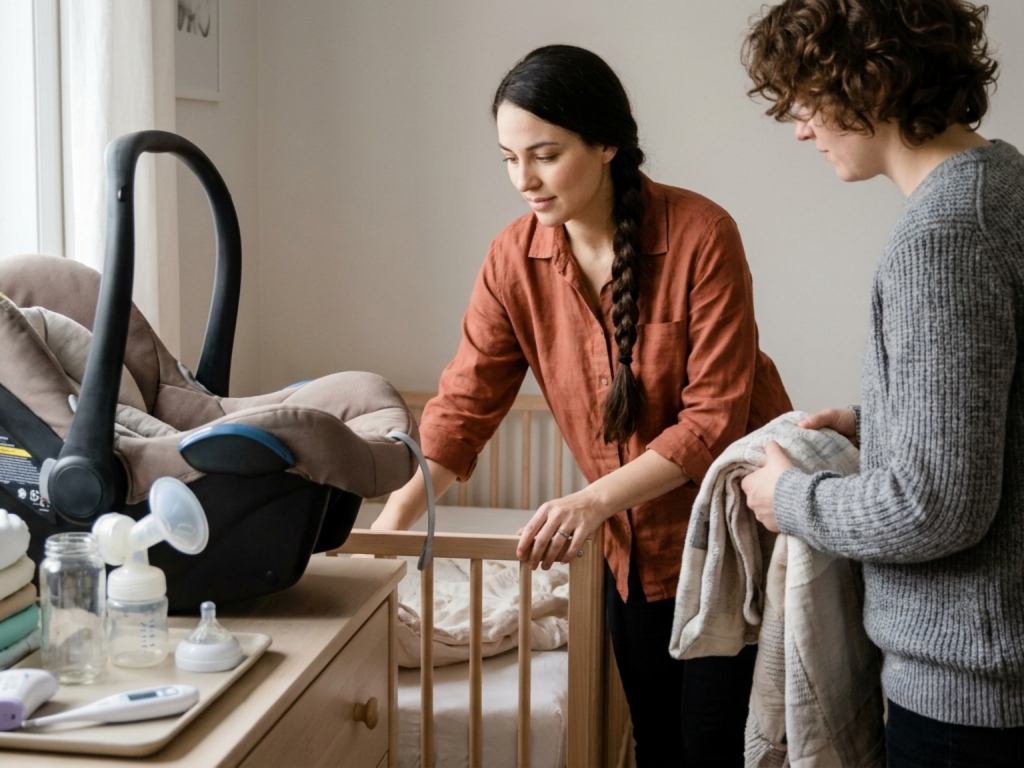
Intro
Bringing a newborn home is a major transition. Preparation can reduce preventable hazards, make feeding and sleep care more manageable, and give recovering parents practical support during a period of substantial physical and emotional adjustment.
You do not need to create a perfect nursery or purchase every marketed product. The priorities are a safe sleep environment, reliable transportation, feeding supplies suited to your plan, basic infection-control measures, a clear medical follow-up plan, and enough household support to protect parental rest.
Highlights
Prepare the sleep space, car seat, feeding supplies, and essential hygiene items before labor begins.
A newborn should sleep on a firm, flat, separate surface without pillows, loose bedding, or soft objects.
Arrange pediatric follow-up and understand which newborn findings require urgent medical advice.
Visitors and caregivers should follow clear illness, vaccination, and hand hygiene expectations.
Support for the recovering parent is a safety measure, not an optional luxury.
Set Up Safe Sleep and Transport
The sleep area should be ready before the baby arrives. Current safe-sleep guidance recommends placing an infant supine, or on the back, for every sleep on a firm, flat, non-inclined surface designed for infant sleep. Keep the sleep space free of pillows, quilts, bumpers, stuffed animals, positioners, and other loose or soft items. Room-sharing without bed-sharing is generally recommended during early infancy because it permits close observation while avoiding the hazards of an adult bed.
A fitted sheet is usually the only bedding required. If swaddling is used, the material should be light and secure around the torso without compressing the chest or restricting hip movement. Stop swaddling when the infant shows signs of attempting to roll, and never use weighted swaddles or sleep products that restrict normal movement. Discuss feeding-related sleep arrangements with the baby’s clinician, particularly if the infant was premature or has a medical condition.
Install a rear-facing infant car seat according to both the vehicle and seat manufacturers’ instructions. An appropriately trained child-passenger-safety technician can check the installation. Do not use a car seat as a routine sleep surface outside the vehicle, and avoid adding aftermarket inserts or accessories unless supplied or approved by the manufacturer.
Organize Feeding and Diapering Supplies
Choose supplies based on the anticipated feeding plan, while leaving room for that plan to change. For breastfeeding, useful preparations may include nursing bras, breast pads, a comfortable feeding position, access to water and food, and a plan for lactation support. A breast pump is not automatically necessary before birth, but some families benefit from arranging one in advance, especially when separation, prematurity, or anticipated pumping is likely.
For expressed human milk, identify clean containers, labeling supplies, and a refrigerator or freezer location. Follow the storage and handling instructions provided by the hospital, lactation professional, or pediatric clinician. Feeding equipment should be washed using appropriate methods and allowed to dry fully; do not assume that sterilization is required for every family or every piece of equipment, because recommendations can vary with age and medical circumstances.
If formula will be used, purchase only the type recommended for the infant and prepare it exactly according to the product label or clinical instructions. Concentrating or diluting formula can cause clinically significant electrolyte and fluid disturbances. Use safe water as advised locally, wash hands before preparation, and discard unfinished formula according to professional guidance. Keep several diaper sizes, cotton or disposable wipes, barrier ointment, a changing surface, and a lidded disposal container available. Never leave an infant unattended on an elevated changing surface.
Prepare the Home for Routine Care
Newborns have limited thermoregulatory capacity, so aim for a comfortable room rather than excessive warmth. Dress the infant in approximately one additional light layer compared with an adult in the same environment, and assess the chest or back rather than relying only on hands and feet, which may feel cool normally. Avoid overheating, direct heat sources, electric blankets, and hot water bottles. A digital thermometer designed for infants can be useful, but ask a clinician which route and technique are appropriate for your baby.
Place routine-care items where they can be reached without leaving the infant alone: diapers, clean clothing, burp cloths, saline drops if advised, and any prescribed medication. Do not give over-the-counter medicines, herbal products, water, or supplements unless the baby’s healthcare professional specifically recommends them. Keep medications, cleaning products, cosmetics, batteries, small objects, cords, and plastic packaging out of reach. Check that smoke detectors and carbon monoxide alarms are installed and functioning, and confirm that the water heater is set to prevent scalding.
Make the first days physically easier. Stock simple food, drinking water, and household necessities. Create one or two safe places to set the baby down while you use the bathroom, eat, or pause. A crying infant can be placed supine in an empty crib for a brief break while the caregiver regains control. Shaking or forceful handling is never safe; ask another adult for help when exhaustion or frustration is escalating.
Plan Infection Prevention and Visitors
Newborn immune defenses are still developing, so sensible infection prevention matters without requiring isolation. Establish hand hygiene before newborn care, especially after using the bathroom, preparing food or formula, changing diapers, touching pets, or returning from public settings. Ask visitors to wash their hands before holding the baby and to avoid kissing the infant’s face or hands.
Set visitor rules for newborns before delivery, when it may be harder to negotiate boundaries. Anyone with fever, cough, vomiting, diarrhea, an unexplained rash, or a recent significant exposure to a contagious illness should postpone the visit. Discuss recommended vaccinations for close caregivers with the baby’s clinician; depending on local policy and current disease circulation, this may include influenza, pertussis, or other immunizations. Visitors should not smoke in the home, vehicle, or near the infant.
Clean feeding equipment according to the manufacturer’s instructions and clinical advice. Routine household cleaning of high-touch surfaces is generally sufficient; avoid aerosolized disinfectants, strong fragrances, and unnecessary chemical exposure around the infant. If a caregiver develops an illness, ask a healthcare professional how to balance infection precautions with feeding and direct care. Seek prompt clinical advice for a newborn with a temperature concern, breathing difficulty, poor feeding, unusual sleepiness, or a marked change in behavior.
Arrange Medical Follow-Up and Records
Choose a pediatric practice before birth when possible and confirm how to reach the office after hours. Ask when the newborn first pediatrician visit should occur, which clinician will review hospital screening results, and how urgent concerns are triaged. Keep the hospital discharge summary, medication list, immunization record, newborn metabolic and hearing-screen information, blood-type or bilirubin information when provided, and insurance details in one accessible location.
Learn the feeding, urine, stool, weight, and jaundice observations the clinical team expects you to monitor. Newborn jaundice is common, but increasing yellow discoloration, difficulty waking for feeds, poor intake, or unusual limpness warrants medical assessment rather than home diagnosis. The discharge team should also explain umbilical cord care, bathing, vitamin supplementation where recommended, and follow-up for infants with risk factors such as prematurity, low birth weight, hemolytic disease, or feeding difficulty.
Prepare a written list of questions and record the names and doses of any products the baby receives. In an emergency, know the local emergency number and the location of the nearest appropriate facility. Do not delay urgent care while trying to obtain an appointment or compare symptoms online. The threshold for calling is appropriately low in a very young infant.
Support the Recovering Parent and Household
Postpartum recovery can involve pain, bleeding, sleep disruption, lactation challenges, surgical recovery, or complications such as hypertension, infection, anemia, or thromboembolism. Before delivery, identify who will provide meals, transportation, laundry, pet care, sibling care, and overnight help. A written schedule can prevent one exhausted person from becoming the default manager of every task.
Arrange postpartum and lactation follow-up according to the birthing parent’s needs. Keep prescribed medications available and clarify which over-the-counter products are compatible with breastfeeding or other medical conditions. Seek urgent care for heavy bleeding, chest pain, shortness of breath, severe headache or visual symptoms, unilateral leg swelling, fever, or rapidly worsening pain. These signs can represent serious postpartum complications and should not be attributed automatically to normal recovery.
Emotional preparation is equally important. Mood variability is common, but persistent depression, severe anxiety, inability to sleep even when the baby sleeps, intrusive thoughts that feel uncontrollable, confusion, hallucinations, or thoughts of harming oneself or the baby require immediate professional attention. Arrange postpartum mental health support in advance, including a clinician, trusted contact, crisis service, or emergency pathway appropriate to your location. The caregiver’s wellbeing directly affects the infant’s safety and the family’s capacity to function.
Create a Practical First-Week Plan
The first week is easier when decisions have already been simplified. Write down feeding contacts, pediatric and postpartum appointments, pharmacy details, emergency numbers, and the preferred route for after-hours advice. Keep a small notebook or digital record for feeds, wet diapers, stool, temperature readings when clinically indicated, medications, and questions. These observations can help clinicians assess patterns, but they are not a substitute for examination.
Agree on basic caregiving roles. One person can track appointments while another handles meals or supplies. Limit nonessential commitments and protect uninterrupted rest in shifts where possible. Accept specific offers of help rather than relying on vague promises, and ask visitors to contribute practical support instead of expecting to be hosted.
Review the plan after the baby arrives. Newborn behavior, milk production, recovery, and household capacity may differ from expectations. A flexible plan that responds to professional advice is more useful than a rigid checklist. Preparation should reduce cognitive load, not create a standard that parents feel they have failed to meet.
When to Seek Prompt Medical Advice
- A newborn has breathing difficulty, blue or gray coloring, marked limpness, or is difficult to wake.
- A newborn is feeding poorly, has substantially fewer wet diapers than expected, or repeatedly vomits.
- A newborn has a temperature concern; use the threshold and measurement method provided by the clinician.
- Yellowing appears to be worsening, or jaundice is accompanied by poor feeding or unusual sleepiness.
- The postpartum parent has heavy bleeding, chest pain, shortness of breath, severe headache, vision changes, or thoughts of self-harm.
Tools & Assistance
- Pediatric practice phone number and after-hours triage instructions
- Rear-facing car seat checked by a certified child-passenger-safety technician
- Digital infant thermometer and written temperature guidance from the clinical team
- Shared household calendar for appointments, feeding support, and caregiver shifts
- Emergency contacts, hospital discharge paperwork, and medication records in one location
FAQ
Do I need to buy every newborn product before delivery?
No. Prioritize safe sleep, transport, feeding, diapering, temperature assessment, and hygiene supplies. Many specialized products are optional and can be evaluated after you understand your baby’s needs.
Should visitors wear masks around a newborn?
Recommendations depend on current respiratory-virus circulation, household risk factors, and local public-health guidance. Ask the baby’s clinician about masking, testing, vaccination, and visitor restrictions for your circumstances.
What should I ask before leaving the hospital?
Ask about feeding expectations, diaper output, jaundice monitoring, cord care, bathing, medications or supplements, screening results, follow-up timing, and exactly whom to call for urgent or after-hours concerns.
Can a newborn sleep in a stroller, swing, or car seat at home?
These devices are not generally intended as routine sleep surfaces. Move a sleeping infant to a firm, flat, approved sleep space as soon as reasonably possible and follow the manufacturer’s safety instructions.
How can a family prepare for parental exhaustion?
Arrange shifts, meals, transportation, and practical help before birth. If a caregiver feels unable to stay calm, place the baby safely in an empty crib and contact another adult or a healthcare professional.
Sources
- American Academy of Pediatrics — Safe Sleep
- Centers for Disease Control and Prevention — About Hand Hygiene
- Centers for Disease Control and Prevention — Vaccines for Family and Caregivers
Disclaimer
This article provides general educational information and is not a substitute for individualized medical advice, diagnosis, or treatment. Consult your newborn’s healthcare professional and seek urgent care for concerning symptoms.
















Please log in to leave a comment.