
Intro
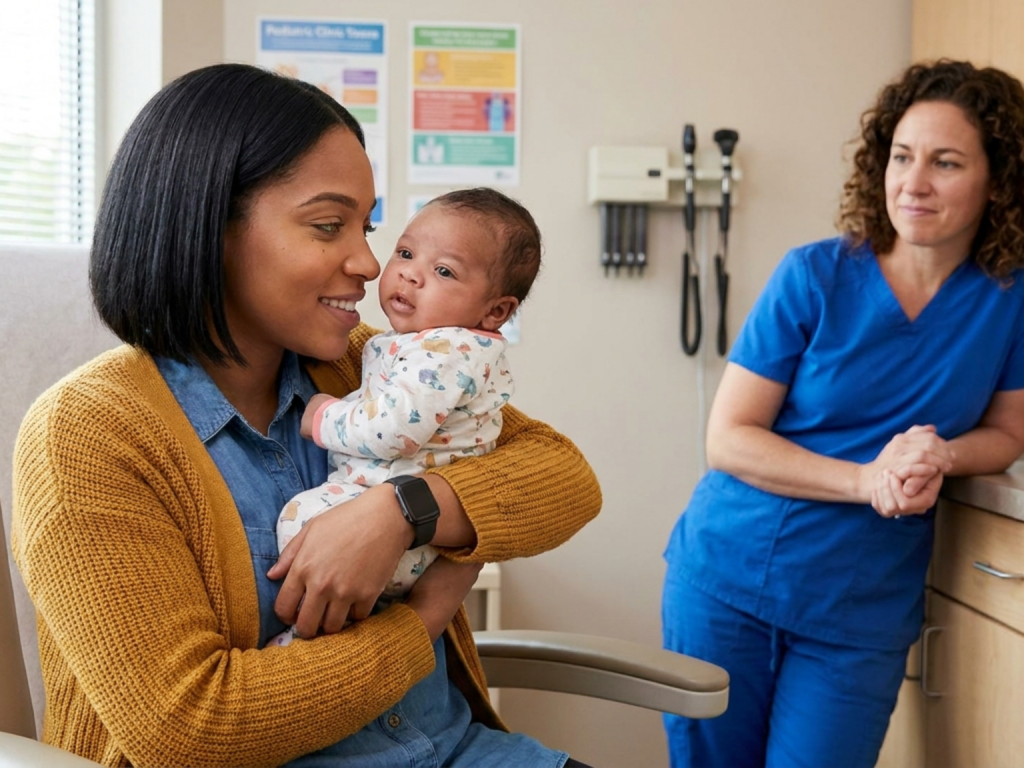
A baby's first smile can feel like a profound moment of recognition and connection. Many caregivers notice smiles during the newborn period, but early smiles are often reflexive rather than responses to another person. A social smile is different: it is an emerging form of intentional communication directed toward a familiar face, voice, or interaction.
Most babies begin smiling socially by the end of the second month, although the timing varies. Prematurity, temperament, alertness, visual attention, and individual developmental pace can all influence when a smile becomes consistent. Understanding the usual range can help caregivers enjoy this milestone without turning it into a rigid test.
Highlights
Most babies begin social smiling around 2 months, often by the end of the second month.
Newborn reflex smiles may occur during sleep or without an obvious social trigger.
Social smiling gradually becomes more coordinated with eye contact, voices, and other caregiver cues.
Preterm infants may reach this milestone according to postconceptional age, so adjusted developmental timing can be relevant.
A missed smile on one occasion is usually less informative than a broader pattern of social responsiveness over time.
What is a social smile?
A social smile is a smile that occurs in the context of human interaction. A baby may look toward a caregiver’s face, respond to a familiar voice, or smile during a gentle exchange. The expression may initially be brief or inconsistent, but it represents an important early step in social communication: the infant is beginning to participate in a reciprocal interaction rather than merely displaying a spontaneous facial movement.
Newborns can smile from the first days or weeks of life, particularly while asleep, drowsy, feeding, or passing gas. These early expressions are commonly described as reflexive or endogenous smiles. They are normal and meaningful as part of early neurologic development, but they do not necessarily indicate that the infant is recognizing or intentionally responding to a person.
Over time, the context becomes clearer. A developing social smile is more likely to occur when the baby is awake, calm, and visually engaged. The baby may look at a face, pause as though attending, and then smile. The response may also be followed by increased movement, vocalization, or repeated looking. These behaviors are components of early infant communication cues and often appear together rather than as isolated milestones.
When do babies usually start smiling socially?
Most babies begin social smiling at approximately 2 months of age. The American Academy of Pediatrics describes a first social smile as usually appearing by the end of the second month. Scientific literature likewise identifies social smiling as one of the earliest social-communication skills, typically emerging around this period.
There is, however, a normal range. Some infants begin to smile socially during the first month or early in the second month, while others take somewhat longer to show a reliable pattern. A baby may produce a social smile only when especially rested, well fed, or interested, so caregivers may not see it during every interaction. A milestone is not an appointment that must occur on a particular day; it is a skill that gradually becomes more frequent and coordinated.
For babies born preterm, developmental timing may be considered in relation to postconceptional age, which combines gestational age at birth with age since birth. Research has found that the onset of social smiling is related to developmental maturity in both preterm and full-term infants. Families should ask their pediatrician or other qualified clinician how to interpret milestones using the baby’s gestational history and adjusted age when appropriate.
Temperament also matters. Some babies are highly expressive, whereas others observe quietly before responding. Differences in opportunity, lighting, positioning, sleep-wake state, and the baby’s ability to focus visually can affect when a smile is seen. These factors do not by themselves indicate a problem.
How social smiling develops over the first months
Social smiling is not a single switch that turns on. It typically develops through increasingly organized patterns of attention and response. Early on, an infant may briefly fixate on a caregiver’s face and produce a smile with little consistency. In subsequent weeks, the baby may sustain eye contact for longer, smile more often in response to a familiar person, and repeat the exchange when the caregiver continues speaking or smiling.
Research on young infants indicates that looking and smiling have distinct developmental dynamics at first. As the first months progress, smiling becomes more coordinated with caregiver gaze and other social cues. This coordination helps create a rudimentary turn-taking pattern: the caregiver offers a face, voice, or expression; the infant attends and responds; and the caregiver responds again.
These exchanges support social-emotional development in infancy. They also provide an early foundation for later vocal turn-taking, shared attention, imitation, and emotional regulation. A smile does not mean that a baby understands a conversation in the adult sense, but it can show that the infant is increasingly available for social engagement.
Caregivers may notice related behaviors such as calming when a familiar person approaches, watching a face during feeding, making cooing sounds, widening the eyes, moving the arms or legs with excitement, or turning away when tired. Development is multidimensional, so the overall pattern of interaction is more informative than any single facial expression.
Ways to encourage social interaction
Caregivers do not need special equipment or a formal program to support social smiling. Ordinary routines provide repeated opportunities for face-to-face interaction with babies. Hold the baby safely at a comfortable viewing distance, speak in a calm voice, pause to allow time for a response, and follow the infant’s signals rather than demanding eye contact or a smile.
Choose moments when the baby is awake and relatively settled. Gentle singing, talking during diaper changes, and responding warmly to small sounds or movements can make interactions predictable and enjoyable. If the baby looks away, yawns, becomes fussy, or changes facial expression, that may signal fatigue or overstimulation. Taking a break and trying again later is responsive caregiving, not a missed opportunity.
These repeated exchanges are often called serve-and-return interaction. The infant’s look, sound, movement, or smile is the serve; the caregiver’s attentive response is the return. The response does not need to be elaborate. A relaxed facial expression, a few spoken words, or gentle acknowledgment can reinforce the infant’s emerging communication.
It is also reasonable for caregivers to protect their own energy. Feeding, soothing, bathing, and carrying can all become social moments, but no parent needs to perform constant stimulation. A secure relationship grows through many ordinary, responsive interactions over time. If a caregiver is experiencing depression, anxiety, exhaustion, or difficulty feeling connected, discussing this with a healthcare professional can support both the caregiver and the infant.
What if my baby is not smiling yet?
A baby who has not yet smiled socially at exactly 2 months may still be developing within a typical range. First consider the context: Was the baby awake and alert? Could the baby see the caregiver’s face clearly? Was the infant hungry, uncomfortable, sleepy, or overstimulated? A baby may smile more reliably at one time of day or with one familiar caregiver.
Rather than repeatedly testing the baby, observe the broader pattern across several days. Does the infant look toward faces or voices, briefly attend to people, settle with familiar caregivers, or show other changes in social engagement? Notes or short observations can be useful during a routine visit, especially when they describe what happened, when it happened, and whether the behavior is becoming more frequent.
Contact the baby’s healthcare professional if you are concerned about a lack of social response, if the baby rarely appears to notice faces or voices, or if you observe a loss of a skill the baby previously used. Concerns deserve attention even when a baby is otherwise healthy. A clinician can review vision, hearing, neurologic development, feeding, sleep, gestational age, and the complete developmental history.
Urgent medical care is appropriate for acute symptoms such as difficulty breathing, marked lethargy, seizure-like activity, significant feeding difficulty, or an infant who is difficult to awaken. These are not specific to social smiling, but they require prompt assessment. For developmental questions, a pediatrician, family physician, public health nurse, or qualified child-development service can guide next steps.
Putting the milestone in perspective
Social smiling is an encouraging early milestone, but it is not a measure of intelligence, attachment quality, or a caregiver’s success. Babies differ in expression, timing, and the situations that bring out a response. One quiet day does not erase previous progress, and a smile alone cannot establish that development is typical in every area.
Think of the milestone as part of a changing relationship. In the early weeks, caregivers learn the baby’s rhythms and signals. Around the second month, many infants begin to make social responses more visible. In the months that follow, these responses may become more reciprocal as the baby combines gaze, facial expression, vocalization, body movement, and eventually gestures.
Tracking Social interaction milestones can help families organize observations, but milestone lists should support conversations with clinicians rather than replace them. Developmental surveillance is an ongoing process that considers the infant’s medical history, family observations, examination findings, and trajectory over time.
The most useful approach is warm, observant, and flexible: offer interaction, notice the baby’s cues, allow rest, and seek professional advice when a concern persists. Your attentive presence matters even before the first unmistakable social smile appears.
When to seek professional guidance
- Discuss persistent concerns about social responsiveness with the baby's healthcare professional.
- Mention limited response to faces or voices, especially when it occurs across different settings.
- Report any loss of previously observed social, motor, communication, or feeding skills.
- Ask how prematurity and adjusted age should affect developmental expectations.
- Seek urgent care for severe lethargy, breathing difficulty, seizure-like activity, or inability to feed.
Tools & Assistance
- Keep a brief developmental observation log for routine healthcare visits.
- Use face-to-face talking, singing, and pausing during calm daily routines.
- Ask the pediatrician or family physician about developmental surveillance and screening.
- Contact a public health nurse or early-intervention service when available in your area.
- Share concerns with all regular caregivers so observations can be compared respectfully.
FAQ
Can newborns smile before they smile socially?
Yes. Newborns commonly make reflexive smiles, including during sleep or drowsiness. A social smile is more likely to occur while the baby is awake and responding to a face, voice, or interaction.
What is the usual age for a baby's first social smile?
Many babies begin social smiling around 2 months, and the American Academy of Pediatrics states that it usually appears by the end of the second month. Individual timing varies.
Do premature babies smile socially later?
Timing may relate more closely to postconceptional or adjusted developmental age than to chronological age alone. Ask the baby's clinician how to interpret milestones based on gestational age at birth.
How can I encourage my baby to smile socially?
Interact when the baby is awake and calm by speaking, singing, smiling, and pausing for a response. Follow signs of tiredness or overstimulation and try again later.
When should I discuss a lack of social smiling with a clinician?
Discuss it if concerns persist, if the baby rarely responds to faces or voices, or if a previously observed social skill disappears. The clinician can assess the whole developmental pattern.
Sources
- HealthyChildren.org (American Academy of Pediatrics) — When do babies first smile?
- PubMed Central — The Dynamics of Looking and Smiling Differ for Young Infants ...
- ScienceDirect — The onset of social smiling in preterm and full-term infants from two ...
Disclaimer
This article is for general educational purposes and does not diagnose or treat any medical condition. Consult a qualified healthcare professional for advice about your baby's development or health.











Please log in to leave a comment.