
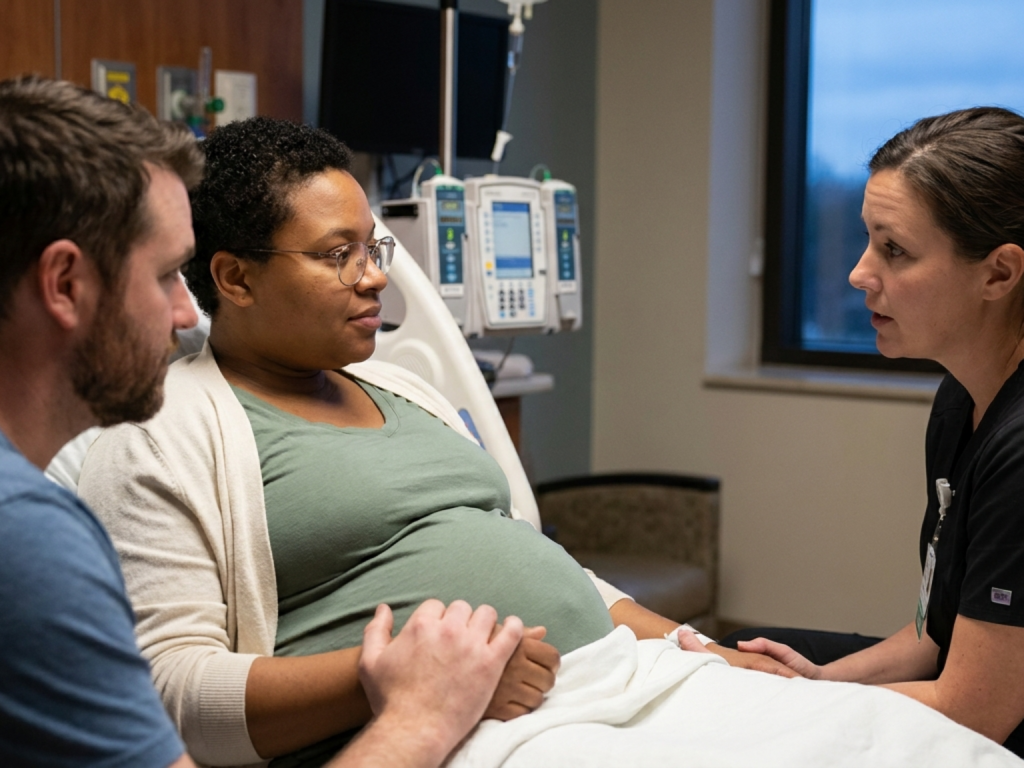
Intro
Fear during pregnancy and birth can spread through a couple quickly, especially when labor is unpredictable, pain rises, or plans change. A partner does not need to be perfectly calm to be useful. What matters is noticing what is happening in the body, naming the feeling without shame, and choosing responses that make the moment safer.
This article focuses on how a partner manages fear and emotions in a birth setting: how to steady the nervous system, communicate without escalating distress, and stay supportive when the birthing person needs calm, clarity, and respect. The goal is not emotional perfection; it is reliable presence.
Highlights
Fear in birth is often a physiologic stress response, not a character flaw. Naming it early makes it easier to keep it from driving behavior.
A partner helps most by regulating first, then responding with clear communication, consent, and practical support.
Support should reduce threat, not add pressure. Short sentences, steady tone, and specific help are usually more effective than overexplaining.
If fear becomes persistent, traumatic, or unsafe, professional care is appropriate and often necessary.
Why fear shows up for partners
Fear in a birth setting is usually a normal stress response, not a sign of weakness. The brain reads pain, uncertainty, previous loss, medical language, and responsibility for another person as potential threat. That can activate sympathetic arousal: faster heart rate, tight muscles, shallow breathing, and racing thoughts. In that state, a partner may feel pressure to fix everything immediately, which often makes communication harder.
It helps to name the experience accurately. A partner may be scared because they care, because they do not understand what will happen next, or because a prior trauma is being reactivated. In that sense, normal fear before labor is common. The goal is not to eliminate the feeling on command; the goal is to keep it from taking over behavior. When fear is acknowledged early, it is easier to use emotional regulation during labor instead of reacting from panic.
Regulating your own nervous system
Once fear rises, the first job is regulation, not problem solving. Slow the body before trying to speak. A longer exhale, lower shoulders, unclenched jaw, and feet on the floor can reduce intensity enough to think clearly. Some partners benefit from silently counting breaths or asking for one minute before answering a question. This is basic emotional regulation during labor: reducing internal noise so the partner can remain steady.
Keep the behavior small and deliberate. Speak in short sentences. Focus on one task at a time. If the room feels overwhelming, look at the birth team or the monitor, not every possible future outcome. If the partner has a history of panic, a few rehearsed grounding steps are more useful than improvising in the moment. Brief self-regulation is not selfish; it makes supportive presence possible.
If another support person is available, step out for a short reset rather than trying to process every fear in front of the birthing person. A partner who is flooded can still be useful after a pause. The point is to return regulated enough to listen, track information, and offer help without adding urgency.
Communication that lowers threat
Fear gets worse when people feel misunderstood. The most stabilizing language is often simple: acknowledge, validate, and ask. Respectful communication during labor means not arguing with the birthing person about whether their pain or fear is real. It also means not flooding them with statistics, stories, or reassurance that ignores what they are saying. A calm tone matters, but precision matters more.
A partner can say that the situation feels intense, ask what would help right now, and reflect back what they heard. That keeps the interaction oriented toward the present instead of the worst case. Psychological safety during birth improves when the partner does not override consent, does not pressure for touch, and does not make decisions on the birthing person’s behalf unless they have been asked to do so. If a topic needs discussion, keep it concrete and brief. This is not the time for a relationship trial or a full retrospective on every worry in the partnership.
When tension spikes, avoid sarcasm, blame, or correction in front of staff. If a concern needs to be raised, say it directly and respectfully. The partner’s voice should add clarity, not another layer of threat.
Practical support during labor and decision-making
Partners often feel better when fear is converted into tasks. Practical support can lower uncertainty and create a supportive birth environment even when labor is still unpredictable. That may mean timing contractions if requested, bringing water, adjusting lighting, finding a nurse, or reminding the team about preferences that were discussed in advance. Helpful support is specific and responsive rather than busy.
Decision-making should stay anchored in the birthing person’s wishes and the clinical picture. BRAIN decision-making in labor can help a partner slow the pace enough to ask about benefits, risks, alternatives, what the team recommends, and what happens if the choice is deferred. Used well, it prevents fear from turning into either passivity or impulsive action. Used badly, it can become a script that delays urgent care, so it should never replace medical judgment.
Continuous emotional and physical support does not mean the partner must never leave the room or never feel afraid. It means showing up consistently, asking what kind of help is wanted, and staying present enough to notice when the birthing person is losing energy, becoming overheated, or getting overwhelmed. Emotional support during labor can be quiet and efficient: a hand on the shoulder if welcomed, a clear explanation repeated when needed, or simply standing close and staying available. A supportive presence in labor is often less about perfect words than about dependable, respectful behavior.
After birth: the emotional rebound
Once the baby is born, many partners expect relief and instead feel a crash of emotion. Adrenaline drops, sleep deprivation starts, and the pressure to be competent can stay high. Some people feel tearful, detached, irritable, or surprisingly numb. Those reactions can be part of the normal post-birth adjustment, but they still deserve attention. The same is true for the birthing person, who may need quiet, reassurance, food, hydration, and help making sense of a very intense transition.
Good postpartum recovery support is practical and relational. Keep decisions small, reduce unnecessary visitors, and avoid high-stakes conversations until both people are resting more consistently. If a partner notices persistent panic, intrusive thoughts, marked sadness, or a sense of emotional shutdown, those symptoms should not be brushed off as exhaustion alone. Birth can stir old fears, and the first days afterward are a vulnerable time for both bonding and conflict.
A brief debrief can help once everyone is stable. What felt hardest, what worked, and what needs attention next time are useful questions. A partner who processes the experience with honesty and care is less likely to carry unspoken fear into the postpartum period.
When fear needs professional support
Not every fear can or should be managed privately. If anxiety is persistent, interferes with sleep or eating, causes avoidance of prenatal care, or is linked to trauma, the right next step is professional care. Perinatal mental health support may come from an obstetric clinician, midwife, therapist, or psychiatrist with perinatal experience. Couples therapy can also help when fear is becoming a pattern in the relationship rather than a one-time response to birth.
Some partners need help before labor begins, especially if they have a history of panic attacks, birth trauma, miscarriage, or previous loss. Others need help after birth, when emotions are amplified by sleep loss and recovery. Trauma-informed birth care can make a major difference because it reduces the chance that fear is amplified by dismissive communication or a chaotic environment. If a partner can say, ‘I am getting overwhelmed, I need a pause,’ that is a skill worth learning before labor, not a failure.
Seek urgent evaluation if there are thoughts of self-harm, harm to the baby, hallucinations, confusion, severe panic, chest pain, or a feeling that safety is at risk. Fear is common; persistent danger signals are not something to manage alone.
When to seek help now
- Thoughts of self-harm, harm to the baby, or loss of contact with reality need immediate emergency help.
- Severe panic, chest pain, fainting, or shortness of breath should be medically evaluated rather than watched at home.
- Fear that stops eating, sleeping, attending appointments, or cooperating with care needs prompt clinical attention.
- Do not force touch, decisions, or reassurance when consent is not clear; that can worsen distress.
Tools & Assistance
- Obstetric clinician or midwife visit to review fears and the birth plan
- Perinatal therapist or couples counselor for anxiety, trauma, or conflict
- Childbirth class or hospital birth educator for practical preparation
- Written labor preferences note with emergency contacts and support roles
- Local crisis line or emergency services if safety concerns escalate
FAQ
Is it normal for a partner to feel scared about birth?
Yes. Fear is common when the outcome is uncertain, responsibility feels high, or past experiences have made birth feel unsafe.
What should a partner do first when panic rises?
Pause, breathe out longer than you breathe in, lower stimulation, and ask for one clear task before trying to solve everything.
Can a partner reassure too much?
Yes. Reassurance without listening can feel dismissive. Validation, calm presence, and practical help usually work better.
When should a clinician or therapist be involved?
When fear is persistent, severe, tied to trauma, or affecting sleep, eating, attendance at visits, or safety.
Sources
- NPR — How To Help Your Anxious Partner — And Yourself
- Psych Central — How to Face Your Fears in a Relationship: Tips and Support ...
- UW Medicine Right as Rain — How Not to Let Relationship Fear Scare You Away From Love
Disclaimer
This article is for general education and does not replace individualized medical, obstetric, or mental health advice. If fear, panic, or mood changes are severe, persistent, or involve safety concerns, contact a qualified clinician promptly.

















Please log in to leave a comment.