
Intro
Labor pain is intense, meaningful, and highly individual. Positioning cannot remove the physiologic work of contractions, cervical dilation, fetal descent, and pelvic pressure, but it can change how pain is perceived and how pressure is distributed through the pelvis, lower back, hips, and perineum.
For many people, the most helpful approach is not one perfect posture, but a flexible sequence of positions chosen with the birthing person, midwife, obstetric clinician, doula, or nurse. The safest options depend on gestational age, fetal status, maternal blood pressure, epidural use, monitoring needs, mobility, and any medical complications.
Highlights
Upright positions during labor may help some people feel more in control and may reduce front or back pain, especially in early labor.
Side-lying, forward-leaning, hands-and-knees, sitting, standing, and supported squatting can each relieve pain in different ways.
Pain relief from positioning is not guaranteed; evidence suggests benefits may be modest or uncertain in some stages of labor.
Position choices should be adapted to fetal monitoring, epidural analgesia, fatigue, pelvic pressure, and clinical guidance.
Why position can change labor pain
Labor pain has several overlapping sources: uterine contractions, cervical stretching, pressure on pelvic tissues, fetal descent, and sometimes sacral or lumbar nerve irritation. Because these sensations are transmitted from different areas, changing posture can shift the mechanical load and alter how intense or localized the pain feels. A position that reduces lower back compression may not reduce contraction intensity, but it may make the contraction easier to breathe through.
Maternal position also affects gravity, pelvic diameters, soft-tissue tension, and the relationship between the fetal presenting part and the cervix. Upright positions during labor, such as standing, walking, sitting, or supported kneeling, may use gravity to encourage fetal descent and may help some people feel active rather than confined. The World Health Organization supports mobility and upright positions for low-risk women in labor and emphasizes that women should be able to choose preferred birth positions when clinically appropriate.
It is important to frame positioning realistically. Research on maternal position and labor pain suggests that some women report less front and back pain in vertical positions than in horizontal positions, particularly in early labor. However, pain outcomes are not uniform, and guideline reviews note that pain benefits may be small or uncertain in some contexts. Positioning is best understood as a low-intervention comfort strategy, not a guaranteed analgesic treatment.
Upright positions for early and active labor
Standing, slow walking, swaying, and leaning upright can be especially useful when contractions are regular but the birthing person still has enough energy to move. Vertical posture may reduce the sensation of being compressed against the bed and can make rhythmic coping easier. Some people instinctively sway their hips during contractions; this small movement can ease pelvic floor tension and make pain feel less fixed.
Standing beside the bed, leaning over a raised mattress, or resting the forearms on a partner’s shoulders are practical variations. The goal is not athletic movement. It is supported, sustainable mobility that allows the pelvis to respond to each contraction. Between contractions, the person can rest, sip fluids if permitted, and reset breathing.
Upright positions may be limited by dizziness, exhaustion, heavy bleeding, blood pressure concerns, continuous monitoring requirements, or a clinician’s concern about the fetal heart rate. If the waters have broken and there are concerns about cord presentation, fetal position, or descent, staff may advise a specific posture. In low-risk labor, however, many units encourage movement as long as maternal and fetal observations remain reassuring.
A helpful rule is to change position before pain becomes overwhelming. Waiting until pain is extreme can make movement harder. Early labor is often the best time to experiment with standing, walking, supported rocking, or sitting upright, then keep the positions that make contractions feel more manageable.
Forward-leaning positions and back labor
Back labor often refers to intense pain in the sacrum or lower back during contractions, sometimes associated with fetal occiput posterior position, although back pain can occur for many reasons. Forward-leaning labor positions may help because they reduce pressure on the sacrum and create space for the abdomen to hang forward. This can feel especially relieving when lying on the back intensifies spinal or pelvic pressure.
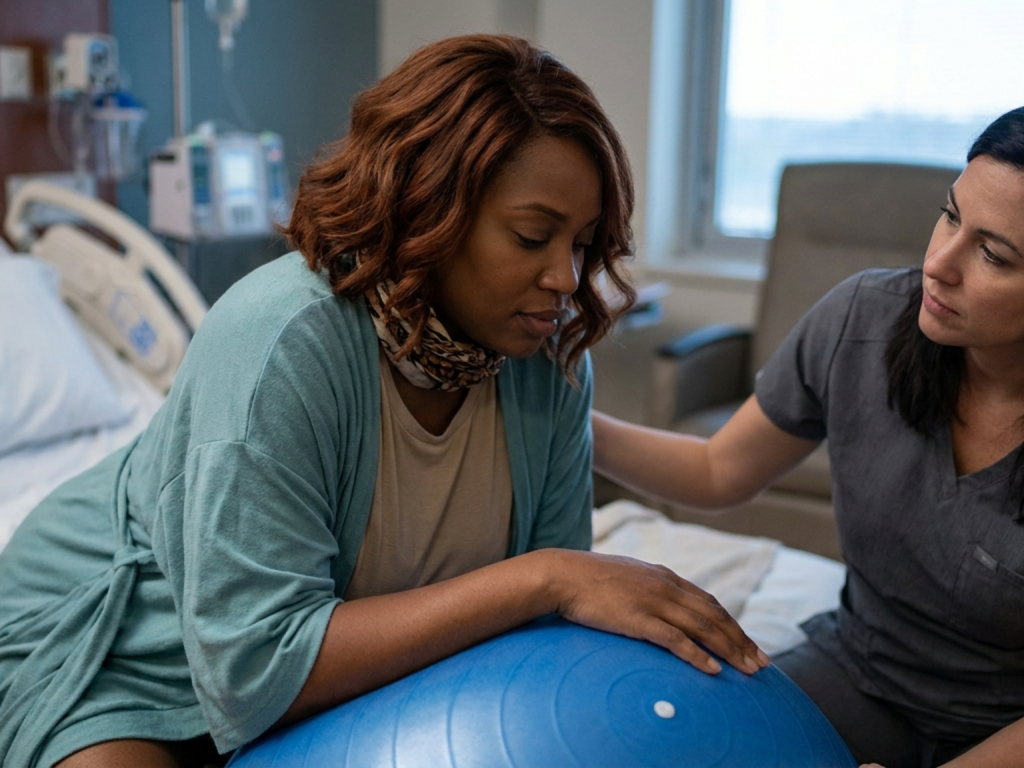
Common forward-leaning options include kneeling over the head of the bed, leaning onto a birth ball, resting forearms on a counter-height surface, or standing with the upper body supported by a partner. These postures can be paired with slow hip circles, pelvic tilts, or gentle rocking if they feel comfortable. Some people find that movement between contractions matters as much as the exact position during contractions.
Hands-and-knees position for back labor is another frequently used option. The person rests on hands and knees, or on forearms and knees if wrists are tired. This can reduce direct sacral pressure, allow the abdomen to move away from the spine, and sometimes make counterpressure easier. A nurse, midwife, doula, or partner may apply firm sacral counterpressure during contractions if the birthing person requests it and the clinical team agrees.
Forward-leaning positions should be modified for knee pain, wrist pain, dizziness, or fatigue. Pillows, a raised bed, a birth ball, or a peanut ball can reduce strain. If there is an epidural, hands-and-knees may require extra support or may not be safe depending on leg strength and monitoring. Ask staff before attempting any position that requires weight-bearing after neuraxial analgesia.
Side-lying and rest positions
Rest is an active part of labor care. Side-lying position during contractions can be valuable when the person is tired, has an epidural, needs continuous fetal monitoring, or wants a less exposed posture. Lying on the left side is commonly suggested because it can support maternal circulation and may reduce aorto-caval compression, the pressure of the pregnant uterus on major blood vessels when lying flat on the back. Right-side lying may also be appropriate if it improves comfort or fetal heart rate patterns.
Side-lying can be made more effective by placing pillows between the knees, behind the back, and under the upper leg. A peanut ball between the thighs may help maintain pelvic opening while allowing rest, particularly for people with epidural analgesia. The upper knee can be brought slightly forward or supported higher to create asymmetry in the pelvis. Small changes in hip angle often make a large difference in pelvic pressure.
This position is also useful when contractions feel too close together and the person needs a quieter coping pattern. The birthing person can focus on breathing, jaw relaxation, and releasing the pelvic floor between contractions. If back pain persists, a support person may provide warm compresses or gentle pressure to the sacrum, if approved by staff.
Flat supine lying is often uncomfortable in late pregnancy and labor because it can increase back pressure and may affect venous return. If bed rest is needed, a tilted or side-lying posture is usually preferable to lying fully flat, unless the clinical team has a specific reason for another position.
Sitting, kneeling, and supported squatting
Sitting upright on a birth ball, stool, toilet, or bed can combine rest with gravity. Many people like sitting because it gives the pelvis a grounded feeling while allowing rocking, swaying, or leaning forward. Sitting on the toilet can be psychologically useful because the body associates the location with pelvic floor release; however, staff should guide its use, especially if the baby is descending quickly.
Kneeling can reduce pressure on the perineum while still keeping the body upright. Kneeling over the raised head of the bed, over pillows, or onto a birth ball lets the abdomen move forward and may feel protective during intense contractions. This can be useful in active labor and transition, when the urge to curl inward is strong but lying flat worsens back pain.
Supported squatting in labor may widen some pelvic dimensions and can intensify downward pressure. For this reason, it may help some people during pushing, but it can also feel overwhelming or exhausting. It should be supported by a partner, squat bar, bed, or trained staff, and it may not be suitable for everyone. People with epidural-related leg weakness, significant pelvic girdle pain, dizziness, or certain fetal monitoring concerns may need other options.
The key is support and timing. A deep squat held for a long period can fatigue the legs and pelvic floor. Short supported squats during contractions, followed by sitting or side-lying rest, may be more sustainable. During the pushing phase, clinicians may suggest changing position based on fetal descent, perineal stretching, maternal fatigue, and fetal heart rate patterns.
Adapting positions with monitoring, epidural, or medical concerns
Many people worry that medical equipment will make movement impossible. In practice, position changes can often be adapted around intravenous lines, intermittent auscultation, wireless monitoring, continuous fetal monitoring, or epidural analgesia. The range of options depends on local equipment, staffing, and the clinical situation.
With continuous fetal monitoring, standing beside the bed, sitting upright, side-lying, or leaning forward may still be possible if the tracing remains adequate. Staff may need to adjust belts or sensors after each position change. With an epidural, the priority is preventing falls and protecting numb or weak legs. Position changes after epidural analgesia are usually staff-assisted and may include left or right side-lying, semi-sitting, throne position, supported lateral release, or using a peanut ball.
Some clinical situations require more directed positioning. Concerns about fetal heart rate, maternal hypotension, heavy bleeding, shoulder dystocia maneuvers, instrumental birth, or urgent cesarean preparation may temporarily override comfort preferences. This can feel disappointing or frightening, so it is reasonable to ask the team to explain what is happening in clear terms when time allows.
A birth plan can name preferences for mobility, upright posture, hands-and-knees, side-lying, and support tools, but it should remain flexible. The most useful plan gives the team permission to help the birthing person keep moving safely while also responding promptly if maternal or fetal observations change.
How to choose and rotate positions
The best position is usually the one that meets the needs of that moment: pain relief, rest, fetal rotation, descent, monitoring, or pushing effectiveness. Labor is dynamic, so a position that feels ideal at 5 centimeters may feel intolerable at 8 centimeters. Changing preferences are normal and do not mean the person is coping poorly.
A practical rotation might begin with upright walking or swaying, then forward leaning during stronger contractions, then side-lying rest when fatigue builds. If back pain dominates, hands-and-knees or leaning over a ball may be tried. If pelvic pressure becomes intense, sitting upright, supported kneeling, or side-lying with the upper leg supported may help. During pushing, staff may suggest side-lying, kneeling, semi-sitting, or supported squatting depending on fetal descent and maternal energy.
Communication should be simple and immediate. The birthing person can use phrases such as, “This makes my back worse,” “I need more support,” “I feel dizzy,” or “I want to try my side.” Support people can watch for clenched shoulders, breath-holding, shaking from fatigue, or fear, then ask whether a position change would help.
Positioning works best when it is combined with other non-drug coping measures: breathing rhythm, warm compresses, water immersion if available and appropriate, massage, sacral counterpressure during contractions, and emotional reassurance. It can also be combined with pharmacologic pain relief. Wanting an epidural or other analgesia is not a failure of positioning; it is a valid medical pain-relief choice.
When to ask for immediate help
- New heavy bleeding, fainting, chest pain, severe headache, or sudden shortness of breath needs urgent clinical attention.
- Report decreased fetal movement before labor or concerning fetal heart rate comments during labor to the maternity team.
- Do not stand or squat without staff support if you have an epidural, leg weakness, dizziness, or sedation.
- If a position sharply worsens pain, causes numbness, or makes you feel unsafe, stop and ask for help.
- Follow clinician instructions promptly during fetal distress, shoulder dystocia maneuvers, hemorrhage, or emergency birth preparation.
Tools & Assistance
- Discuss preferred labor positions during a prenatal appointment or birth planning visit.
- Ask the maternity unit whether birth balls, peanut balls, squat bars, mats, showers, or wireless monitoring are available.
- Practice side-lying, forward-leaning, hands-and-knees, and supported standing positions before labor.
- Use a trained support person, doula, midwife, or nurse to help with safe position changes.
- Ask for a clinical explanation if monitoring or medical concerns limit mobility.
FAQ
Is lying on my back bad during labor?
Not always, but many people find flat back-lying more painful or less effective, especially late in pregnancy. A tilted, side-lying, upright, or forward-leaning position may be more comfortable when clinically appropriate.
Can I move around with fetal monitoring?
Often, yes, but it depends on the equipment and the fetal heart rate tracing. Staff may adjust monitors after position changes or suggest positions that keep the tracing clear.
What position helps back labor most?
Many people try hands-and-knees, forward leaning, kneeling over a birth ball, or side-lying with sacral counterpressure. The best option varies, so ask your care team to help you adjust safely.
Can I use these positions with an epidural?
Some positions can be adapted after epidural analgesia, especially side-lying, semi-sitting, and supported positions with a peanut ball. Do not weight-bear or squat unless staff confirm it is safe.
Do upright positions make labor less painful for everyone?
No. Some studies and guidelines support mobility and upright posture for comfort, but pain benefits are variable and may be modest. Your own comfort and clinical situation should guide the choice.
Sources
- World Health Organization — Intrapartum care for a positive childbirth experience
- PubMed — Labor pain: effect of maternal position on front and back pain
- North Tees and Hartlepool NHS Foundation Trust — Coping during labour
Disclaimer
This article is for general medical information and does not replace care from an obstetrician, midwife, nurse, or other qualified clinician. Always follow your maternity team's guidance for your specific pregnancy and labor.















Please log in to leave a comment.