
Intro
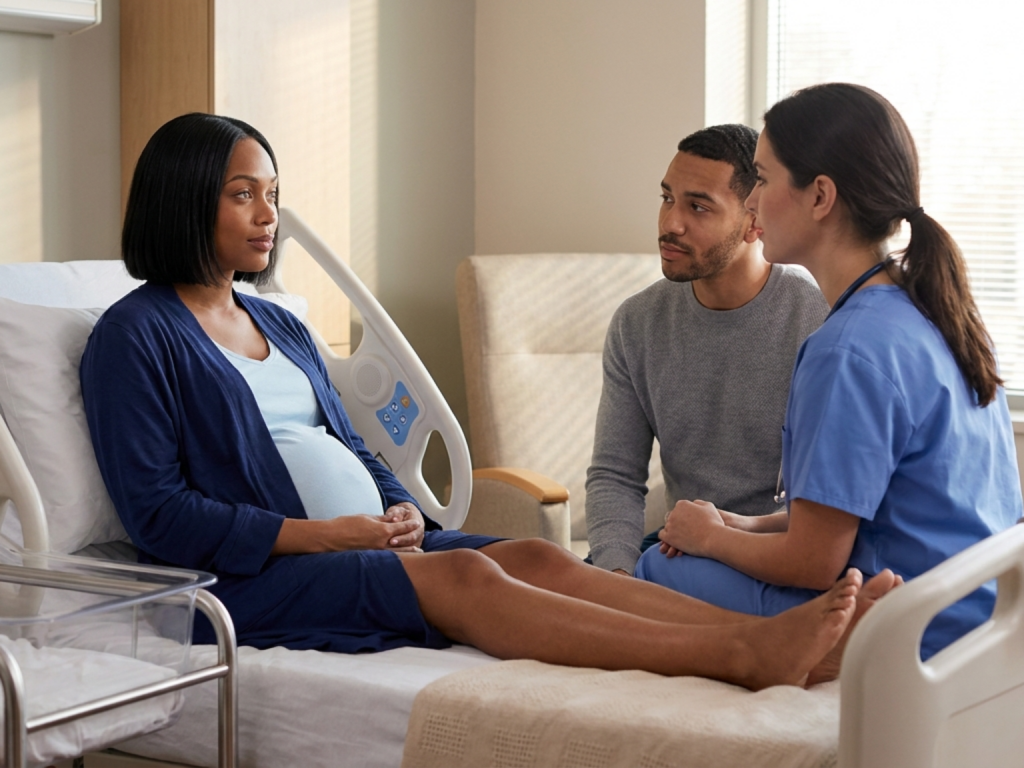
Choosing between a private room and a shared or semi-private room can feel like a small logistical detail until birth and recovery make rest, privacy, and support feel very concrete. For some families, a quiet single room supports bonding and breastfeeding; for others, cost, availability, staff proximity, or a desire not to feel isolated may matter just as much.
This article explains the comfort-related tradeoffs in birth and postpartum settings, using hospital evidence on single and shared rooms while recognizing that local maternity policies, clinical acuity, staffing, and insurance coverage can change what is actually available.
Highlights
Private rooms often improve perceived privacy, dignity, rest, and control over visitors, but they may cost more or be unavailable during busy periods.
Shared or semi-private rooms can offer social contact and reassurance, yet noise, confidentiality, sleep disruption, and visitor overlap may be harder to manage.
Comfort is broader than room type: lighting, temperature, bathroom access, support-person accommodations, lactation help, and nonpharmacologic comfort measures all matter.
Clinical needs always come first; a planned room preference may change if monitoring, surgery, hemorrhage care, neonatal observation, or staffing requires it.
Why the room decision matters after birth
Room type affects more than aesthetics. During labor and postpartum recovery, the room becomes a clinical workspace, a recovery area, a feeding space, and often the first place where parents learn their newborn’s cues. A private room may make sensitive conversations easier, including discussions about bleeding, pain control, pelvic floor symptoms, lactation problems, mood changes, contraception, or neonatal concerns. In a shared room, those same conversations may require more effort from staff to protect confidentiality.
Evidence from inpatient hospital studies consistently suggests that many patients prefer single rooms because they offer greater comfort, privacy, control, and dignity. Single rooms have also been associated with better patient experience scores and perceived improvements in rest and communication. These findings are relevant to maternity care, but they should be applied thoughtfully: birth units have unique demands, including fetal monitoring, emergency readiness, newborn assessment, lactation support, and frequent postpartum vital-sign checks.
The best choice is not the same for every family. A medically stable person recovering after an uncomplicated vaginal birth may prioritize quiet sleep and uninterrupted skin-to-skin time. Someone recovering after cesarean birth, severe preeclampsia, postpartum hemorrhage, or neonatal observation may care more about rapid access to nurses, clear call-bell response, and practical support with mobility and feeding.
What private rooms tend to offer
A private room usually provides the strongest sense of control. You can more easily adjust lighting, limit visitors, discuss symptoms without another patient nearby, and recover without sharing bathroom access or hearing another family’s alarms, conversations, or newborn care. For postpartum patients, this can matter because recovery is often interrupted by uterine checks, medication timing, newborn feeds, lactation visits, pediatric assessments, and routine newborn procedures.
Private rooms may also support physiologic comfort. Lower noise and fewer unrelated interruptions can make it easier to sleep between feeds, practice breastfeeding or pumping without feeling observed, and respond to the baby’s hunger cues. A single room may help a support person participate more consistently, especially if the unit allows overnight stays, a reclining chair, or a sleeper sofa. For some families, that support reduces the physical burden of getting in and out of bed, lifting the baby after abdominal surgery, or managing supplies.
The tradeoff is that private rooms are not always guaranteed. Some hospitals assign rooms based on availability, clinical priority, insurance status, or paid upgrades. A private room can also feel isolating, especially for someone who expected more communal reassurance or who finds the early postpartum period emotionally intense. If you know that isolation worsens anxiety or mood symptoms, it is reasonable to tell your care team in advance and ask how they provide postpartum nursery support, mental health screening, lactation rounding, and nurse check-ins.
What shared or semi-private rooms can mean
Shared or semi-private rooms are not automatically inferior. For some people, another patient nearby can make the hospital feel less lonely. Hearing another family navigate feeding, diapering, or postpartum recovery may normalize the early learning curve. In systems where private rooms are scarce or expensive, shared rooms may also be the standard and can still provide safe, compassionate maternity care when staff maintain privacy practices and clear routines.
The main challenges are predictable: noise, light, visitor overlap, reduced control over rest periods, and more complicated confidentiality. Newborn crying, alarms, shift changes, medication rounds, and conversations from the other side of a curtain can fragment sleep. If both families have visitors, the room may feel crowded quickly. After birth, even short sleep intervals can be valuable because oxytocin, lactation, pain perception, mood regulation, and wound healing are all affected by exhaustion.
Privacy deserves particular attention. In a shared room, clinicians should still protect sensitive information, but the physical setting can make this difficult. You can ask staff to step into a hallway, use lower voices, close curtains, or return when the room is quieter for nonurgent discussions. If you are processing birth trauma, intimate-partner safety concerns, adoption plans, substance-use treatment, mental health symptoms, or neonatal complications, tell the team that you need a private conversation. That request is appropriate, not demanding.
Comfort options beyond the room label
The comfort difference between rooms is partly physical and partly operational. A private room with poor support may feel less comfortable than a shared room with attentive staff and practical amenities. When touring a hospital or discussing birth preferences, ask about the details that affect recovery hour by hour.
- Sleep environment: dimmable lights, door-closing practices, overnight vital-sign timing, quiet hours, earplugs, and whether routine checks can be clustered when clinically safe.
- Mobility and pain support: adjustable beds, birth balls, showers, tubs if available, heat packs, positioning aids, abdominal binders after cesarean birth if recommended, and help with first ambulation.
- Feeding support: lactation consultant access, breast pump availability, formula preparation policies, donor milk policies where applicable, and space for private feeding attempts.
- Support-person logistics: overnight stay rules, sleeping surface, meal access, bathroom access, parking, and what happens if the birthing person transfers to an operating room or higher-acuity unit.
- Newborn care: bedside newborn assessments, rooming-in expectations, nursery availability, and how staff handle procedures if the parent needs rest or monitoring.
Nonpharmacologic comfort measures can sit alongside medical pain relief rather than compete with it. Breathing support, movement, upright positioning, counterpressure, water therapy, warmth, massage, music, and environmental control may help during labor, while postpartum comfort may depend more on sleep protection, pain reassessment, perineal or incision care, hydration, bowel-regimen guidance, and feeding assistance. Ask your clinician what is appropriate for your medical situation.
Clinical safety and realistic planning
A room preference should never be treated as a contract that overrides clinical care. Birth can change quickly. Continuous fetal monitoring, induction complications, hypertensive disease, infection evaluation, cesarean recovery, postpartum hemorrhage risk, magnesium sulfate therapy, neonatal respiratory transition, or need for higher-acuity observation may determine where you are cared for. In those moments, the safest room is the one that allows the team to monitor and respond effectively.
It helps to separate preference from requirement. You might strongly prefer a private postpartum room, but also identify what matters most if that room is unavailable: fewer visitors, a quiet corner, help clustering nighttime care, privacy for lactation, or early discharge planning if medically appropriate. This gives staff concrete ways to support comfort without promising something the unit cannot control.
Cost and coverage should be clarified before admission when possible. Some hospitals include private maternity rooms as standard; others charge a daily upgrade fee, assign them only when available, or bill differently depending on insurance. Ask whether a requested private room is guaranteed, waitlisted, or assigned after delivery. Also ask what happens after a cesarean birth, neonatal intensive care admission, or transfer from labor and delivery to postpartum.
For out-of-hospital birth plans, comfort questions look different. Families considering a low-intervention birth plan may also want to understand how transfer works if hospital admission becomes necessary, including whether private rooms are possible after transfer. The priority remains timely clinical care, not preserving the original setting preference at all costs.
Questions to ask before admission
Specific questions are more useful than asking whether the rooms are comfortable. Hospital language varies: private, single, semi-private, shared, labor-delivery-recovery, labor-delivery-recovery-postpartum, triage, antepartum, and postpartum rooms may all mean different things. Ask what type of room you will likely use at each stage: admission evaluation, active labor, birth, recovery, and postpartum stay.
Good questions include: Is a private room standard or an upgrade? Can my support person stay overnight? Is there a private bathroom? Are showers or tubs available during labor? What are quiet-hour practices? How are visitors managed in shared rooms? Can routine care be clustered to protect sleep? What privacy steps are used for sensitive discussions in semi-private rooms? How are newborn procedures and rooming-in preferences handled if I am exhausted, recovering from surgery, or medically unstable?
It is also worth asking how to communicate changes during the stay. You may not know until after birth whether you need more privacy, more staff check-ins, fewer visitors, nursery help, lactation support, or stronger pain reassessment. A supportive maternity team should be able to help you adjust the environment within clinical and staffing limits.
When to speak up urgently
- Tell staff immediately if bleeding suddenly increases, you pass large clots, feel faint, or have chest pain or shortness of breath.
- Ask for prompt assessment if severe headache, vision changes, right upper abdominal pain, or markedly elevated blood pressure symptoms occur.
- Request private help if you feel unsafe with a visitor, coerced, unable to disclose symptoms, or emotionally overwhelmed.
- Call for assistance before standing if you have had an epidural, cesarean birth, heavy blood loss, magnesium therapy, or significant dizziness.
- Seek urgent newborn assessment for poor feeding with lethargy, blue color, breathing difficulty, fever concerns, or abnormal tone.
Tools & Assistance
- Hospital maternity tour or virtual room walkthrough
- Birth preferences worksheet that separates must-haves from nice-to-haves
- Insurance benefits call about private-room coverage or upgrade fees
- Postpartum support plan for sleep, feeding, visitors, and recovery help
FAQ
Is a private room medically safer than a shared room?
Not necessarily. Private rooms may improve privacy, sleep, and experience, but safety depends on staffing, monitoring, acuity, infection-control practices, and how quickly the team can respond.
Can I request a private room after delivery if I did not request one before?
Often yes, but availability and cost vary. Ask the postpartum charge nurse or admitting team how requests are prioritized and whether an upgrade fee applies.
What if I want privacy but also worry about feeling isolated?
Tell your team. You can ask for a private room with scheduled check-ins, lactation visits, mental health screening, nursery support if available, and clear call-bell expectations.
Can comfort preferences be included in a birth plan?
Yes. Include practical preferences such as lighting, visitor limits, support-person presence, mobility aids, feeding support, and rooming-in goals, while noting that clinical needs may change the plan.
Sources
- BMJ Quality & Safety — One size fits all? Mixed methods evaluation of the impact of 100% single-room accommodation on staff and patient experience, safety and costs
- PubMed Central — Care to Share? Patients in Private Rooms Are More Likely to Have Better Patient Experience Scores Than Those in Semi-Private Rooms
- ScienceDirect — Do patients in hospitals benefit from single rooms? A literature review
Disclaimer
This article is for general educational purposes and does not replace individualized medical advice. Discuss room options, birth preferences, symptoms, and postpartum concerns with your obstetric, midwifery, nursing, or pediatric care team.

















Please log in to leave a comment.