

Intro
Assisted delivery and baby positioning are closely linked during the second stage of labor, when the cervix is fully dilated and the baby is descending through the pelvis. If progress slows, the fetal heart rate raises concern, or the baby's head is not aligned well for birth, clinicians may consider changing maternal position, manual assessment, or assisted vaginal birth with forceps or vacuum.
This article explains how fetal head position affects decision-making, why movement and upright posture may matter, and what families can ask when an assisted birth is being discussed. It is written to support informed conversations with a midwife, obstetrician, or labor team, not to replace individualized medical advice.
Highlights
Baby position in the pelvis can influence how smoothly the second stage of labor progresses and whether assistance is considered.
Upright, lateral, kneeling, or hands-and-knees positions may improve comfort and can sometimes help fetal alignment, especially when supine positions are avoided.
Forceps and vacuum are used only in specific circumstances when vaginal birth is close and clinical prerequisites are met.
Some forceps are designed not only to help traction but also to rotate a baby from occipito-posterior or occipito-lateral positions.
A calm explanation, consent, pain relief options, and a clear backup plan are central to safe, respectful assisted birth care.
How baby position affects second-stage labor
In the second stage of labor, the baby must descend, flex the head, rotate, and pass under the pubic arch. Clinicians usually describe fetal head position by the direction the occiput, or back of the baby’s head, is facing. An occiput anterior position often fits the pelvic curve efficiently. An occiput posterior position, with the baby’s back toward the mother’s back, can be associated with slower descent, more back pain, and a longer pushing phase, although many babies rotate spontaneously before birth.
Position is not only about direction. The team also considers station, meaning how low the head is in relation to the ischial spines; flexion, meaning whether the chin is tucked; and asynclitism, where the head is tilted so one parietal bone leads. These details matter because assisted vaginal birth requires confidence that the head position is known, the head is low enough, and the expected path of birth is mechanically reasonable.
When progress is slow, the question is rarely simply whether the mother is pushing hard enough. It may be whether the baby has completed the necessary rotation, whether the pelvis and fetal head are aligned, whether contractions are effective, and whether the parent is exhausted or has dense epidural anesthesia. Good care keeps these factors together rather than treating assisted delivery as an isolated intervention.
Maternal positions before assistance is considered
Maternal position can change pelvic dimensions, pressure points, and the direction of maternal effort. Evidence reviewed in maternity guidance suggests that, for women without epidural analgesia, upright positions in the second stage may reduce the likelihood of assisted vaginal birth compared with lying positions. International guidance also supports helping women use comfortable positions and discourages routine supine or semi-supine birth positions when alternatives are possible.
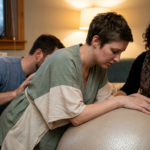
Common options include standing, sitting upright, supported squatting, kneeling, side-lying, or hands-and-knees. These positions may improve comfort, reduce aortocaval compression, and use gravity to assist descent. They may also help a baby adjust from malposition, particularly when asynclitism or incomplete rotation is suspected. With an epidural, mobility may be more limited, but side-lying, supported upright sitting, peanut ball positioning, or assisted kneeling may still be possible depending on sensation, strength, monitoring needs, and local safety policy.
No position guarantees that assistance will be avoided. Some situations require quicker birth because of fetal heart rate concerns, maternal medical conditions, or prolonged second stage. Still, trying appropriate postural changes can be a valuable part of care when there is time and both parent and baby are stable. The best position is usually one that is clinically safe, tolerable, and reassessed frequently.
When assisted vaginal birth may be discussed
Assisted vaginal birth usually means using a vacuum cup or forceps to help the baby be born through the vagina. It may be discussed when the baby is low in the birth canal but birth is not progressing, when the parent is too exhausted to continue pushing effectively, or when the fetal heart rate pattern suggests that birth should happen sooner. It may also be considered when prolonged pushing could pose extra risk because of a maternal medical condition.
Before proceeding, clinicians normally confirm that the cervix is fully dilated, membranes are ruptured, the head is engaged and low enough, fetal head position is known, the bladder is empty, and adequate analgesia is available. Preparation for assisted delivery also includes explaining why help is recommended, which instrument is being proposed, what alternatives exist, and what would lead the team to abandon the attempt and move to cesarean birth.
Baby position is central to this decision. A vacuum cup is commonly used when the head position is suitable and traction can follow the pelvic curve. Forceps may be preferred in certain circumstances, including when more precise control of the head is needed. Some forceps are specifically designed to rotate a baby from occipito-posterior or occipito-lateral positions before birth. That rotational role is one reason accurate assessment by an experienced clinician matters.
Forceps, vacuum, and rotation
Vacuum and forceps both aim to support birth during contractions and maternal pushing, but they work differently. A vacuum device attaches a cup to the fetal scalp and applies traction. Forceps are curved metal instruments placed around the baby’s head to guide descent and, in selected cases, rotation. Choice of instrument depends on fetal position, station, urgency, gestational age, maternal anatomy, clinician skill, and whether rotation is needed.
Rotational assisted vaginal birth is more complex than straightforward traction. If the baby is occipito-lateral or occipito-posterior, the head may need to turn before it can pass safely. Some clinicians may attempt manual rotation first, followed by pushing or instrument assistance if appropriate. In other cases, rotational forceps may be considered. These decisions require careful assessment because incorrect position diagnosis, excessive traction, or sequential use of instruments can increase risk.
Assisted delivery interventions can be emotionally intense because they often arise quickly. A concise explanation can still happen: why assistance is needed now, what the clinician believes the baby’s position is, whether rotation is expected, what pain relief is being used, and what the backup plan is. Respectful communication helps parents understand that the goal is not only speed, but a birth route that balances fetal wellbeing, maternal safety, and the likelihood of success.
Risks, benefits, and informed consent
The potential benefit of assisted vaginal birth is avoiding a more prolonged second stage or achieving birth more quickly when fetal or maternal concerns are present. It may also avoid a second-stage cesarean birth, which can be technically more difficult when the head is deeply engaged. However, assisted birth is not risk-free, and the balance depends on the clinical picture.
Maternal risks after assisted delivery can include perineal trauma, vaginal tears, pain, bleeding, urinary or anal sphincter injury, and emotional distress, especially if events feel rushed or poorly explained. An obstetric anal sphincter injury is a tear involving the anal sphincter muscles and requires prompt recognition and repair. Baby-related risks vary by instrument and situation and may include scalp bruising, marks from forceps, cephalohematoma, jaundice, or, rarely, more serious injury. These outcomes are uncommon but important to discuss honestly.
Consent is not just a signature or a brief statement. It includes the opportunity, when time allows, to understand the indication, proposed instrument, expected number of pulls or attempts, likelihood of success, and alternatives such as continued pushing, position changes, manual rotation, or cesarean birth. In urgent situations, communication may be compressed, but clinicians should still explain what is happening and check understanding as much as possible.
How to participate in decisions during labor
Parents do not need to become obstetric experts during labor, but they can ask focused questions. Useful questions include: What position is the baby in? Is the head low enough for assisted birth? Are there position changes we can try first? Which instrument are you recommending and why? Is rotation needed? What would make you stop and change plan? These questions are especially relevant when When assisted delivery becomes risky depends on the baby’s position, station, maternal tissue response, fetal status, and the number of attempts already made.
Support people can help by listening for the clinical reason, repeating key information, and advocating for pauses when the situation is stable. They can also help the laboring parent change position, maintain hydration if allowed, use breathing techniques, and stay oriented when the room becomes busy. If birth is urgent, the support role may shift toward reassurance and helping the parent understand each step afterward.
After birth, debriefing matters. Ask what instrument was used, whether rotation was performed, whether there were tears or repairs, and what newborn monitoring is recommended. If the experience was frightening, it is appropriate to request a postpartum review with the maternity team. Physical healing and emotional processing are both part of recovery from assisted vaginal birth.
Seek urgent care
- During labor, tell the team immediately about severe continuous pain, heavy bleeding, or a sudden change in fetal movement before admission.
- Urgent fetal heart rate concerns require real-time clinical assessment and may change the birth plan quickly.
- After assisted birth, seek prompt review for fever, worsening pelvic pain, heavy bleeding, foul-smelling discharge, or difficulty passing urine.
- Report severe headache, visual symptoms, chest pain, shortness of breath, or one-sided leg swelling urgently after birth.
- For the baby, urgent review is needed for poor feeding, unusual sleepiness, breathing difficulty, seizures, or worsening jaundice.
Tools & Assistance
- Ask the maternity team to explain fetal position, station, and whether rotation is expected.
- Discuss labor positions that are safe with your monitoring, epidural status, and mobility.
- Request a clear assisted birth plan, including when the attempt would stop.
- Use a birth partner or doula to help track questions and communication during urgent decisions.
- Arrange a postpartum debrief if the assisted birth felt sudden, traumatic, or confusing.
FAQ
Can changing position prevent assisted delivery?
Sometimes it may help, especially when there is time, the baby and parent are stable, and malposition is suspected. It cannot guarantee avoidance of forceps, vacuum, or cesarean birth.
Is occiput posterior position always a problem?
No. Many babies in an occiput posterior position rotate during labor and are born vaginally without assistance. Persistent posterior position can make descent slower and may affect decisions.
Why does the clinician need to know the exact head position before using instruments?
Instrument placement and traction depend on fetal head position. Incorrect assessment can reduce the chance of success and may increase risk, especially if rotation is required.
Can forceps rotate the baby?
In selected cases, yes. Some forceps are designed to rotate a baby from occipito-posterior or occipito-lateral positions, but this requires appropriate circumstances and skilled clinical judgment.
Should I refuse lying on my back during birth?
You can discuss alternatives and ask to use comfortable, safe positions. Supine or semi-supine positions are often discouraged when avoidable, but urgent procedures or monitoring may sometimes require specific positioning.
Sources
- PubMed Central — Evaluating the effects of maternal positions in childbirth
- NHS — Forceps or vacuum delivery
- World Health Organization — Management of the Second Stage of Labour Background Information
Disclaimer
This article is for general medical education only and does not diagnose, prescribe, or replace care from a qualified clinician. Always consult your maternity team about labor management, fetal position, and assisted delivery decisions.















Please log in to leave a comment.