
Intro
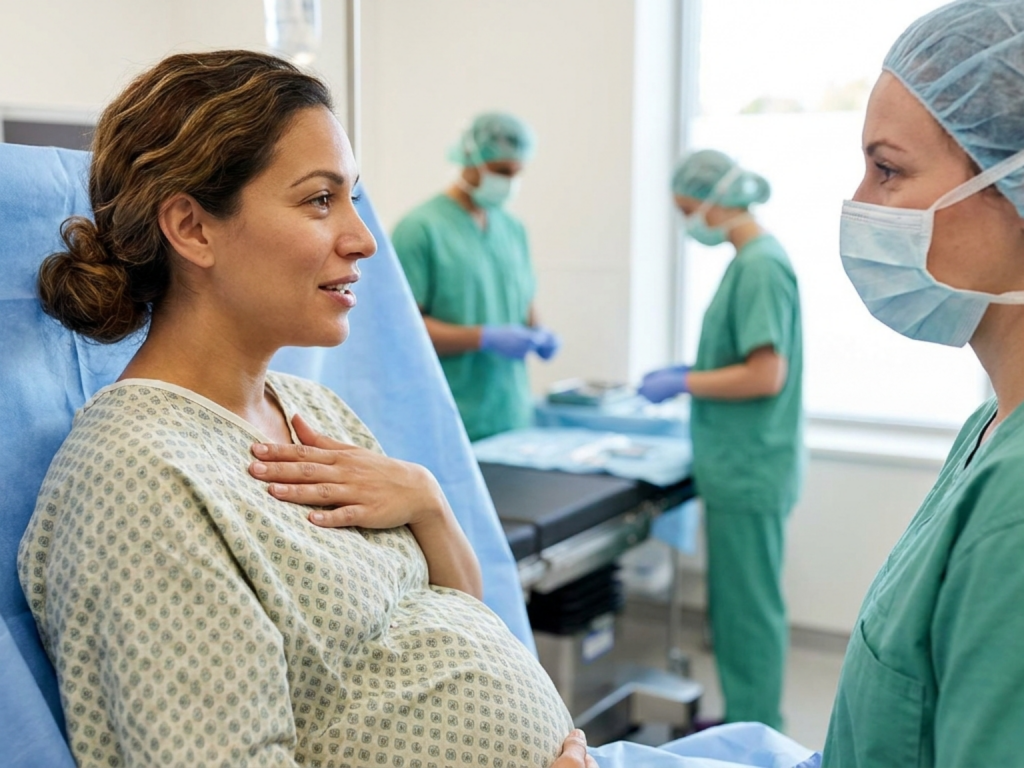
A cesarean birth is a surgical way to deliver a baby through incisions in the abdomen and uterus. It may be planned before labor, scheduled because of a known obstetric concern, or performed urgently when vaginal birth is no longer the safest route. Even when it is expected, the experience can feel intense because it combines birth, surgery, anesthesia, and newborn care in one setting.
Highlights
A cesarean usually follows a predictable sequence: preparation, anesthesia, sterile setup, abdominal and uterine entry, birth, placental delivery, closure, and recovery monitoring.
Most cesareans use regional anesthesia so the birthing person is awake but pain is blocked below the chest or abdomen; general anesthesia is reserved for selected clinical situations.
The operation is not over when the baby is born. The placenta, uterus, bleeding control, wound closure, and postoperative prevention steps are all important parts of care.
A supportive team can explain each phase, protect privacy, include a birth partner when appropriate, and adapt care to urgent circumstances.
Before the operating room
A step-by-step c-section procedure begins before the first incision. The clinical team confirms identity, gestational details, indication for cesarean, allergies, relevant medical history, blood type considerations, consent, and whether the operation is planned, urgent, or emergency. This pause is not paperwork for its own sake; it reduces wrong-patient, wrong-procedure, medication, and hemorrhage-preparation risks.
Typical preparation includes an intravenous line, baseline vital signs, fetal heart rate assessment when appropriate, and review of recent laboratory data. Many patients receive antibiotic prophylaxis before cesarean to reduce postoperative infection risk, and some receive antacid or anti-nausea medication depending on local protocol and anesthetic plan. Compression devices may be placed on the legs to reduce venous thromboembolism risk, especially because pregnancy and surgery both increase clotting tendency.
A urinary catheter is commonly inserted after anesthesia or shortly before surgery. It keeps the bladder empty, which improves surgical exposure and lowers the chance of bladder injury. The abdomen is cleaned with antiseptic solution, hair may be clipped rather than shaved if necessary, and sterile drapes are placed. A support person may be allowed in the room for many planned or non-crash cases, but this depends on hospital policy, anesthesia type, and clinical urgency.
Anesthesia and positioning
Most cesarean births are performed with regional anesthesia, usually spinal, epidural, or a combined spinal-epidural technique. Regional anesthesia numbs the lower body while allowing the patient to remain awake, hear the baby, and often have early contact soon after birth. The anesthetic goal is not merely comfort; it also allows the surgeon to work safely without the physiologic stress of uncontrolled pain.
The patient is usually positioned lying on the back with a slight left tilt or wedge. This helps reduce compression of the inferior vena cava by the pregnant uterus, supporting venous return and blood pressure. Blood pressure, oxygen level, heart rhythm, and symptoms such as nausea, chest heaviness, or shortness of breath are monitored closely. A drop in blood pressure can happen after spinal anesthesia and is treated promptly by the anesthesia team.
Before incision, the team checks that the block is adequate, often by testing sensation to cold or touch. The patient should expect pressure, pulling, and movement rather than sharp pain. If pain control is inadequate, the team should be told immediately; anesthesia can be adjusted. General anesthesia may be used when regional anesthesia is contraindicated, unsuccessful, or when birth must occur extremely quickly, but it changes the experience because the patient is unconscious and airway management becomes central.
Opening the abdomen
Once the sterile field is established, a drape usually blocks the surgical field from view. Some hospitals offer a clear drape or lowered drape for selected moments if the patient wants a more family-centered experience and the clinical situation allows it. The first incision is commonly a low transverse abdominal incision, often called a bikini-line incision, made just above the pubic hairline. It is frequently about 10 to 20 centimeters long, though the exact size depends on body habitus, urgency, fetal position, prior scars, and surgical judgment.
After the skin incision, the surgeon works through the subcutaneous tissue and fascia, which is the strong connective layer over the abdominal muscles. In many cesareans, the rectus muscles are separated in the midline rather than cut. The peritoneal cavity is then entered, giving access to the lower uterus. This layered approach is why the opening phase can feel like pressure and tugging even with excellent anesthesia.
Several technical details vary among surgeons and hospitals, including how the peritoneum is opened, whether a bladder flap is created, and how tissues are handled. Evidence-based technique reviews emphasize that some traditional steps are not always necessary for every case, and the safest approach depends on anatomy, prior surgery, adhesions, bleeding, urgency, and operator experience. For the patient, the practical point is that the team is moving through tissue layers deliberately to reach the uterus while protecting nearby structures.
Opening the uterus and birth
The uterine incision is usually a low transverse uterine incision in the lower uterine segment. This location is preferred in many cases because it tends to bleed less and is associated with better healing characteristics than some vertical incisions. However, a different uterine incision may be needed for certain situations, such as a very preterm uterus, obstructing fibroids, unusual fetal lie, placenta location, or dense adhesions.
After the uterine incision is made and extended, the membranes are opened if they have not already ruptured. The surgeon then guides the presenting part of the baby, often the head, through the uterine and abdominal openings. An assistant may apply fundal pressure from above the uterus. Patients commonly feel strong pressure during this phase, sometimes described as pushing, rocking, or being moved on the table, but sharp pain should not be expected.
The baby is usually delivered within minutes of the incision phase in an uncomplicated case, but timing varies. Once the baby is born, the cord is clamped and cut according to clinical circumstances. Delayed cord clamping may be possible in stable situations, while urgent newborn or maternal needs may require faster clamping. The newborn team assesses breathing, tone, color, heart rate, and transition. Skin-to-skin contact in the operating room may be offered if both patient and baby are stable, but safety, sterility, and monitoring come first.
Placenta, bleeding control, and uterine repair
After the baby is delivered, attention turns to placenta delivery during C-section and control of uterine bleeding. The placenta may separate with gentle traction, uterine massage, or manual assistance depending on the situation and local practice. The surgical team checks that the placenta and membranes appear complete because retained tissue can contribute to bleeding or infection.
Uterotonic medication, often oxytocin, is commonly given after delivery to help the uterus contract. Uterine contraction compresses blood vessels where the placenta was attached and is a major defense against postpartum hemorrhage. The team watches uterine tone, blood loss, vital signs, and the appearance of the surgical field. If bleeding is heavier than expected, clinicians may use additional medications, sutures, uterine massage, or other interventions based on the cause.
The uterine incision is then closed with sutures. Some surgeons close the uterus in one layer and others in two, depending on clinical judgment, tissue quality, bleeding, and future pregnancy considerations. The abdomen and pelvis may be inspected for bleeding, injury, clots, or retained material. This part can feel emotionally quiet compared with the moment of birth, but it is medically central. Good uterine repair and hemostasis help reduce immediate complications and support recovery.
Closing the layers
Once the uterus is repaired and bleeding is controlled, the surgeon closes the abdominal layers. The exact closure sequence depends on what was opened and local technique. The fascia is a key strength layer and is closed carefully because it supports wound integrity. Subcutaneous tissue may be closed if the layer is thick or if closure is expected to reduce wound complications. Skin may be closed with sutures, staples, or adhesive strips depending on surgeon preference, patient factors, and institutional practice.
The external dressing protects the incision during the early healing period. The team may count instruments, sponges, and needles before closure is completed, and in many operating rooms counts are repeated at defined moments. This is a normal safety practice, not a sign that something has gone wrong.
Closure often takes longer than delivery itself. That can surprise families who expect the operation to be nearly finished once they hear the baby cry. During this time, anesthesia monitoring continues, the newborn may be assessed nearby, and a support person may divide attention between the baby and the patient. It is reasonable for the patient to ask for updates, especially if the room becomes quiet or if sensations change.
Immediate recovery and postoperative prevention
After surgery, the patient is moved to a recovery area or monitored in the operating room until stable. Nurses and clinicians check blood pressure, pulse, oxygen level, uterine firmness, vaginal bleeding, pain, nausea, itching, urine output, and the incision dressing. The uterus is often massaged through the abdomen to confirm that it remains firm. This can be uncomfortable, but it helps detect uterine atony and excessive bleeding early.
Pain control usually uses a multimodal plan, meaning different medication types are combined to reduce opioid needs while keeping pain manageable. The specific plan should account for allergies, breastfeeding goals, sedation risk, medical history, and patient preference. Early oral intake, walking, catheter removal, and discharge timing vary by institution and individual recovery. Many teams encourage early mobilization when safe because it supports circulation, bowel function, and confidence with newborn care.
Before going home, patients should receive clear instructions about incision care, activity limits, medications, follow-up, and postpartum recovery warning signs. Warning signs may include heavy bleeding, fever, worsening abdominal pain, foul-smelling discharge, chest pain, shortness of breath, calf swelling or pain, severe headache, vision changes, wound redness or drainage, or thoughts of self-harm. Any concerning symptom deserves prompt contact with a healthcare professional or emergency care.
When to seek urgent help
- Heavy bleeding, fainting, rapid heartbeat, or soaking pads quickly after birth needs urgent assessment.
- Fever, worsening incision redness, pus-like drainage, or increasing abdominal pain may indicate infection.
- Chest pain, shortness of breath, coughing blood, or one-sided leg swelling can signal a clot emergency.
- Severe headache, vision changes, right upper abdominal pain, or sudden swelling can occur with postpartum hypertensive disorders.
- Thoughts of self-harm, feeling unsafe, or inability to care for yourself or the baby requires immediate support.
Tools & Assistance
- Ask the obstetric team to explain the planned incision type and anesthesia plan.
- Prepare a concise medication, allergy, surgery, and bleeding-history list before admission.
- Request postoperative instructions in writing before discharge.
- Use the hospital maternity triage line or emergency services for urgent postpartum symptoms.
- Schedule postpartum follow-up and incision review as recommended by the care team.
FAQ
Will I be awake during a cesarean?
Usually yes, if regional anesthesia is safe and effective. General anesthesia is used in selected urgent cases or when regional anesthesia is not suitable.
How long does a cesarean take?
The baby may be born within minutes after surgery begins, but the full operation often takes longer because placenta delivery, bleeding control, and closure are essential.
Is pressure normal during the operation?
Pressure, pulling, and movement are common with regional anesthesia. Sharp pain is not expected and should be reported immediately.
Can I have skin-to-skin contact in the operating room?
Often, but it depends on maternal stability, newborn transition, hospital policy, staffing, and whether urgent care is needed.
Does every cesarean use the same incision?
No. Many use low transverse abdominal and uterine incisions, but anatomy, urgency, placenta position, prior surgery, and fetal factors can change the surgical approach.
Sources
- PubMed / National Library of Medicine — Cesarean delivery: an evidence-based review of the technique
- NHS — What happens - Caesarean section
- Mayo Clinic — C-section
Disclaimer
This article is for general medical education only and does not diagnose, prescribe, or replace individualized care. Always consult your obstetric, anesthesia, or emergency care team about personal risks, symptoms, and treatment decisions.

















Please log in to leave a comment.