
Intro
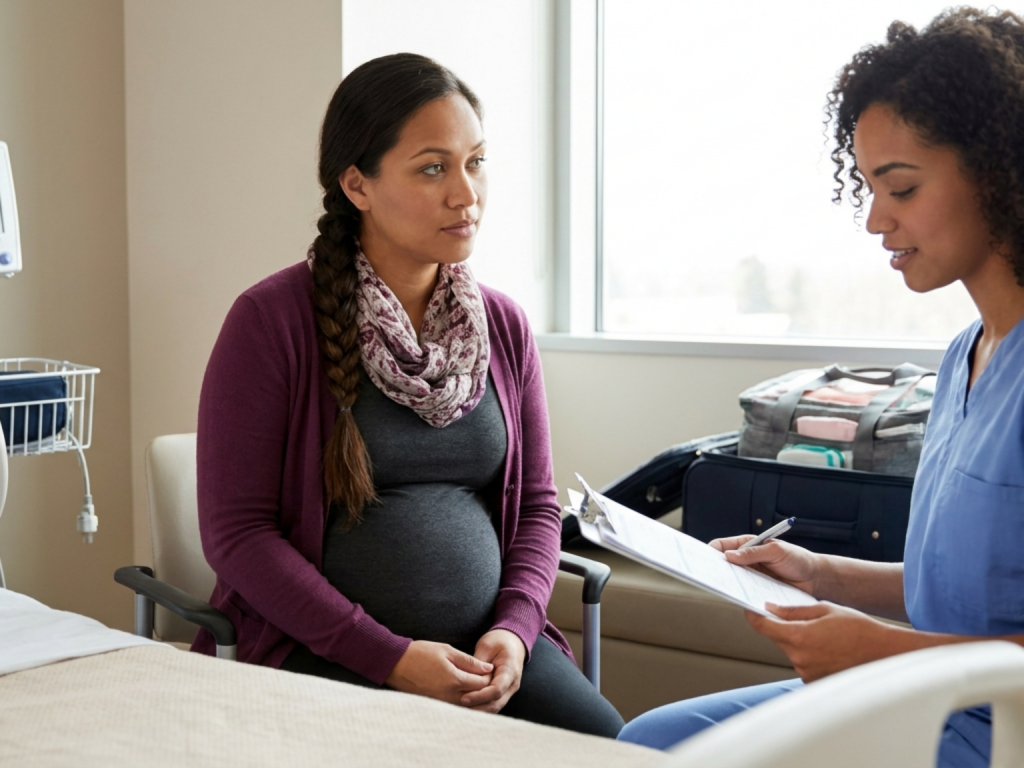
A scheduled cesarean can bring a welcome sense of structure to birth, especially when vaginal delivery would be medically inadvisable or uncertainty around labor feels difficult. Knowing the anticipated date, care team, anesthesia plan, and sequence of events may help families prepare practically and emotionally.
Predictability does not make cesarean birth risk-free, nor can every detail be guaranteed. The most appropriate delivery route and timing depend on individual maternal, fetal, placental, and obstetric factors and should be decided through informed discussion with the maternity care team.
Highlights
Scheduling can provide a defined plan for admission, anesthesia, staffing, support, and early recovery.
A planned procedure may avoid some complications associated with labor, perineal trauma, or an urgent intrapartum operation.
Cesarean birth remains major abdominal surgery and carries immediate and future-pregnancy risks.
The planned date is an informed target rather than a guarantee because labor or a new medical concern may arise first.
What makes a scheduled cesarean more predictable?
A scheduled cesarean is arranged before labor for a specific clinical indication or, in some healthcare settings, after informed discussion of maternal-request cesarean birth. Unlike an unplanned C-section during labor, it usually allows time for preoperative assessment, laboratory testing, fasting instructions, medication review, and consultation about anesthesia. The hospital can coordinate an obstetric surgeon, anesthetist, operating-room staff, neonatal personnel, and postoperative care.
Families generally receive an anticipated admission time and an outline of what will happen before, during, and after surgery. This can simplify transportation, childcare, leave from work, and the availability of a chosen support person. It may also allow someone with previous birth trauma, severe anxiety, or particular communication needs to discuss supportive measures in advance.
Predictability is still relative. Operating-room emergencies can delay the procedure, and contractions, membrane rupture, bleeding, or fetal concerns can occur before the scheduled date. A good plan therefore includes instructions for whom to call, where to attend, and what to do if labor begins early.
Clinical situations in which planning may improve safety
A planned C-section before labor may be recommended when clinicians judge that labor or vaginal birth presents an unacceptable or substantially increased risk. Examples can include placenta previa covering the cervical opening, certain forms of abnormal placental attachment, some fetal presentations, selected prior uterine incisions, or other individualized maternal and fetal concerns. The indication, however, matters more than the label of planned cesarean itself.
Advance scheduling gives specialists time to review imaging and records, arrange blood products when significant hemorrhage is foreseeable, and involve additional surgical or neonatal expertise when necessary. In complex placental disease, delivery may be organized in a facility with an appropriate operating room, transfusion capability, intensive care, and multidisciplinary support. This preparation can be an important advantage over responding to the same problem after labor or heavy bleeding has begun.
Not every breech presentation, previous cesarean, multiple pregnancy, or maternal medical condition automatically requires surgery. Options depend on precise clinical details, local expertise, the pregnant person’s preferences, and how risks compare in that particular case.
Potential maternal advantages
Because labor is usually avoided, a scheduled cesarean offers a high likelihood of avoiding labor pain and uncertainty about labor duration. Regional anesthesia, most commonly spinal or combined spinal-epidural anesthesia, usually allows the patient to remain awake while preventing operative pain. Pressure, pulling, or movement may still be felt, and postoperative pain remains expected. An individualized postoperative cesarean pain control plan can be discussed before admission.
Cesarean birth avoids perineal tearing and episiotomy. Evidence reviews comparing planned birth strategies suggest lower rates of some pelvic-floor outcomes, including urinary incontinence and painful perineal symptoms, after planned cesarean. The magnitude and certainty of benefit vary by outcome, follow-up interval, and the populations studied. Cesarean does not guarantee protection against all pelvic-floor dysfunction, which can also be influenced by pregnancy itself and other factors.
A scheduled operation may also reduce the chance of needing operative vaginal delivery or an emergency C-section during labor. Avoiding a prolonged labor followed by surgery can feel physically and emotionally beneficial, but individual outcomes cannot be predicted with certainty from population averages.
Practical and emotional benefits of a defined plan
For some people, the greatest advantage is not a particular clinical outcome but a clearer pathway through birth. Advance discussion can cover the likely type of anesthesia, urinary catheter placement, prevention of blood clots, antibiotic prophylaxis, skin-to-skin contact, feeding support, and the expected hospital stay. Knowing the operating-room sequence may make an unfamiliar environment feel more manageable.
A planned setting can also support family-centered cesarean practices when clinically feasible. These may include having a support person present, using a lower or transparent drape at the desired moment, facilitating early contact, and minimizing unnecessary separation of parent and baby. Such practices differ among hospitals and may need to change quickly if either patient requires urgent care.
Predictability may be particularly meaningful after a previous traumatic labor or emergency operation. Some people feel relief and greater control; others experience grief about not having a vaginal birth, anxiety about surgery, or mixed emotions. None of these responses is wrong. Prenatal counseling, trauma-informed communication, mental health support, and a documented plan for triggers or preferences can make care more compassionate without promising an entirely controllable experience.
Timing and newborn considerations
When there is no medical reason for earlier birth, planned cesarean is commonly scheduled at or after 39 completed weeks. Timing seeks to balance the possibility of spontaneous labor against the baby’s need for continued maturation. A medical or obstetric indication may justify earlier delivery, and the care team should explain why the anticipated benefits outweigh the consequences of earlier birth.
Babies born by cesarean before labor can have more difficulty clearing lung fluid, contributing to transient tachypnea and other respiratory problems. The likelihood is generally greater at earlier gestational ages, which is one reason timing matters. Parents should ask how the proposed date affects newborn breathing difficulties after cesarean and whether neonatal support will be immediately available.
Comparative evidence is nuanced. A recent meta-analysis reported similar maternal and perinatal mortality between planned cesarean and planned vaginal delivery while identifying lower rates of several adverse outcomes in the planned-cesarean group. However, study design, clinical indications, participant selection, and differences in care can affect comparisons. A Vaginal vs C-section comparison should therefore focus on absolute risks and personal circumstances rather than assuming one route is universally safer.
Risks that remain despite careful scheduling
Planning improves coordination but does not remove the inherent risks of major abdominal surgery. Short-term complications can include hemorrhage, transfusion, infection after cesarean birth, injury to nearby organs, anesthesia complications, and blood clots after C-section. Recovery typically involves wound care, restricted activity, pain management, and support with mobility and infant care. Some complications are uncommon, but their significance makes preoperative assessment and prevention measures important.
Cesarean birth also creates a uterine scar. In later pregnancies, this may increase the likelihood of placenta previa, placenta accreta spectrum, uterine rupture in a future labor, adhesions, and repeat surgery. Risks can rise with the number of cesareans, although the absolute likelihood differs among individuals. People hoping for several pregnancies may wish to discuss cumulative reproductive implications before choosing a delivery route when more than one reasonable option exists.
The planned operation may become more urgent if labor starts, membranes rupture, bleeding develops, or fetal assessment becomes concerning. Occasionally the anesthetic or surgical approach must change. These possibilities do not mean that planning has failed; they reflect the reality that obstetric conditions can evolve quickly.
Shared decision-making and preparing for the day
Shared decision-making for delivery route should integrate the best available evidence with the person’s medical history, obstetric findings, prior experiences, values, and preferences. Useful questions include why cesarean is recommended, whether alternatives are reasonable, what could happen if labor begins first, and how the proposed timing was chosen. The clinician can provide individualized estimates rather than relying only on broad population statistics.
Preparation commonly includes reviewing medicines and allergies, following hospital-specific eating and drinking instructions, completing laboratory tests, and discussing regional anesthesia. Patients should not stop prescribed medication or change fasting plans without professional guidance. It is also helpful to arrange practical support because lifting, driving, wound discomfort, fatigue, and caring for other children may complicate the early recovery period.
Ask how the hospital handles skin-to-skin contact, feeding in the recovery area, nausea prevention, postoperative mobilization, catheter removal, and discharge follow-up. Confirm whom to contact for contractions, fluid leakage, vaginal bleeding, reduced fetal movement, severe symptoms, or uncertainty before the scheduled date. A flexible plan with clear contingencies preserves many benefits of predictability while acknowledging that safety decisions may need to change.
When to seek urgent maternity advice
- Contact the maternity unit promptly if labor begins or the membranes may have ruptured before the scheduled operation.
- Seek urgent assessment for significant vaginal bleeding, severe or persistent abdominal pain, or reduced fetal movement.
- Report chest pain, difficulty breathing, fainting, or one-sided leg swelling urgently before or after birth.
- After discharge, obtain prompt advice for fever, worsening wound redness, pus, heavy bleeding, severe headache, or escalating pain.
- Follow the hospital's individual instructions rather than waiting for the scheduled admission time when concerns arise.
Tools & Assistance
- Prepare a written question list for the obstetric and anesthesia consultations.
- Ask the maternity unit for its cesarean admission, fasting, and early-labor instructions.
- Create a postoperative support plan for transport, meals, lifting, childcare, and feeding assistance.
- Request trauma-informed care or perinatal mental health support if previous birth experiences are affecting preparation.
- Keep the maternity triage telephone number and hospital route readily available.
FAQ
Is a scheduled cesarean guaranteed to happen on the planned date?
No. Labor or complications may arise first, and operating-room emergencies can cause delays. The maternity team should provide a contingency plan.
Does a planned cesarean avoid all pain?
Regional anesthesia usually prevents operative pain, although pressure or pulling may be felt. Incisional and abdominal pain are expected during recovery and should be addressed with an individualized care plan.
Why are uncomplicated planned cesareans often scheduled around 39 weeks?
Waiting until at least 39 completed weeks generally supports fetal maturation and reduces respiratory morbidity compared with earlier elective birth, unless a clinical indication makes earlier delivery safer.
Can skin-to-skin contact happen in the operating room?
Often it can when parent and baby are stable and the hospital supports the practice. Safety needs or local operating-room policies may require modification.
Can someone give birth vaginally after a previous cesarean?
Some people may be candidates for vaginal birth after cesarean, while others may be advised to have a repeat operation. Eligibility depends on the uterine incision, obstetric history, current pregnancy, and available clinical resources.
Sources
- PubMed — Planned cesarean delivery vs planned vaginal delivery
- NIH / NCBI Bookshelf — The benefits and risks of planned caesarean birth
- Mayo Clinic — Cesarean Birth
Disclaimer
This article provides general medical information and is not a substitute for individualized advice. Consult your obstetric or maternity care team about delivery route, timing, and urgent symptoms.


















Please log in to leave a comment.