
Intro
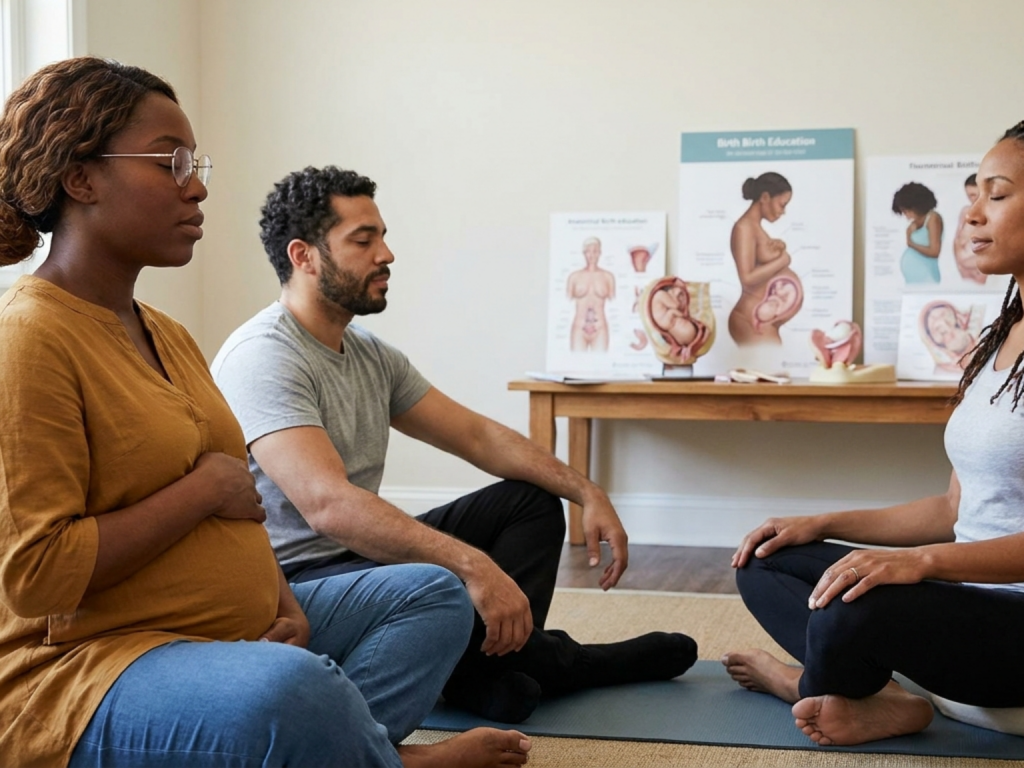
Childbirth education can help pregnant people and their support teams understand physiologic labor, prepare for common interventions, and develop coping skills before birth begins. Lamaze, HypnoBirthing, and the Bradley Method are three well-known approaches that share an interest in confidence, relaxation, and informed participation, but they differ in philosophy, class structure, language, and the role they assign to the birth partner.
This overview compares the methods in a clinically grounded way. It does not frame any method as a guarantee of unmedicated birth or a substitute for obstetric, midwifery, anesthesia, or neonatal care. Instead, it explains what each method tends to emphasize so families can discuss realistic options with their healthcare team.
Highlights
Lamaze has evolved from a breathing-focused method into a broader childbirth education model centered on informed decision-making, comfort measures, mobility, support, and confidence in birth.
HypnoBirthing uses relaxation, guided imagery, breathing, and positive suggestion to reduce fear and help the laboring person enter a calmer, more focused state.
The Bradley Method strongly emphasizes preparation for physiologic birth, prenatal nutrition, exercise, relaxation, and partner coaching, typically through a longer class series.
All three approaches can coexist with medical care, analgesia, induction, cesarean birth, or neonatal support when clinically indicated.
Why childbirth education methods differ
Lamaze, HypnoBirthing, and the Bradley Method are sometimes grouped together because each offers nonpharmacologic coping tools for labor. In practice, they are distinct systems. Each reflects a different theory of how fear, muscle tension, social support, and clinical decision-making shape the birth experience. The most useful question is not which method is universally best, but which method fits a person’s medical context, temperament, support system, and birth setting.
Medically, labor pain is multifactorial. Uterine contractions, cervical dilation, pelvic floor stretch, fetal position, fatigue, anxiety, prior trauma, and the care environment can all influence pain perception. Childbirth education cannot remove all pain or risk, but it can improve preparation. Many classes teach families how to recognize stages of labor, use comfort measures, communicate preferences, and understand when interventions such as monitoring, augmentation, analgesia, operative vaginal birth, or cesarean birth may become appropriate.
The methods also differ in how they discuss physiologic birth. Some families are seeking an unmedicated birth if it remains safe; others want coping tools while remaining open to epidural analgesia or other interventions. A balanced approach treats birth preferences as useful planning tools, not pass-fail tests. This matters because a person may use slow breathing, guided imagery, partner coaching, or upright positioning during early labor and still need or choose medical support later.
Lamaze: education, confidence, and adaptable coping
Lamaze began in the twentieth century with roots in psychoprophylaxis, a framework that used education, conditioned relaxation, and breathing to reduce fear and improve coping during labor. Modern Lamaze education is broader than the popular stereotype of patterned breathing. It generally emphasizes evidence-informed decision-making, movement in labor, continuous support, comfort techniques, and confidence in the body’s capacity to give birth while still recognizing the role of medical care when needed.
A Lamaze-informed class may cover the physiology of contractions, cervical change, fetal descent, hormonal feedback, and the transition from latent to active labor. It may also teach how to use questions such as benefits, risks, alternatives, intuition, and timing when discussing interventions. This structure can be especially helpful for medically literate parents who want to understand not only what might happen, but why a clinician may recommend a particular step.
Breathing remains part of Lamaze, but the goal is usually flexible regulation rather than rigid performance. Focused breathing during labor can help interrupt panic, reduce accessory muscle tension, and give the laboring person a repeatable rhythm during contractions. Lamaze classes often pair breathing with movement, massage, hydrotherapy when available, counterpressure, upright positioning, and continuous emotional support. In that sense, Lamaze can be compatible with many birth plans, including spontaneous labor, induction, epidural use, or cesarean preparation.
HypnoBirthing: fear reduction and deep relaxation
HypnoBirthing is built around the idea that fear and tension can amplify pain and interfere with effective coping. Classes commonly teach self-hypnosis, relaxation scripts, breathing, visualization, affirmations, and language that reframes contractions as purposeful uterine activity. The aim is not unconsciousness or loss of control. Rather, the laboring person practices entering a focused, deeply relaxed state while remaining aware and able to respond.
The method often emphasizes the fear-tension-pain cycle: fear increases sympathetic arousal, which may increase muscle tension and perceived pain; reducing fear may support calmer breathing, lower muscular resistance, and more effective coping. From a physiologic perspective, this overlaps with broader principles of autonomic regulation. Slow diaphragmatic breathing, guided imagery during labor, and relaxation and positive suggestion may help some people stay oriented during contractions, especially when practiced repeatedly before labor.
HypnoBirthing may appeal to people who are anxious about birth, who prefer quiet coping strategies, or who respond well to mental rehearsal. It can also be useful for partners because they learn scripts, environmental cues, and ways to protect calm in the room. However, families should be cautious about any class or instructor implying that fear reduction prevents complications or guarantees a specific outcome. Placental function, fetal tolerance of labor, malpresentation, hemorrhage, infection, hypertensive disease, and many other clinical issues are not controlled by mindset. HypnoBirthing works best when it is treated as a coping framework within, not outside, appropriate clinical care.
The Bradley Method: partner coaching and physiologic birth preparation
The Bradley Method is often described as a partner-coached childbirth method. It places strong emphasis on preparation for unmedicated, physiologic birth, with the partner or coach playing an active role in relaxation, positioning, encouragement, and advocacy. Compared with shorter childbirth classes, Bradley programs are commonly more extensive and may include prenatal nutrition, exercise, labor rehearsal, relaxation practice, and postpartum topics.
A key feature is the assumption that preparation starts well before contractions begin. Prenatal nutrition is discussed as part of overall pregnancy health, while exercises may be used to build awareness, stamina, and comfort with labor positions. Relaxation is central: the coach learns to observe tension, help the laboring person release muscles between contractions, and maintain a calm environment. The approach can work well for couples or support teams who want a clearly defined role for the partner and who are willing to practice over time.
The Bradley Method’s strength can also be a limitation for some families. Its strong orientation toward unmedicated birth may feel empowering to one person and too restrictive to another, particularly when medical complexity is present. A person with preeclampsia, fetal growth restriction, placenta previa, insulin-treated diabetes, prior uterine surgery, or another risk factor may need a care plan that prioritizes surveillance or intervention. The method can still offer useful relaxation and coaching skills, but it should be integrated with individualized obstetric or midwifery guidance.
Comparing breathing, relaxation, and partner roles
Breathing techniques for natural birth appear across all three approaches, but they are used differently. Lamaze tends to use breathing as one tool among many, adapting rhythm to the stage of labor and the person’s needs. HypnoBirthing often links breathing to self-hypnosis, visualization, and calm sensory input. Bradley commonly uses breathing in the context of full-body relaxation and partner observation, especially between contractions.
The partner’s role also varies. In Lamaze, the partner may provide support, help ask questions, and assist with comfort measures, but the method is not defined solely around partner coaching. In HypnoBirthing, the partner may read scripts, manage the sensory environment, and reinforce practiced cues. In Bradley, the partner is typically trained as a central coach who actively supports relaxation, timing, position changes, and communication with staff.
Another distinction is the degree of structure. HypnoBirthing may feel internally focused, with repeated mental conditioning and scripts. Bradley may feel like a comprehensive course with a strong philosophy of preparation and practice. Lamaze may feel more modular and adaptable, especially in settings where families want evidence-based childbirth interventions explained alongside comfort techniques. None of these differences makes one approach inherently superior. The best fit depends on whether the family wants flexibility, mental conditioning, intensive partner coaching, or a combination of these elements.
Choosing and integrating a method safely
When choosing a class, families can ask practical questions: How many sessions are included? Who teaches the class? Does the instructor discuss induction, epidural analgesia, cesarean birth, assisted vaginal birth, postpartum recovery, and newborn care without judgment? Are high-risk pregnancies addressed with appropriate caution? Does the class encourage collaboration with physicians, midwives, nurses, doulas, and anesthesia professionals?
It is also reasonable to combine methods. A person might take a Lamaze-style hospital class for clinical orientation, use breath-based labor coping from HypnoBirthing, and borrow Bradley partner-coaching tools for relaxation between contractions. The goal is not method purity. It is a realistic, rehearsed toolkit that can flex as labor changes. Birth plans should include preferences and contingency language, such as what support is desired if induction is recommended, if pain relief becomes necessary, or if fetal monitoring changes the plan.
Families planning out-of-hospital birth should be especially clear about transfer criteria, emergency transport, hemorrhage management, neonatal resuscitation, and the credentials of the care team. Families planning hospital birth can ask how mobility, intermittent monitoring when appropriate, doulas, water immersion, or upright pushing are handled locally. Across settings, the safest preparation respects both physiologic labor and the possibility that timely intervention may protect the pregnant person or baby.
What these methods can and cannot promise
These methods can help many people feel more prepared, less fearful, and more involved in decisions. They can support relaxation, communication, and self-efficacy in childbirth. They may reduce panic and improve satisfaction by giving the laboring person and partner specific actions to take during contractions. They can also make prenatal conversations with clinicians more productive because families arrive with a shared vocabulary for preferences, tradeoffs, and consent.
They cannot diagnose complications, determine fetal status, replace skilled clinical assessment, or guarantee vaginal, unmedicated, or uncomplicated birth. Pain experience varies widely, and needing analgesia is not a failure of preparation. Likewise, induction or cesarean birth may be medically appropriate. The healthiest use of Lamaze, HypnoBirthing, or Bradley is to prepare for participation, not control. A calm, informed family can still make rapid decisions when circumstances change.
For many parents, the most durable benefit is not a specific breathing pattern or script, but the confidence to ask informed questions, receive support, and adapt. A supportive class should leave families with practical skills, realistic expectations, and respect for both physiologic birth and modern maternity care.
Use Medical Guidance
- Seek urgent care for heavy bleeding, severe headache, decreased fetal movement, fever, seizures, chest pain, or severe abdominal pain.
- Do not use any childbirth method as a substitute for prenatal care, fetal assessment, or emergency obstetric care.
- Discuss class recommendations with your obstetrician, midwife, or maternal-fetal medicine specialist if pregnancy is high risk.
- Pain relief, induction, assisted birth, or cesarean birth may be medically appropriate and should not be treated as failure.
- Out-of-hospital birth planning should include clear emergency transfer and newborn resuscitation protocols.
Tools & Assistance
- Ask your clinician which labor coping strategies are appropriate for your pregnancy and birth setting.
- Compare class length, instructor credentials, medical balance, and postpartum coverage before enrolling.
- Practice breathing, relaxation, and partner communication skills several times before the due date.
- Prepare a flexible birth preferences document that includes contingency plans for intervention.
- Discuss doula support, anesthesia options, fetal monitoring, and transfer criteria early.
FAQ
Can Lamaze, HypnoBirthing, or Bradley be used with an epidural?
Yes. Breathing, relaxation, positioning, partner support, and decision-making tools can still be useful before epidural placement, during labor, and if the plan changes.
Which method is best for an unmedicated birth?
The Bradley Method is most explicitly oriented toward partner-coached unmedicated birth, while HypnoBirthing emphasizes fear reduction and Lamaze emphasizes flexible coping and informed care. The best fit depends on medical context and personal preference.
Does HypnoBirthing mean being hypnotized by someone else?
Usually no. It commonly involves self-hypnosis, guided relaxation, visualization, and practiced mental cues while the laboring person remains aware and able to respond.
Are these methods safe for high-risk pregnancy?
Many coping skills may still be helpful, but high-risk pregnancies require individualized medical guidance. Ask your clinician which activities, birth settings, and labor plans are appropriate.
Should partners attend childbirth classes?
Partner attendance is often helpful. It is especially central in the Bradley Method, but Lamaze and HypnoBirthing also benefit from a support person who understands the plan and coping tools.
Sources
- PubMed Central — Comparison of the Bradley Method and HypnoBirthing Childbirth Education Programs
- Lamaze International — Our History
- The Bradley Method® — The Bradley Method® - bradleymethod.com - childbirth education
Disclaimer
This article is for informational education only and does not diagnose, prescribe, or replace care from a qualified healthcare professional. Consult your obstetric, midwifery, anesthesia, or emergency care team for personal medical advice.













Please log in to leave a comment.