
Intro
Pregnancy often changes how hobbies feel. A pastime that once seemed routine may suddenly raise questions about balance, overheating, abdominal impact, or exposure to chemicals. At the same time, many hobbies can remain part of everyday life and can support mood, sleep, physical conditioning, and a sense of identity.
This article focuses on low-risk, generally safe hobbies in pregnancy and on the practical boundaries that help separate reassuring activities from those that deserve caution. Because pregnancy is individual, the safest choice is not always the same for everyone; if you have bleeding, pain, placenta-related concerns, preterm labor risk, or another medical issue, ask your obstetric clinician or midwife for personalized advice.
Highlights
Many hobbies can continue in pregnancy if they are low impact, do not create fall risk, and do not cause overheating or trauma.
Physical hobbies are often safest when they resemble moderate physical activity while pregnant rather than high-intensity training or collision sports.
Creative and restorative hobbies can be especially valuable when fatigue, nausea, or pelvic pressure make exercise less appealing.
Some activities, including scuba diving, contact sports, and hobbies with a high chance of falling, are best avoided or discussed carefully with a clinician.
A good pregnancy hobby is one that feels sustainable, calming, and easy to adapt as your body changes.
Why hobbies still matter in pregnancy
Hobbies are not just a way to pass time. They can reduce stress reactivity, support social connection, and create routine when pregnancy symptoms make daily life feel unpredictable. For some people, a hobby also provides gentle movement, which can complement standard recommendations for exercise in pregnancy.
That said, the goal in pregnancy is usually not to maximize performance. It is to preserve enjoyment while avoiding unnecessary risk. A hobby that is low impact, easy to stop, and compatible with your energy level is often better than one that is technically impressive but leaves you exhausted, overheated, or unsteady. In practical terms, the best hobbies are usually the ones that do not require you to hold your breath, strain hard, or ignore warning signs from your body.
It can help to think in three categories: physical hobbies, creative hobbies, and restorative hobbies. All three can be safe, and many people do best with a combination of the three.
How to judge whether a hobby is pregnancy-safe
Safety in pregnancy is usually about risk patterns rather than a single rule. A generally safe hobby tends to have low risk of abdominal trauma, low fall risk, moderate intensity, and manageable heat exposure. It should also avoid strong pressure changes, chemical inhalation, or repetitive strain that is more than your body can comfortably tolerate.
A useful screening question is whether the activity could still feel safe if your center of gravity shifts, your joints become more lax, or your stamina drops. Pregnancy hormones can increase ligamentous laxity, which makes balance and joint stability less predictable. This is one reason activities with a lot of jumping, contact, or rapid directional change deserve caution.
Another key issue is overheating. The body regulates temperature a little differently in pregnancy, and prolonged exercise in very hot conditions is not ideal. The same principle applies to hot yoga, saunas used as part of a hobby, or any activity that leaves you flushed and unable to cool down. If you are using a hobby as movement, it should feel like moderate physical activity while pregnant rather than a test of endurance.
If a hobby causes dizziness, shortness of breath out of proportion to effort, chest pain, uterine contractions, bleeding, leaking fluid, or persistent abdominal pain, stop and seek medical guidance.
Low-risk physical hobbies many pregnant people enjoy
Several movement-based hobbies are commonly compatible with pregnancy when they are adapted to your baseline fitness and symptoms. Walking is the classic example: it is accessible, easy to pace, and easy to stop. Swimming and water walking are also popular because buoyancy can reduce joint load and make movement feel more comfortable. Stationary cycling is another useful option because it lowers fall risk compared with outdoor cycling on uneven terrain.
Yoga and Pilates can also be excellent hobbies when they are modified for pregnancy and when the instructor understands prenatal anatomy. Gentle mobility work, breathing practice, and pelvic floor exercises while pregnant can be particularly helpful if they are done without excessive bracing or breath-holding. Some people also enjoy low-impact dance, light gardening, or hiking on stable terrain, provided the route is manageable and there is no significant fall risk.
If you already had a movement hobby before pregnancy, you may not need to stop it entirely. More often, the question is how to scale the activity. That may mean reducing intensity, shortening duration, taking more breaks, using supportive footwear, avoiding unstable surfaces, and choosing settings where help is nearby if you become lightheaded or fatigued.
As a general rule, the hobby should leave you feeling pleasantly worked, not depleted.
Creative and restorative hobbies that support well-being
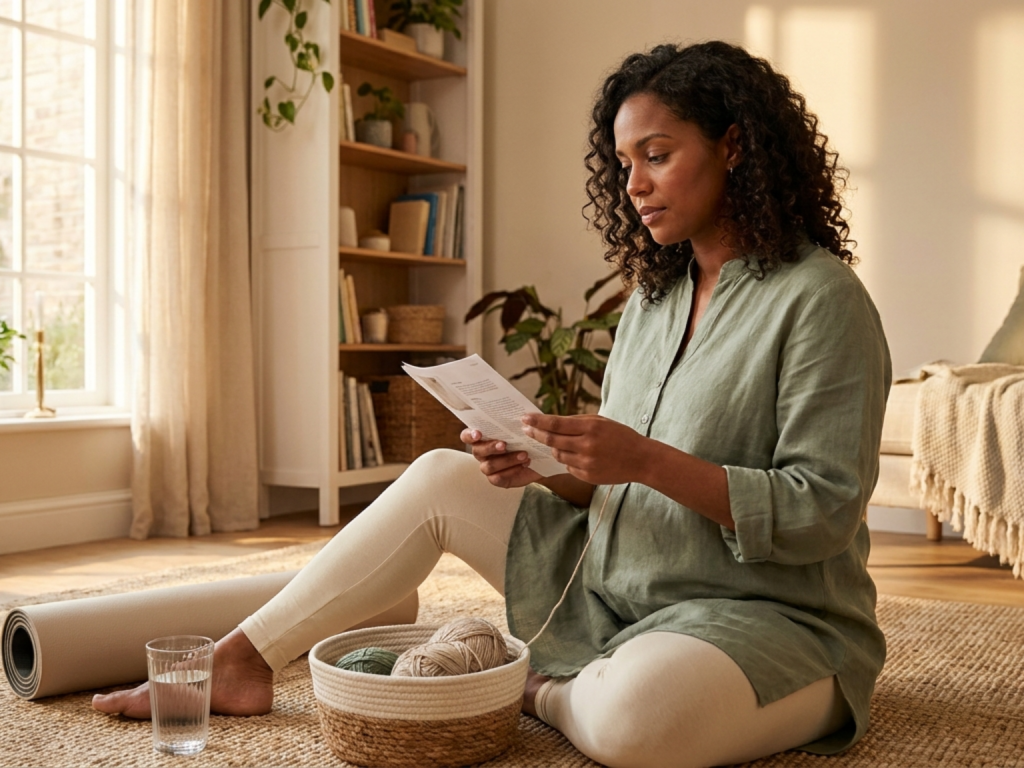
Not every beneficial hobby needs to raise your heart rate. In pregnancy, many people find that creative and restorative activities become especially valuable because they are easier to sustain on days with nausea, pelvic heaviness, or poor sleep. Reading, journaling, knitting, crochet, sewing, drawing, coloring, music practice, and simple crafts can all be calming and flexible.
These hobbies are often safe because they do not create mechanical strain or exposure hazards. The main considerations are posture and duration. If you sit for long periods, change position regularly, support your back, and avoid neck or wrist strain. If you stand for an activity, keep the work surface at a comfortable height and take breaks to reduce swelling or dizziness.
Mind-body hobbies can also be helpful. Breathwork, meditation, prenatal relaxation practice, and guided imagery are not substitutes for medical care, but they can be useful tools for managing stress and improving sleep routines. Some people like photography, birdwatching, or low-key museum visits because they combine gentle walking with a sense of curiosity and novelty.
The best restorative hobby is one that lowers tension rather than adding another performance target to your day.
Hobbies that need caution or are usually best avoided
Some hobbies carry enough risk that they are usually discouraged in pregnancy or require explicit individualized clearance. Contact sports are a major example because even a single impact to the abdomen can be harmful. This includes any activity with frequent collisions, body checks, or falls.
Hobbies with a strong fall risk also deserve caution. Skiing, skating, horseback riding, climbing without adequate protection, and high-speed cycling can all become more hazardous as balance and reaction time change. If the activity is essential to you, discuss it with your clinician rather than assuming it is safe because it used to feel routine.
Scuba diving in pregnancy is generally avoided because pressure changes can pose risks to the fetus. Hot classes and other activities that deliberately raise core temperature too much are also poor choices. The same applies to any hobby that involves fumes, solvents, or other chemical exposures unless you are confident that ventilation and product safety are appropriate.
It can be helpful to remember that avoiding a high-risk hobby is not a failure of fitness or confidence. It is a pregnancy-specific safety adjustment, much like choosing a seat belt or a different medication review pathway. If a hobby feels borderline, it is reasonable to seek a clinician’s opinion before continuing.
How to adapt hobbies across trimesters and changing symptoms
Pregnancy is dynamic, so hobby decisions often change over time. In the first trimester, fatigue, nausea, and smell sensitivity may make short, low-commitment hobbies more realistic. This is often a good time to prioritize hobbies that can be paused quickly, such as reading, crafts, or brief walks.
In the second trimester, many people feel more energetic and able to resume longer walks, swimming sessions, or prenatal classes. Even then, it remains wise to avoid overexertion and to keep hydration and rest breaks built in. If you are returning to exercise in pregnancy after a period of inactivity, gradual progression is usually more comfortable than trying to “catch up.”
In the third trimester, balance, pelvic pressure, reflux, and sleep disruption may become more prominent. Stable, low-impact hobbies are often easier than activities that require agility or prolonged standing. This is also a good time to reassess positions, pacing, and transportation to and from hobby spaces.
Finally, think about your hobbies as part of a broader safety plan. If one activity worsens pain, bleeding, contractions, or dizziness, stop and ask for medical advice. Pregnancy does not require giving up pleasure; it simply asks for more selective, body-aware choices.
When to stop and get medical advice
- Stop a hobby if you have vaginal bleeding, fluid leakage, or regular contractions.
- Seek advice for chest pain, fainting, severe shortness of breath, or persistent dizziness.
- Get evaluated if a hobby causes abdominal trauma, a fall, or significant pelvic pain.
- Do not push through overheating, especially in hot rooms or during vigorous activity.
- Contact your clinician if you are unsure whether a hobby is safe for your specific pregnancy.
Tools & Assistance
- Ask your obstetric clinician or midwife whether your current hobbies need any trimester-specific changes.
- Look for prenatal classes led by instructors trained in pregnancy modifications.
- Use a simple exertion check: you should generally be able to speak in full sentences during moderate activity.
- Plan hobbies in cool, well-ventilated environments with water and rest breaks available.
- If you have a complex pregnancy, request individualized activity guidance rather than relying on general advice.
FAQ
Can I keep doing my favorite hobby if I was active before pregnancy?
Often yes, if the hobby is low risk and you adapt intensity, posture, and environment. Ask your clinician if the activity involves impact, falls, overheating, or contact.
Are walking and swimming good hobbies in pregnancy?
Yes, for many people they are among the easiest low-risk options. They are typically gentle on the joints and can be adjusted to your energy level.
Is yoga always safe during pregnancy?
Not always. Modified prenatal yoga is often appropriate, but hot classes, deep twisting, and positions that feel unstable may need to be avoided or changed.
What if my hobby makes me short of breath?
Mild exertional breathlessness can happen, but marked shortness of breath, chest pain, dizziness, or inability to talk normally means you should stop and seek advice.
Do I need permission to start a new hobby while pregnant?
Usually not for low-risk hobbies, but it is smart to check with your clinician if the activity is physically demanding, involves equipment, or has any fall or impact risk.
Sources
- NHS — Exercise in pregnancy
- American Pregnancy Association — Activities to Avoid During Pregnancy
- UC Davis Health — Is exercise safe during pregnancy? Experts share which activities to do and which you should avoid
Disclaimer
This article is for informational purposes only and does not replace individualized medical advice. Please consult your obstetric clinician or midwife about activity choices in your specific pregnancy, especially if you have symptoms or complications.













Please log in to leave a comment.