
Intro
Bathing and showering are usually routine parts of self-care, but pregnancy can change how safe they feel. Shifts in balance, a lower threshold for dizziness, pelvic or back discomfort, fatigue, and sensitivity to heat can all make the bathroom a place where small hazards matter more than they used to.
The good news is that many risks are preventable with a few thoughtful adjustments. A safer bathroom does not need to be complicated: stable footing, good lighting, moderate water temperature, and a calmer pace can make a real difference. If you have a higher-risk pregnancy or have been given specific limitations, ask your obstetric clinician or midwife how these general safety steps should be adapted for you.
Highlights
Pregnancy can increase fall risk because balance, circulation, and fatigue may all change together.
The most common bathroom injuries are slips, burns from hot water, and fainting related to heat or standing too long.
Simple changes such as non-slip mats, grab bars, and a shower chair can meaningfully improve safety.
Water that is warm rather than hot helps reduce the chance of overheating and scald injury.
If you feel dizzy, short of breath, or unwell in the bathroom, stop and seek help rather than pushing through.
Why bathrooms can feel less forgiving in pregnancy
Even if you have always moved confidently around your home, pregnancy can subtly change the mechanics of daily activities. A shifting center of gravity, ligament laxity, and the physical load of the growing uterus can affect stability. Add fatigue, nausea, or a brief episode of lightheadedness, and a wet bathroom floor becomes more than an inconvenience.
Heat can also matter. Warm water promotes vasodilation, which can lower blood pressure slightly and increase the chance of dizziness in some people. For that reason, bathroom safety in pregnancy is not only about preventing slips; it is also about reducing the chance of feeling faint, overheated, or suddenly weak while standing in a confined space.
It helps to think of the bathroom as a place where predictability is your friend. Keeping the route clear, using steady fixtures, and avoiding rushed movements can lower risk without sacrificing comfort. Many people find that a few small environmental changes create a noticeably calmer routine.
Preventing slips, trips, and falls
Fall prevention in pregnancy starts with the basics: dry floors, stable handholds, and enough light to see puddles or soap residue. Water on tile, smooth tub surfaces, and shampoo bottles left underfoot are common but preventable hazards. If you need to step over a tub wall, move slowly and keep one hand free for support.
Practical measures that are consistently recommended include:
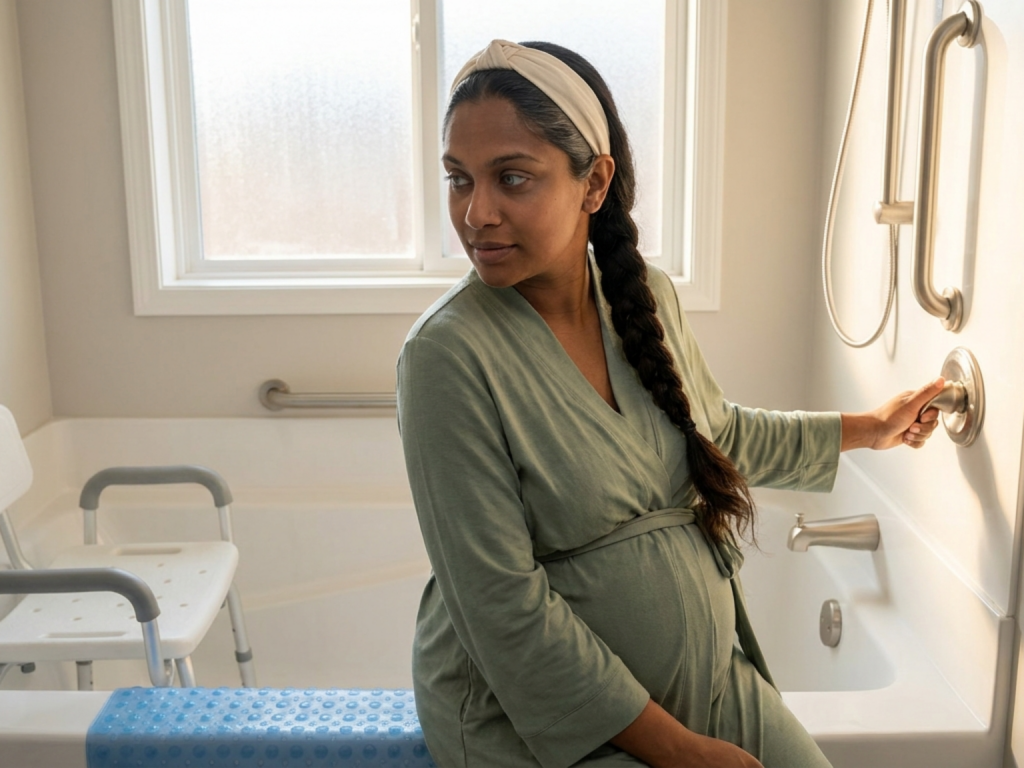
- Using a non-slip bath mat or textured shower mat inside and outside the tub or shower.
- Installing grab bars or other non-slip surfaces and grab bars in places where your weight naturally shifts.
- Keeping towels, clothing, and toiletries within easy reach so you do not need to bend, twist, or step away from support.
- Cleaning up condensation and splashes promptly, especially at night or when you are tired.
- Improving lighting so you can see the floor clearly, including during early-morning or late-night bathroom trips.
If you already feel unsteady, a shower chair or bench can reduce the need to stand for long periods. That can be especially helpful if you are recovering from illness, have pelvic discomfort, or notice dizziness when you rise from sitting.
Choosing water temperature that is gentle on the body
Water temperature is one of the most important parts of bathing and shower safety. Hot water can scald skin, but it can also leave you flushed, lightheaded, or short of breath, particularly if you remain in the steam and heat for a long time. In pregnancy, many clinicians advise avoiding very hot baths or showers and keeping the water heater set to no more than 120°F (49°C).
That setting reduces the risk of accidental burns while still allowing for a comfortable wash. It is also a good idea to check the water with your hand or wrist before stepping fully into the tub or shower, because water that feels pleasant at first can become too hot after several minutes. If you notice redness, pounding heartbeat, or a sensation of overheating, cool down and leave the bathroom.
For people who enjoy soaking, safe warm baths in pregnancy generally mean warm rather than hot water, limited time in the tub, and attention to how the body feels rather than trying to tolerate discomfort. The phrase warm bath safety while pregnant is essentially about pacing: avoid heat that makes you sweat, feel woozy, or struggle to breathe comfortably.
Some people are more sensitive to heat when they have not eaten, are dehydrated, or are already tired. In those situations, a shorter shower or a lower-temperature bath may be the safer choice.
Making bathing easier when your body feels different
Comfort matters as much as injury prevention. Pregnancy-related nausea, back pain, pelvic girdle pain, varicose veins, or a sense of heaviness in the lower abdomen can make ordinary washing feel exhausting. A seated shower, a handheld shower head, or bathing in shorter segments can reduce strain without turning the routine into a chore.
If standing for long periods makes you dizzy or if balance feels unreliable, sit down before you feel unsafe rather than waiting until you are close to fainting. Keeping shampoo, soap, and a towel within arm’s reach also matters, because repeated bending and twisting can increase the chance of losing balance.
Some people prefer morning showers because they feel less tired then; others do better at night when water helps ease muscle tension. Either is fine if the bathroom setup is safe. What matters most is matching the routine to your current symptoms, not forcing yourself into a habit that leaves you shaky or breathless.
If you have been told to limit activity, avoid prolonged standing, or modify heat exposure, use that guidance for bathing too. Personalized advice is especially important if you have bleeding, contractions, ruptured membranes, severe anemia, a history of fainting, or another pregnancy complication.
Bathing around children and shared family spaces
Many pregnant people are also caring for young children, which adds another layer of safety planning. If a child is in the bath or shower area, supervision needs to be active and continuous. Brief distractions are enough for a child to slip, inhale water, or get into a risky position.
Bath seats can be helpful for some children, but they do not replace supervision and they are not a guarantee against drowning or falls. For family bathrooms, shatterproof glass doors, stable handholds inside the tub or shower, and clutter-free floors are wise additions. Keeping toys, bottles, and bath products organized can also reduce the chance of tripping when you are carrying a child or helping them step in and out.
If you are bathing children while pregnant, remember that lifting a slippery child out of the tub can strain the back and throw off balance. When possible, use step stools, low hooks for towels, and another adult’s help for the most physically demanding parts of the routine. This is a situation where a few minutes of planning can prevent both falls and muscle strain.
When to pause and ask for medical advice
Most bathing and shower routines can be made safer with household changes, but some symptoms deserve a pause and a call to your clinician. Seek advice if you repeatedly feel faint, have trouble standing in warm water, notice palpitations, or become short of breath while bathing. These can be signs that the routine is too hot, too long, or not well matched to your current condition.
Get urgent medical attention if you fall and have abdominal pain, vaginal bleeding, fluid leakage, severe headache, or decreased fetal movement after the incident, or if you sustain a burn that is significant or blistering. The same applies if you lose consciousness or cannot get up safely.
If bathing or showering is difficult because of a high-risk pregnancy, a musculoskeletal injury, or a condition that affects mobility, it is reasonable to ask for individualized guidance. Your obstetric team can help you decide whether you need temporary limits, equipment, or a different routine. Safety advice should fit your body and your pregnancy, not the other way around.
Safety warnings to take seriously
- Do not ignore dizziness, faintness, chest tightness, or a sudden racing heartbeat in the bathroom.
- Keep bath and shower water warm, not hot; avoid prolonged exposure to steam or very hot water.
- Use non-slip mats and grab bars, especially if you have had any falls or feel unsteady.
- Never leave a young child unattended in the bath or shower area.
- After a fall, burn, bleeding, or fluid leakage, contact a healthcare professional promptly.
Tools & Assistance
- Non-slip bath mat
- Professionally installed grab bars
- Shower chair or bench
- Handheld shower head
- Water thermometer or reliable water-heater setting check
FAQ
Is a shower safer than a bath in pregnancy?
Often it can be, especially if you are worried about slipping or overheating, but the safest option is the one that feels stable, not too hot, and easy to exit.
What water temperature is usually recommended?
Many safety guidelines advise setting the water heater to no more than 120°F (49°C) to reduce scald risk.
Can I use grab bars or a shower chair?
Yes. These are common fall-prevention aids, and they are often helpful in pregnancy if you feel unsteady or need to sit while washing.
Should I avoid very hot baths completely?
Very hot water is generally not advised because it can increase overheating and dizziness. If you enjoy baths, keep them warm rather than hot and stop if you feel flushed or weak.
When should I call my clinician about bathing safety?
Call if you have repeated dizziness, fainting, bleeding, contractions, fluid leakage, a fall, or any symptom that makes bathing feel unsafe.
Sources
- MedlinePlus — Bathroom safety for adults: MedlinePlus Medical Encyclopedia
- Nationwide Children's Hospital — Bathtub and Shower Safety
- Mayo Clinic — Shower Safety: Tips and Helpful Products
Disclaimer
This article is for general educational purposes and does not replace individualized medical advice. If you have symptoms, a fall, a burn, or a high-risk pregnancy, contact your obstetric clinician or other qualified healthcare professional.













Please log in to leave a comment.