
Intro
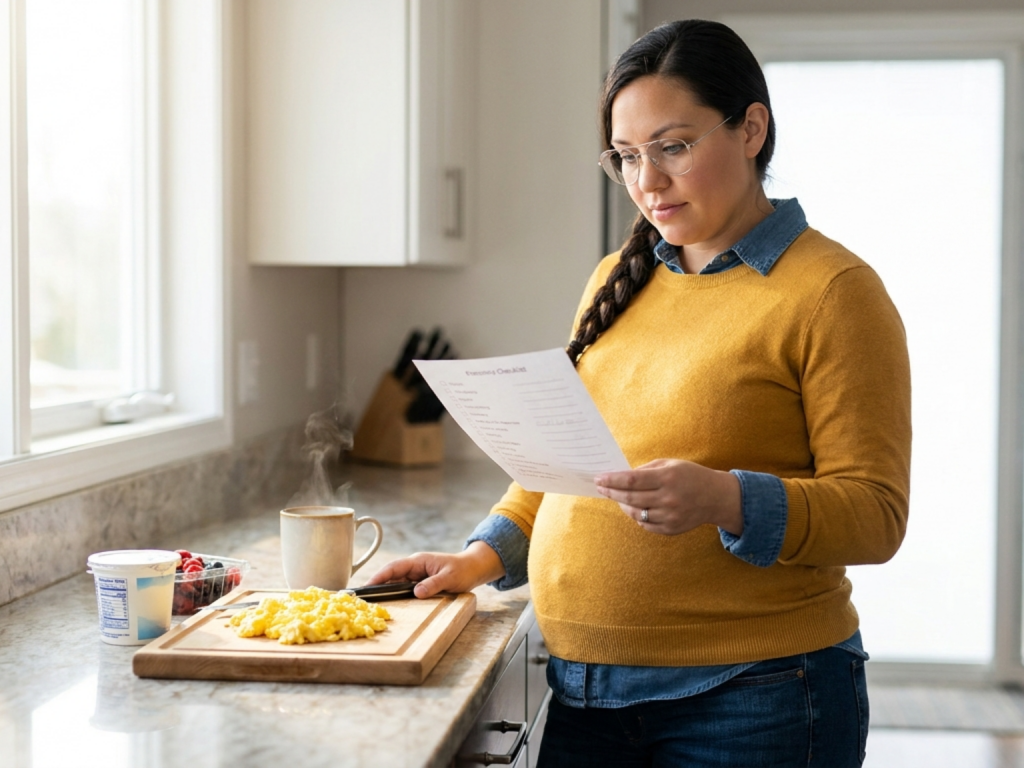
Pregnancy can make nutrition advice feel contradictory: one person says to eat for two, another says to avoid half the grocery store. The reality is more nuanced. Most common nutrition mistakes are not about a lack of effort; they are about misunderstanding which risks matter most and how small choices add up.
This article focuses on the errors clinicians see most often: food-safety lapses, excess caffeine or alcohol, fish choices with too much mercury, and the assumption that supplements can replace a varied diet. If you are feeling uncertain, that is normal. Pregnancy nutrition is one area where a thoughtful conversation with your obstetric clinician or dietitian can be genuinely useful.
Highlights
Unsafe food is not always obvious: raw, undercooked, or poorly stored items can look normal.
Fish can remain part of pregnancy nutrition, but mercury content and serving choices matter.
Caffeine guidance is about total daily intake, not just coffee, tea, or soda in isolation.
Alcohol is the clearest avoidable exposure, and the safest choice is complete avoidance.
A prenatal vitamin helps, but it cannot replace a balanced diet or good food-safety habits.
Why common nutrition mistakes happen
Many people make pregnancy nutrition mistakes because they are trying to be careful, not careless. Advice from family, social media, labels, and older habits can conflict, and nausea or food aversions can push anyone toward the easiest available option. In that setting, it is understandable to focus on calories first and details later.
The key idea is that pregnancy nutrition has two jobs at once. First, it must meet increased needs for protein, iron, folate, calcium, iodine, and energy. Second, it must reduce exposure to foodborne pathogens and toxins that are more concerning in pregnancy. That is why some foods are limited not because they are inherently unhealthy, but because the balance of benefit and risk changes.
A useful mindset is to ask: is this a nutrient question, a food-safety question, or both? Once you separate those categories, decisions become easier. If your eating pattern is unusually restricted because of nausea, veganism, diabetes, food insecurity, or other medical factors, your clinician or dietitian can help you make the plan more individual and less guesswork-driven.
Mistake 1: treating food safety as optional
One of the most common mistakes is assuming that food is safe if it looks, smells, and tastes fine. In pregnancy, that is not enough. Foods with higher infection risk can carry organisms such as Listeria or other pathogens even when they appear fresh. That is why high-risk foods in pregnancy deserve a stricter standard than the usual household rule of thumb.
Common problem foods include raw or undercooked fish and shellfish, undercooked meat, poultry, and eggs, unpasteurized milk and juices, soft cheeses made from unpasteurized milk, raw sprouts, and chilled deli salads or ready-made items with uncertain handling or storage. Raw cookie dough and batter are also easy to overlook because they feel like a small indulgence rather than a food-safety issue.
The practical fix is not perfection; it is consistency. Fully cook animal products, check labels for pasteurization, and be cautious with foods that have been sitting out or refrigerated for an unknown length of time. If you are eating prepared foods, think about whether they were held cold enough and handled carefully. A simple habit of asking where the food came from and how it was stored can prevent a lot of avoidable risk.
- Choose fully cooked eggs, meat, poultry, and seafood.
- Avoid unpasteurized dairy products and juices.
- Be cautious with raw sprouts and deli salads.
- Do not rely on appearance alone to judge safety.
Mistake 2: ignoring mercury and fish guidance
Fish can be a valuable part of pregnancy nutrition because it provides high-quality protein and, in many species, beneficial fatty acids. The mistake is not eating fish; it is eating the wrong types too often or avoiding fish entirely because the guidance feels confusing. Some fish accumulate mercury, and methylmercury is a neurotoxin that is especially relevant during fetal development.
The simplest rule is to avoid high-mercury fish and follow local advice about tuna and oily fish. The exact details vary by country and species, but the core principle is consistent: choose lower-mercury options more often and keep large predatory fish off the regular menu. If you enjoy seafood, this is usually a moderation problem, not an all-or-nothing problem.
People also sometimes assume that fish oil capsules solve the issue. They can be useful in some circumstances, but they are not a substitute for discussing your overall diet, especially if you already eat a lot of seafood or have specific medical conditions. If fish is a regular protein source for you, ask your clinician or dietitian which species fit your pregnancy diet best rather than guessing from general internet lists.
Mistake 3: treating caffeine and alcohol casually
Caffeine is easy to underestimate because it comes from more than coffee. Tea, cola, energy drinks, chocolate, and some medications can all contribute to the total daily amount. Many guidelines use a limit around 200 mg per day, but the important clinical point is to count the full day, not just the cup you remember. If you have a large mug in the morning and then a soda or energy drink later, the total can climb faster than expected.
Alcohol is different. Here the safest guidance is straightforward: avoid it entirely during pregnancy. There is no convincing reason to treat it as a low-stakes exposure when the goal is to reduce preventable fetal risk. If social situations make that hard, planning a non-alcoholic alternative in advance can help.
People sometimes blame caffeine for every symptom, but the more practical concern is moderation and consistency. Excess caffeine may worsen sleep, reflux, palpitations, or nausea, which can already be difficult during pregnancy. Reading labels and thinking about total intake across the day is often more useful than trying to classify one drink as good or bad.
Mistake 4: relying on supplements instead of a balanced diet
A prenatal vitamin is important, but it is not a complete nutrition strategy. It can help cover micronutrients such as folate, iron, iodine, and sometimes vitamin D, yet it does not provide enough protein, fibre, fluid, or overall energy for pregnancy on its own. A common mistake is thinking that supplementation cancels out a diet that is too limited, too repetitive, or too low in quality.
The better framing is that supplements support a balanced diet; they do not replace it. Meals still matter for steady energy, bowel regularity, growth, and maternal wellbeing. If nausea, food aversion, vegan eating, or time constraints make your diet narrow, that is a sign to ask for help, not a sign that you have failed.
It is also wise to avoid stacking multiple products without review. Some people take a prenatal vitamin plus additional iron, herbals, or over-the-counter mixtures and assume more is better. In pregnancy, extra is not automatically safer. If you are unsure what your prenatal vitamin contains or whether you need additional supplementation, a clinician can review the label and make the plan more individualized.
Mistake 5: overlooking storage, leftovers, and everyday routines
Food safety is not only about what you buy; it is also about how you store, prepare, and reheat it. A pregnancy food safety routine can be very simple, but it needs to be consistent. Leftovers should be refrigerated promptly, cold foods should stay cold, and reheated foods should be steaming hot rather than merely warm. If something has been sitting out for a long time, especially perishable food, it is safer not to gamble on it.
The two-hour rule for perishable foods is a helpful memory aid, particularly for picnics, takeout, work lunches, and party buffets. The more uncertain the handling, the less comfortable you should feel about eating it. That applies to chilled ready-to-eat foods, deli salads, and any item where storage history is unclear. Good refrigeration and clean hands are not glamorous advice, but they are genuinely effective.
If you think you already ate something risky, try not to panic. One exposure does not automatically mean harm. What matters is whether you develop symptoms such as fever, vomiting, diarrhoea, abdominal pain, or flu-like illness, and whether the food was known to be high risk. Contact your maternity team promptly for advice, especially if symptoms are significant, persistent, or accompanied by dehydration or reduced fetal movement. Early guidance is often more useful than waiting and worrying.
When to pause and ask for advice
- Avoid alcohol completely during pregnancy unless your own clinician gives very different advice.
- Keep total caffeine intake within the limit recommended by your healthcare professional.
- Do not eat raw sprouts, unpasteurized dairy products, or undercooked animal products.
- Seek medical advice if you develop fever, vomiting, diarrhoea, or flu-like symptoms after a concerning food exposure.
- Do not assume a food is safe because it looks fresh, smells normal, or was bought from a familiar store.
Tools & Assistance
- A pregnancy food safety checklist reviewed by your obstetric clinic or dietitian
- A kitchen food thermometer for meat, poultry, and reheated leftovers
- A simple caffeine tracker for coffee, tea, cola, energy drinks, and chocolate
- A prenatal vitamin label review with your pharmacist or clinician
- A short list of low-mercury fish options from your local health authority
FAQ
Is occasional caffeine safe during pregnancy?
Many guidelines allow moderate caffeine intake, often around 200 mg per day, but the exact limit should be confirmed with your clinician because the total comes from several sources.
Can I eat fish while pregnant?
Usually yes. The key is to choose lower-mercury fish and avoid high-mercury species; local guidance can also help you interpret tuna and oily fish recommendations.
Are all soft cheeses unsafe in pregnancy?
No. The main concern is unpasteurized soft cheese. Check the label or ask how it was made and stored before deciding.
What should I do if I ate undercooked meat or raw cookie dough?
Do not panic. Note what happened and contact your maternity team if you feel unwell, have fever or gastrointestinal symptoms, or were exposed to a known high-risk food.
Sources
- Mayo Clinic — Pregnancy nutrition: Foods to avoid during pregnancy
- MedlinePlus — Pregnancy and Nutrition
- NHS — Foods to avoid in pregnancy
Disclaimer
This article is for general information only and does not replace individualized medical advice. Please consult your obstetric clinician, midwife, or dietitian for personal guidance, and seek urgent care if you have severe symptoms or concern for foodborne illness.













Please log in to leave a comment.